
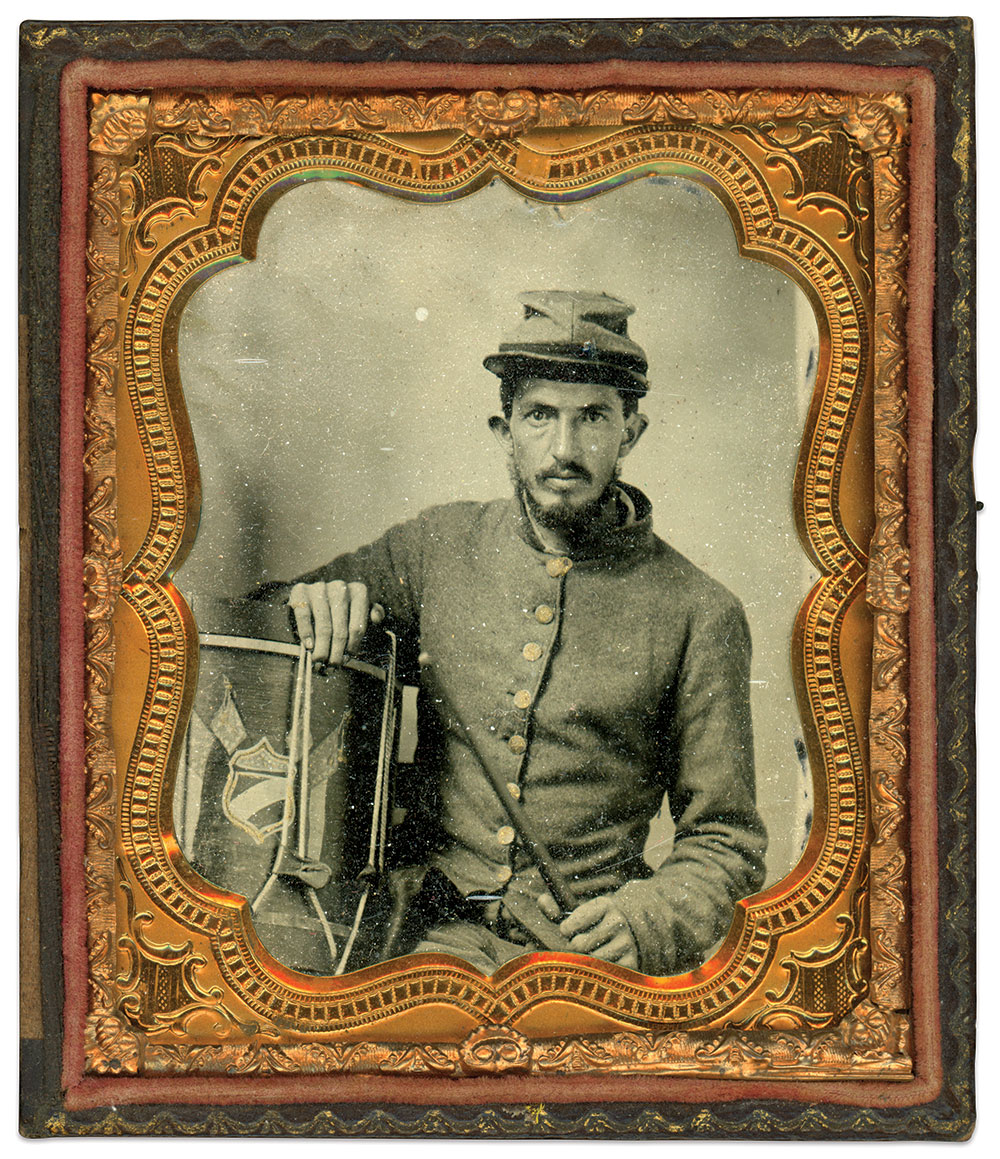
A Southern drummer leans into the camera, his stick at the ready. The patriotic motif on the drum tells a story: The shield at the center symbolizes protection, defense, and national power. The flags flanking either side are the Stars and Bars, the Confederacy’s first flag—but the canton contains 15 stars instead of the 11 representing each state that seceded to join the new nation. One theory holds that the other four stars may represent the slaveholding states that did not secede: Delaware, Maryland, Missouri, and Kentucky.
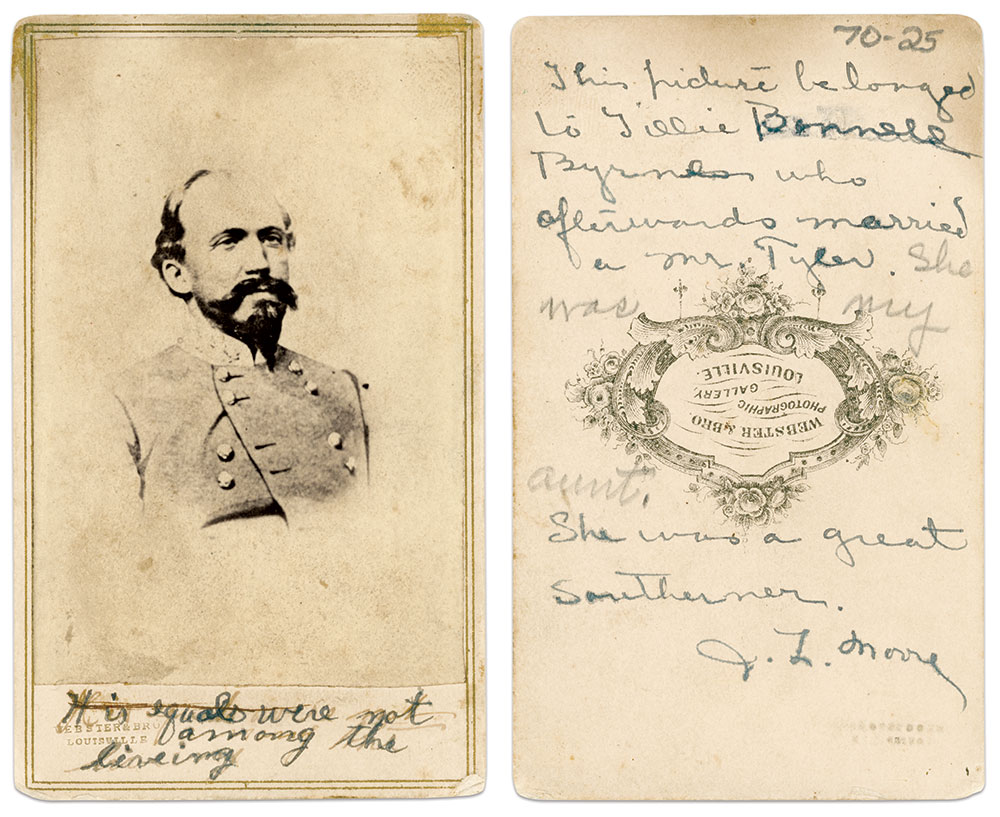
An admirer of John Hunt Morgan inscribed “His equals were not among the living” below his likeness. A note on the back reveals that the owner of this image, Tillie Bonnell Byrne, “was a great Southerner.”
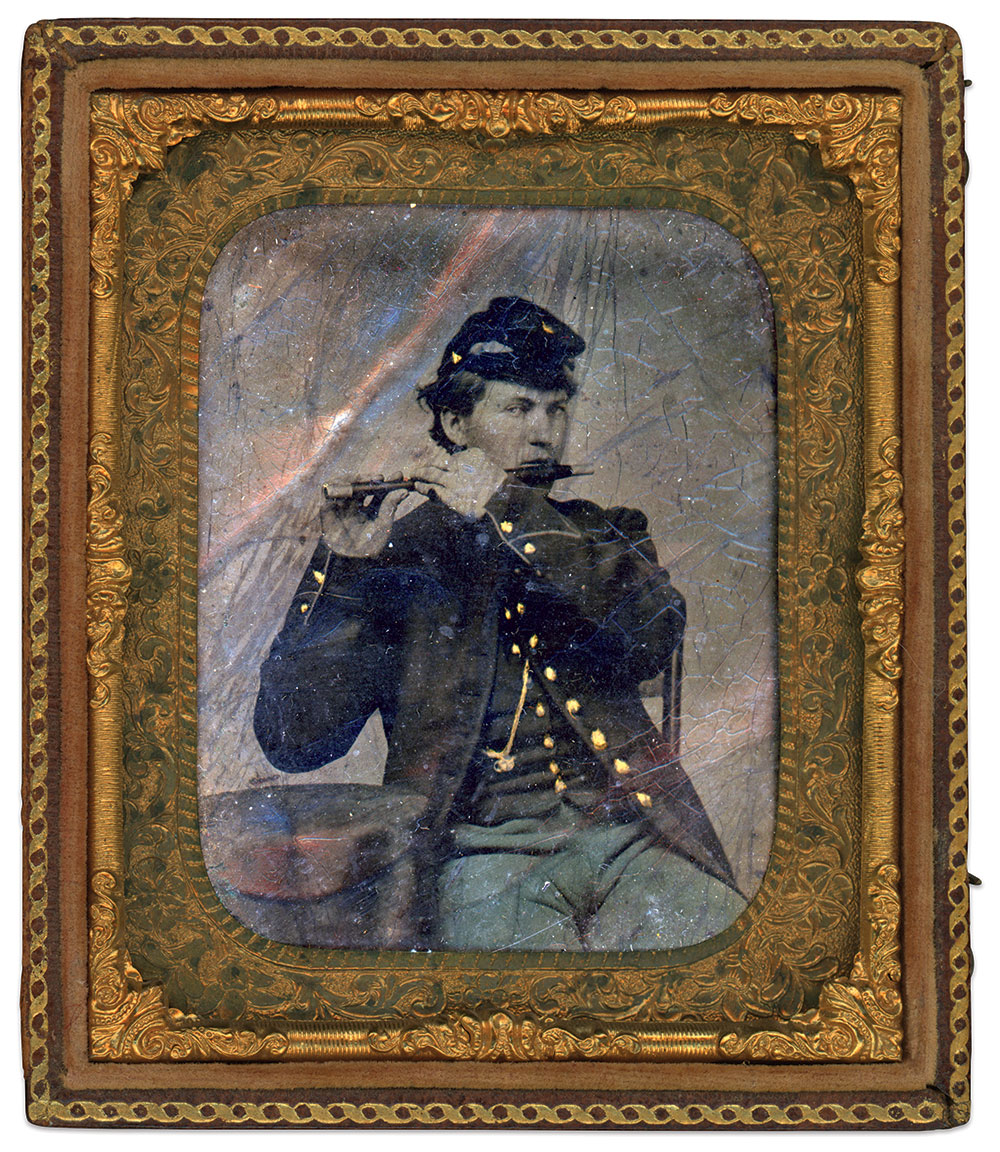
A Northern musician stares straight into the camera’s lens, holding his fife in position.
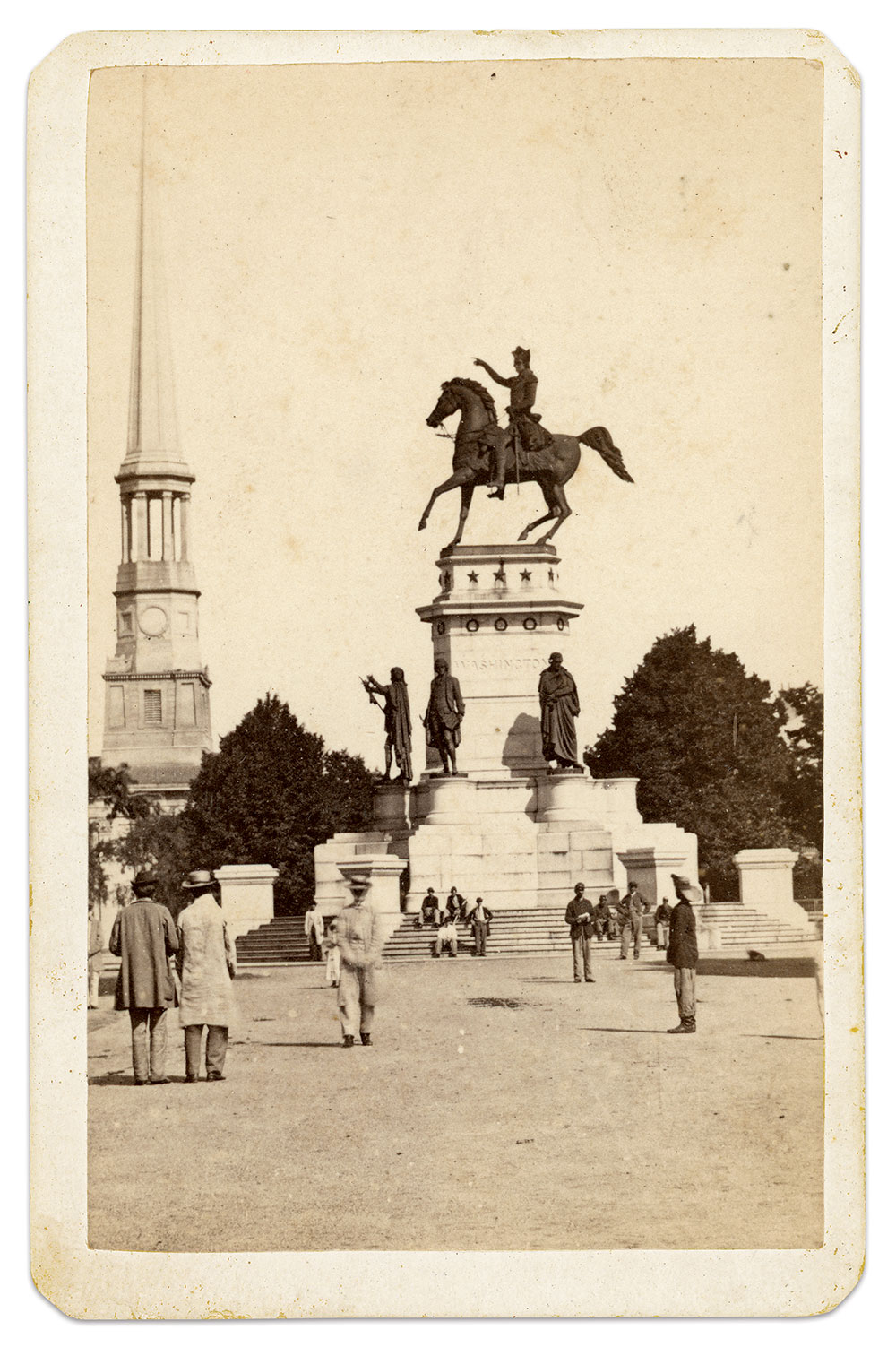
The statue of George Washington on his horse towers 60 feet in the heart of Richmond, Va., surrounded by fellow founders and Virginians Patrick Henry, George Mason, and Thomas Jefferson. Completed in 1857, the monument survived the Civil War and is pictured here with Union soldiers around its base. To the left is the spire of St. Paul’s Episcopal Church, where President Jefferson Davis received news of the fall of Petersburg on April 2, 1865—prompting the evacuation of Confederate military forces and governmental leaders.
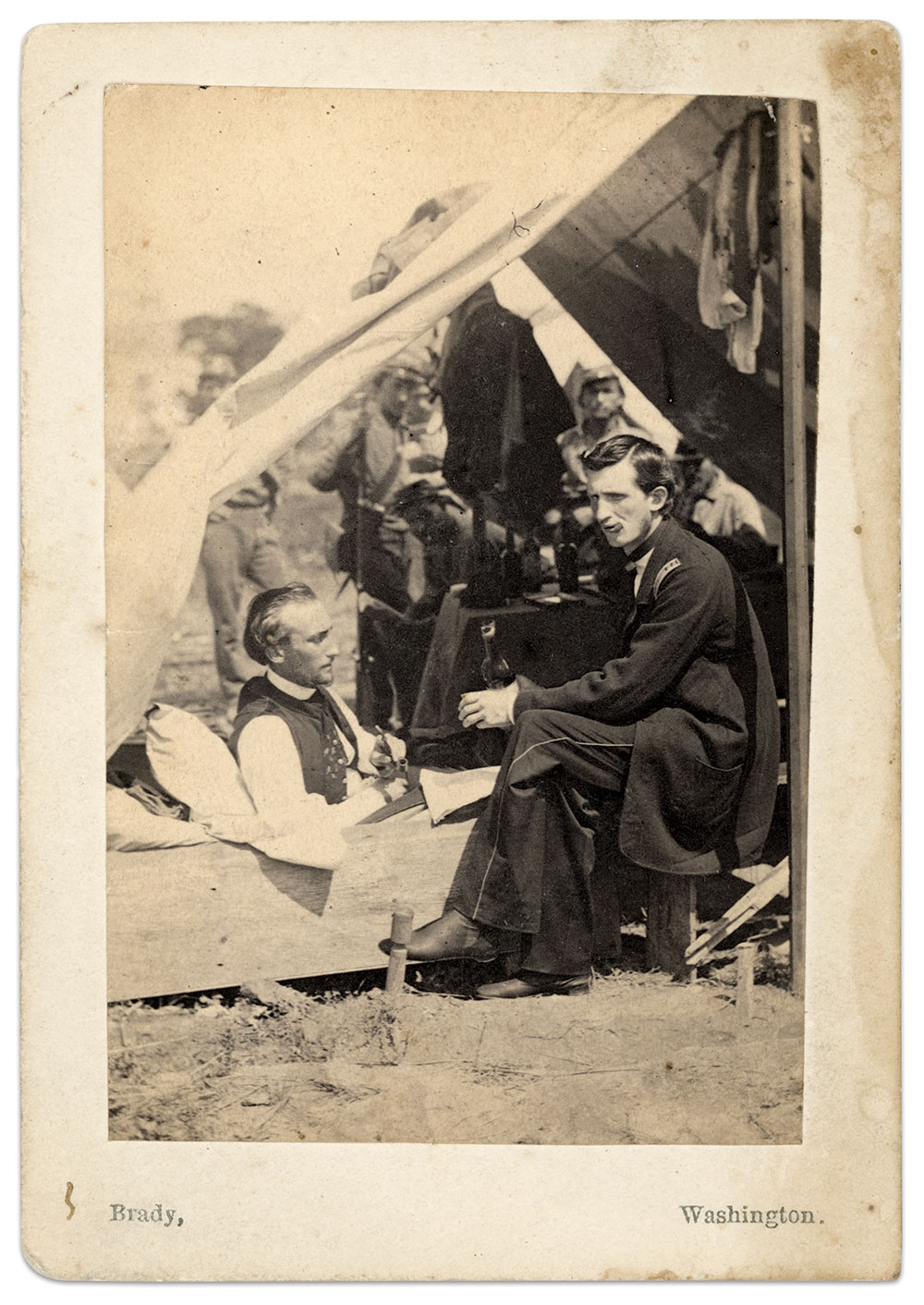
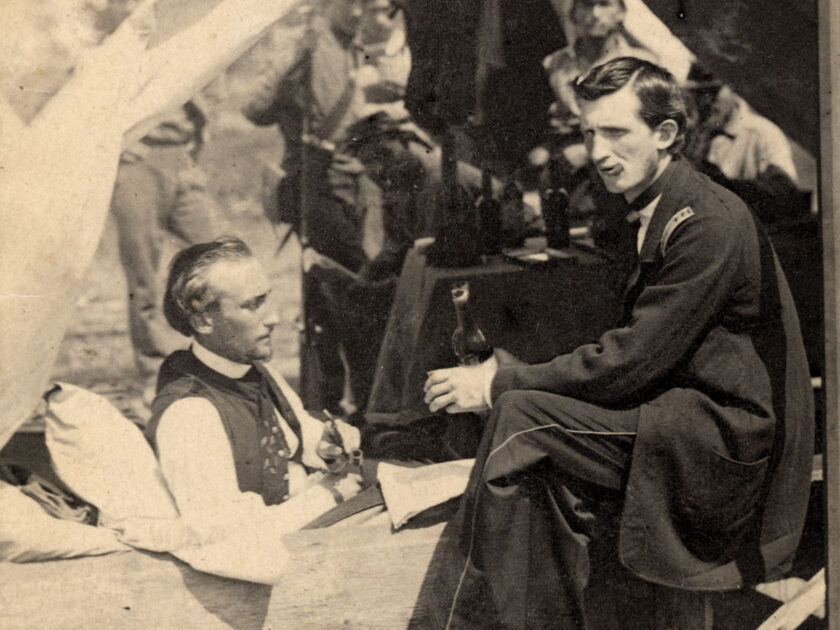
This albumen print by Mathew B. Brady bears a resemblance to his Summer 1861 “Illustrations of Camp Life” series; it is the subject of an ongoing investigation by owner Michele Behan. Guided by the opinions of authorities on photography and material culture, her working theory is that this scene depicts a field hospital near Centreville, Va., following the July 18, 1861, Battle of Blackburn’s Ford. Behan proposes that the reclining officer may be 1st Lt. Lorenzo Lorain (West Point 1856) of the 3rd U.S. Artillery, who suffered a gunshot wound in the leg during the fight. His horse was shot and killed at the same moment. The attending physician may be Asst. Surg. Frederic de Peyster III of the 8th New York State Militia.
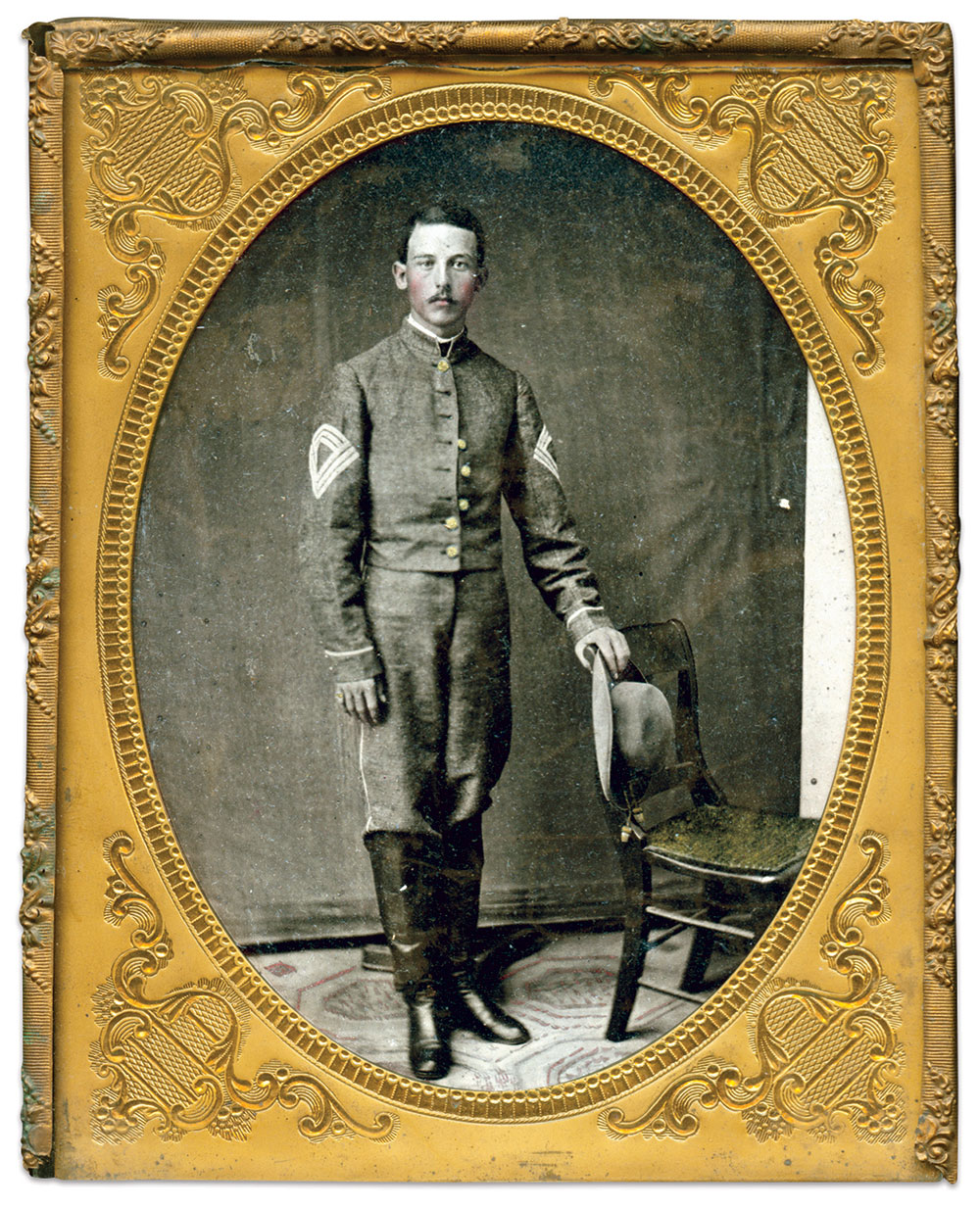
William Edward Sims is pictured here after he advanced to sergeant major of his home state’s 21st Mississippi Infantry on New Year’s Day 1864. Raised near Woodville on Woodlands Plantation, where 81 slaves lived, according to the 1860 census schedule, William, known as Willie or Billy, attended Yale. Following graduation in 1861, he returned home and enlisted in the 21st as a private. He proved his mettle as a soldier during the Peninsula and Overland Campaigns and operations in the Shenandoah Valley. Sims suffered a slight wound in the left eye, the result of a gunshot, in The Wilderness. Months later, at Cedar Creek, he received a severe gunshot wound to his right foot and fell into enemy hands. Union surgeons amputated part of the foot before he gained his release from Point Lookout, Md., in October. Retired from active duty soon afterward, he spent the remainder of the war with the Invalid Corps in Mississippi.
Following the end of hostilities, he wrote to a Yale professor, “I have lost everything. My father is dead; our plantation is desolated, the cotton has been burned, and the slaves are scattered. I am crippled for life, and, worst of all, I have been compelled to take the oath of allegiance to a government I despise.” Over time, his attitude changed. Relocating to Virginia and becoming an attorney, he switched political allegiance from the Democrats to the Republicans during Reconstruction. Identifying with the Readjuster Party, a biracial movement that numbered former Confederate general William Mahone among its leaders, Sims’ bid for a state senate seat in 1883 ended in deadly riots, prompting him to leave Virginia for Washington, D.C. Appointed consul to Colombia in 1890, he died there a year later after a brief illness at age 49.
SPREAD THE WORD: We encourage you to share this story on social media and elsewhere to educate and raise awareness. If you wish to use any image on this page for another purpose, please request permission.
LEARN MORE about Military Images, America’s only magazine dedicated to showcasing, interpreting and preserving Civil War portrait photography.
VISIT OUR STORE to subscribe, renew a subscription, and more.
1 thought on “Civil War Images of Musicians, Leaders, and Battlefield Life”
Comments are closed.