

By Timothy Bennett
On a June day in 1895, a convoy of carriages rolled through the campus of the U.S. Military Academy and the countryside surrounding West Point. The vehicles slowed and stopped from time to time for the occupants to take in the landmarks, gravesites, and other places of interest.
At the end of the day, the carriages pulled up at the chapel, where the tourists gathered on its steps for a keepsake portrait to commemorate the visit. A photographer from the prestigious Pach Brothers in New York City captured the aging men for posterity.


The group, all members of the Class of 1855, had converged on their alma mater for their 40th reunion. Ten in number, these veterans had helped reshape the United States in their youth. They had commanded troops in opposing armies, fought in some of the Civil War’s pivotal battles, and carried the conflict’s scars into varied postwar careers.
Among them were two Union generals who distinguished themselves in the Gettysburg Campaign: David M. Gregg, who commanded cavalry in the surprise attack against JEB Stuart’s troopers at Brandy Station at the beginning of the campaign, and Alexander S. Webb, whose brigade stood firm at the Copse of Trees during Pickett’s Charge at the culmination of the battle.
Also in attendance was Francis T. Nicholls, the former Confederate brigadier whose empty left sleeve and carefully positioned artificial foot testified to wounds suffered while serving with Gen. Stonewall Jackson in the Shenandoah Valley and at Chancellorsville.
The other seven classmates pictured include William W. Averell, the hard-fighting Union cavalry brigadier who proved his mettle on numerous battlefields. Three more classmates were unable to make the trip, and the rest of the class of 34 cadets had died.
Averell owned this print of the reunion portrait. On the back of the thick cardstock mount, someone carefully recorded the names of these classmates who bonded at West Point and went on to follow dramatically different paths through war and peace.
Here’s a look at the West Pointers who attended the 40th reunion, June 10-13, 1895.
Tenacious Cavalryman
Seated at left holding a light-colored hat, New York-born William Woods Averell graduated 26th in the class. Assigned to the Mounted Rifles, he served on the New Mexico frontier and was wounded in encounters with Native Americans in 1857 and 1859. During the Civil War, he commanded Union cavalry in Virginia and West Virginia, including at the Battle of Droop Mountain in 1863, and suffered two more wounds. He received five brevets before resigning in May 1865 following a dispute with Maj. Gen. Philip Sheridan. Averell later served as U.S. consul general to Canada from 1866 to 1869. He died in Bath, N.Y., in 1900 at age 65.
Respected Adjutant, Last Survivor
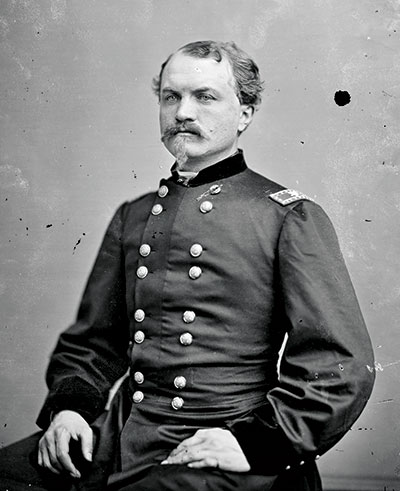
Behind Averell’s left arm is Samuel Breck, Jr., of Massachusetts, who graduated seventh and entered the artillery. He served in the Third Seminole War, at Fort Moultrie in South Carolina, and as an assistant professor at West Point. During the Civil War, Breck worked principally in the Adjutant General’s Department. His assignments included service with the 1st Corps and the Department of the Rappahannock during the 1862 occupation of Fredericksburg and the campaign against Stonewall Jackson in the Shenandoah Valley. After the war, he remained in the Regular Army and became a brigadier general in 1897. Breck retired the following year and died in 1918 at age 83, the last surviving class member.
Western Theater Commander
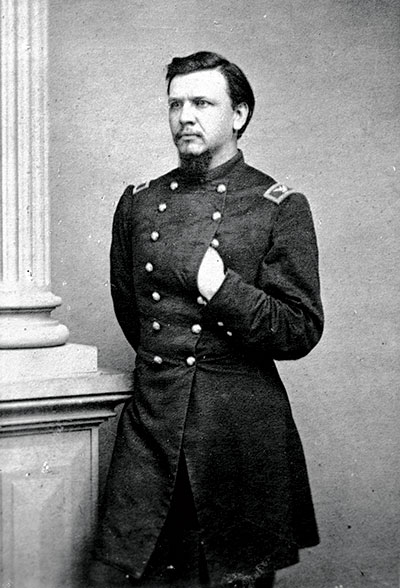
by an unidentified photographer. Library of Congress.
Seated beside Breck is Pennsylvania-born Lewis Merrill, who graduated 20th and joined the dragoons. After frontier duty in Kansas, he became colonel of a Missouri volunteer cavalry regiment in 1861 and campaigned in Missouri, Arkansas, Tennessee, and Georgia. He was brevetted brigadier general for gallant and meritorious service. During Reconstruction, Merrill commanded troops in northwestern South Carolina and led a vigorous campaign against the Ku Klux Klan, earning praise from the War Department. He later returned to western duty, fought in the Nez Perce campaign, and guarded construction of the Northern Pacific Railroad. Merrill retired because of disability in 1886 and died in February 1896, only eight months after the reunion. His remains rest in Arlington National Cemetery.
Bearing the Brunt of Pickett’s Charge
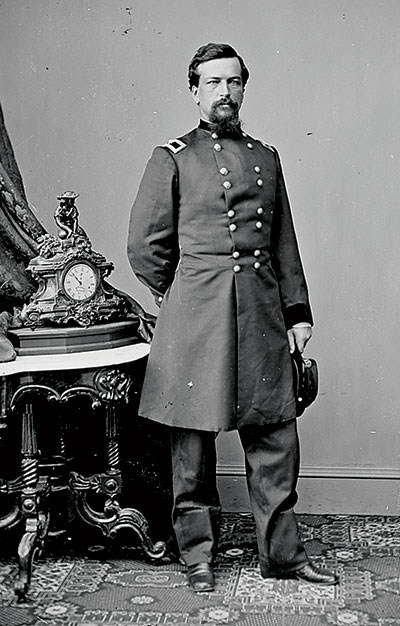
of Washington, D.C. National Archives.
To Merrill’s left sits New Yorker Alexander Stewart Webb, who graduated 13th and entered the artillery. He taught mathematics at West Point before the Civil War and rose to brigadier general of volunteers in 1863. Webb is remembered for Gettysburg, where his brigade helped repulse Pickett’s Charge. Wounded during the fighting, he later received the Medal of Honor for his conduct. The walking stick he holds was fashioned from a flagstaff of a Virginia regiment in Pickett’s Charge. At Spotsylvania Court House in May 1864, a bullet passed near Webb’s right eye and exited behind his ear, but he returned to duty and served on Maj. Gen. George G. Meade’s staff in 1865. Webb left the Army in 1870 and served as president of the City College of New York from 1869 to 1902. He died in 1911 and was buried at West Point.
Successful Staffer
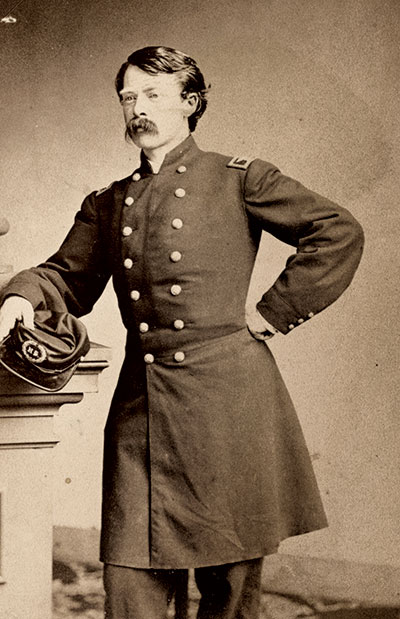
of Washington, D.C. The Liljenquist Family Collection at the Library of Congress.
Beside Webb is George David Ruggles of New York, who graduated 19th and entered the infantry. His Civil War career was centered on staff service. As chief of staff to Maj. Gen. John Pope, he participated in the battles of Cedar Mountain, Second Bull Run, and Chantilly. He later served as assistant chief of staff of the Army of the Potomac during the Maryland Campaign and became its adjutant general under Meade in February 1865. Ruggles remained in the Adjutant General’s Department for most of his career, serving in western departments and on both coasts. He became adjutant general of the U.S. Army in 1893 and was still on active duty when the reunion photograph was made. He retired in 1897 and died in 1904.
Twice-Wounded Confederate
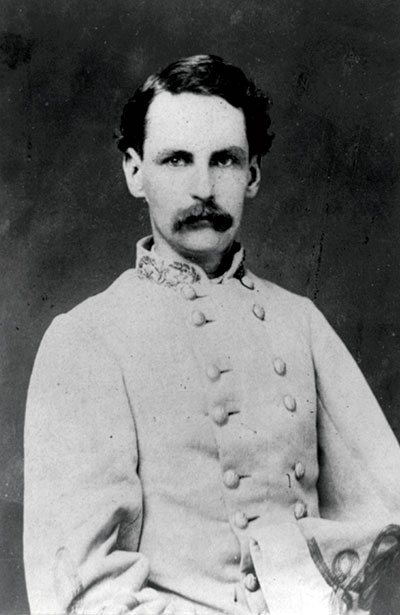
Seated on the lower step is Francis Redding Tillou Nicholls of Louisiana, the only Confederate veteran in the photograph—and one of six classmates to join the Southern cause. He graduated 12th and resigned from the Army in 1856 to study law. In 1861, he helped organize the Phoenix Guards and became lieutenant colonel of the 8th Louisiana Infantry. Nicholls fought at First Manassas and served in Stonewall Jackson’s Shenandoah Valley Campaign, where a wound cost him his left arm. Promoted to brigadier general, he returned to duty and lost his left foot to an artillery shell at Chancellorsville in 1863. After the war, Nicholls served two terms as governor of Louisiana and became chief justice of the state Supreme Court. He died in Louisiana in 1912 at age 77.
First in Class, Noted Engineer
Next to Nicholls is Cyrus Ballou Comstock of Massachusetts, who graduated first in the class. An engineer, he taught at West Point and served as chief engineer of the Army of the Potomac during the Fredericksburg and Chancellorsville campaigns.
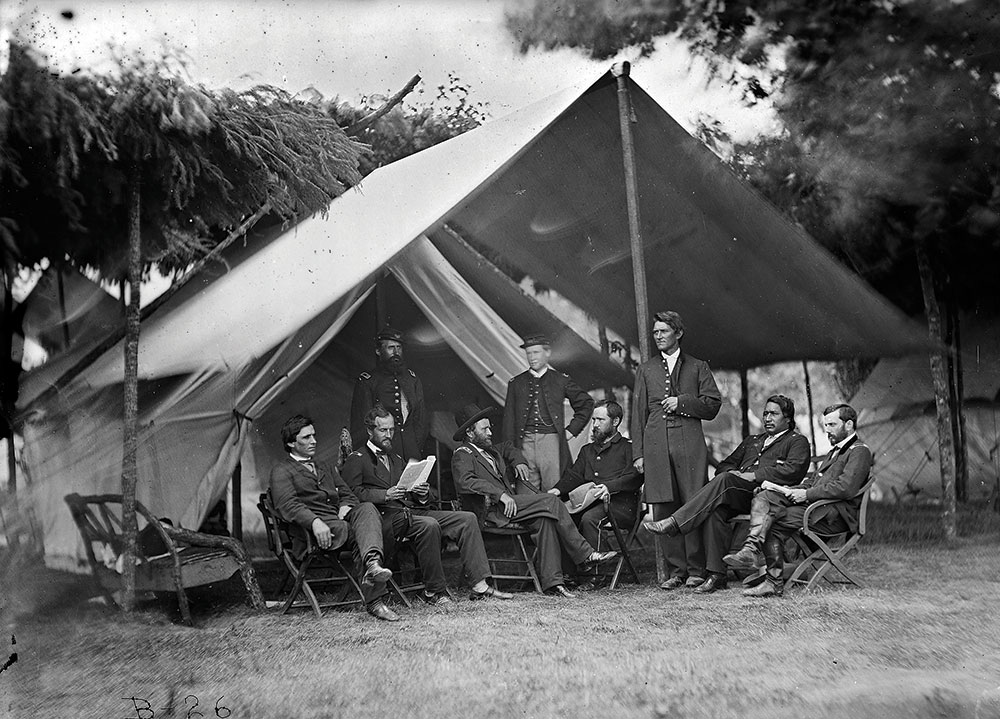
He later joined Grant’s staff, serving during the Vicksburg and Chattanooga campaigns and accompanying the general east in 1864. Comstock was senior engineer during the successful assaults on Fort Fisher, N.C. and Mobile, Ala. After the war, he briefly served on the military commission that tried the Lincoln assassination conspirators but was removed after criticizing its proceedings. He continued with the Corps of Engineers and served as president of the Mississippi River Commission. Comstock retired in 1895 and died in 1910.
California Defender
To Comstock’s left is New York native Clarence Edmund Bennett, who graduated 25th and joined the infantry. After serving in Minnesota, Utah, and Dakota Territory, he resigned in 1860 and settled in San Bernardino, Calif. Concerned by secessionist activity in the state, he joined the local militia and returned to federal service in 1863 as a major in the 1st California Cavalry. Bennett commanded posts in Arizona and New Mexico territories and was brevetted colonel in 1865. Rejoining the Regular Army after the war, he served during Reconstruction in Texas, Virginia, and North Carolina, then spent 16 years at Fort Sully in Dakota Territory. Promoted to lieutenant colonel in 1897, he retired that December. Bennett died in 1902 and was buried at Arlington National Cemetery.
Effective in the Gettysburg Campaign
Beside Bennett sits Pennsylvania-born David McMurtrie Gregg, who graduated eighth and entered the dragoons. After frontier service, he became colonel of the 8th Pennsylvania Cavalry in 1862 and rose to brigadier general later that year. At Gettysburg, Gregg commanded the cavalry that confronted Maj. Gen. JEB Stuart east of town on July 3 and helped prevent the Confederate horsemen from reaching the Union rear.
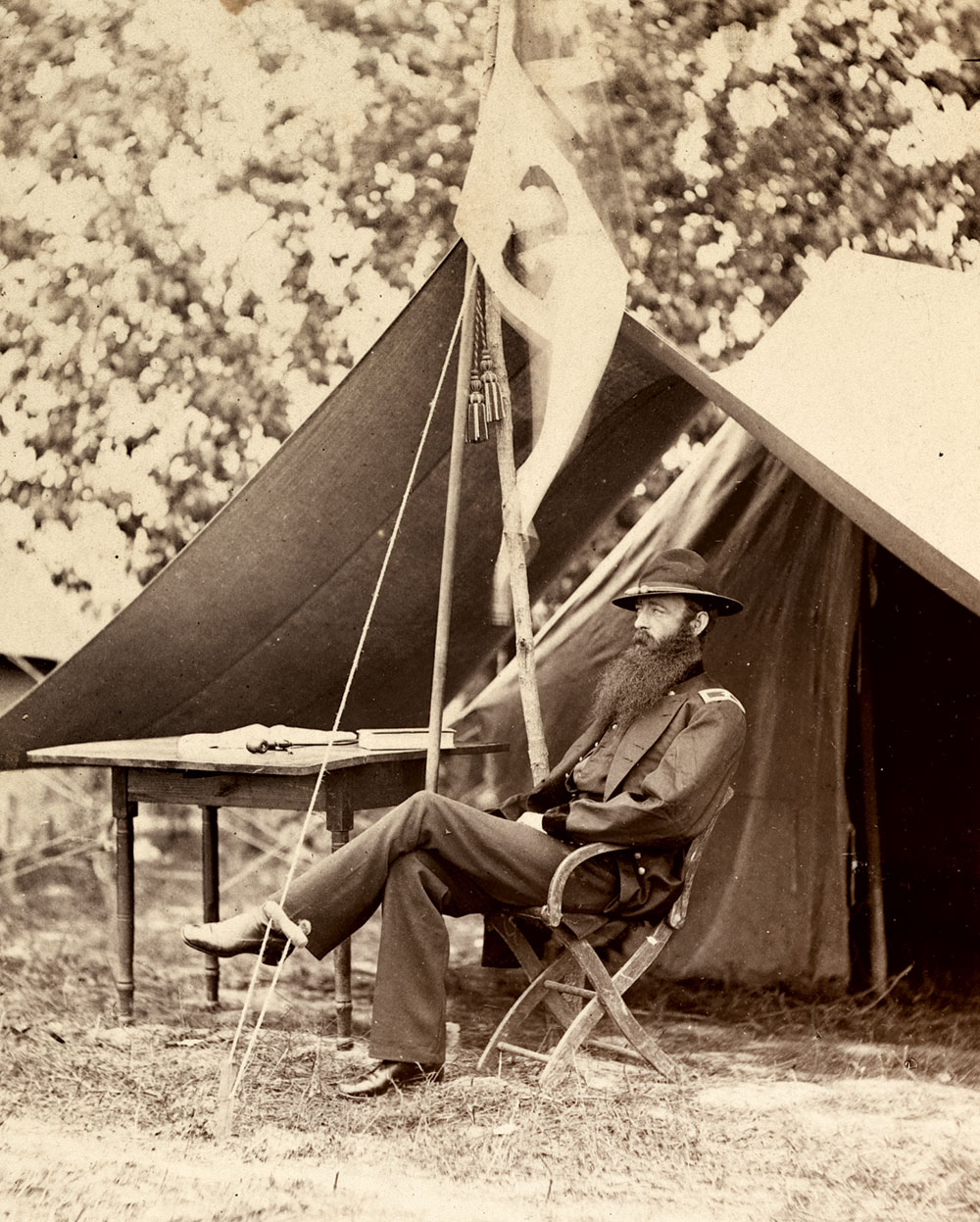
He later led cavalry during the Overland and Petersburg campaigns and was brevetted major general. Gregg unexpectedly resigned in February 1865 and returned to his Pennsylvania farm. He later served as U.S. consul in Prague, Pennsylvania’s auditor general, and a leader of veterans’ organizations. Active in preserving Valley Forge, he died in Reading in 1916 at age 83.
Protecting the Pacific Coastline
At far right is Massachusetts-born George Henry Elliot, who graduated fourth and entered the artillery. He served on the Texas frontier before transferring to the Corps of Engineers in 1857. Elliot helped construct the defenses of San Francisco Harbor and, throughout the Civil War, oversaw fortifications at Fort Point, Alcatraz Island, and elsewhere along the Pacific Coast. He was brevetted major in 1865 for meritorious wartime service. By the time of the reunion, Elliot had attained the rank of colonel. Congress authorized him to continue directing improvements to the Dalecarlia Reservoir of the Washington, D.C., aqueduct system after he left active service in March 1895. He died in 1901.
Timothy Bennett is a 1974 graduate of Youngstown State University in Ohio with a degree in criminal justice. He retired from a career in law enforcement, where a lifetime of investigation and research aided his love of Civil War history and the study of historical figures.
SPREAD THE WORD: We encourage you to share this story on social media and elsewhere to educate and raise awareness. If you wish to use any image on this page for another purpose, please request permission.