Site Overlay

Wounded at Gettysburg, Vilified for a Political Scandal

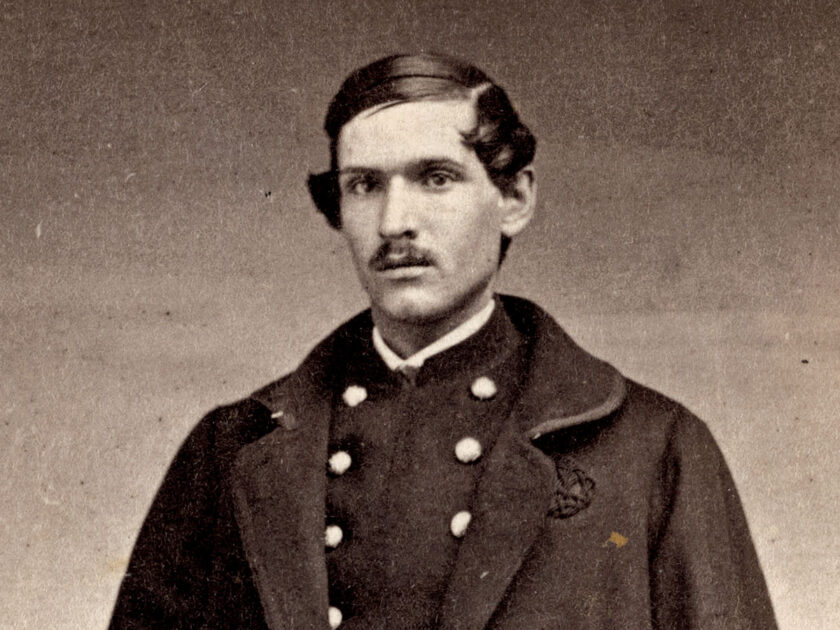
Dudley. Carte de visite by F.W. Burwell of New Haven, Conn. The Liljenquist Family Collection at the Library of Congress.

In every battle he fought, William Wade Dudley “distinguished himself as a good soldier, which is the highest possible recommendation that can be given any man,” according to an 1881 biography in The National Tribune, a newspaper for Civil War veterans and their families.

Before hostilities, Dudley, Vermont-born and raised in Connecticut, had relocated with his family to Indiana, making his home in Richmond, and joining an uncle in the milling business.

Then came the war. In 1861, Dudley, 18, enlisted in the 19th Indiana Infantry. His fellow soldiers elected him captain of Company B, and the regiment joined the Army of the Potomac. At Brawner’s Farm during the Second Battle of Bull Run, the 19th fought alongside fellow Midwestern regiments in its brigade, battling Stonewall Jackson’s forces to a standstill with stubborn courage.

In the Maryland Campaign, the brigade earned its nom de guerre, the Iron Brigade of the West. At Antietam, Dudley’s calm leadership under fire stood out. Bullets pierced his uniform, and he narrowly avoided death or capture. He received a promotion to major for his gallantry.

Dudley pictured after Gettysburg. Carte de visite by F.W. Burwell of New Haven, Conn. The Liljenquist Family Collection at the Library of Congress.

By Gettysburg, Dudley had risen to lieutenant colonel. On July 1, 1863, the Iron Brigade faced overwhelming numbers of the enemy in McPherson’s Woods. Amid the chaos, as Dudley lifted the regimental flag after eight color-bearers had fallen, a bullet shattered his leg. Surgeons fought to save the limb, but gangrene set in, and they amputated it.

The wound ended Dudley’s service. In Washington, D.C., he accepted a clerkship in the Pension Bureau. When Confederates threatened the capital in July 1864, Dudley organized and drilled a battalion of clerks, ready to defend the city against Lt. Gen. Jubal Early and his corps. Dudley’s clerks were ultimately not needed as seasoned troops dispatched by Lt. Gen. Grant arrived in the nick of time.

Dudley later served in the Veteran Reserve Corps and practiced law in Indiana.

In 1880, Dudley returned to Washington as Pension Bureau commissioner, where he built a solid record serving veterans and their families. His stature led to his selection as treasurer of the Republican National Committee. He served in this capacity during the bitter 1888 presidential campaign, pitting Republican and former Union general Benjamin Harrison against Democrat Grover Cleveland. After Dudley learned that the vote was a toss-up in Indiana—Harrison’s home state—he issued a circular advising Hoosier party leaders to divide undecided voters “into blocks of five, put a trusted man with the necessary funds in charge of these five and make him responsible that none get away and that all vote our ticket.” In other words, bribe the voters.

Section 1, Plot 800. Military Images.

A Democratic Party member got hold of the circular and passed it to campaign leadership. Exposed as the infamous “Block of Five Letter,” the scandal rocked the country just weeks before the election. Republicans declared the letter a forgery. Dudley threatened to sue newspapers for libel. Harrison won the contest, coming out on top in the Electoral College, but losing the popular vote. President Harrison shunned Dudley—his reputation destroyed.

Dudley lived quietly in the nation’s capital until his death in 1909. The press did not remember him well.

Most Hallowed Ground is part of the Arlington National Cemetery (ANC) Project. Established by Jim Quinlan of The Excelsior Brigade, its mission is to identify all Civil War veterans on the grounds. Contact Jim at 703-307-0344.


SPREAD THE WORD: We encourage you to share this story on social media and elsewhere to educate and raise awareness. If you wish to use any image on this page for another purpose, please request permission.

LEARN MORE about Military Images, America’s only magazine dedicated to showcasing, interpreting and preserving Civil War portrait photography.

VISIT OUR STORE to subscribe, renew a subscription, and more.

Scroll Up