
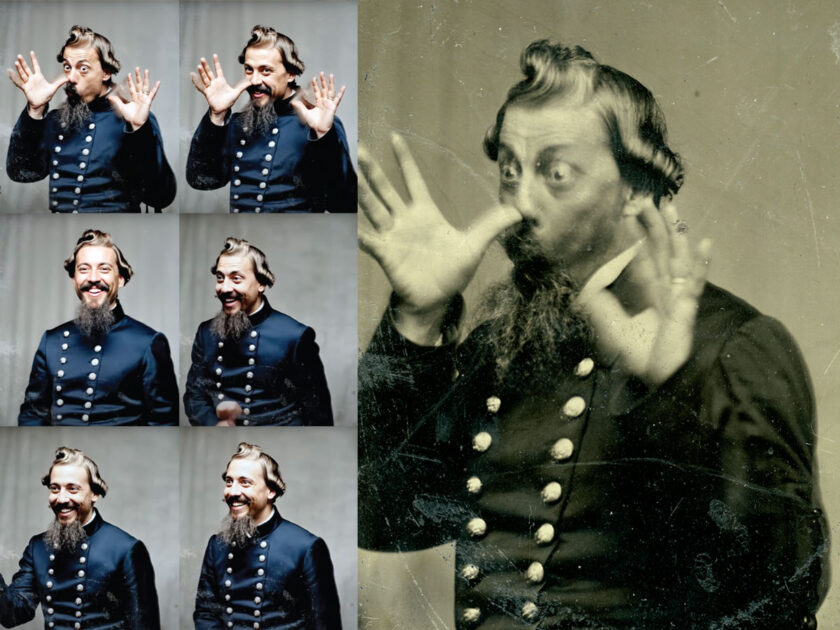
Reflections on Generative AI
The emerging genre of historic photographs brought to life through AI touched me personally when an image in my collection appeared on the YouTube channel History in Motion. I watched
The emerging genre of historic photographs brought to life through AI touched me personally when an image in my collection appeared on the YouTube channel History in Motion. I watched
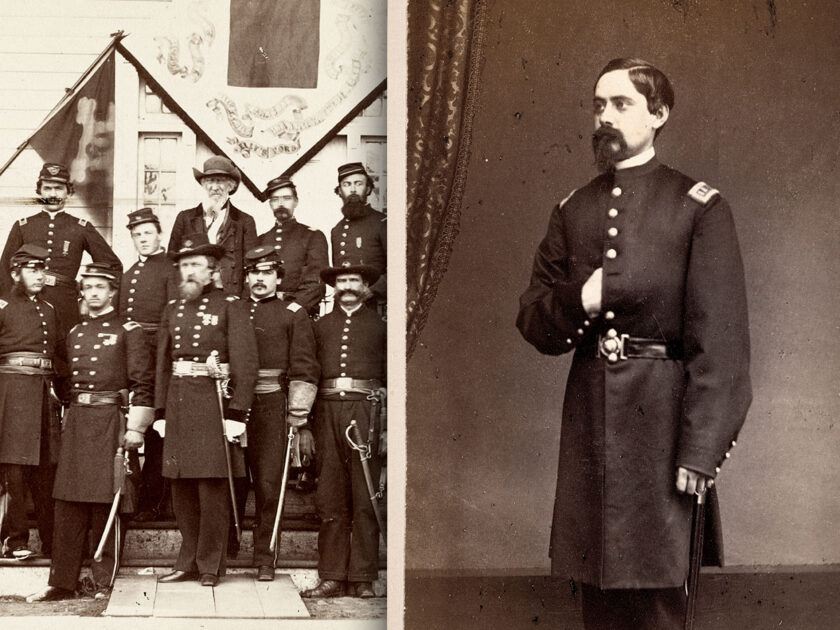
By Evan Phifer When the Civil War broke out, John Barclay Fassett volunteered as a private in the First Troop Philadelphia City Cavalry for three months in 1861. Soon afterwards,
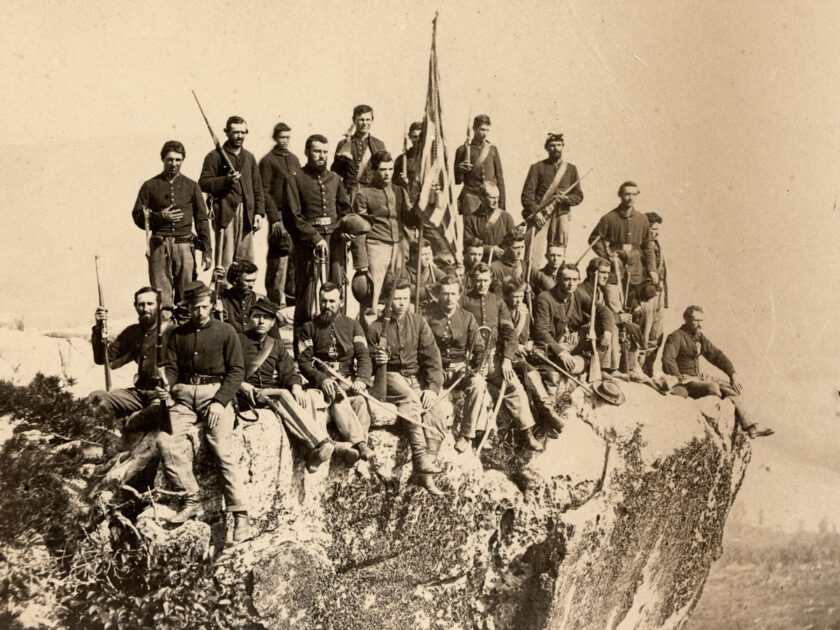
By Phil Spaugy “We had our photograph taken on one plate on Point Lookout” so wrote Corp. William Thomas in his diary on August 29, 1864. This view of 28
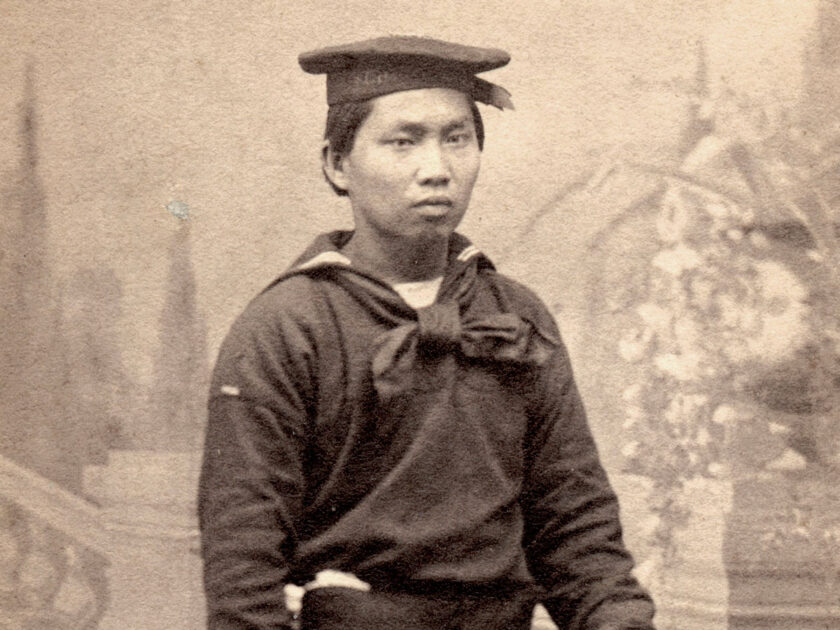
Western campaigners, one wearing an identification badge and another with a cigar, posed in Kentucky towards the war’s end. A U.S. sailor of Asian heritage posed for his likeness in

Cover stories surface in different ways. When the reveal themselves, it is unexpected and joyful. The image and story that leads are Summer 2025 issue is no exception. I was

I’ve heard from a number of you about the cover story in our last issue, “Wounded Warriors.” The gist of the comments: Seeing soldiers and sailors with amputated limbs brought

War Department clerk and former army captain Edward C. Townsend was overcome with emotion after news of the assassination of Abraham Lincoln reached him. “Never before did I shed tears

By Richard Leisenring, Jr., adapted from his forthcoming book Elmira. The name is as recognizable to any novice Civil War historian as Gettysburg, Appomattox, or Andersonville. Over the years, books

By Charles T. Joyce Visitors to the Gettysburg National Military Park encounter stone sentinels of all shapes and sizes. One of them, an austere granite marker on the north side

By Ron Field, featuring images from the author’s collection The United States and British Royal Navy enlisted sailors frequented photographic studios at home and abroad during the American Civil War