
By Jack Hurov
Students of the Civil War are well acquainted with the Grand Review in Washington, D.C. For two days in May 1865, several federal armies, comprising some 145,000 troops, marched from the Capitol, northwest along Pennsylvania Avenue, cheered by throngs of spectators lining the streets, perched on roofs, and peering through windows. Veterans from the prim-and-proper Eastern and casual Western regiments marched by the White House and passed a reviewing stand, where President Andrew Johnson and other military and political dignitaries gathered. The spectacle was well represented in the press and in photographs.
Notably, however, no soldiers of color were invited to participate.
Six months later, on the morning of November 14, 1865, some 200 Black veterans formed a line and marched in a Grand Reception in Harrisburg, Pa., as a crowd of thousands cheered them on. Representative soldiers from Massachusetts, Pennsylvania, and Rhode Island marched through the city and halted at the home of U.S. Senator and President Abraham Lincoln’s first Secretary of War Simon Cameron, who praised them for their service and newly-won freedoms. The column resumed its march to the grounds of the Capitol, where more speeches awaited them. That evening, a meeting and gala ball concluded the event. The Black press, notably the Christian Recorder, the liberal Philadelphia newspaper of the African Methodist Episcopal Church, covered the event. No photographs or other works of art were created.

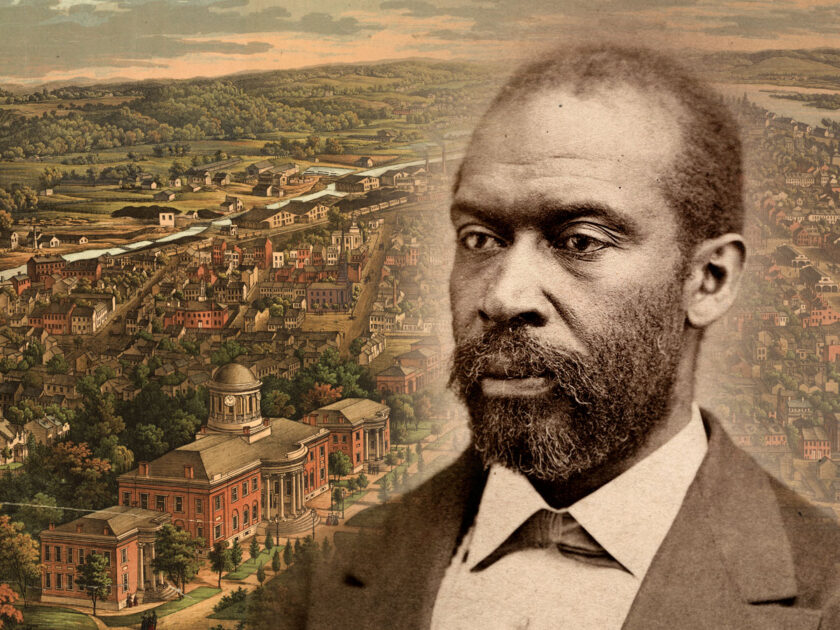
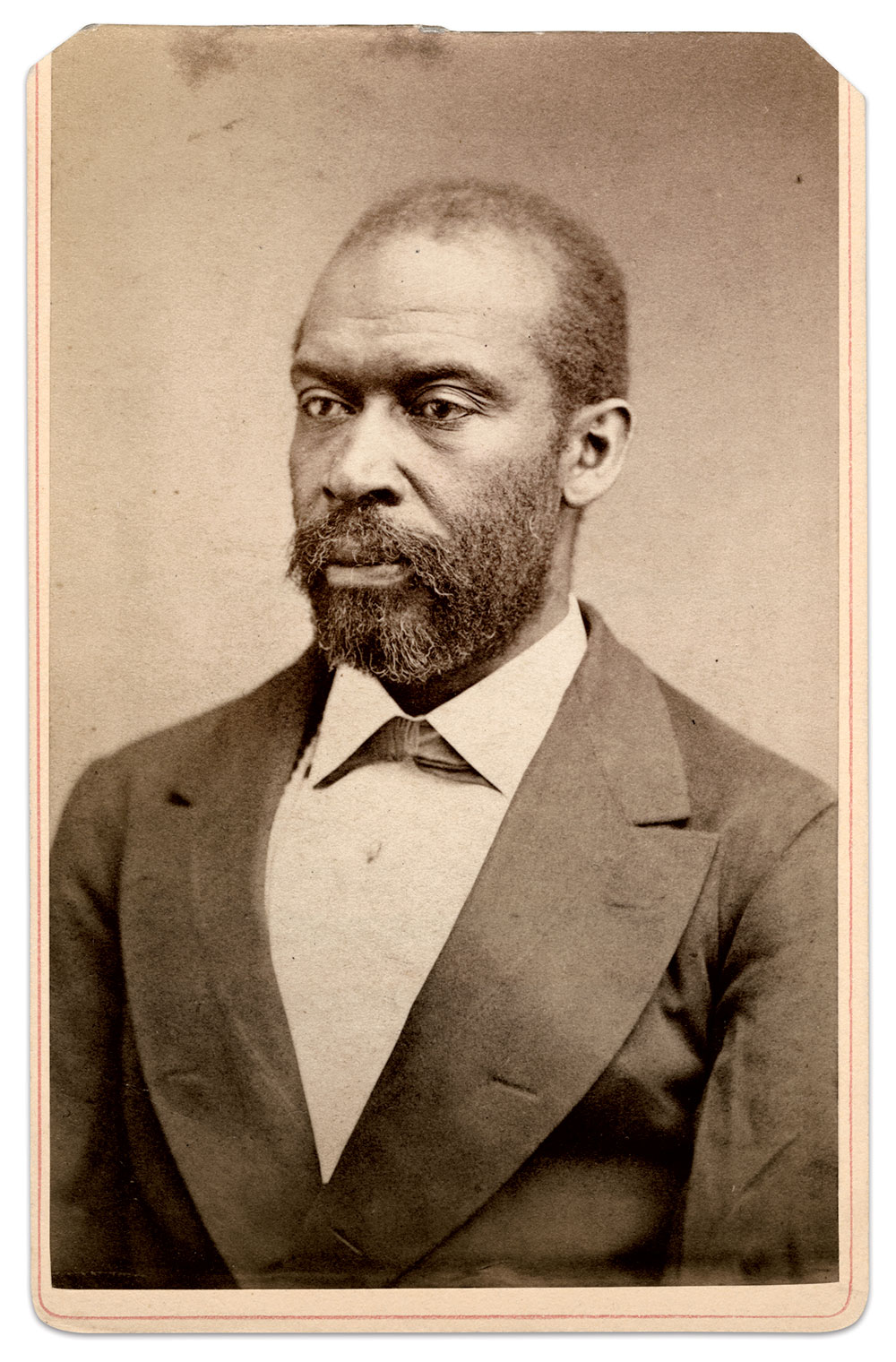
Known as the Grand Reception, the event was championed by Harrisburg native Thomas Morris Chester. A captain in the Pennsylvania militia whose members became the 3rd and 8th U.S. Colored Infantry, Chester helped raise the 54th and 55th Massachusetts infantries and served as a war correspondent for the Philadelphia Press. He also joined the Garnet Equal Rights League soon after its formation in Harrisburg in August-September 1865. Named for prominent abolitionist Henry Highland Garnet, the civil rights organization hosted the Grand Reception—its first major event. Morris chaired the organizing committee and served as Grand Marshal.

This essay addresses two related questions. What factors contributed to the timing of the Grand Reception? What events led to Harrisburg being selected as the host city?
It also explores two complementary themes: The absence of Black soldiers from the Grand Review, and placing the Grand Reception within the larger contexts of remembering and memorializing the sacrifices made by Black soldiers and sailors during the war, and the emerging civil, political and social rights immediately following the end of the conflict.
Why Harrisburg?
South-central Pennsylvania became the crucible of Lee’s second invasion of the North, culminating in the Battle of Gettysburg, July 1-3, 1863. In addition to gathering much needed supplies, the Confederate army rounded up an undisclosed number of free Black men, women, and children, and sent them south into enslavement spurring reversal of Pennsylvania Gov. Andrew Curtin’s rejection of Black volunteers to one of acceptance of their enlistments in the U.S. Army. Harrisburg thus became the center for honoring Black military service in November 1865. Gov. Andrew Curtin endorsed the host city with its extensive railroad connections, easing travel for the gathering of veterans.
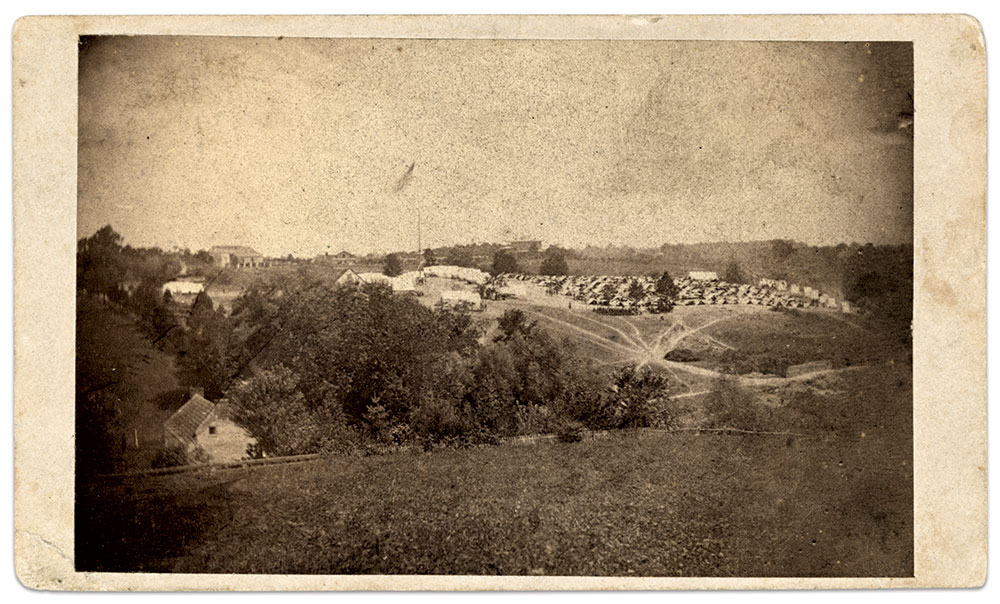
Camp William Penn, north of Philadelphia, also influenced the decision. Distinguished for training 11 United States Colored Troops (USCT) regiments between 1863 and 1865, seven participated in the Reception. The timing of the event was due in large part to USCT terms of enlistment. Nine of the 13 attending regiments mustered out from October through early November 1865.
The Grand Reception’s Overarching Theme
Allyship among Blacks and their white supporters in the abolitionist struggle permeated orations and readings of letters by dignitaries unable to attend.
Senator Cameron’s address focused not only on the ratification of the 13th Amendment, which was passed by the House of Representatives on January 31, 1865, but also called for Negro suffrage and equality before the law, including the right to serve on juries and provide witness testimony. “Like all other men, you have your destinies in your own hands, and if you continue to conduct yourselves hereafter as you have done in this struggle, you will have all the rights you ask for, all the rights that belong to human beings.”
A letter read aloud from Maj. Gen. Meade supported the event. “I am glad that the colored soldiers are to be thus welcomed.”
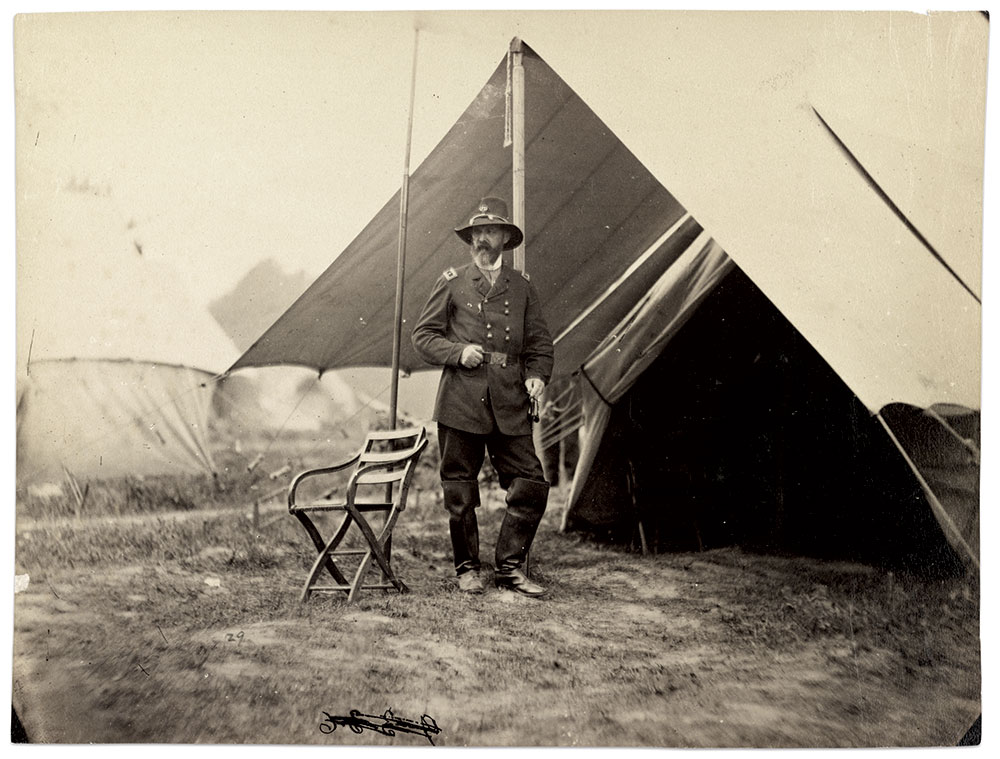
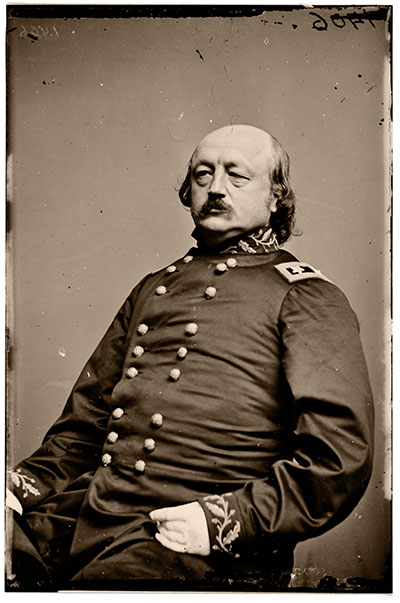
Another letter, from Maj. Gen. Benjamin F. Butler, who had most recently commanded colored troops attached to the Army of the James, noted, “I have witnessed their patience and discipline in the camp, and their bravery and good conduct on the battle-field, and, above all, their devotion and unswerving loyalty to the flag and the Government.”
Chester, in his role as the reception’s chief marshal, welcomed William Howard Day of New York. A gifted orator and Doctor of Divinity, Day had presented a lecture in Harrisburg the previous month in support of the Garnet League’s fund-raising efforts and plans for the November review. Day emphasized the valor of African-American soldiers in battle. Inasmuch as they had fought and given their lives “preserving the Government,” Day asked, had they therefore not earned equal rights under the law, in addition to political equality?
Perhaps most important to the soldiers being honored were a series of resolutions prepared and read by John P. Smith, a Black Bostonian, on behalf of Pennsylvania’s colored citizens. Imploring that Black citizens once again be granted the elective franchise, reversing an 1838 Pennsylvania constitutional restriction that limited suffrage to whites, Smith rejected distinctions based on race, which, he argued, had no place in a country led by a republican government. Moreover, Smith asserted that the right of full citizenship was guaranteed not only by virtue of birth but also by military service. From this time forward, Smith maintained, Black citizens would never accept abridgement of their civil, political, and social rights. Clearly, such activism presaged passage of the future 14th and 15th Reconstruction constitutional amendments to protect these freedoms.
Views of Two Current Historians
The absence of Black troops from the Grand Review in Washington, D.C., has prompted differing interpretations from Civil War historians Gary Gallagher and Hilary N. Green. Gallagher emphasized the military circumstances and planning decisions that shaped participation; Green stressed the importance of race and the responses of Black communities. Together, their perspectives illuminate the debate over the Washington review and the significance of the Harrisburg gathering that followed.
While affirming African Americans’ manifold contributions to federal service, Gallagher contended that 19th-century “Americans who regarded the Grand Review in (exemplary) terms could not have imagined that future generations would take a far different view”—specifically, that it was “too white, racist, exclusionary and oppressive.” In a recorded presentation to the Pasadena Civil War Roundtable, he explored the “conflicting ways the review has been interpreted by historians,” particularly the absence of Black soldiers.
Yet resentment over their absence surfaced publicly and, in the press soon after the review. In a June 1865 speech in Lowell, Mass., a dismayed Maj. Gen. Butler asked, “Is there no reward to be given to him? Shall we forget him?” Such outspoken advocacy helped lay the groundwork for the Harrisburg review.
Gallagher acknowledged that planners could have scheduled the Washington review to include USCT, but emphasized that federal forces remained on active duty across the nation in late May 1865. The 25th Corps, commanded by Maj. Gen. Godfrey Weitzel and composed of Black troops, faced continuing operations in the South and deployment to Texas to counter the French presence in Mexico.
The service records of the regiments represented at Harrisburg illustrate these geographic and logistical obstacles. Six of the 13 mustered out in Texas: the 8th, 22nd, 41st, 43rd, 45th and 127th USCT. The others mustered out in Florida (3rd USCT), Louisiana (11th U.S. Colored Heavy Artillery), North Carolina (6th USCT), South Carolina (32nd USCT and 54th and 55th Massachusetts infantries), and Virginia (24th USCT). Their muster-out dates ranged from Aug. 20 to Nov. 10, 1865, with six occurring in October. These continuing service commitments complicated their participation in the May review.
Gallagher also cited hurried preparations and inadequate communication among leading generals as possible reasons for the absence of USCT. Still, the review was publicly anticipated by May 6, when the New York Times reported that “a grand military review will take place as soon as the armies under Sherman get here.”
Although planners “opted to stage the event with the republic’s greatest and most famous armies,” Gallagher noted that Black troops received prominent recognition elsewhere.
Although planners “opted to stage the event with the republic’s greatest and most famous armies,” Gallagher noted that Black troops received prominent recognition elsewhere. USCT were among the vanguard entering Richmond after its fall and headed President Abraham Lincoln’s funeral procession in Washington.
Such honors, however, did not ensure recognition of emancipation in coverage of the Grand Review. Despite devoting “many pages of prose and engravings” to the event, neither Harper’s Weekly nor Frank Leslie’s Illustrated Newspaper mentioned “emancipation or the destruction of slavery” among the war’s outcomes. Nor did either publication “comment on the absence of USCT in the parade.”
The New York Times denied the “deliberate exclusion” of Black troops and instead praised their continued service in the Southwest. Might those soldiers have preferred participation in the review and furloughs home to descriptions of their “bravery, good discipline and devotion to country”?
Noting that other Army corps and the Navy were also absent, Gallagher challenged conclusions in recent studies that, in his view, reduced the explanation for Black troops’ absence to race. Yet, a roster of missing participants cannot fully account for the significance of the omission. The issue was qualitative as well as quantitative: the absence of Black soldiers carried a particular meaning, one directly connected to the Harrisburg review.
Green argued that “race and the exclusion of African American soldiers cannot be divorced from the event.”
Green addressed that meaning in her 2025 book, Unforgettable Sacrifice: How Black Communities Remembered the Civil War. While acknowledging that the Washington review requires a multifaceted interpretation, she argued that “race and the exclusion of African American soldiers cannot be divorced from the event.”
Newspaper coverage of the Harrisburg review—from its planning and fundraising to the reception and subsequent commentary—reveals those racial divisions. Accounts published between May and November 1865 largely split along political lines. Democratic-leaning newspapers employed racist language to criticize everything from accommodations for guests to the professionalism of Black soldiers, even questioning emancipation’s revolutionary significance. Republican-leaning, pro-abolitionist newspapers, by contrast, celebrated an “overwhelmingly successful” event.
Green further contended that the Black press, including The Christian Recorder, helped make the Harrisburg review a success and sustained community activism afterward, “drawing widespread support of Black Pennsylvanians and their white allies who countered ongoing racism and disrespect shown to black soldiers at the May 1865 Grand Review.”
Closing Thoughts
Period newspapers covered the Harrisburg review extensively, yet no photographs or other contemporary art documenting the event have come to light. Their absence diminishes neither the sacrifices of Black soldiers and sailors nor the significance of the gathering. Discovering such images, however, would offer an invaluable resource for remembrance and commemoration.
When Black troops marched through Harrisburg in November 1865, they proudly displayed their service to the Union and sacrifices for emancipation. Held months after the Grand Review, the event offered a distinct occasion for testimony and remembrance. Yet the constitutional promises that would shape the lives of these soldiers and their descendants had yet to be fulfilled.
South Carolina ratified the 13th Amendment on November 13, the day before the Harrisburg review. Alabama followed on December 2, North Carolina on December 4, and Georgia on December 6, providing the final approval needed to reach the three-fourths threshold for ratification.
Note: Grand Reception Participants
Veterans of the 3rd, 6th, 8th, 22nd, 24th, 32nd, 41st, 43rd, 45th and 127th USCT, 11th US Colored Heavy Artillery, and 54th and 55th Massachusetts infantries.
References: “The final march: Grand review of the armies,” nps.gov; Miller, Photographic History of the Civil War, Index Volume 10; Davis, The Image of War: 1861-1865, Index Volume 6; North Branch Democrat, Tunkhannock, Pa., May 31, 1865; Philadelphia Inquirer, Nov. 15, 1865; The Liberator, Boston, Mass., Nov. 24, 1865; Green, Unforgettable Sacrifice: How Black Communities Remembered the Civil War; Historical Marker Database; “Henry Highland Garnet,” Wikipedia; “Thomas Morris Chester,” Wikipedia; “Harrisburg Grand Review, Nov. 14, 1865,” Housedivided.dickinson.edu; “Who paid Confederates in York? Who didn’t?” Witnessing york.com; D. Dillon, “Black Troops in the U.S. Military,” MI, May-June 1981; Zollar, “6th US Colored infantry, they laid down their lives for the flag, ibid, Summer 2015; Regimental Index; “Harrisburg in the American Civil War,” Wikipedia; Garnet League, “Ceremonies at the Reception of Welcome to the Colored Soldiers of Pennsylvania in the City of Harrisburg” Nov. 1865 (cited by Green); The Christian Recorder, Oct. 21, 1865, Nov. 11 and 18, 1865; Gallagher, The Union War, “The Grand Review: Its Meaning and Memory.” Sept. 26, 2023; New Orleans Tribune, June 7, 1865 (cited by Green); Cillela, “The Graphic War,” Civil War News February 2020; Harrisburg Patriot & Union, Nov. 14, 1865; Harrisburg Daily Telegraph, Nov. 14, 1865; Green, personal communication, May 2026.
Jack Hurov serves as a copy editor for MI.
SPREAD THE WORD: We encourage you to share this story on social media and elsewhere to educate and raise awareness. If you wish to use any image on this page for another purpose, please request permission.