
By Evan Phifer
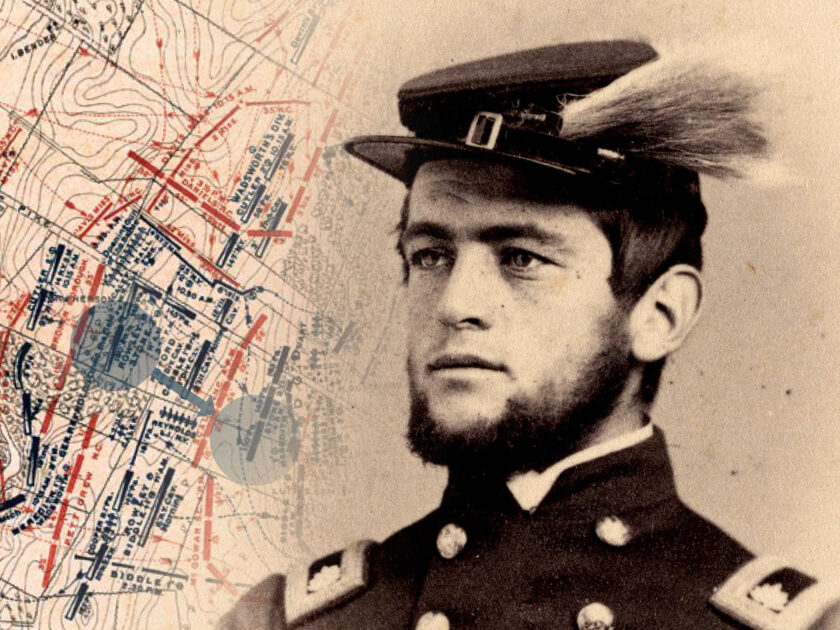
Henry Shippen Huidekoper understood the importance of historical memory. The former lieutenant colonel of the 150th Pennsylvania Infantry wrote in 1896, “Everyone who lived during war times owes to posterity and to history a narrative of what he saw or heard in that eventful period.” Huidekoper spoke and wrote about his wartime experiences and carried lasting reminders of his Gettysburg experience, including the Medal of Honor he received in 1905.
Growing up in Meadville, Pa., Huidekoper’s early experiences shaped his character—and the soldier he’d become. His father hosted political dignitaries in his hometown, including President Zachary Taylor. His grandfather gave silver to escaped slaves making their way north to Canada and freedom, influencing his strong anti-slavery sentiments. As a student at Harvard from 1858-1862, he befriended Robert Todd Lincoln.
Then the war began. Huidekoper intended to join the artillery, but found his desired company full. Following his father’s advice that his services might be more useful later, he returned to his studies while learning military tactics and drill. He left college to care for his terminally ill father. After he passed, Huidekoper enlisted, carrying with him his father’s blessing.
Off to War
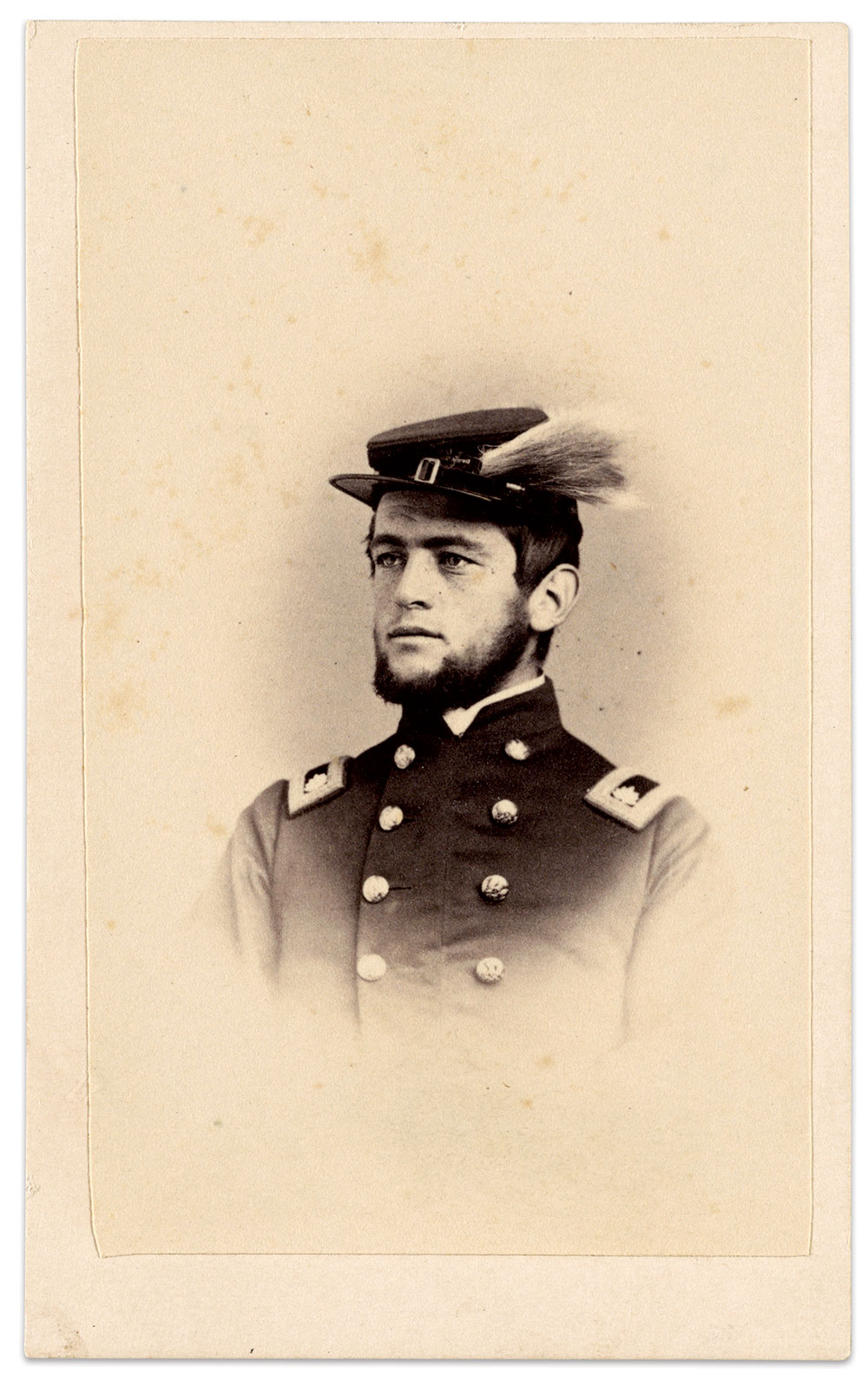
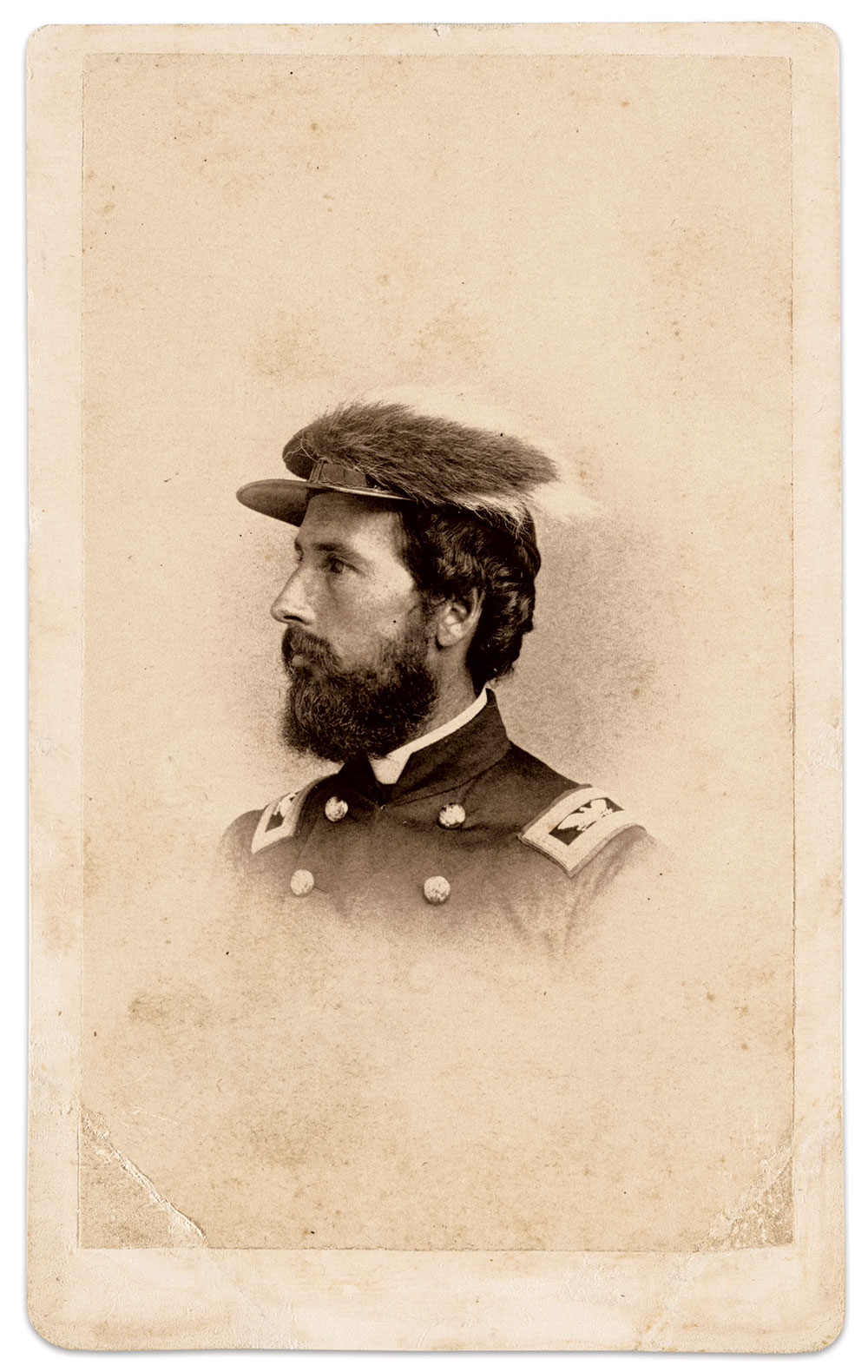
In August 1862, Huidekoper joined the 150th Pennsylvania Infantry. The new regiment capitalized on the fame of the 13th Pennsylvania Reserves, the original Bucktails, whose distinctive deer-tail headgear alluded to their marksmanship. Major Roy Stone, an officer of the original regiment, returned to Pennsylvania to raise an entire brigade of Bucktails. Huidekoper helped recruit several companies for the 150th and gained promotion to lieutenant colonel. He reported to Col. Langhorne W. Wister, who, like Stone, had previously served with the 13th.
Upon arriving in Washington, D.C., two companies received orders to report to the Soldiers’ Home, where President Abraham Lincoln and his family resided during the warmer months. One company, K, ultimately remained as Lincoln’s guard throughout the war. Huidekoper frequently encountered the president, who “always had a pleasant word of greeting” for him.
In February 1863, the regiment traveled to Virginia, joining the 143rd and 149th infantries in a brigade commanded by now Col. Stone and part of the 3rd Division of the Army of the Potomac’s 1st Corps.
The timing of its assignment coincided with low morale from the defeat at Fredericksburg and increasing anti-war sentiment in the North. The 150th publicly declared its dedication to the Union. One section that certainly appealed to the anti-slavery Huidekoper read, “Resolved, That as we believe that ‘fighting for Southern rights’ means nothing more than warring for the extension of slavery, which we regard alike as a curse to the land and a great moral wrong, we hail with joy the President’s proclamation doing away with that institution in every State in which rebellion exists, and hope soon to see it forever blotted from our soil.”
Lightly engaged at Chancellorsville, the regiment spent much of the spring drilling and picketing. Near White Oak Church, Huidekoper described the serene side of camp life: “The bands around us and across the river have been playing sweetly for a few days. It is delightful as the sun goes down to sit in one’s tent and enjoy the music, which seems to float from camp to camp. Camp life will have a thousand recollections which will outlive all memory of the hardship.” In early June, Gen. Robert E. Lee’s army headed north. On June 30, as the 150th crossed from Maryland into Pennsylvania, the men gave three cheers for their “Old Keystone State” and resolved to defend their home soil.
They were soon tested.
Gettysburg
On the morning of July 1, the 150th broke camp north of Emmitsburg, Md., about six miles south of Gettysburg. Approaching the sounds of battle, the 150th encountered civilians driving cattle and horses from the town.
They arrived west of Gettysburg by late morning. Amid artillery fire, the regiment threw off their knapsacks and advanced toward McPherson’s Ridge. Suddenly, a voice rang out that the order to load had never been given. Amid nervous laughter and jokes, Col. Wister ordered the men to load, and they continued forward. The regimental drummer later recalled with pride the 150th advancing “with banners gayly flying, and cheers that rend the air—a sight, once seen, never to be forgotten.”
The 150th took position on McPherson’s Ridge, between the Iron Brigade in McPherson’s Woods and Cutler’s brigade to the right. Maj. Gen. Abner Doubleday later called this the “key-point of the first day’s battle, for it overlooked the field, and its possession by the enemy would cut our force in two.”
As Maj. Gen. Robert E. Rodes’ batteries on Oak Hill shelled the brigade, Col. Stone repositioned the 149th and 143rd Pennsylvania to avoid enfilade fire. While riding toward the Railroad Cut to observe troop placements, Stone suffered an incapacitating wound, elevating Wister to brigade command.
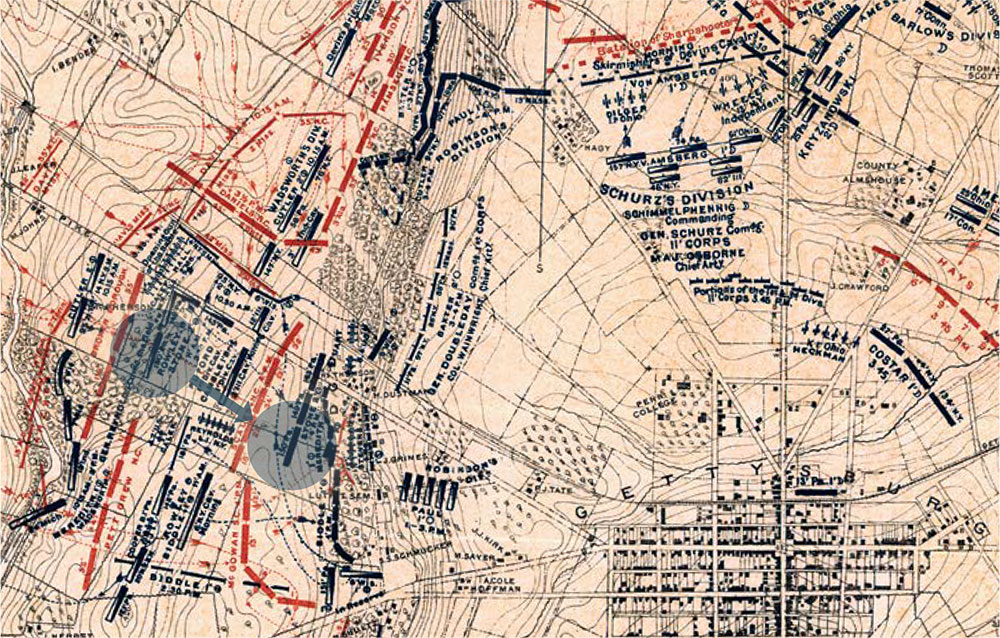
Huidekoper now took command of the 150th at a perilous moment. Brig. Gen. Junius Daniel’s North Carolina Brigade threatened from the north. To meet the attack, Huidekoper commanded the right wing of the regiment and Maj. Thomas Chamberlin the left. Huidekoper led Companies A, F, and D to the Chambersburg Pike, where they fired two effective volleys, advanced, and, with the 149th, drove back the 32nd North Carolina Infantry. At some point in the action, Huidekoper suffered a leg wound but remained on the field.
After returning to his position and reforming the divided regiment, Huidekoper realized Chamberlin was missing and called for volunteers to find him. Six men ventured out and returned with the dangerously wounded major.
Huidekoper turned his attention to a new threat: Col. John M. Brockenbrough’s Virginians advancing toward the unprotected right flank. He formed his men and braced for the attack, but the Virginians pushed the Pennsylvanians back. Still on his feet, Huidekoper reformed the remnants of his command to protect an artillery battery wheeling into position.
Then came a second, severe wound, this time to his right arm. Ducking into the nearby McPherson Barn, a saddlebag cord was used to staunch the bleeding. Huidekoper returned once more to his regiment as the defense of McPherson’s Ridge began to unravel. Weakened by his wounds, he finally turned command over to Capt. Cornelius C. Widdis, instructed him to withdraw the regiment gradually, and left the field.
After a final stand on Seminary Ridge, the 150th rallied on Cemetery Hill. Of the 397 men engaged, the regiment suffered 264 casualties—66.5 percent. Over the next two days, the survivors helped defend Cemetery Ridge and, on July 2, assisted in the recovery of two guns.
Road to Recovery
Huidekoper’s story now diverged from that of his regiment. Leaving McPherson’s Barn, he walked into Gettysburg and sought treatment at the Catholic Church, now a temporary hospital for the division. Waiting in a pew, he unbuckled his belt, rested his shattered arm, and asked for whiskey to ease the pain. He later recalled that he “got and swallowed the largest drink I ever took in my life.”
When his turn came, Surg. Philip A. Quinan of the 150th administered chloroform. Huidekoper awoke to find his arm gone and joked that henceforth he would have to salute the surgeon with his left hand. The next day, with Confederates occupying Gettysburg, he watched Lt. Gen. Richard S. Ewell and his staff enter the church to make observations from its cupola.
“Huidekoper awoke to find his arm gone and joked that henceforth he would have to salute the surgeon with his left hand.”
Below, two local girls approached Huidekoper and asked what he needed. Having eaten nothing since the morning of July 1, he requested food. They were the children from the Myers family located just down the street, and they soon returned with wine and a cracker. They arranged for him to recuperate at their home, where the wounded Maj. Chamberlin also stayed. Huidekoper remained there, taken care of by Sallie Myers, the 21-year-old schoolteacher who nursed many men during these difficult days, until about July 9 before leaving for Baltimore.
During his recovery, Huidekoper visited Washington and reunited with Company K, still on duty as Lincoln’s guard. In an encounter with Lincoln, he joked that he had been “usurped” in rank by the president’s son Tad. Company K had outfitted the boy with a colonel’s uniform and a hat marked “150 P.V.” (Pennsylvania Volunteers).
That December, Huidekoper returned to the 150th. Lieutenant Col. Chamberlin later recalled, “His empty sleeve, pinned across his breast, recalled most vividly the unequal struggle of July 1, in which he had acquitted himself with the skill of an old campaigner, ably seconding the plans of Colonel Wister, and by his personal undertakings, adding lustre to the record of the regiment.”
Promoted to colonel in February 1864 following Wister’s retirement, Huidekoper could not muster in at the rank because of the regiment’s depleted strength. His amputation still unhealed, he resigned on March 5. Later that year, he married Emma Gertrude Evans in Germantown, Pa.
Epilogue
After the war, Huidekoper became a major general in the Pennsylvania National Guard, served as Philadelphia’s postmaster, worked in the emerging telephone industry, and remained active in veterans’ affairs. He helped shape the public memory of Gettysburg, producing a relief map of the battlefield, assisting with plans for the Pennsylvania Monument, and proposing a reunion for the battle’s 50th anniversary.
Gettysburg remained with him in another way. He experienced phantom sensations and pain from his missing arm and trained himself not to instinctively use it. Yet in his dreams, he always had two hands.
The Medal of Honor he received included a citation: “While engaged in repelling an attack of the enemy, received a severe wound of the right arm, but instead of retiring remained at the front in command of the regiment.”
Huidekoper died November 9, 1918, and was buried in Greendale Cemetery in Meadville.
Evan Phifer has worked at numerous cultural institutions including the Foundation for the National Archives, White House Historical Association, and the American Revolution Institute of the Society of the Cincinnati. He holds a BA in History from Bucknell University and is a graduate of American University’s Public History program.
SPREAD THE WORD: We encourage you to share this story on social media and elsewhere to educate and raise awareness. If you wish to use any image on this page for another purpose, please request permission.
LEARN MORE about Military Images, America’s only magazine dedicated to showcasing, interpreting and preserving Civil War portrait photography.
VISIT OUR STORE to subscribe, renew a subscription, and more.