
By Ron Field
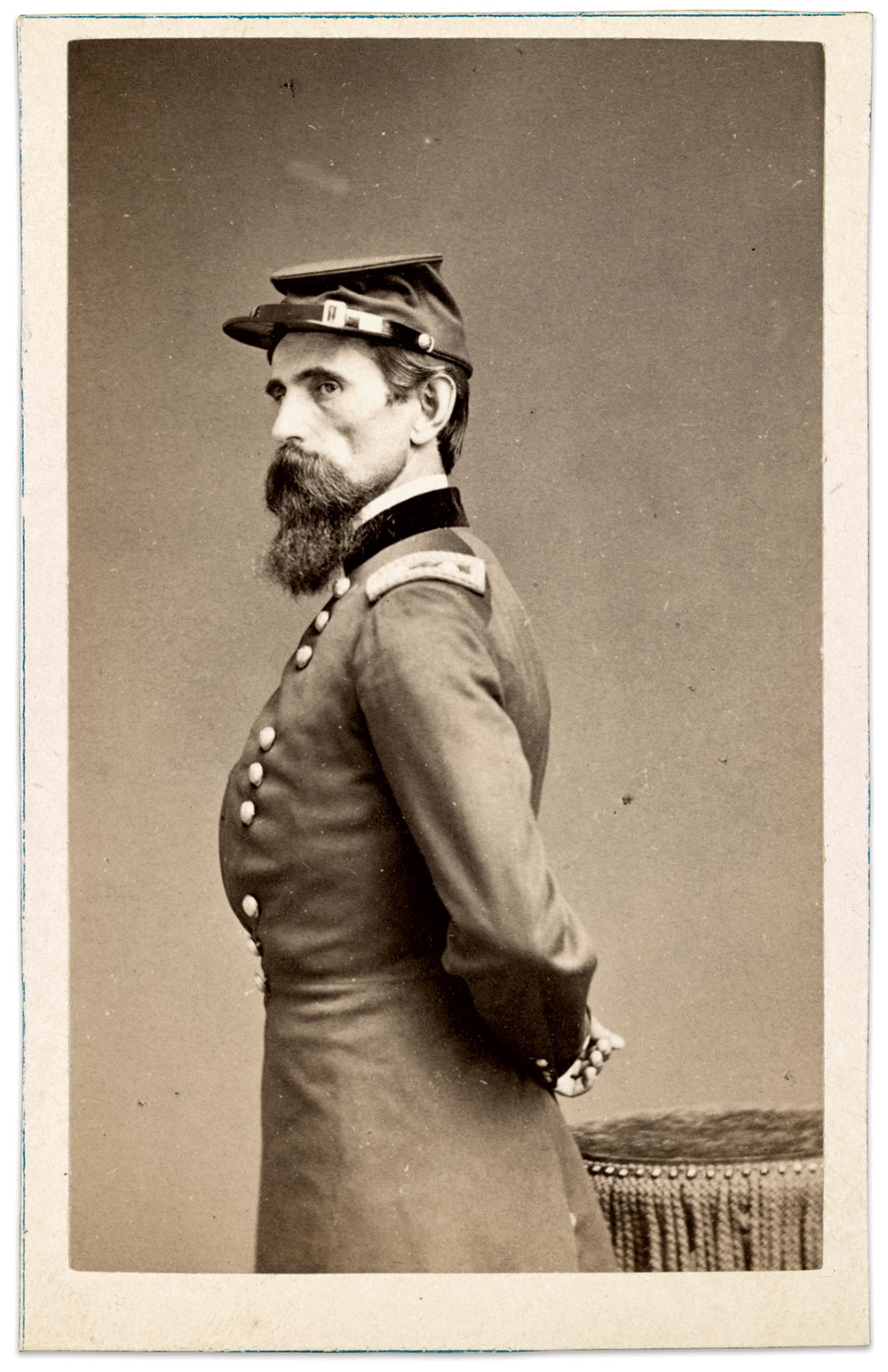
Organized at Indianapolis by Col. Lewis Wallace on April 21, 1861, the 11th Indiana included as its nucleus the Montgomery Guards and Independent Zouaves, two existing uniformed militia companies. Wallace originally formed the Montgomery Guards at Crawfordsville, Ind., in 1856, and adopted a Zouave uniform in 1860, the color of which was described as “steel gray, with narrow binding of red on their jackets and the top of a small cap. The shirt was dark blue flannel.”
Clearly basing the uniform of his regiment on that of the Montgomery Guards, Wallace later stated in his 1906 autobiography, “There was nothing of the flashy, Algerian colors in the uniform of the Eleventh Indiana … Our outfit was of the tamest gray twilled goods, not unlike home-made jeans – a visor cap, French pattern, its top of red cloth not larger than the palm of one’s hand; blue flannel shirt with open neck; a jacket Greekish in form, edged with narrow binding, the red scarcely noticeable; breeches baggy, but not petticoated; button gaiters connecting below the knees … The effect was to magnify the men, though in line two thousand yards off they looked like a smoky ribbon long-drawn out.”
During the course of the regiment’s two enlistments, three months and three years, it had three different uniform patterns.
Three-Months’ Enlistment, First Uniform Pattern
As State Quartermaster General John H. Vajen would not supply Zouave uniforms, the jackets, trousers, and shirts acquired for them were privately purchased by Wallace from Eli A. Hall, a merchant tailor and clothier at 2 Odd Fellows Hall, Indianapolis, and were composed of 606 sets of jackets and trousers at $10 a suit. Later, 400 extra suits were made by J.C. Geissendorff & Co., of the same city, at about $7. Six hundred fatigue caps were ordered at one dollar each from Meyberg & Hellman, Manufacturers and Wholesale Dealers in Hats and Caps, at 124 Walnut Street, Cincinnati, Ohio. Two types of pull-over shirt with placket front appear to have been provided—one with a low neckline and no collar fastened by three small buttons, and the other with a collar, wide placket front, and large breast pocket.
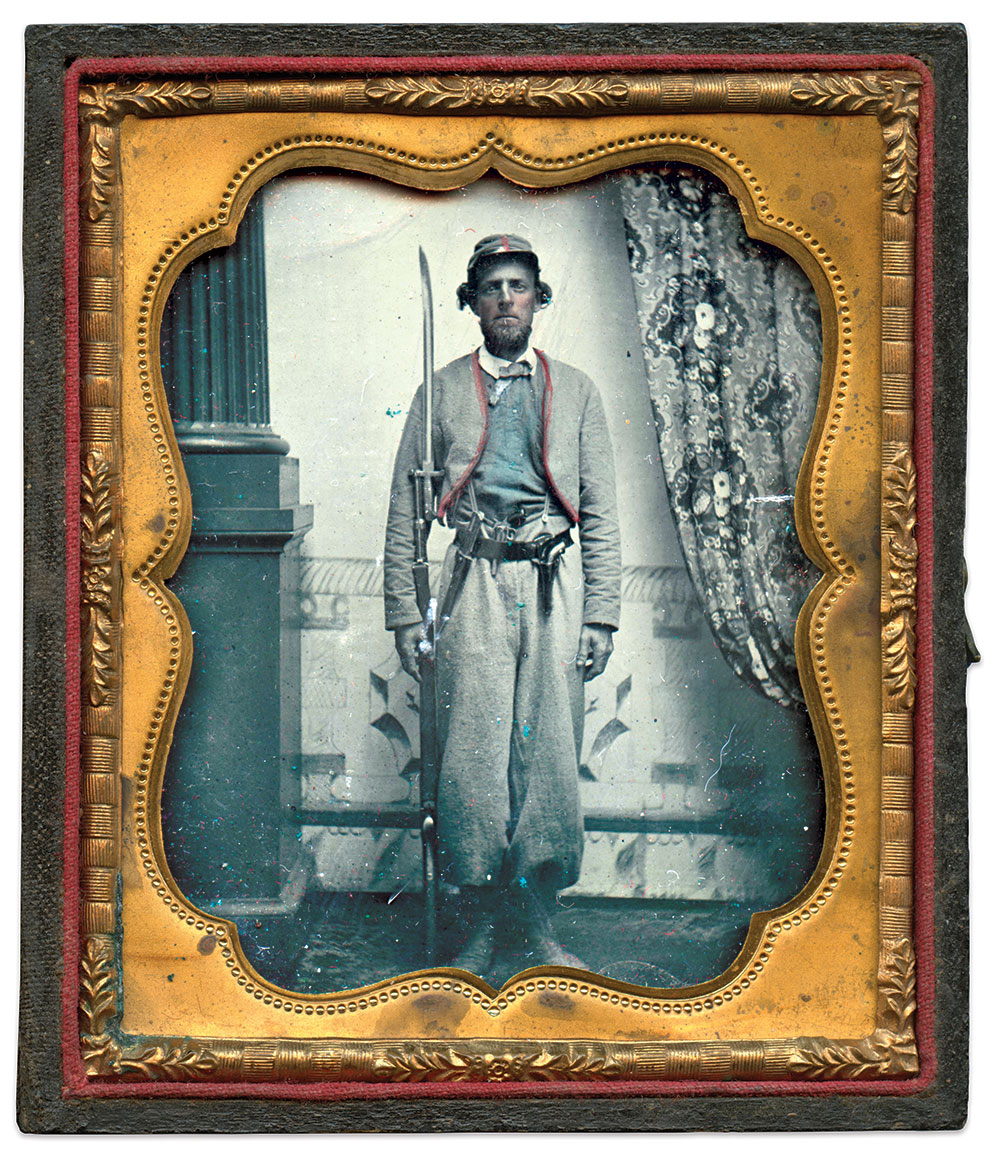
On May 8, Eli Hall delivered several wagon loads of clothing to the Zouave barracks in Indianapolis, on which occasion the Daily Journal commented, “His operation looked like the movements of a clothing store.” The same publication advised, “Five companies of the Zouave regiment have been uniformed. The others will be similarly clothed in a few days. The suit consists of a gray jacket covering a red [actually blue] shirt, loose gray pants, and a gray cap with a scarlet top. It is a comfortable dress and well adapted for service.”
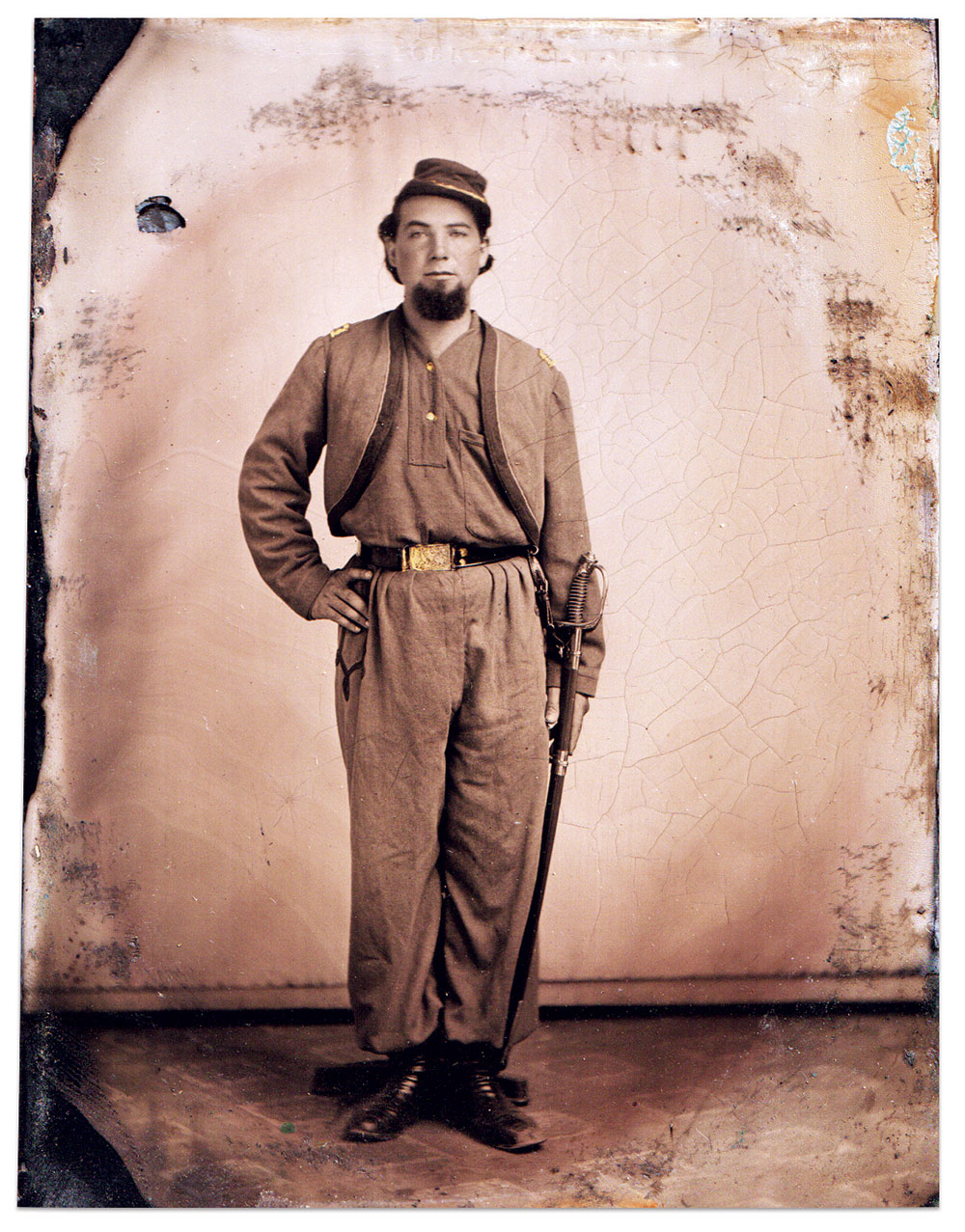
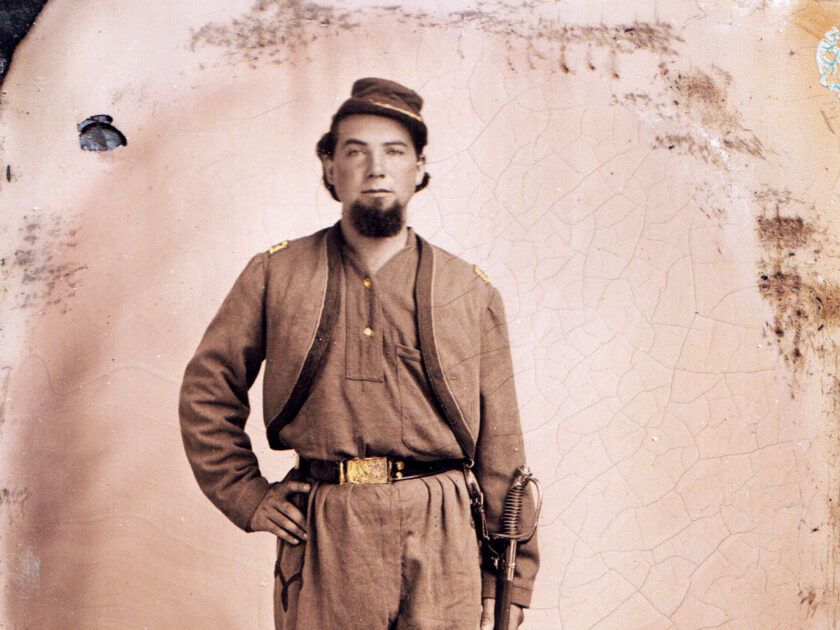
Officers of the regiment wore a similar uniform to that of the enlisted men, except that the red binding on their jackets was slightly wider and edged with light blue. Their trousers had small modified “Austrian” knots on the outside seam of each leg and shoulder straps on jackets had red fields rather than infantry blue. Their caps were red overall with gold trim worn by some. When the 11th was re-organized for three years’ service, they generally wore the regulation blue dress. Musicians wore fezzes with gray band and red top and tassel, plus red trousers.
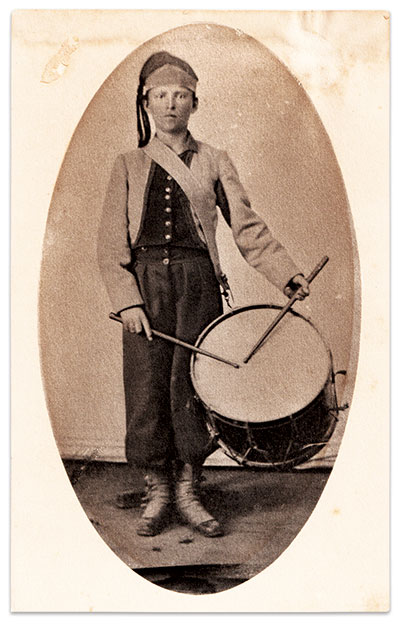
Five companies of the Zouaves received the Model 1855 rifle with saber bayonet on May 6, 1861. The remaining company had Model 1855 rifle muskets with the socket or triangular bayonet. As noted by Wallace, writing from Cumberland, Md., on June 15, 1861, “With the exception of one company, I am armed with sword bayonet and minie musket.”
Describing the departure of the 11th Indiana from Indianapolis for Camp Morris at Evansville on May 9, 1861, the Daily Sentinel stated that the regiment was accompanied by a “daughter of the regiment” who rode in front of the column dressed in “a neat Zouave jacket and a jaunty cap.” When the regiment arrived at Evansville, the Daily Journal reported, “The companies passed down Main street in platoons of sixteen men, and the regular swaying motion of the vast mass, surrounded by glittering bayonets, when viewed from a short distance, was splendid.”
Wallace’s Zouaves initially spent time doing picket duty along the Ohio River near Evansville, observing pro-Confederate forces in nearby Kentucky. Ordered to Maryland in early June, they passed through Cincinnati, on which occasion the Daily Commercial reported that it was dressed in “grey with red trimmings, jackets and pantaloons cut in the zouave style, grey undershirts, caps have the red center piece … officers’ caps red. Each man carried a knapsack enclosing an army blanket, a haversack … a canteen and tin cup. Many of the officers were armed with Colt’s revolvers, and we noticed a good many of the men similarly provided.” The Zouaves participated in the expedition to Romney in July, and at the end of their three-month service returned to Indianapolis, having lost but one enlisted man to disease.
Three Years’ Enlistment, Second and Third Patterns
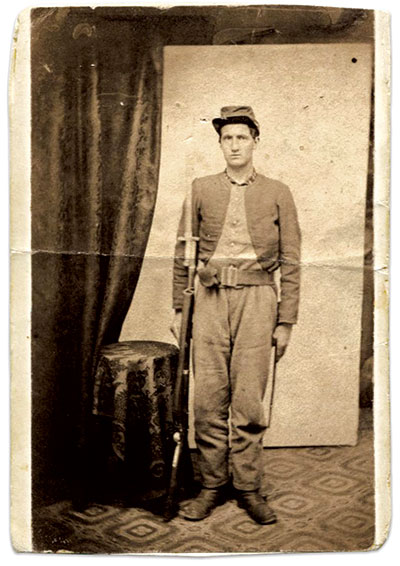
The original gray uniform proved so popular that it was retained when the regiment reorganized for three years’ service on August 2, 1861. While this arrangement suited the men, the War Department objected. On September 23, 1861, Thomas A. Scott, acting secretary of war, wrote Gov. Oliver P. Morton, “The Department respectfully requests that no troops hereafter furnished by your State for the service of the Government will be uniformed in gray, that being the color generally worn by the enemy. The blue uniform adopted for the Army of the United States is recommended as readily distinguishable from that of the enemy.”
On October 20, 1861, following his promotion to brigadier general, Lew Wallace also wrote Morton, “The 11th Regiment begins to want for clothing …it is very desirable to keep up their identity as ‘Zouaves.’ The Zouave clothing is not furnished at any of the store depots. It costs the men no more than ordinary uniforms and, if it did, they would be perfectly willing to pay the difference. What I would like for your Excellency to do is have made a supply of them, Zouave style, dark blue jacket, and sky-blue Zouave pants with shirts.”
The letters resulted in a new Zouave uniform for the 11th, issued sometime between December 16 and 25, 1861.
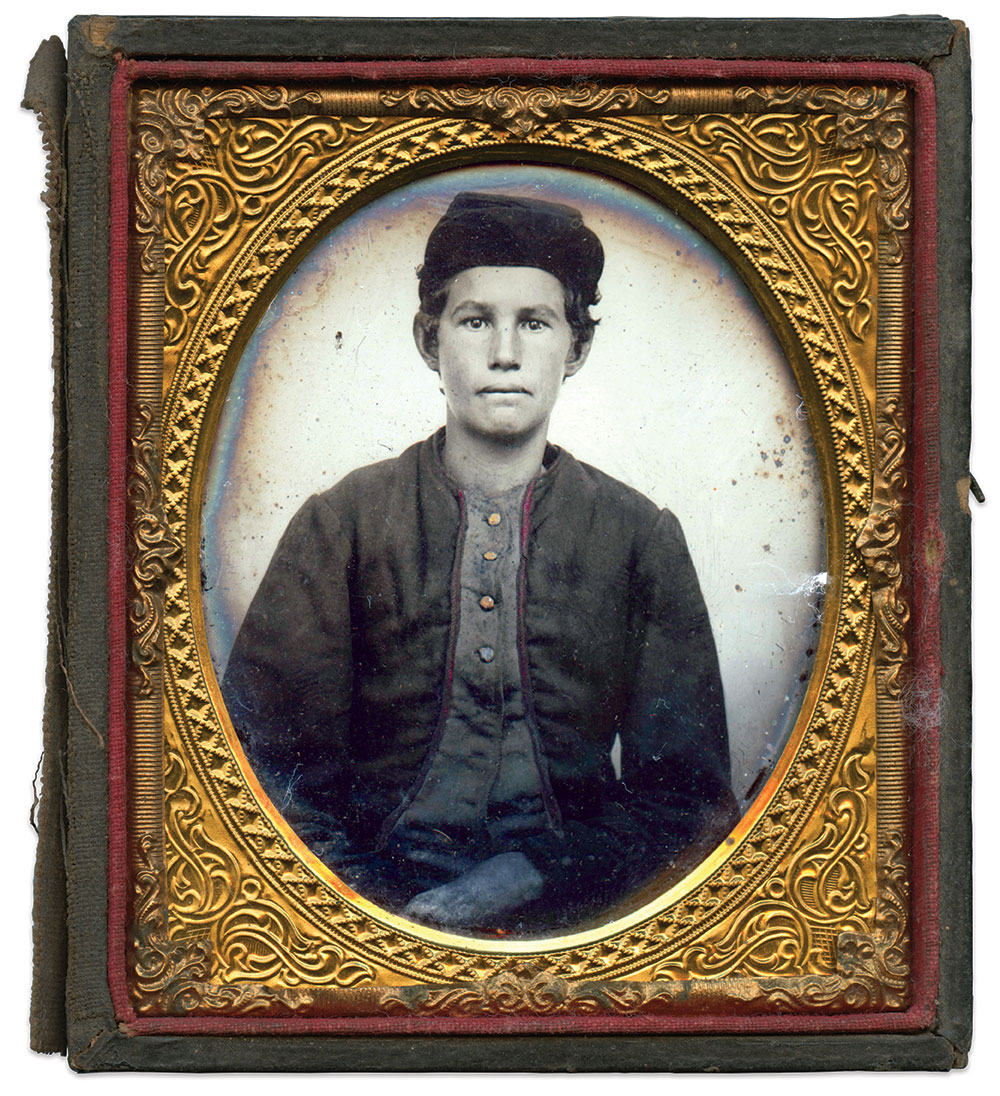
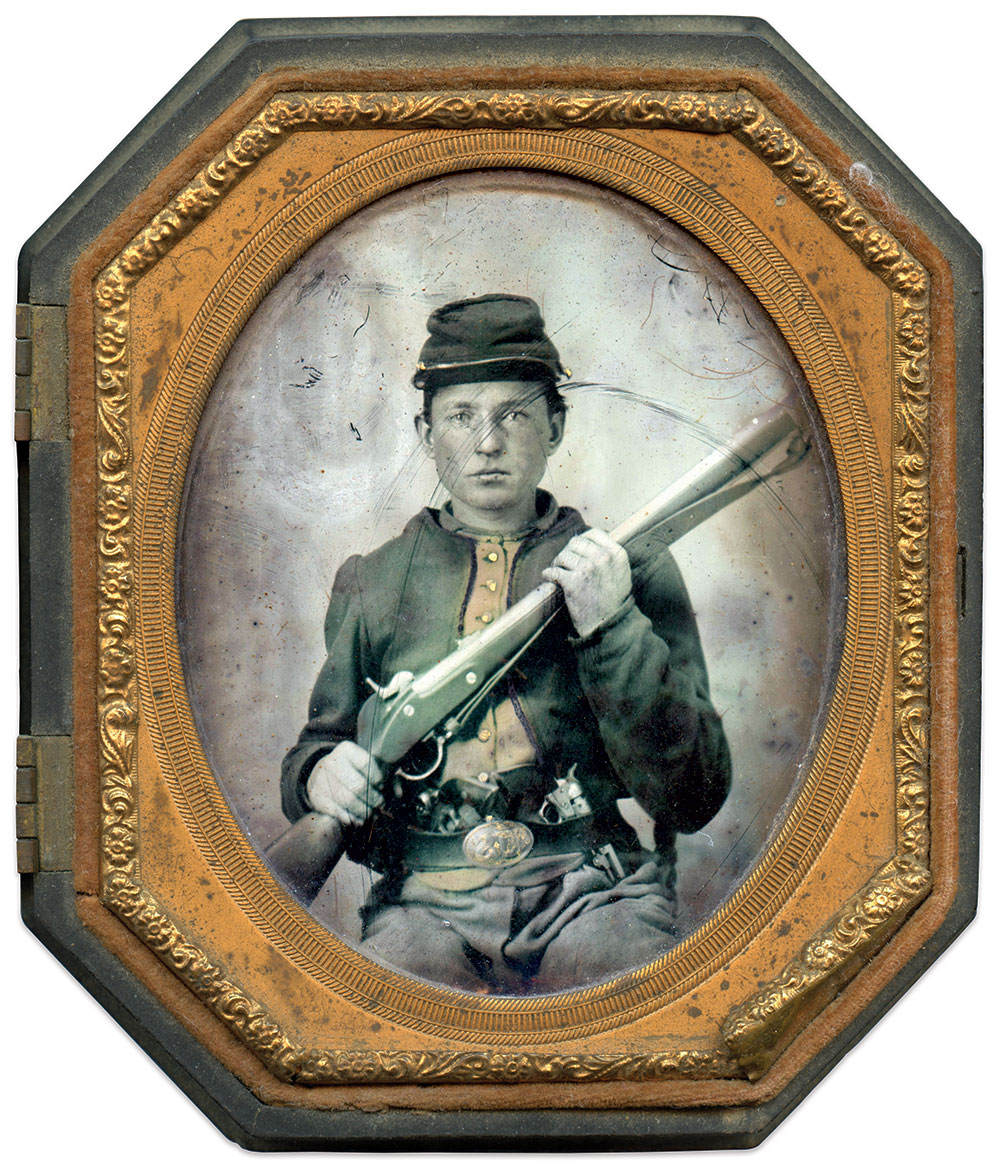
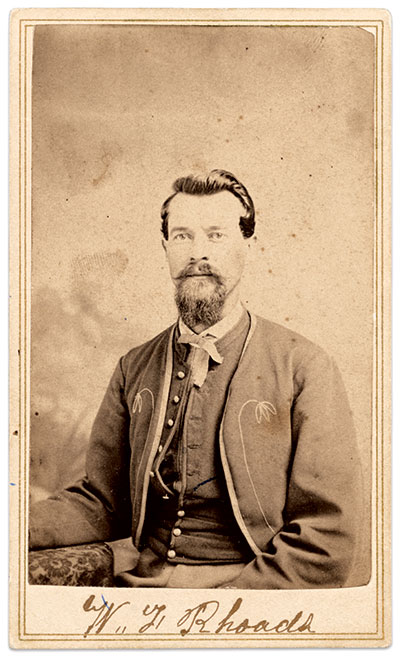
On Christmas Day, Sylvester Bishop, a corporal in Company F, wrote his mother, “We have drawn our new uniforms…The Zouave touch to the pants is dropped. They are blue and made according to Army Regulations. Our coats are black with a blue front that buttons up close, which makes it look like a vest.”
Based on photographic evidence, this uniform consisted of a dark blue jacket with an integral, light blue, nine-button false vest, and regulation sky blue infantry trousers. Bishop also stated that caps and shirts were not furnished at that time, so the men continued to wear their original red-trimmed grey caps until they were worn out and gradually replaced by dark blue ones. He does mention that shirts of the same dark blue color, cut, and material as originally issued to the regiment were acquired, adding that other shirts were procured from home by some men, and that leggings were again occasionally issued.
According to an ordnance report from the fourth quarter of 1862, the three-year regiment was by then armed with a mixture of Model 1855 rifles and rifle muskets, plus Pattern 1856 Enfield rifle muskets.
This uniform, recognized as the second-pattern, was subsequently issued to other regiments in the 13th Corps of the Army of Tennessee in 1862. This prompted Corp. Bishop to comment on August 26, 1863, “I hardly know our regiment any more by their dress. Nearly every regiment in our division have got our suits, besides regiments in other divisions.”
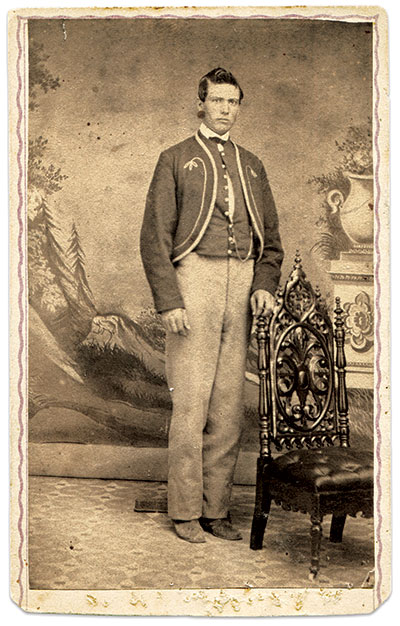
Possibly as a reaction to this, the Zouaves adopted a third-pattern jacket sometime in the autumn of 1863. Separate from the vest, it had a light blue, three-petal, drooping flower tombeau either side of the breast, which ran round the bottom edge of the jacket to form a single loop at the back, and was edged with light blue trim. The vest had a nine or ten small-button front, and was dark blue, although some men were photographed wearing light blue versions. Images of members of the regiment produced in New Orleans, where they were stationed after the Vicksburg Campaign, show they wore third-pattern jackets. Others taken early in 1865 in Baltimore, where they were sent after the Shenandoah Campaign, show them still wearing that garb.
Wallace’s Zouaves served with distinction in both the eastern and western theaters of the war, distinguishing themselves at Fort Donelson and Champion’s Hill. When transferred East, they served under Sheridan in the Shenandoah Valley, and participated in the battles of Opequon, Fisher’s Hill, and Cedar Creek. The regiment was mustered out on July 26, 1865, having lost one officer and 114 enlisted men killed in action.
Special thanks to Phil Spaugy and Tim Prince for identifying weapons in the images.
References: Wallace, Lew Wallace: an Autobiography, Vol. 1; Lossing, Pictorial History of the Civil War in the United States of America, Vol. 1; Correspondence of Oliver P. Morton, Archives, Indiana State Library, Indianapolis, Ind.; Correspondence of Sylvester C. Bishop, DePauw University Library, Greencastle, Ind.; Terrill, Report of the Adjutant General of Indiana, Indianapolis, Ind., Vol. II; Miller, American Zouaves, 1859-1959: An Illustrated History: McAfee, Michael, “Uniforms in History: 11th Regiment – Indiana Zouaves,” Military Images (May-June 1996); Indiana State Sentinel; Evansville Daily Journal, Cincinnati Daily Commercial.
SPREAD THE WORD: We encourage you to share this story on social media and elsewhere to educate and raise awareness. If you wish to use any image on this page for another purpose, please request permission.
LEARN MORE about Military Images, America’s only magazine dedicated to showcasing, interpreting and preserving Civil War portrait photography.
VISIT OUR STORE to subscribe, renew a subscription, and more.