
By Melissa A. Winn
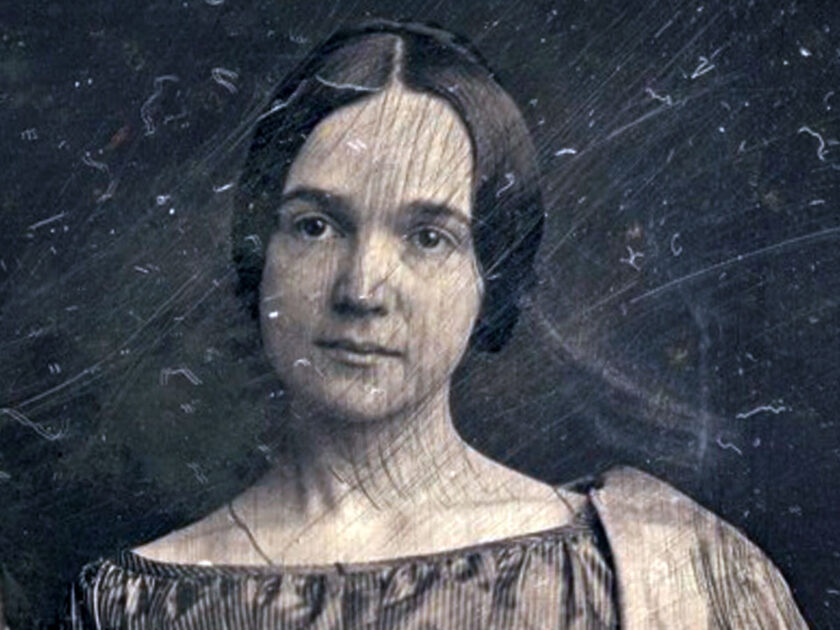
In his bestselling 2024 book The Demon of Unrest, Erik Larson places Mary Boykin Chesnut among the central figures in the drama surrounding the outbreak of the Civil War. Drawing extensively from her diary, Larson uses what he calls her “lacerating quips,” social commentary, and novelistic prose to illuminate a society on the brink of catastrophe. It’s not hard to see why Larson, a prolific writer (and one of my favorites, if I might interject some opinion here), is drawn to her as a source. At heart, Chesnut is a writer, too. Her diary is not a collection of untouched wartime entries. It’s far more ambitious: a consciously crafted work of literature.

On Feb. 18, 1861, Chesnut began keeping the journal that would become her legacy. During the 1880s, she substantially revised and expanded her writings, editing and re-editing the manuscript and transforming it into a literary account. She died in 1886 before seeing the work published. Based on her drafts and papers now held at the South Caroliniana Library in Columbia, S.C., historians don’t believe she was finished with her work, although she certainly intended it for publication someday. In a June 1883 letter to Varina Davis, she wrote, “How I wish you could read over my journal. I have been two years overlooking it—copying—leaving myself out. You must see it—before it goes to print—but that may not be just now. I mean the printing—for I must overhaul it again—and again.”
The diary was first published as A Diary from Dixie in 1905 by her friend Isabella Martin as a heavily edited and abridged edition, specifically omitting details Martin felt didn’t befit a Southern woman of society or the contemporary Confederate remembrance of events. A 1949 version by Ben Ames Williams further romanticizes Chesnut’s good Southern girl persona, also depending heavily on Chesnut’s last and consciously crafted draft.
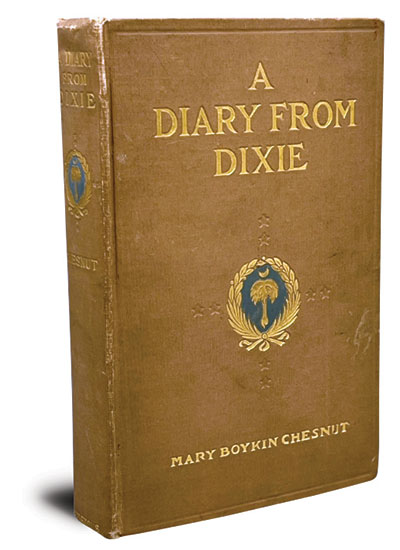 In 1981, C. Vann Woodward’s Mary Chesnut’s Civil War examined the diary using the full context of the available 1880s edited drafts and the original 1860s “journal,” as Chesnut referred to it, revealing a richer portrait of a woman of notable intelligence, sharp wit, literary ambition, and often contradictory views of the world around her.
“The purpose here is certainly not to disparage her work, nor to extol it,” Woodward wrote, “but rather to understand and explain its true character and to remove some of the misapprehension and perplexity about it.” Woodward received the Pulitzer Prize for History for the book.
Born Mary Boykin Miller in South Carolina in 1823, she grew up among the political and social elite of the antebellum South. Her father served as governor of South Carolina and later as a U.S. senator. In 1840, she married James Chesnut, Jr., who would become a U.S. senator, Confederate officer, and aide to President Jefferson Davis.
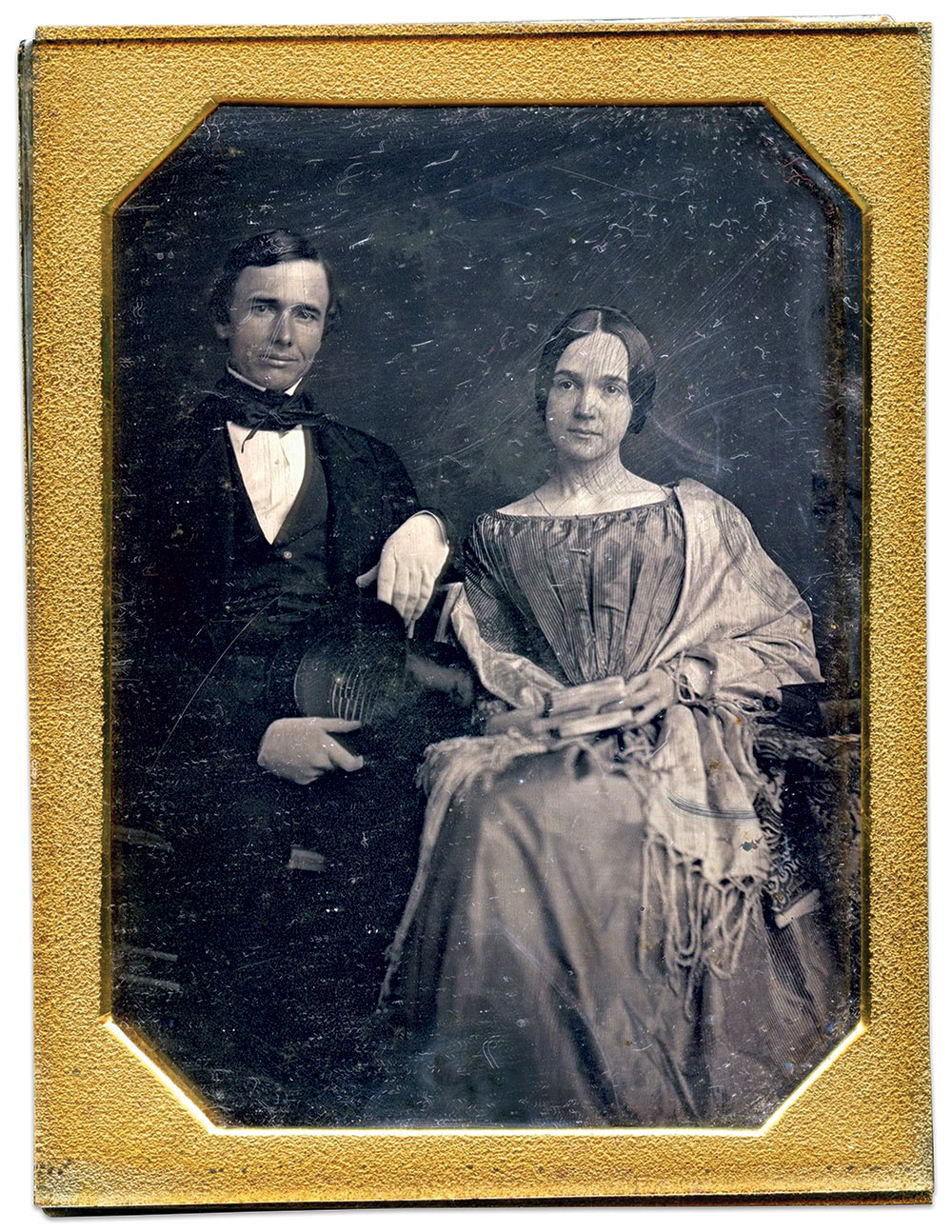
Her husband’s political connections placed Chesnut at the center of Confederate society. She knew its most influential figures, including Jefferson and Varina Davis, and moved among the politicians, generals, and their families who shaped the Southern war effort. Observant, witty, and frequently irreverent, she possessed a remarkable ability to recognize the absurdities and hypocrisies surrounding her.
Chesnut’s writings are especially compelling for their treatment of slavery and the position of women in Southern society. Although she belonged to the slaveholding aristocracy and supported the Confederacy, she recognized the moral contradictions within that world.
“The mulattos one sees in every family … resemble the white children,” Chesnut wrote. “Any lady is ready to tell you who is the father of all the mulatto children in everybody’s household but her own. Those, she seems to think, drop from the clouds.”
She considers herself an abolitionist and doesn’t shy away from condemning the moral injustice of slavery. Yet she seems unwilling to confront the contradiction in her own life, comfortably enjoying the privileges afforded by the enslaved people who attend to her and James.
A Diary from Dixie in 1905 cast Chesnut as a proper Southern lady, the 1949 version romanticized her, and the 1981 version revealed her wit, ambition, and contradictions.
“Slavery has to go of course … and joy go with it,” she wrote.
Her diary also reveals the frustrations of women whose lives were shaped by decisions made almost exclusively by men. Chesnut questioned marriage, gender expectations, and women’s limited independence, often with a biting wit that seems almost modern.
“There is no slave after all like a wife,” she wrote. “All married women, all children and girls who live in their father’s houses are slaves.”
“So we whimper and whine do we? Always, we speak in a deprecatory voice do we? And sigh gently at the end of every sentence. They say our voices are the softest, sweetest in the world,” she observes, adding that if so, it might be because “we are afraid to raise our voices above a mendicant moan.”
The inequalities Chesnut so sharply criticized became painfully personal in her later years.
The plantations she and James had called home for decades had been bequeathed to James by his father only during James’ lifetime, and transferred to another male heir after his death. Despite a lifetime spent among the South’s wealthiest families, she was left with little financial security after his death in 1885 with an allowance reportedly amounting to just $140 a year.
It was during these difficult years that Chesnut returned to her wartime journals, revising, expanding, and transforming them into the narrative we recognize today. Writing was a refuge.
Of particular interest to readers of Military Images, Chesnut was also an avid collector of photographs. During the war, she assembled albums containing more than 200 cartes de visite depicting politicians, generals, family members, and acquaintances—many of the very people who populated her diary. Some photographs were autographed, while others had identifications in her handwriting. Together, they formed a remarkable visual record of her social world, a cast of characters whose personalities and conversations she would later bring to life in her reworked diary. The photographs may even have served as visual reminders as Chesnut reconstructed her wartime experiences. Lost to scholars and family members for years, the albums resurfaced in 2007. Chesnut’s descendants, working with several organizations, joined forces to purchase them at auction and reunite them with her papers housed at the South Caroliniana Library.
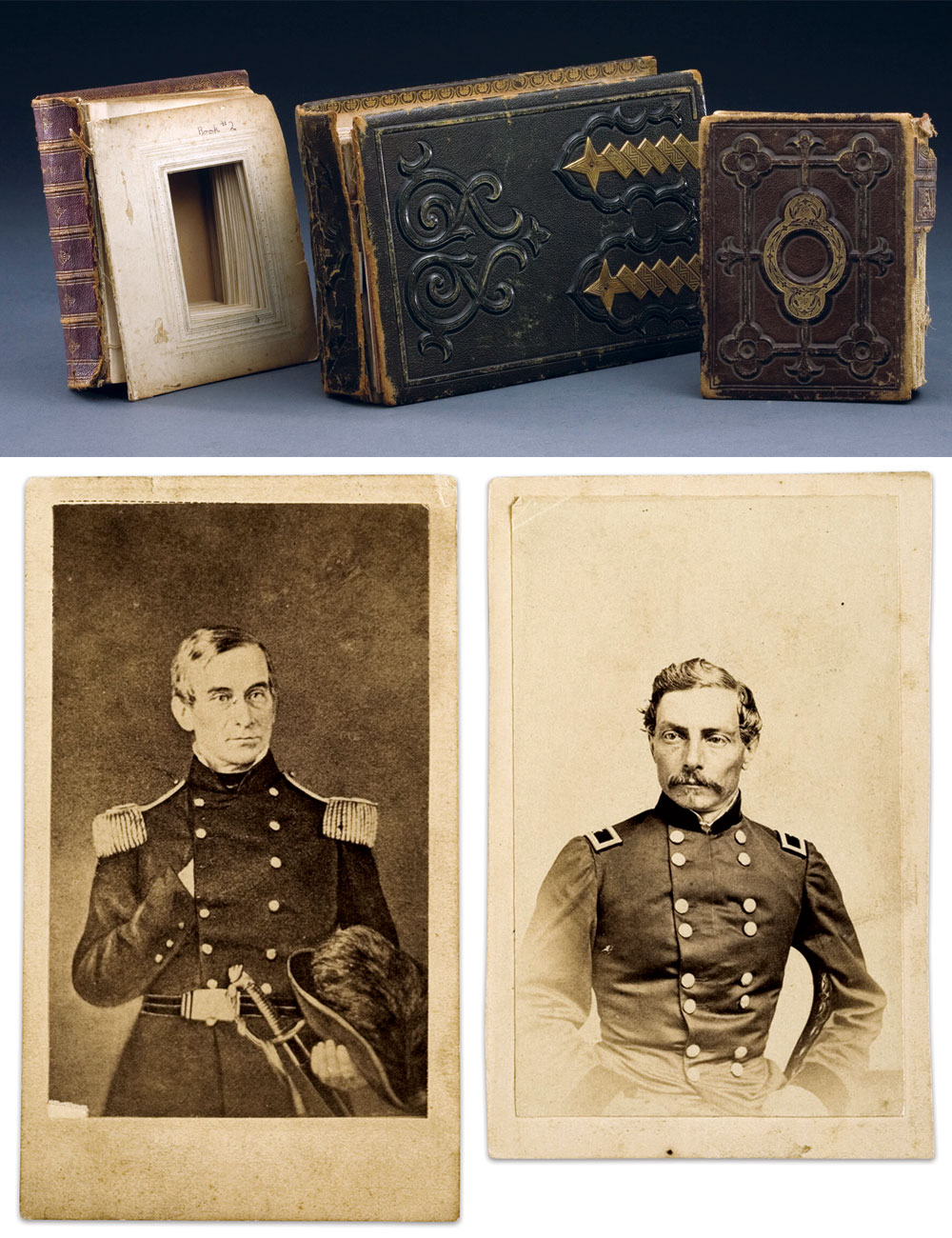
Chesnut died on Nov. 22, 1886, at age 63, at her home, Sarsfield, in Camden, S.C. She is buried beside her husband in the Chesnut family cemetery at Knights Hill in Camden. She continues to captivate readers because she accomplished something few diarists ever do. She transformed the people, conversations, contradictions, and tragedies of her world into literature. The Confederacy lost the war, but Mary Chesnut preserved its voices and, with her collection of photographs, many of its faces, as well.
Melissa A. Winn has been enchanted with photography since childhood. Her career as a photographer and writer includes numerous publications, among them Civil War Times, America’s Civil War, and American History magazines. She is currently Director of Marketing and Communications for the National Museum of Civil War Medicine. Melissa collects Civil War photos and ephemera, with an emphasis on Dead Letter Office images and Gen. John A. Rawlins, chief of staff to Gen. Ulysses S. Grant. Melissa is a MI senior editor. Contact her at melissaannwinn@gmail.com.
SPREAD THE WORD: We encourage you to share this story on social media and elsewhere to educate and raise awareness. If you wish to use any image on this page for another purpose, please request permission.