
Curated by Charles Joyce, with contributions from Rick Brown, Scott Hann, Robert May, Dale Niesen, Paul Russinoff, and Melissa Winn
July 1

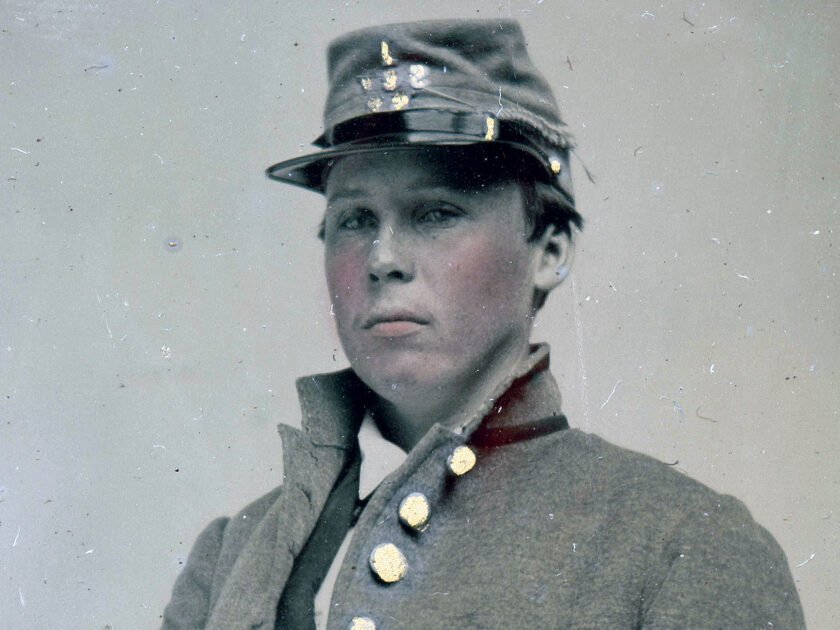
Amputation at the Express Office
The first Union infantry to relieve Brig. Gen. John Buford’s beleaguered cavalry was a brigade commanded by Brig. Gen. Lysander Cutler. It included the 76th New York Infantry. Before the regiment formed, Confederate artillery blasted its position, and rebel infantry rose up from a wheatfield and charged. Thus began a vicious fight that ended in a retreat by the 76th and its brigade to a wooded area. The long list of casualties included Pvt. George W. Smith, 19, of Blodgett Mills, N.Y.. Two bullets struck him in his left leg: a flesh wound in the upper thigh, and a Minié ball that crushed his ankle. Five days later at a temporary hospital at the Express Office in town, Surgeon John H. Beech of the 24th Michigan Infantry amputated his lower leg.
Transported to Camp Letterman, Smith recovered. He returned home and lived a full life as a husband, father of four, and a grocer and peddler of patent medicines. He died in 1928 at age 84, outliving his wife, Mary, and all but one of the Civil War veterans in Blodgett Mills.
—Charles T. Joyce
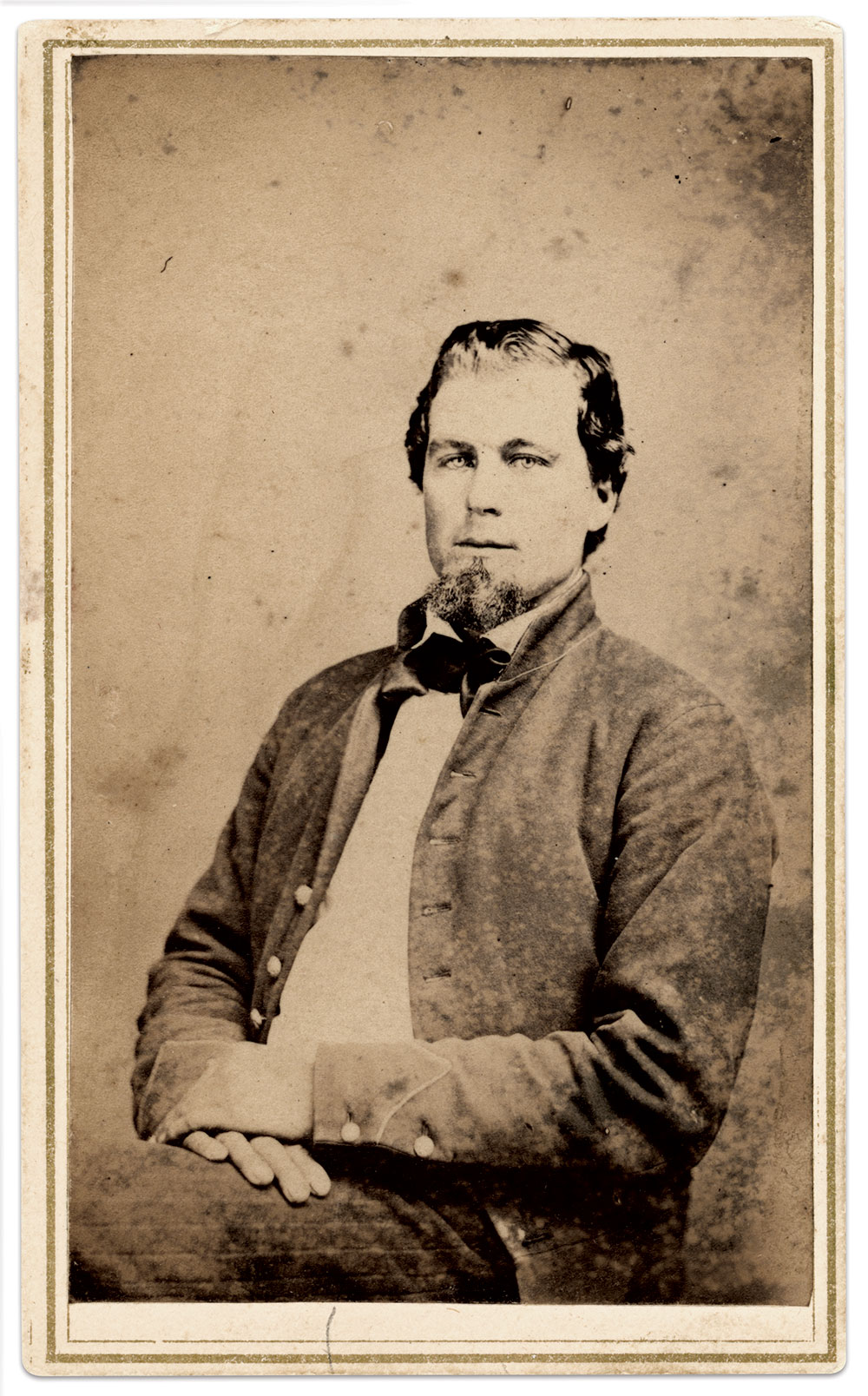
Wounded Bucktail
In the hotly contested fighting around the Edward McPherson Farm, the 150th Pennsylvania Infantry went into battle 397 strong. The Bucktails ranks included German Jonathan DeRoss of Company H, one of five brothers who served in the Union army.
When the fighting at McPherson’s farm ended, the 150th counted 273 casualties—66 percent of its force. DeRoss numbered among the wounded. He recovered and rejoined his fellow Bucktails on the Overland and Petersburg campaigns. DeRoss lost his life just weeks before the surrender at Appomattox. Rebel lead struck and killed him while he skirmished with his Bucktails at the Battle of Hatcher’s Run on Feb. 6, 1865. Buried on the field, his remains were later disinterred and returned to his mother, Susan, in Crawford County, Pa. She buried him next to his father, Alexander, who had died a year earlier in an accident involving a runaway team of horses. All of DeRoss’s soldier-brothers survived the war.
— Dale R. Niesen and Charles T. Joyce

Test of Faith on McPherson’s Ridge
The fighting along McPherson’s Ridge tested 1st Lt. Francis Marion Powell’s Christian faith. He and his comrades in the 142nd Pennsylvania Infantry, and their brigade, were no match for the overwhelming numbers of Brig. Gen. James J. Pettigrew’s Division of North Carolinians.
Two bullets struck Powell, who commanded Company A. One hit him in the upper right body and fractured a rib or ribs. The Minié ball struck a small pocket Bible, pierced his clothing, indented his skin, and caused a sickening pain from his lower rib to abdomen. He credited the Bible with saving his life. The other projectile narrowly missed his carotid artery. It continued on a trajectory that shattered his lower jaw and fractured his upper jaw, and knocked out several teeth before it exited just above the angle of his mouth.
Powell spent the remainder of 1863 and early 1864 recuperating. The second wound left the right side of his face “rounded and deformed.” Promoted to captain, he returned to the 142nd for the Overland Campaign, where he suffered two wounds in The Wilderness. A bullet to his thigh left a half-dollar sized entrance scar and an exit scar as wide as a silver dollar. A buckshot or pistol shot to the breast proved minor. Powell returned to duty and mustered out in June 1865.
Suffering speech impediments, temporary blindness, dizziness, and partial paralysis, Powell abandoned his pre-war occupation as a teacher and became a farmer while briefly holding jobs in the mercantile and financial businesses. He also served as treasurer of Mercer County, Pa., and briefly ran a private bank. A lifelong Methodist, Powell served as his congregation’s treasurer for 25 years. He also held membership and offices in the Masons. He died in 1920, at age 83, after a brief illness.
—Scott D. Hann

A Tar Heel at Willoughby Run
“Their ranks went down like grass before the scythe” is how one Iron Brigade officer described the division of North Carolinians commanded by Brig. Gen. James J. Pettigrew. His Tar Heels made a desperate attack across Willoughby Run.
One of Pettigrew’s largest regiments, the 26th infantry, stepped into a wheatfield bordering Willoughby Run and engaged in deadly combat at close quarters against the 24th Michigan Infantry. When the brutal fighting ended two hours later, both sides suffered staggering casualties. The 26th lost 81 percent of its men, including its youthful colonel, Henry Burgwyn, killed as he rallied his men.
The wounded included 22-year-old Henry Clay Tyson of Company H. The son of a prosperous, slave-holding family in Randolph County, he had joined the 26th a year earlier. Struck in the thigh, his serious wound resulted in a long recuperation in hospitals and at Camp Holmes in Raleigh. Tyson returned to the 26th in November 1864 and remained on duty until the surrender, and his parole, at Appomattox.
Tyson reunited with his wife, Elizabeth, who he had wed during his convalescence in Raleigh, started a family that grew to eight children, and supported them as a farmer in Richmond County. He died in 1917 at age 76.
—Paul Russinoff
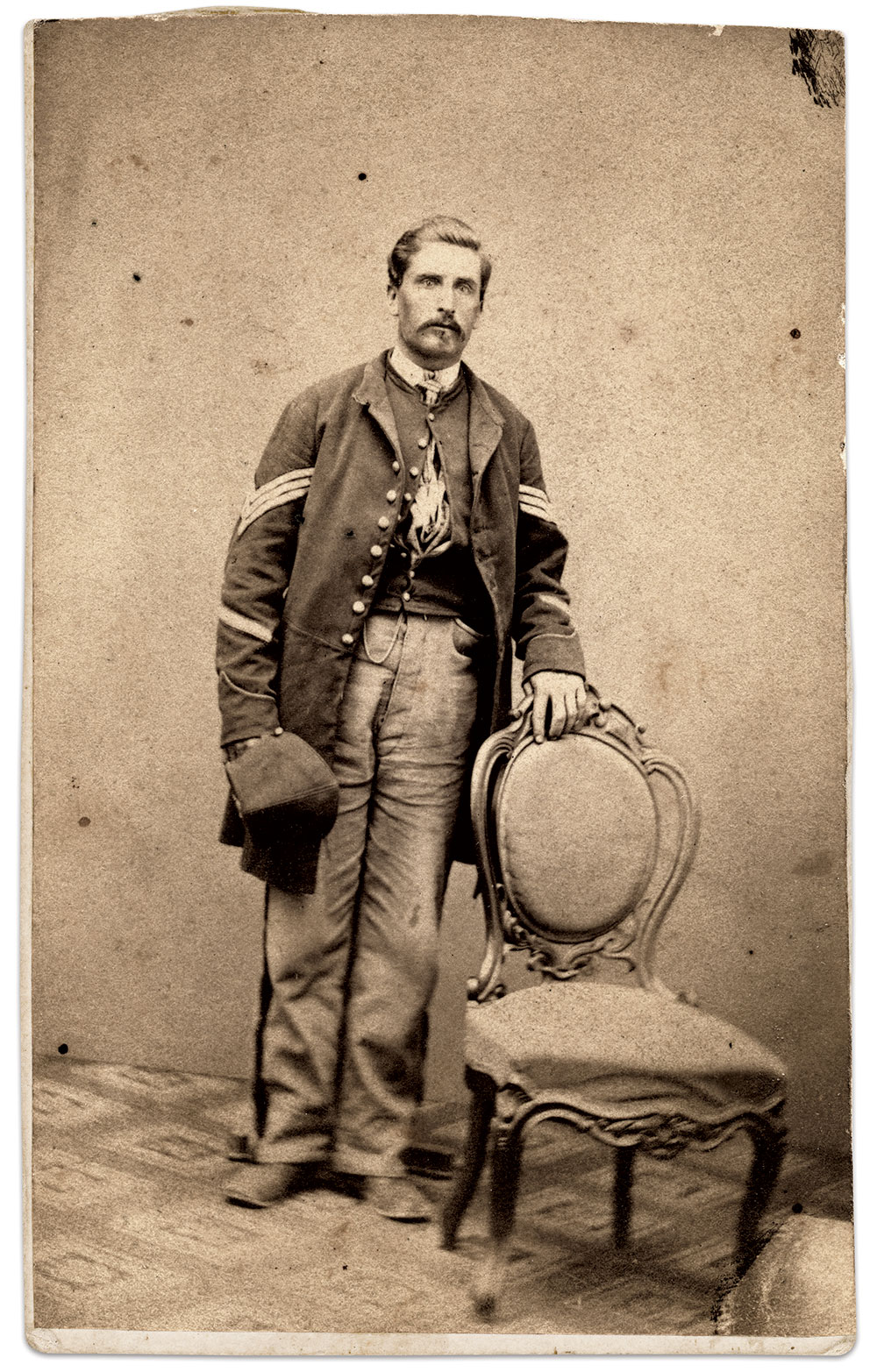
Walking and Loading
The 107th Pennsylvania Infantry went into action about 1 p.m. northwest of Gettysburg, its 230 men loading as they walked and 25 officers keeping them aligned. Over the next two hours, they captured more Confederates than they numbered. But they also lost heavily. The regiment’s lieutenant colonel commanding, James MacThomson, noted in his after-action report, “I regret to report the loss of large numbers of most excellent soldiers.”
They included Sgt. John Kozier of Company B, who suffered a wound in his side that required several months to heal. This marked his second time on a casualty list: the first occurred at the Second Battle of Bull Run, where Confederates captured and quickly paroled him.
Less than a year later at Petersburg, he received his third war wound, a severe injury to his right leg that ended with an amputation and death at a military hospital in Washington D.C. Buried in Arlington Cemetery, his remains were exhumed in December 1864 and reinterred in Spring Hill Cemetery in Shippensburg, Pa. He was 24 years old.
—Dale R. Niesen
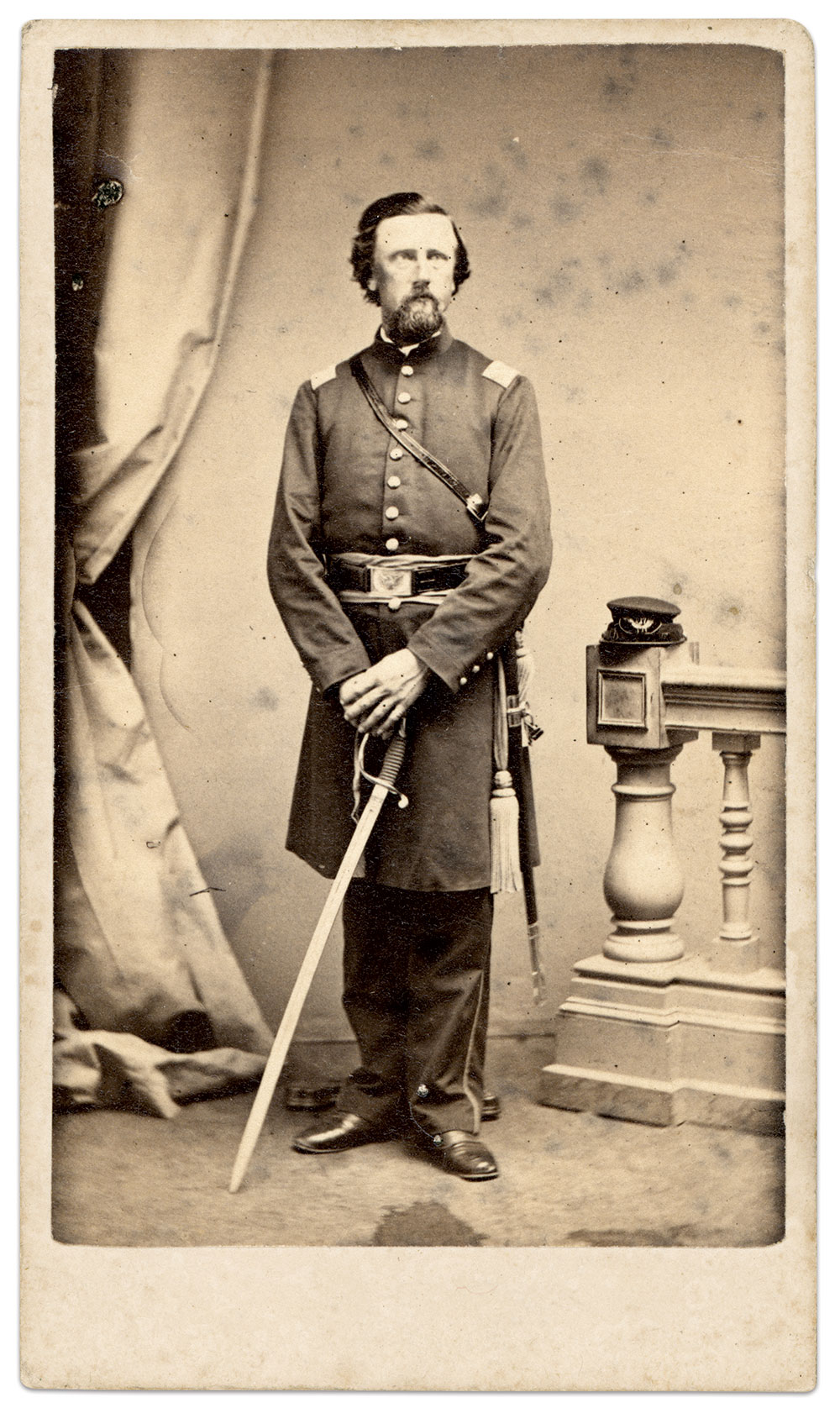
“Now Seventeenth, Do Your Duty”
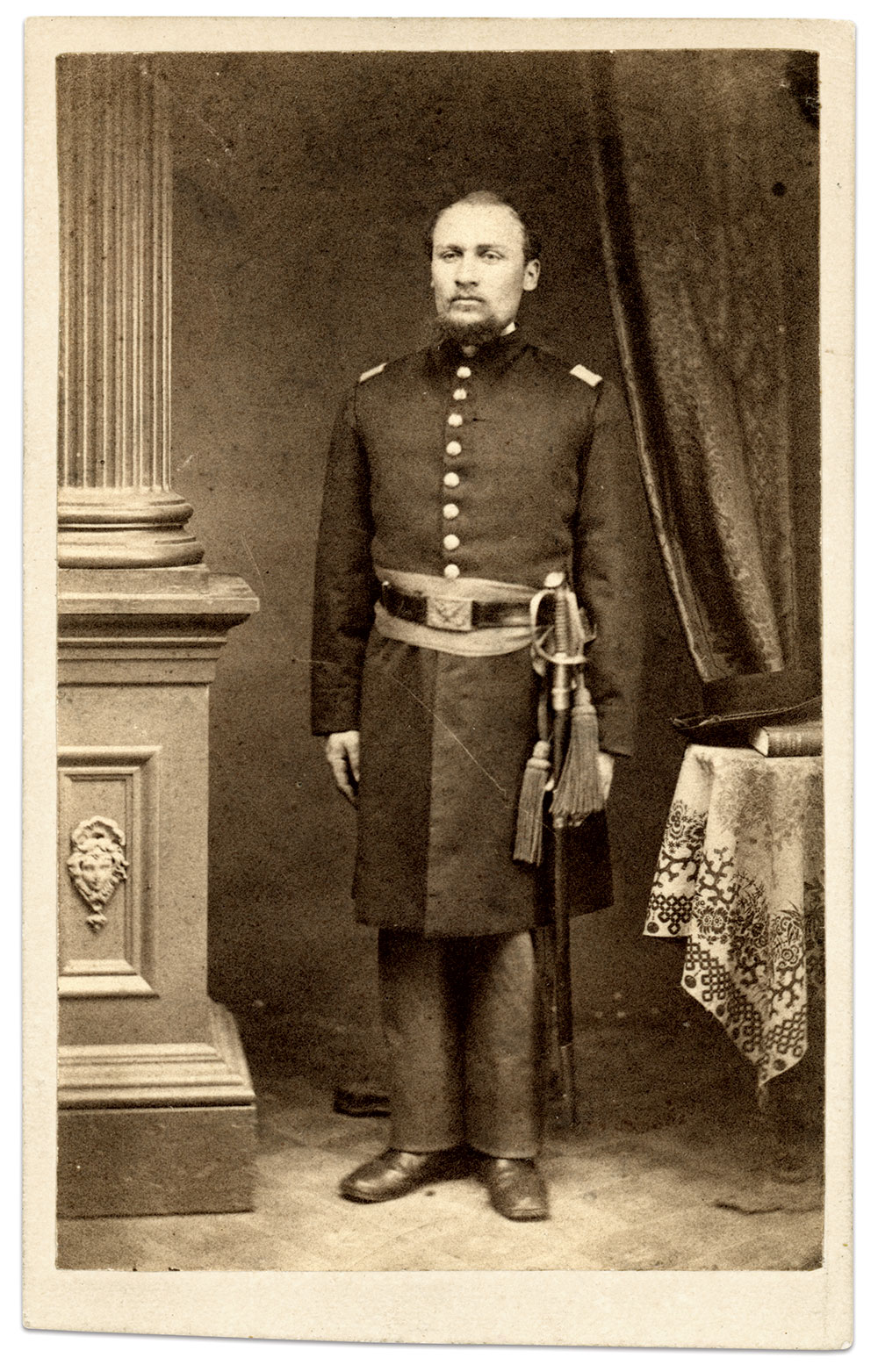
Lieutenant Col. Douglas Fowler of the 17th Connecticut Infantry nearly missed the battle. During the hot, dusty march north, he was arrested for allowing an enlisted man to leave the ranks to drink from a brook. The punishment outraged his men. One private recalled that, during an evening halt, soldiers gathered around their “beloved Fowler,” some vowing they would not fire a shot unless he was released. Fowler urged restraint, promising that if the regiment fought, he would lead them. Word of the protest reached 11th Corps headquarters, and Fowler was freed.
A locksmith in Norwalk, Fowler came from a divided family: four brothers in Union blue, one in Confederate gray. He served in three Connecticut regiments: the 3rd at First Bull Run, the 8th, and the 17th, where he raised Company A and became its first captain.
On the afternoon of July 1, the 17th was positioned near the far right of the 11th Corps, which was perilously anchored at Blocher’s Knoll (now Barlow’s Knoll). Mounted on a conspicuous white horse, Fowler may have sensed his fate. When the 17th was ordered to advance to the knoll in an effort to stem the swarming Confederate attack upon it, he handed his carte de visite to an enlisted man, then rode forward and ordered, “Now Seventeenth, do your duty. Forward, double quick! Charge bayonets!” The attack disintegrated into brutal hand-to-hand fighting with Brig. Gen. John B. Gordon’s Georgians. In the melee, artillery shrapnel decapitated Fowler, his blood and brains splattering his adjutant, Henry W. Chatfield.
As the regiment fell back, a shaken Chatfield and the sergeant major failed to recover the body. A corporal tried, and dragged the colonel some 200 yards before being captured, recalling that Confederate quickly stripped the headless corpse of valuables.
Fowler’s remains were never found. They may lie in an unknown grave in Soldiers’ National Cemetery or beneath the field. An early ghost story claims his headless form still wanders the trees along Rock Creek below Barlow’s Knoll.
—Charles T. Joyce

Wounded Wolverine
Battling the behemoth 26th North Carolina Infantry during the afternoon, the overmatched 24th Michigan Infantry grudgingly fell back, reforming repeatedly as it withdrew east toward a barricade at the Lutheran Theological Seminary.
Among the stalwart Wolverines was Capt. Richard Shaw Dillon of Company A. Born in New York to an Irish immigrant father, Dillon settled in Detroit, working as an iron moulder. Commissioned a first lieutenant in the summer of 1862, he received a sword from the Moulders’ Association and received his captain’s bars a month before Gettysburg.
During the battle, Capt. Dillon suffered a gunshot below the left knee. He made his way to the Adams County Courthouse, converted into a temporary hospital. Though his exact route is unrecorded, one theory is that rescuers carried him east along Chambersburg Pike, south on Franklin Street, then east on West Middle Street to the courthouse. The route assumes that Dillon’s Company A fought on the 24th’s right flank, near the Pike, and was exposed to enemy fire after its fellow Iron Brigade infantrymen in the 19th Indiana withdrew down the Pike.
Dillon spent two days in the courthouse before being moved to the home of Adams Sentinel Editor Robert G. Harper, near the David Wills house. A week later, Dillon arrived in Baltimore and completed his recovery in Detroit.
Though his combat service ended, Dillon remained on duty in various roles, including acting assistant inspector general with the 5th Corps, recruiter, and assignment with the Pioneer Corps. After the war, he returned to his trade and became superintendent of a blast furnace.
The war permanently damaged his health. “No person has any idea how much I suffer… it is sapping the very foundation of my life,” he wrote. He refused a pension: “I think I got my pay as was agreed… and as long as I am able to get around I will not beg from Uncle Sam.” Dillon died of pneumonia in 1886, one day after his 56th birthday.
—Scott D. Hann
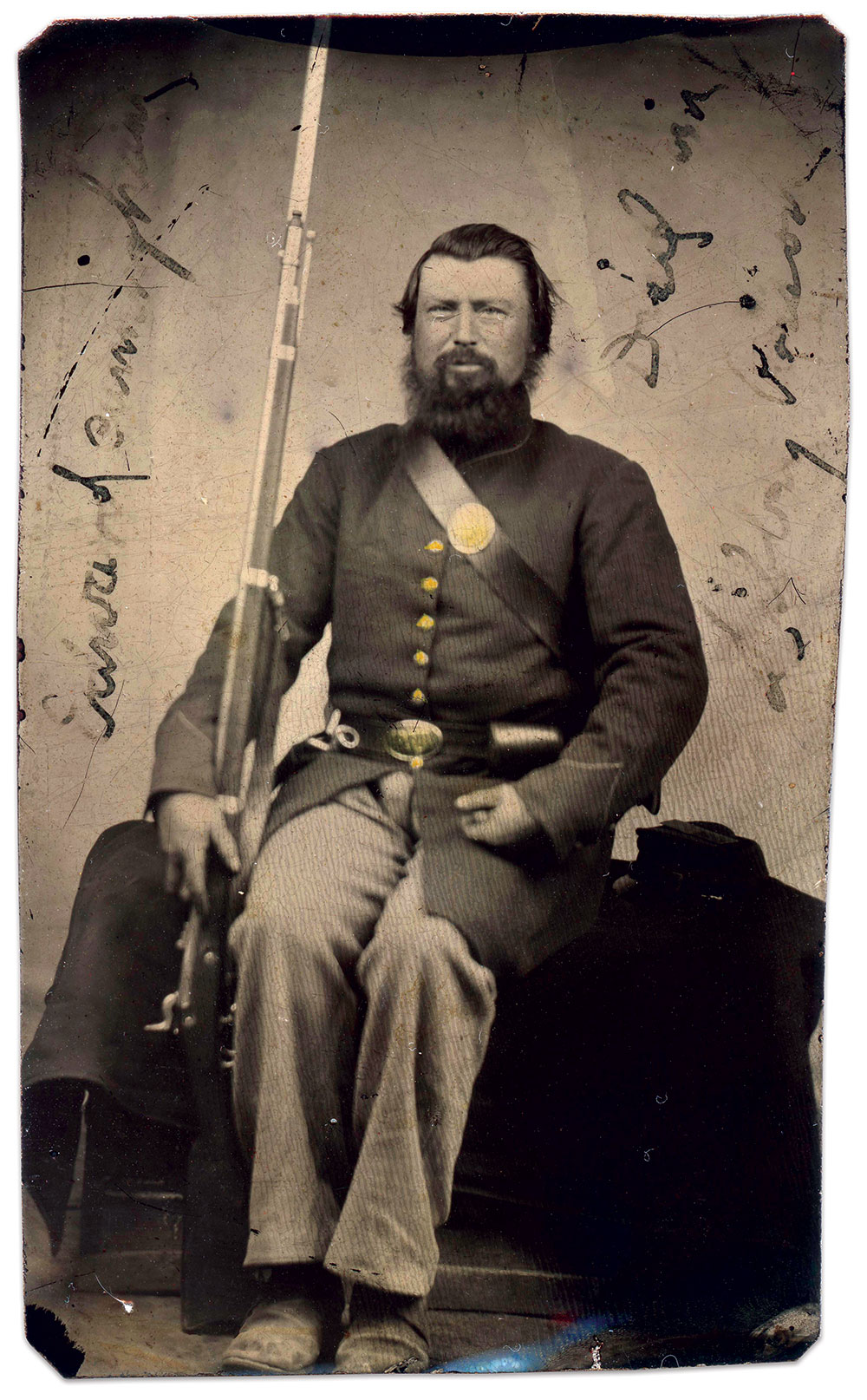
Stubborn Stand Along Oak Ridge
As Maj. Gen. Robert E. Rodes’s Confederates drove Union troops from Oak Ridge late in the day, Maj. Gen. John C. Robinson ordered the 16th Maine Infantry to serve as rear guard, holding a small hill “at any cost.” Their stubborn stand allowed much of its brigade to escape, though overwhelming numbers forced the regiment back along Oak Ridge and into the infamous railroad cut, where Confederates captured 151 enlisted men, including Edward Cunningham.
A peacetime farmer from a family of carpenters, Cunningham enlisted a year earlier when the regiment formed, joining Company K at about age 34; older than most. He passed unscathed through Fredericksburg and Chancellorsville. Captured at Gettysburg and confined at Belle Isle—not Libby Prison, as noted on his photograph. He died of chronic diarrhea in January 1864. His burial place is unknown. Family and friends raised a cenotaph in a cemetery in Jefferson, Maine, to honor his sacrifice. Inscribed on the marker are words by poet Sir Walter Scott: “Soldier rest till God shall call thee, Sleep in peace, thy warfare’s o’er: No more sorrow shall befall thee. Dream of battle-fields no more.”
—Paul Russinoff
July 2

of Greenfield, Ohio. Charles T. Joyce Collection.
Mortally Wounded at “Smith’s Ridge”

At three o’clock in the morning, the 338 officers and men of the 73rd Ohio Infantry were roused from an uneasy sleep among the graves of Evergreen Cemetery and ordered into line of battle in an orchard along the Taneytown Road. Unlike most of the Army of the Potomac’s 11th Corps, the Buckeyes had not been engaged in the previous day’s disastrous fighting north of town. Corps commander Oliver O. Howard had held them in reserve on Cemetery Hill, as a rallying point for retreating Union soldiers.
Among them was Corp. George B. Greiner, 30, a farm laborer who had left behind a wife and three young sons the previous August and enlisted in Company G.
The regiment’s assignment seemed straightforward: support Union artillery on Cemetery Hill being harassed by Confederate skirmishers that had advanced from buildings in town to a sunken farm road known as Long Lane. Between the enemy and the Union line lay a low ridge divided by a rail fence—key ground to secure.
About 9 a.m., the 36 men of Company G advanced to seize the fence. A prolonged, see-saw struggle raged until darkness between rival squads of Union and Confederate skirmishers. When the shooting stopped, the Yankees had succeeded in holding the rebels at bay, lessening the peril to the federal gunners on Cemetery Hill. But the cost to Company G was high: 23 of the company’s men were killed or wounded, including Greiner. A gunshot caused a compound fracture in the middle third of his left leg. Taken to the 11th Corps field hospital on the George Spangler Farm, medical personnel treated his wound with a water dressing. He died on July 15. Buried nearby and later interred in the Soldiers’ National Cemetery with eight others from Company G, their sacrifice recalls the fight for what one historian of this largely overlooked action has dubbed “Smith’s Ridge,” in part tribute to Col. Orland Smith, who commanded the brigade to which the 73rd belonged.
—Charles T. Joyce

of Washington, Pa. Charles T. Joyce Collection.
“Men of the 140th!”
Words spoken early in the day by Col. Richard Roberts to his 140th Pennsylvania Infantry stirred emotions: “Men of the 140th! Recollect that you are now defending your own soil, and are fighting to drive the invader from your own homes and firesides. I shall therefore expect you to conduct yourselves as if in the presence of your wives, your sisters, and your sweethearts, and not disgrace the flag you bear or the name of Pennsylvanians.”
One of those present, Hugh Weir, served in Company G. A year earlier, he had paused his junior year as a law student at Jefferson College in Washington, Pa., to enlist. The 140th had its first taste of combat at Chancellorsville.
At Gettysburg, the 140th, part of Brigadier Zook’s 2nd Corps Brigade, rushed to Stony Hill after the 1st Michigan had begrudgingly left it. The Keystone State men fought until a Confederate breakthrough at the nearby Peach Orchard made their position untenable. About half the 515 officers and men became casualties, including Weir, who suffered a gunshot. He lay on the field until victorious Confederates pulled back that evening, falling into enemy hands. He and other prisoners were taken about two miles to a field hospital at the John Cunningham Farm. The next morning, as Cunningham walked among the wounded, he came upon Weir, who begged him to write to his oldest brother, Adam, about his wound. Cunningham complied. By the time Adam arrived, Weir had perished. He was 23. Adam recovered his brother’s body and brought his remains home to Washington County.
After the war, Weir’s sister, Margaret, married Samuel P. Fergus, a veteran of the 140th. They named one of their children in honor of her fallen brother and his comrade.
—Charles T. Joyce and Robert May

At Sickles’s Ill-Fated Salient
The 2nd New Hampshire Infantry, positioned in Sherfy’s Peach Orchard supporting a battery, found itself at the very apex of a precarious salient created when Maj. Gen. Daniel E. Sickles advanced his 3rd Corps ahead of the rest of the federal line.
The Granite State men included Albert Perkins, a farm laborer from Exeter who had enlisted in the 2nd after Fort Sumter. He served in all the regiment’s battles, from First Bull Run on, rising in rank from first sergeant to first lieutenant of Company D, and acting adjutant of the regiment. At Gettysburg, he commanded his company.
By the late afternoon, the 2nd occupied a spot on the field more exposed to danger than any other Union regiment at this time: Enfilading artillery fire blasted the Peach Orchard salient with shell and canister, knocking leaves from the peach trees and spraying dirt all around. Then, enemy infantry advanced in its direction. The 2nd counterattacked and drove them back. After a brief lull, another artillery barrage and massive charge by Mississippians commanded by Brig. Gen. William Barksdale broke the Union line.
The New Hampshire men lost 193 of 354 engaged; 54 percent of their force. Casualties included Perkins, his left arm shattered and amputated. He survived the surgery and received his captain’s bars. But the stump never quite healed, resulting in an infection that ended in his death in September 1865. He was 23 years old.
—Charles T. Joyce

“Victory Was Within Our Grasp”
After Confederates exploited gaps created when Maj. Gen. Daniel E. Sickles advanced his 3rd Corps beyond the main federal line, overall commander George G. Meade sent reinforcements to seal the breach. They included the 145 men of the 1st Michigan Infantry, ordered onto a small, tree-covered eminence overlooking the soon to be hallowed ground of the Wheatfield.
The three senior commanders of the regiment met briefly and pledged to hold the position at all hazards. Then, the colonel suffered a serious wound and left the field. The lieutenant colonel, William Alexander Throop, took his place. A peacetime clerk in a Detroit bookstore, he had begun his service as a second lieutenant, and suffered a wound, his first of the war, during the Peninsula Campaign at Gaines’ Mill.
At Gettysburg, Throop suffered a wound—his second of the war—soon after taking command. He remained on the field with his men, who, he wrote later, stood “bravely against the storm of bullets sent against them, loading and firing as coolly as though on drill.” Eventually, the 1st and its brigade received orders to pull back, much to the distaste of the Michiganders, who believed “victory was within our grasp.”
Throop remained in command until his colonel recovered. In the fall of 1863, he left to become the colonel of the 118th Pennsylvania Infantry, which had fought alongside the 1st at Gettysburg. In this position, he suffered two more wounds, at the Battle of Cold Harbor, and the Siege of Petersburg. By war’s end, Throop held the brevet rank of brigadier general.
In postwar years, Throop declined a captaincy in the U.S. Army and returned to Detroit, opened a stationary store, and became active in veterans’ affairs, serving a stint as Department Commander of the Michigan Grand Army of the Republic. One day in 1884, he placed a revolver against his right temple and pulled the trigger. He lingered for a day, dying at age 46. According to reports, stunned family and friends had no clue that he had been troubled. Throop left behind farewell letters to his wife and two friends, but the contents were not made public.
—Charles T. Joyce

Keeping a Stiff Upper Lip
First Lt. John Gregory Bishop “Jack” Adams of the 19th Massachusetts Infantry lay next to 2nd Lt. Sherman S. Robinson and witnessed Maj. Gen. Daniel E. Sickles’s advanced line collapse under a Confederate assault. “Someone must go and help them, Jack,” Robinson said. Moments later came the order: “Attention, 19th.” Robinson muttered, “we are in for it.”
The regiment moved into the breach. As Adams, commanding the color guard, uncased the flags, three bullets struck him in the groin and right leg. An enlisted man, himself wounded, carried Adams on his back from the field under heavy fire. At a temporary field hospital, Adams persuaded an assistant surgeon to treat him. The doctor performed a cursory examination and declared Adams could not live another 24 hours. He refused to stop the bleeding, Adams recalled, as he “had no time to waste on me.” The 19th’s lieutenant colonel, Moses Shackley, then appeared. “Jack, old boy,” Shackley said, “they say you are going to die, and I thought you would like a canteen of coffee before you passed up your check.” Adams remembered that Shackley made him comfortable and “urging me to keep a stiff upper lip.”
Adams survived the night. Transported to the main 2nd Corps hospital at the Jacob Schwartz Farm, he lay on the ground between two amputating tables while surgeons performed their grim task almost without pause. He received no care beyond a canteen regularly filled with water, some of which he poured on his injuries to ease inflammation.
At one point, a badly wounded boy lying beside him whispered, “Good night, lieutenant, I think I shall go up before morning.” Adams urged him to hold on, but by dawn the boy was dead. He remained there until afternoon, unclaimed. Adams never learned his name.
“They say you are going to die, and I thought you would like a canteen of coffee before you passed up your check.”
After six days in this makeshift hospital, Adams and others hired a local farmer to cart them to Littlestown, where they caught a train to Baltimore. There, surgeons cleaned Adams’s wounds, removing debris and maggots. He survived, though one bullet remained in his body.
Adams recovered and returned to the 19th in time for the 1864 Overland Campaign. Captured on June 22 during the disastrous Battle of Jerusalem Plank Road, he spent months in prisons in Georgia and South Carolina before being exchanged. He happened to be in Washington, D.C., for the Grand Review of the Army of the Potomac, watching from the street as the small remnant of what remained of the 19th march down Pennsylvania Avenue. Missing from its ranks were the two officers who helped him at Gettysburg: Second Lt. Robinson, who died after being disemboweled by a cannon shot on July 3, and Lt. Col. Shackley who had lost life at Spotsylvania while leading the 59th Massachusetts Infantry.
Adams died in 1900, after serving as National Commander of the Grand Army of the Republic and receiving the Medal of Honor for gallantry at Fredericksburg.
—Charles T. Joyce
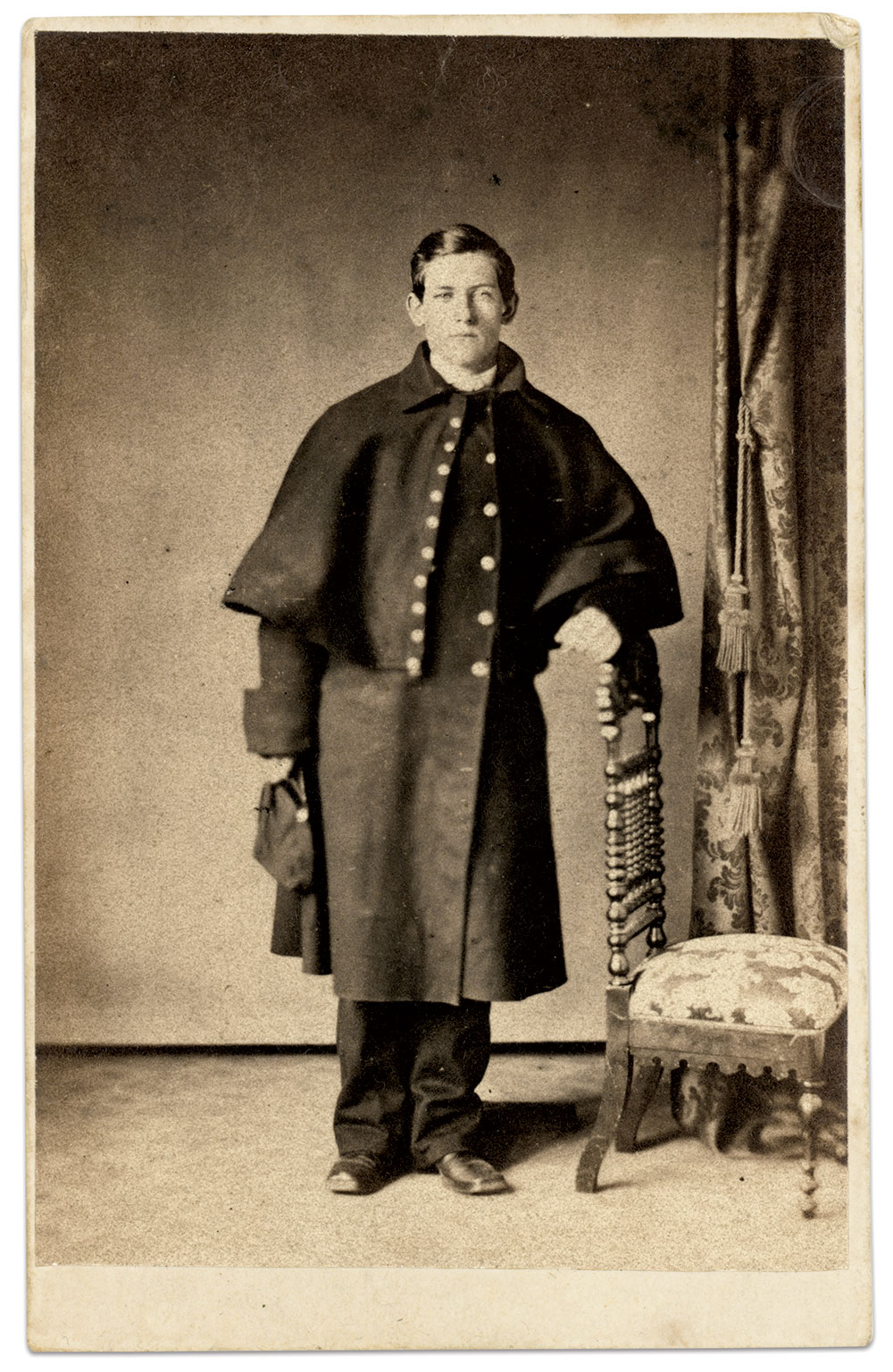
Fighting with Handspikes and Rammers
At one point during the evening attack by Confederates on East Cemetery Hill, two batteries of Union artillery came under direct assault. The gray infantrymen spiked one gun before the cannoneers fought back with handspikes, rammers, and pistols—checking them long enough for reinforcements to arrive and drive the Confederates back.
The cannoneers belonged to Batteries F and G of the 1st Pennsylvania Light Artillery. Casualties in Battery G included artificer William G. Pinkerton, a peacetime coach-maker in Lancaster.
The Confederates captured Pinkerton and marched him to Richmond with other prisoners. Paroled about two months later, weak and malnourished, he recuperated at Satterlee U.S. Hospital in Philadelphia. In a letter to his brother in September, Pinkerton “says he will, if he lives yet repay the rebels for their inhuman treatment of himself and companions while prisoners.”
Pinkerton returned to his battery in January 1864, and spent most of the rest of the war in the Defenses of Washington. He mustered out with when the battery ended its service in June 1865.
Pinkerton returned to Lancaster, married, and eventually moved to Lansing, Mich., and became a carriage builder. He died at age 44 in 1884 from the effects of inflammation of the lungs, a general term covering a range of respiratory issues. Buried in Michigan, his surviving wife, Anna, had his remains exhumed and reburied at Mt. Bethel Cemetery in Columbia, Pa.
—Robert May
July 3
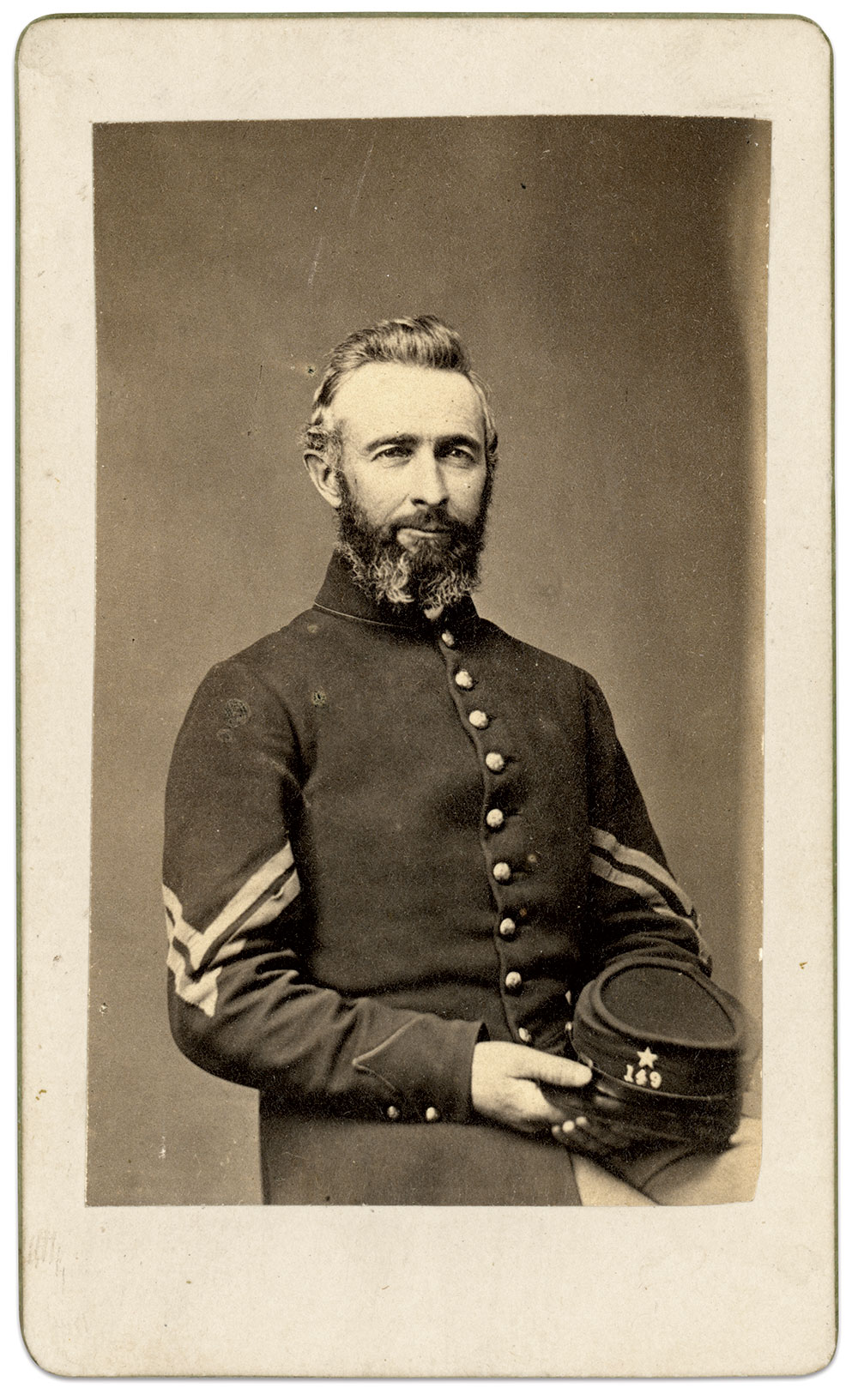
Defending Culp’s Hill
The stubborn defense of Culp’s Hill during the evening of July 2 and into the early morning of July 3 took a toll on the 149th New York Infantry. The regiment arrived at Gettysburg 319 strong and suffered 58 casualties.
The wounded included Corp. Nelson J. Gilbert, 41, a peacetime painter from Syracuse, who suffered wounds to his head and left eye. Two months earlier, in the 149th’s first major battle at Chancellorsville, he had suffered a minor wound in his left leg.
Gilbert’s Gettysburg injuries were not serious enough to prevent him from roaming the battlefield on July 4, where he picked up an English-made knapsack from the body of a dead Louisiana Tiger on East Cemetery Hill. More than 40 years later, in 1905, he donated the relic to the Onondaga Historical Society, where it remains today. Following his death three years later, townspeople remembered Gilbert as First Baptist Church deacon “faithful always, at home, in the army, everywhere until fidelity became the fixed habit of his life. He loved and was loved with rare devotion.”
—Charles T. Joyce and Robert May

At Culp’s Hill: Sans Peur et Sans Reproche
The charge by the 2nd Massachusetts Infantry on the morning of July 3rd across an open meadow at the base of Culp’s Hill, against well-entrenched enemy infantry, is remembered for being exceedingly ill-advised. The regiment’s commander, Lt. Col. Charles R. Mudge, reportedly questioned the orders, and, after informed of their accuracy, replied to the messenger, “Well, it is murder, but it’s the order. Up men, over the works! Forward, double quick!”
The repulse left Mudge dead and almost half of his men as casualties, including Capt. Francis Welch Crowninshield, who led Company H into the fight. Affectionately known as “Crownie,” the 20-year-old had paused his studies at Harvard in 1861 to join the army, and carried battle scars from First Winchester and Antietam.
He added a third at Gettysburg when a bullet struck his right arm. Treated at the 12th Corps field hospital and sent home to Boston, he rejoined the 2nd by the year’s end.
Crownie suffered a fourth wound, during the March to the Sea in late 1864, when a sharpshooter’s bullet struck him in the left thigh as he bathed in Raccoon Creek, Ga. He recovered in time to participate in the Grand Review in Washington, D.C.
Crownie barely survived the war, dying in 1866 in Rome, Italy, while traveling with friends. His death, from enlargement of the heart, was blamed on his war service. He was 23. His remains were returned to Massachusetts. Harvard honored him with a Memorial Hall plaque listing his service and a quote, Sans Peur et Sans Reproche—Fearless and Above Reproach.
—Charles T. Joyce
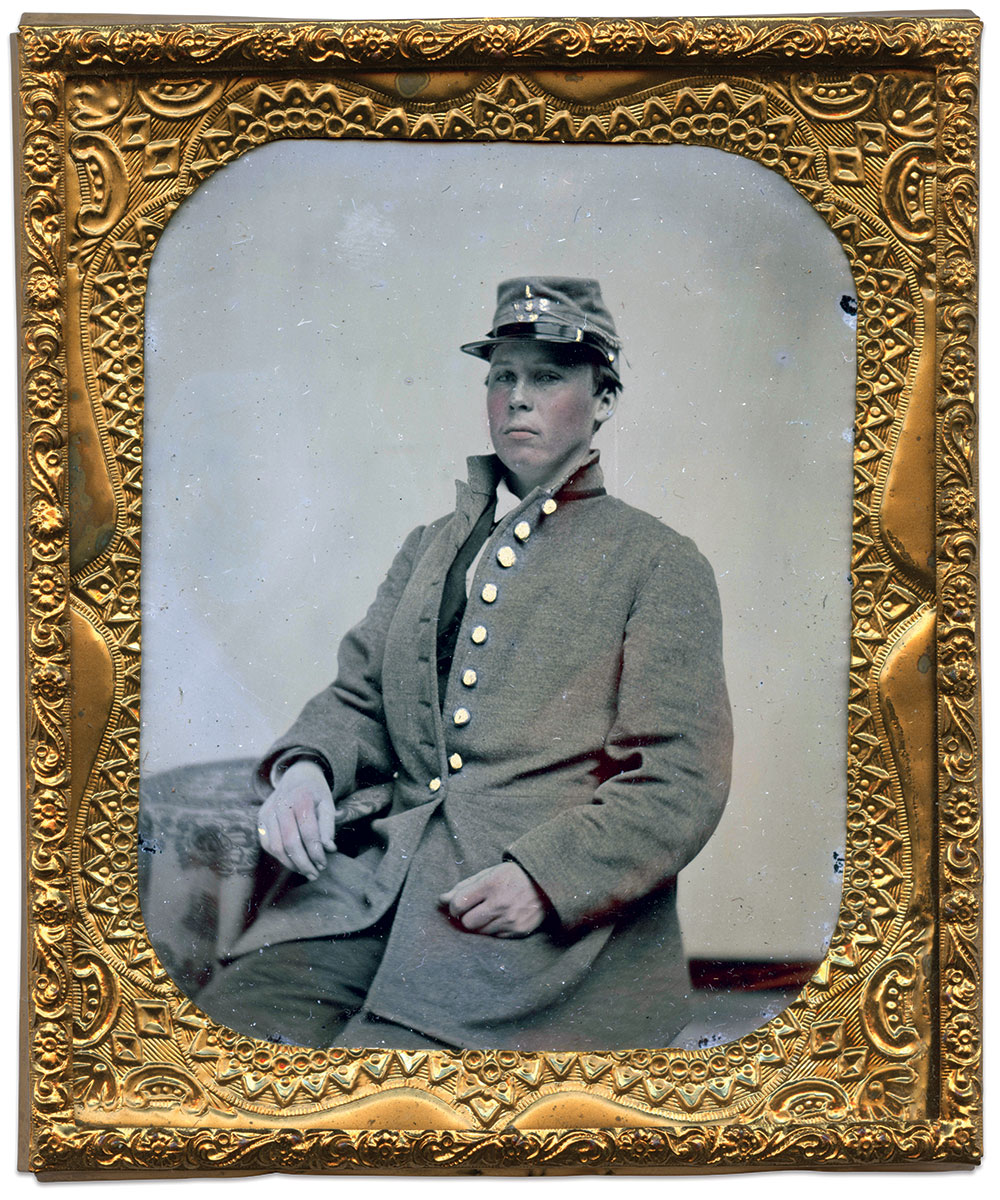
Skirmishing and Shellfire Before Pickett’s Charge
The 14th South Carolina Infantry skirmished and took shell fire from its position behind Pickett’s Division. Though not ordered into the charge, the regiment suffered casualties, including Sgt. Joseph “Joe” Brunson from a slight wound from a bullet or shell fragment.
Born and raised in Edgefield County, Brunson attended the Arsenal Academy in Columbia for a time. In January 1861, he joined the 1st South Carolina Volunteers commanded by Col. Maxcy Gregg, and bore witness to the bombardment of Fort Sumter. When the regiment reorganized a few months later, Brunson joined the 14th and spent the rest of the war with Gen. Robert E. Lee’s Army of Northern Virginia in its most momentous battles, the last two years as sergeant and color bearer. Gettysburg marked the first of two war wounds, the second occurring in The Wilderness, where comrades helped him escape the fires ignited by sparks on dry brush.
Brunson survived it all, from Fort Sumter to Appomattox. “He was at home only twice during the four long years of the war. He waded and swam the Potomac River six times; marched across the Blue Ridge mountains, barefooted, and left tracks of blood behind him,” noted his 1924 obituary after he died at age 84.
His obituary also included this anecdote: “During the long rainy spells the guns were hard to keep clean, and had to be inspected by the Inspector General. When he came to inspect Brunson’s gun, he rubbed it with his white gloves, and called Gen. Lee’s attention to it. Lee caught Brunson by the shoulder and said: ‘You are a good soldier, Sir.’” Lee then called to Brunson’s captain and remarked, “If I had forty thousand soldiers like this boy, I would sweep Grant off the face of the earth.”
—Ronald S. Coddington
Armed with a Hatchet at Pickett’s Charge
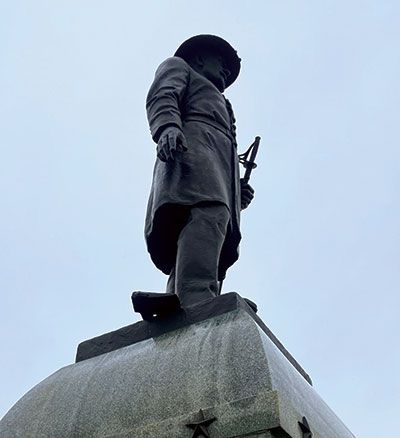
Confederates advancing on the right of Pickett’s Division during its ill-fated charge may have been startled to see a hatchet-wielding Union lieutenant. The officer, Stephen Flavius Brown of the 13th Vermont Infantry, had been arrested and stripped of his sword during the march to Gettysburg for fetching water for his thirsty men in Company G without permission. Restored to command before the battle, his sword could not be found, so he made do with a cook’s hatchet.
Born in Swanton, Vt., Brown had grown from a precocious boy to a schoolteacher. When the war began, he joined his home state’s 1st Infantry for three months’ service. After a bad back disqualified him from rejoining the army as a cavalryman, he raised Company G of the 13th for a nine-month enlistment.
The Vermonters were in their last month of service at Gettysburg—their first combat—defending the Union line against Pickett’s Charge. By all accounts, the untested men performed like battle-hardened veterans when they counterattacked Pickett’s right flank. In the melee, Brown ran forward, swinging his hatchet over his head. He came upon a Confederate officer, seized the man by his collar, and raised his axe to him, demanding both his surrender and his sword. The officer complied, and Brown was once again in possession of an appropriate emblem of his rank. He survived the action.
Following the end of the 13th’s enlistment at the end of July, Brown returned the army as a captain in the 17th Vermont Infantry. His time in the regiment was short-lived: A gunshot in his left arm in The Wilderness resulted in an amputation and ended his service.
Back in Swanton, Brown married and became active in veterans’ affairs. In 1899, he returned to Gettysburg with other survivors of the 13th and viewed the regiment’s monument, featuring a statue of him holding a captured sword, with a hatchet at his feet. The regimental historian explained that Brown’s form represented “the persistent performance of patriotic duty to country at great personal peril, and under serious disadvantages,” predicting that the statue “will ever commend the sympathetic appreciation of mankind, for the human heart is in eternal revolt at power tyrannizing over helplessness.”
Brown died four years later after suffering a heart attack at age 62.
—Charles T. Joyce
With Armistead’s Brigade at Pickett’s Charge
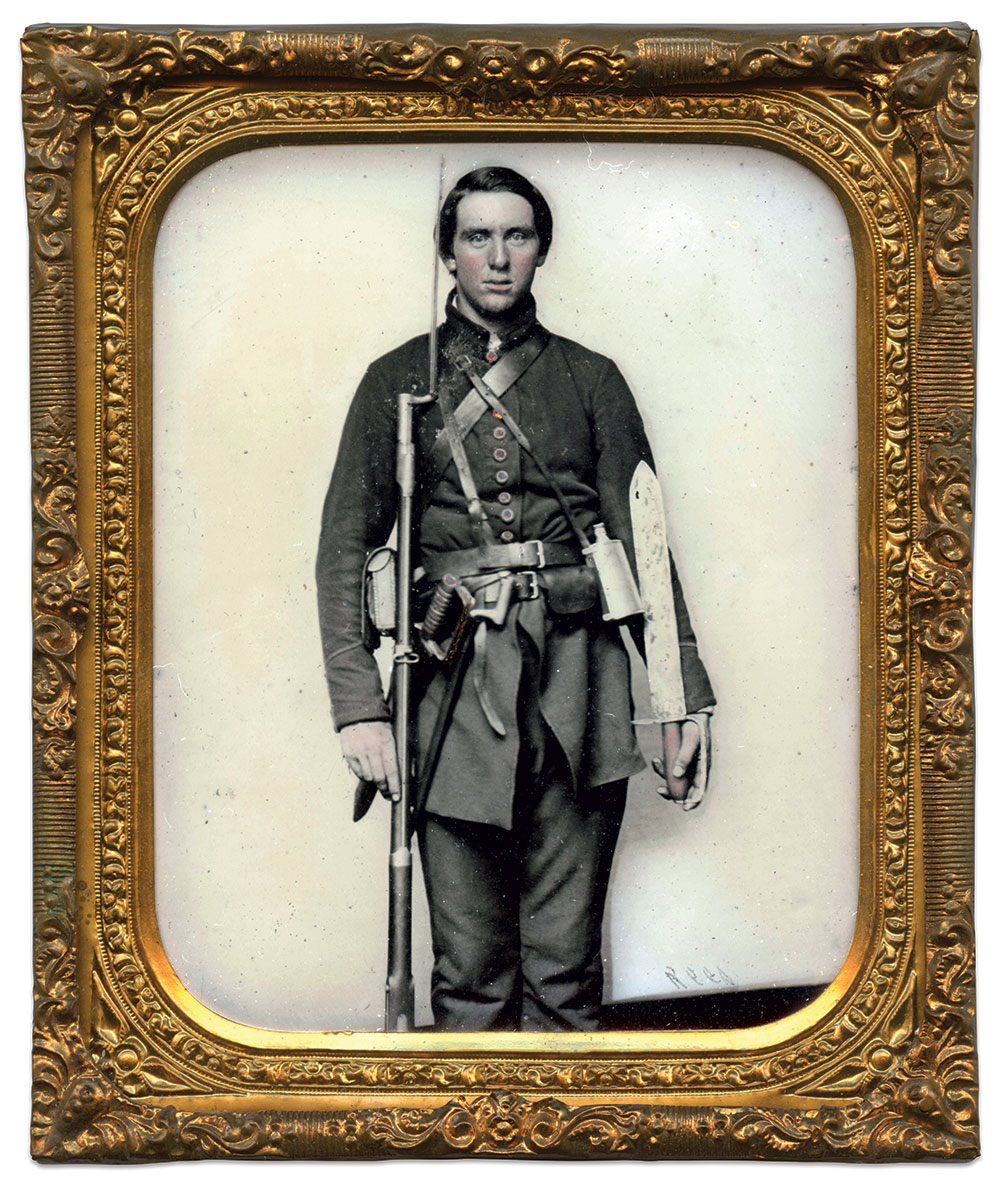
Postwar illustrations of Brig. Gen. Lewis A. Armistead, hat on raised saber, as he led his brigade into the maelstrom of Pickett’s Charge, are representative of the courage of Virginians in the failed assault. One of the men who fought with Armistead that day, William B. Chatten, is largely forgotten. A private in Company A of the 356-strong 38th Virginia Infantry, he numbered among the regiment’s 230 casualties with a gunshot wound in his left arm.
Following the charge, Chatten and other wounded received basic treatment at a field hospital. The next day—the Fourth of July—he and other injured were captured with the surgeon who remained to care for them. Thus began Chatten’s journey as a prisoner of war, held briefly at Fort McHenry in Baltimore and then forwarded to Fort Delaware, where he succumbed to smallpox on Aug. 24, 1863. He was about 23 years old.
—Ronald S. Coddington

In the Bloody Angle with Baxter’s Zouaves
The 72nd Pennsylvania Infantry, part of the respected Philadelphia Brigade, played a critical role in repelling Gen. Robert E. Lee’s final assault at Gettysburg. The Keystone State men defended against Pickett’s Charge, and engaged in brutal hand-to-hand fighting at what became known as the Bloody Angle.
The 72nd, known as Baxter’s Fire Zouaves, included Augustus F. “Gus” Dumont, the son of French immigrants. In 1861, 15-year-old Gus joined the regiment as a musician. Part of his motivation may have been a regular soldier’s salary to support his widowed mother, Margaret, in Philadelphia. By early 1862, Dumont transferred into the ranks as a private. He was present for duty throughout his service, including Antietam, where the 72nd was heavily engaged.
Dumont’s luck ran out at Gettysburg. Killed in action, his body was recovered and returned to Philadelphia, and laid to rest in Mount Peace Cemetery. His mother received a military pension for his service until her death in 1885.
—Paul Russinoff
He “Fell Among the Virginians”
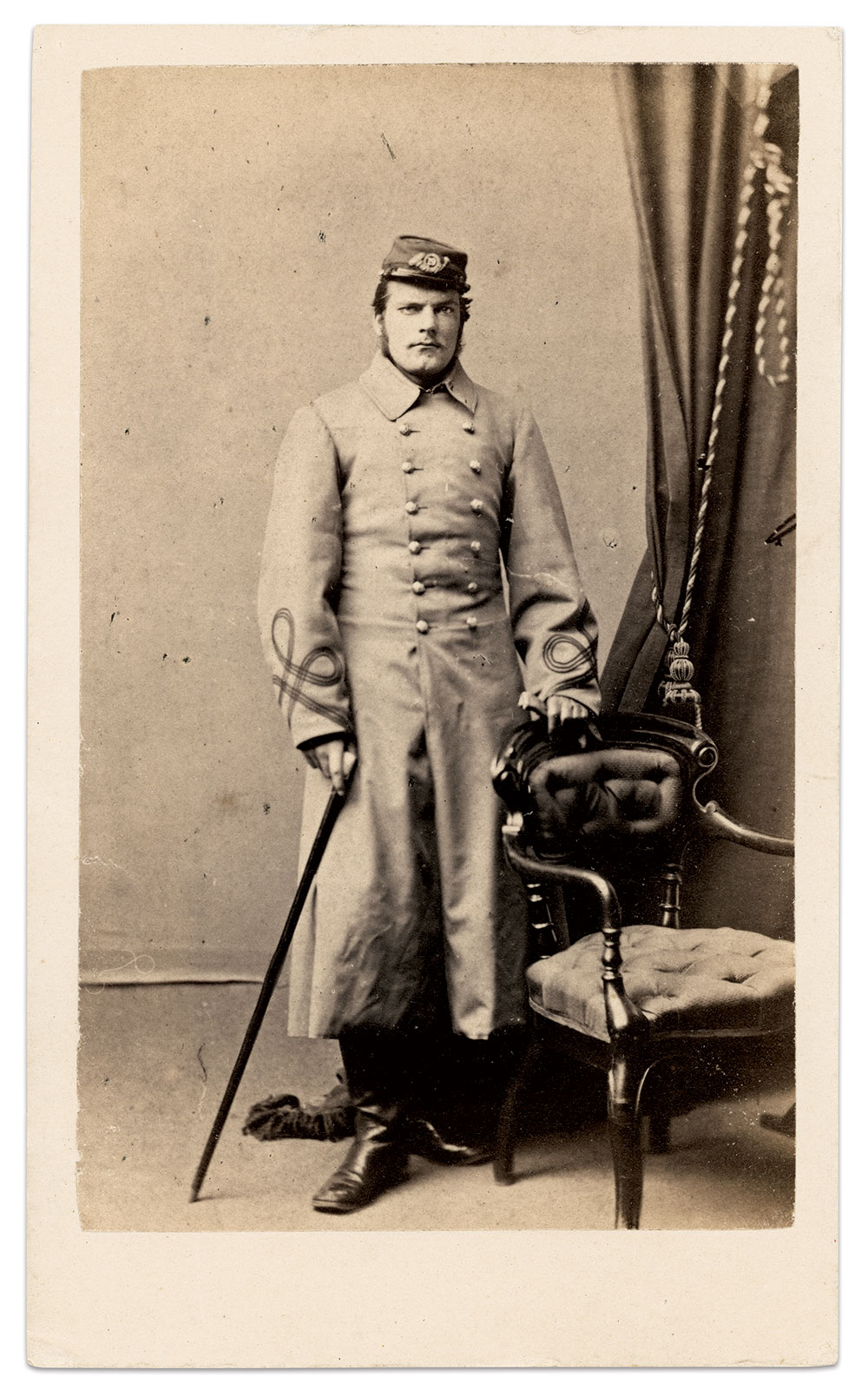
At the climactic moment during Pickett’s Charge, Lt. Col. Edmund Rice urged his 19th Massachusetts Infantry forward to seal a breach in the Union line at the Copse of Trees. Realizing that no orders could be heard in the chaotic din, Rice raised his sword and ran toward the enemy. He later recalled that he became “the bull’s eye for a good many of Pickett’s men.”
He was right. His sword was shot from his hand and his cap from his head before two gunshot wounds to his right thigh knocked him down, and he “fell among the Virginians.” The 19th’s colonel, Arthur Devereux, observed that Rice was wounded “whilst his foot was placed on a man in the enemy’s front rank who had partially fallen or purposely kneeled.”
Rice’s counterattack, and similar small-scale advances, broke the back of Longstreet’s assault. Carried to the 2nd Corps field hospital, a surgeon recalled Rice making light of his wounds, as a “good joke,” and carrying with him three captured Confederate battle flags.
His Gettysburg gallantry was but one in a string of courageous acts. He suffered two wounds in addition to the one at Gettysburg: a canister round in his upper thigh at Antietam and an injury at Spotsylvania. Captured in the latter engagement, he and other prisoners escaped and made their way to Union lines. He is pictured here wearing a custom-tailored double-breasted overcoat with French braids on the sleeve denoting his rank of colonel, a rank he achieved in July 1864.
Rice survived his service and received the Medal of Honor for Gettysburg in 1891. He had subsequent service with the U.S. Army, notably during the Spanish-American War and Philippine Insurrection. He died in 1906, and his remains rest at Arlington National Cemetery.
— Dale R. Niesen

Tending to Casualties at the Schwartz Farm
As the fighting unfolded, so did aid stations. The 2nd Corps established a field hospital along the Taneytown Road, but enemy shelling prompted its relocation several miles south of the battlefield to the 300-acre farm of Jacob Schwartz.
Surgeon Justin Dwinelle Jr. of the 106th Pennsylvania Infantry oversaw the care of the wounded. Born into a prominent family in Madison County, N.Y.—his father served in the U.S. Congress and his mother was related to Declaration of Independence signer William Whipple—Dwinelle joined the army in May 1861. Before leaving his wife and four children, he self-published a do-it-yourself medical guide to help his community, which had lost his services as its physician.
At Gettysburg, Dwinelle and medical staff had their hands full. By the evening of July 3, he estimated 3,260 wounded and dying soldiers were present, including 950 Confederates, many of them captured after Pickett’s Charge. Most of the Southerners were packed into a big bank barn, and the Northerners spread across fields on a thin layer of straw from Schwartz’s stock.
A Christian Commission Delegate sent to help noted that many were destitute of clothing, some almost naked, and suitable food unavailable. To complicate matters, many medical personnel left with the Army of the Potomac to pursue the retreating Confederates. Heavy rains added to the misery after a nearby creek overflowed, sweeping some of the wounded away.
In all, close to 500 patients treated at the Schwartz Farm died, surprisingly low given the horrendous conditions and nature of the wounds—and perhaps a testament to Dwinelle’s therapeutic and administrative skills. One captured officer, Col. William Gibson of the 48th Georgia Infantry, noted, “Dr. Dwinelle has done all for me that I could wish, and his kindness to me will never be forgotten. He has the will and the sense to do his whole duty to his fellow-man, and is an upright, just, and honorable gentleman.”
Dwinelle was less fortunate than those who survived their stay at the Schwartz Farm; while performing cranial surgery at Brandy Station in 1864, he nicked his finger, and infection set in. He battled the effects of the ailment for several years, but was unable to stop it from claiming his life in 1871, just short of his 50th birthday.
—Charles T. Joyce
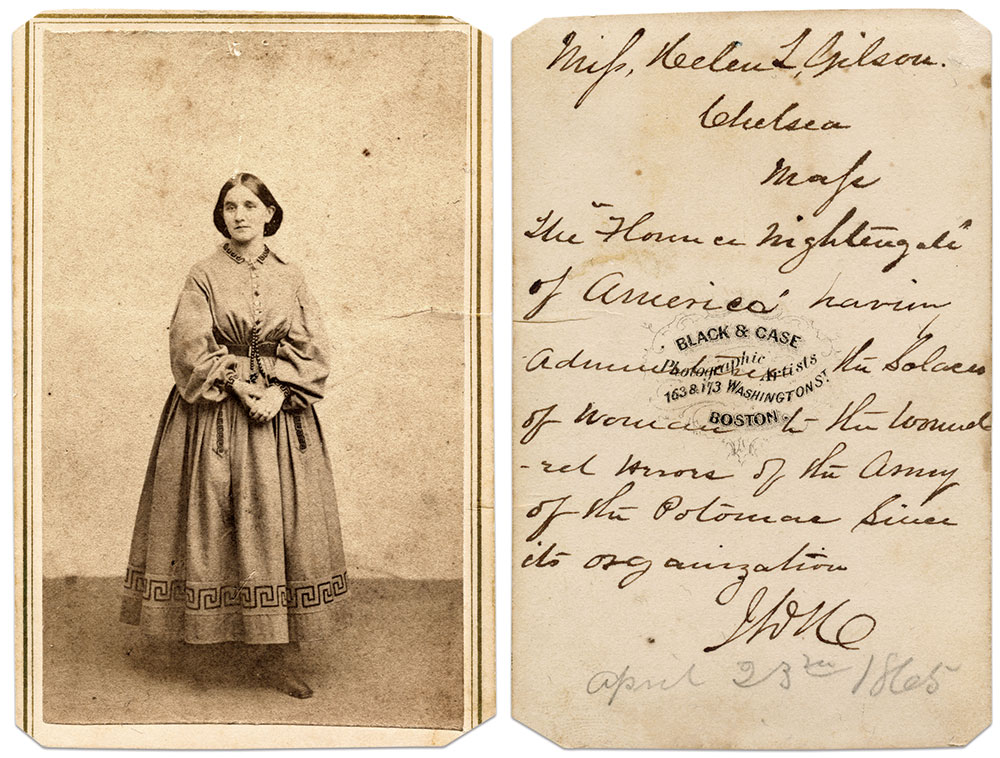
“The ‘Florence Nightingale’ of America”
Helen Louise Gilson, 26, arrived at Gettysburg on July 3 as a veteran nurse who had experienced the grim realities of war. During the Peninsula Campaign, and after the battles of Antietam and Fredericksburg, she attended to bodies shattered by shot and shell. Soldiers remembered her as a tireless caregiver who exuded calm bravery under fire. Amidst the thunder of artillery, they recalled her cheerful demeanor and soft, melodic voice as she sung to the men.
Gilson, working alongside Frank Fay, the mayor of Chelsea, Mass., and his children’s pre-war nanny, organized relief efforts and secured supplies for the U.S. Sanitary Commission. At Gettysburg, she supplied desperately needed medicines and food when official channels fell short. She also proved her resolve after a field hospital was cut off from the main camp by a flooded stream. Gilson remained behind, caring for nearly 250 soldiers, mostly Confederates.
Gilson went on to lead one of her most consequential efforts in June 1864 at City Point, Va., where she alone volunteered to care for neglected Black soldiers of the 9th Corps. She organized a proper hospital, reduced mortality, and upheld equal care. After the war, she aided freedmen and married. She died in 1868 at age 32 from complications during childbirth.
Though much has been written about her, perhaps her finest tribute can be found on the back of this carte de visite: “The ‘Florence Nightingale’ of America, having administered the solace of woman to the wounded heroes of the Army of the Potomac since its organization.”
—Melissa A. Winn
About the curator
Charles T. Joyce, an MI Senior Editor, focuses his collection on images of soldiers killed or mortally wounded at the Battle of Gettysburg.
About the contributors
Rick Brown is Executive Editor of MI.
Scott D. Hann is a native Philadelphian and a retired Atlantic City, N.J. casino dealer. In the fourth grade, after reading a few old cloth-covered books about historic figures, Ulysses S. Grant sparked his interest in the Civil War. In his adult life, he studied history at the universities of Arizona and Texas. Scott is proud of his genealogy which includes kings of England, William Shakespeare, and Civil War soldiers who fought on opposite sides at Gettysburg. He even has a collateral ancestor who was hung during the Salem Witch Trials.
Robert May of Syracuse N.Y., started collecting Civil War memorabilia at the age 15, inspired by his first trip to Gettysburg. Now 20, he can confidently say this will be a lifelong passion, and he’s looking forward to continuing to share soldiers’ stories with everyone.
Dale R. Niesen is the founder of The Image Collector on Facebook. A collector of Civil War images who is focused on Michigan portraits, Dale is also a photographer documenting natural phenomena in the Midwest. He is an MI Senior Editor.
Paul Russinoff of Baltimore, Md., has been a passionate collector and researcher of photographs from the Civil War since elementary school. A subscriber to MI since its inception, representative images from his collection appeared in the Autumn 2014 issue. He is a Senior Editor of MI.
Melissa A. Winn has been enchanted with photography since childhood. Her career as a photographer and writer includes numerous publications, among them Civil War Times, America’s Civil War, and American History magazines. She is currently Director of Marketing and Communications for the National Museum of Civil War Medicine. Melissa collects Civil War photos and ephemera, with an emphasis on Dead Letter Office images and Gen. John A. Rawlins, chief of staff to Gen. Ulysses S. Grant. Melissa is a MI Senior Editor.
SPREAD THE WORD: We encourage you to share this story on social media and elsewhere to educate and raise awareness. If you wish to use any image on this page for another purpose, please request permission.
LEARN MORE about Military Images, America’s only magazine dedicated to showcasing, interpreting and preserving Civil War portrait photography.
VISIT OUR STORE to subscribe, renew a subscription, and more.