
By Phil Spaugy
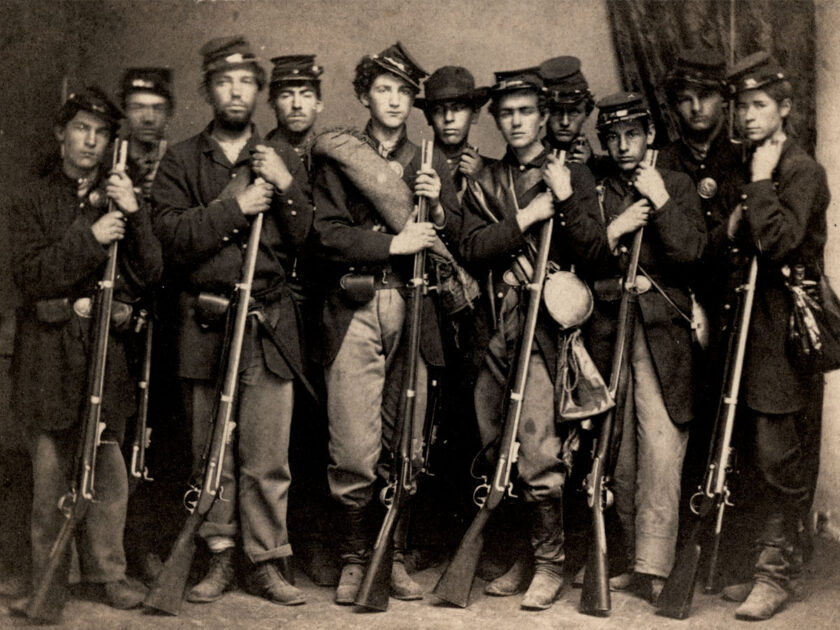
Eleven veteran federal infantrymen standing at ease with their U.S. Model 1842 rifled muskets are front and center in this richly detailed portrait by a photographer in Terre Haute, Ind. Youth is evident in their faces, many clean shaven if in fact they were old enough to require a razor. Still there is little doubt that these boys had, in the parlance of the day, “been to the circus and have seen the elephant!”
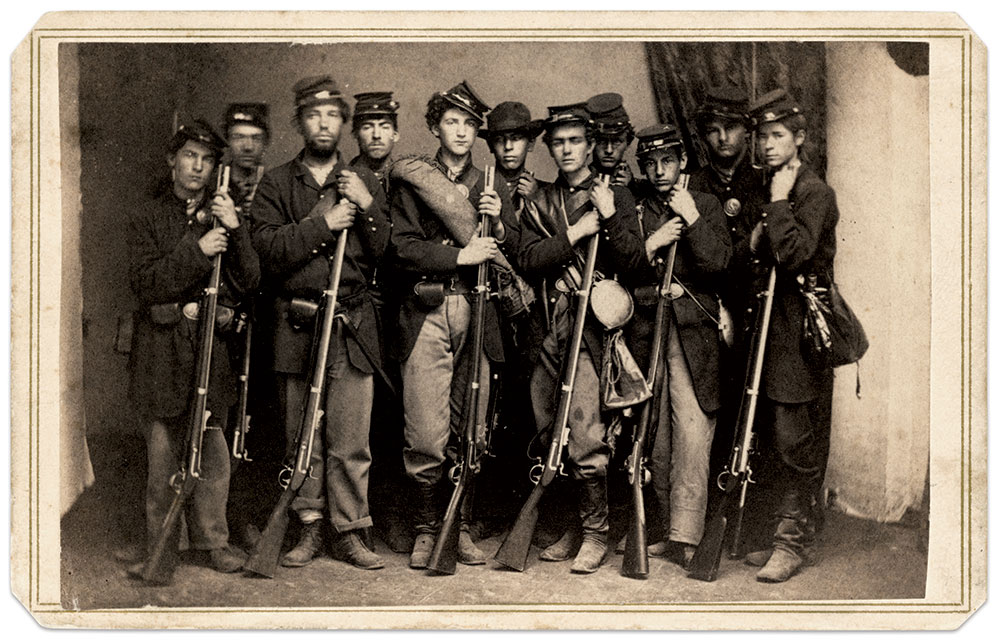
This is the type of image that begs to be researched in depth, and if possible, to at the very least, identify the unit.
While to the casual observer it might appear that the rifled muskets are all easily identified as U.S. Model 1842 rifled muskets in 0.69 caliber, there are some differences that set a few of the rifled muskets in the image apart from the others.
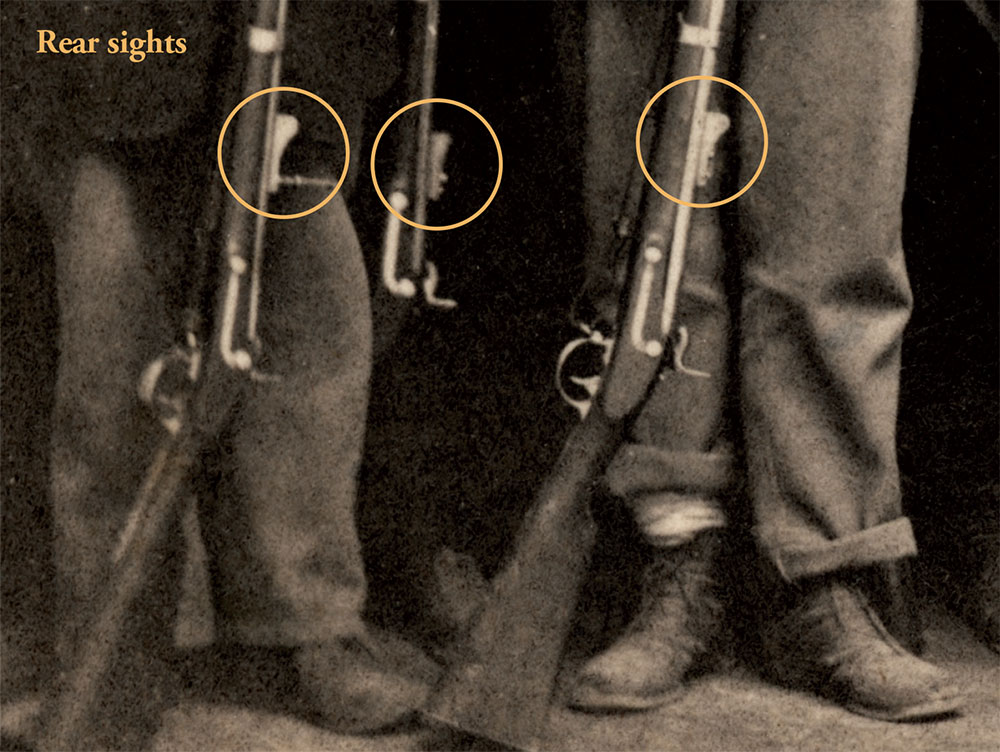
This difference lies in a very slight variation in the rear sight configuration. The U.S. Model 1842 long-range rear sight had much higher sidewall profile than the rear sight used on the Model 1842 smoothbore muskets, which were rifled and sighted by Miles Greenwood of Cincinnati, Ohio. In late 1861 the government contracted with Greenwood to provide 3,000 rifled muskets to the state of Indiana. It is important to note that while Greenwood would rifle more than 25,000 Model 1816/22 and M1842 smoothbore muskets, only 20 percent would be equipped with long range rear sights. This makes identifying Greenwood rifled arms in period images extremely difficult because they may appear to be smoothbore rifle muskets.
Research reveals that the 15th, 32nd, 33rd and 50th Indiana Volunteer Infantry regiments received Greenwood altered M1816/22 or M1842 rifled muskets in late 1861 or early 1862. Given this, I initially had thought the image might be of Company E of the 33rd, since they were raised in the Terre Haute area. However further research showed me that Wright and Prescott, the photographers, did not begin their partnership in Terre Haute until 1863. By this time, all four units mentioned above that had been issued the Greenwood rifled muskets had turned them in and were then issued first-class Springfield or Enfield rifle muskets.
Back down the rabbit hole I went!
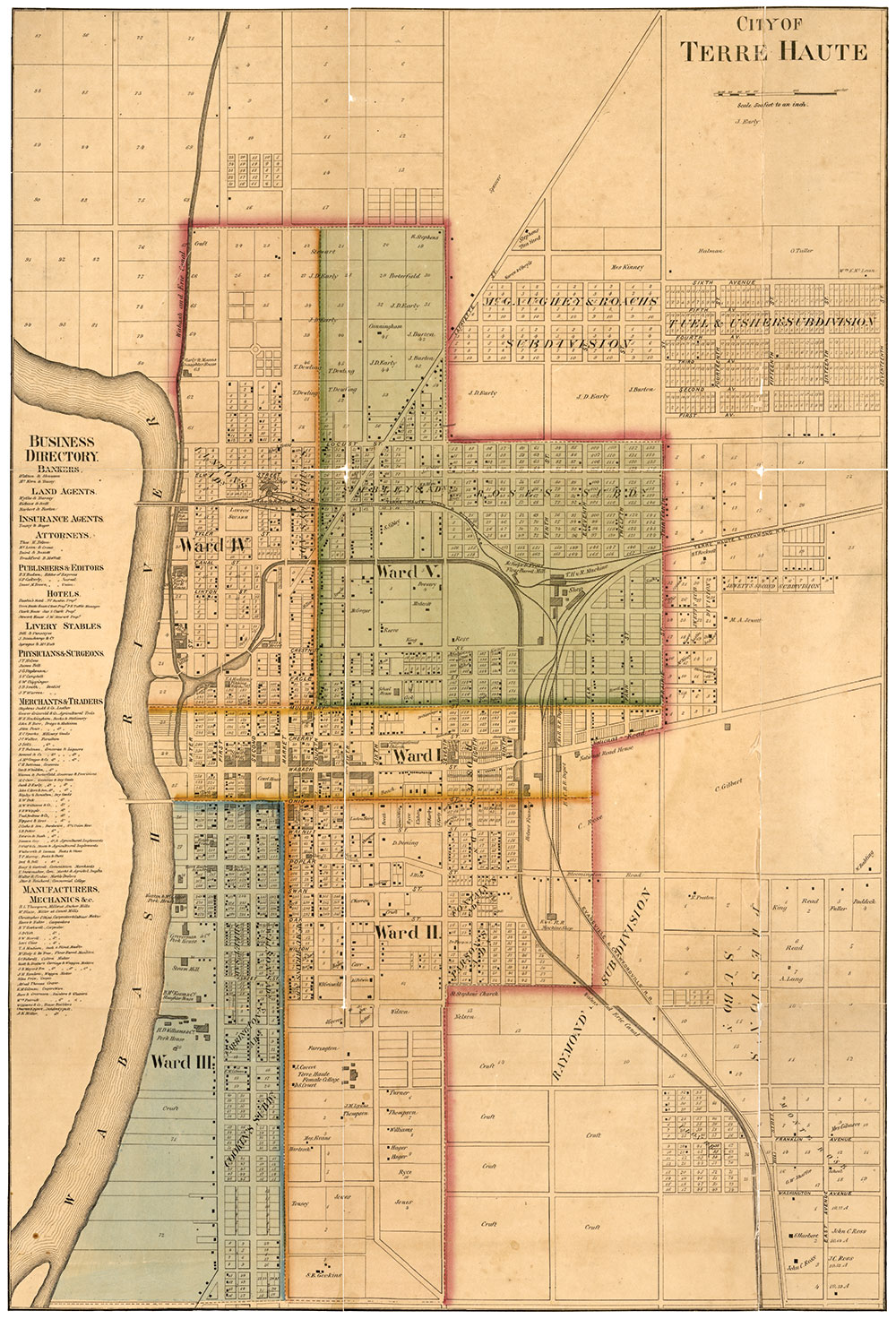
As one can see in the image, the eleven have the look of veteran campaigners. I remembered that Terre Haute was the location of number of rail junctions including the Terre Haute, Indianapolis, Richmond, and Terre Haute and St. Louis railroads. It occurred to me that these soldiers who were obviously of the same unit could have had this image made while their train was stopped in Terre Haute. I do not think they were on a veterans’ furlough as they were all armed and equipped for field service.
Given this, and that several western regiments were armed with the M1842 rifled musket and the Greenwood M1842 rifled variant, unit identification would be difficult if not impossible.
There are several more items in this image that bear comment:
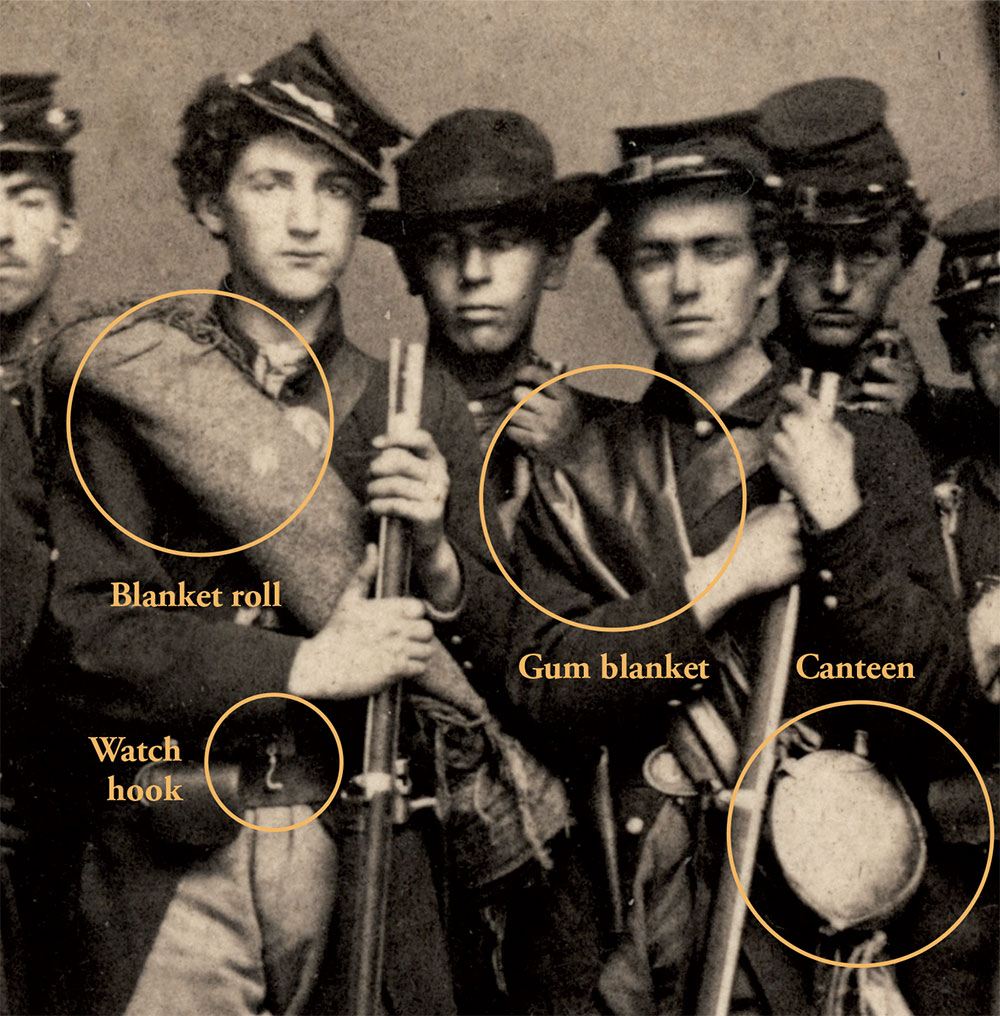
The blanket roll on the soldier standing fifth from the viewer is not the regulation issue U.S. blanket, but rather a unique fringed blanket or coverlet of civilian manufacture. There is also a small pocket watch hook visible below his hand, and what may be the watch chain that is looping over the top of his cap box and then disappearing into a watch or front pocket.
The soldier next to our blanket roll subject is wearing what appears to be the army issue gum blanket in over the shoulder blanket roll fashion. On top of this there is the three-pint M1858 “smooth side” canteen without its fabric covering.
The forage caps all appear to be of the M1858 pattern, with one soldier wearing a soft felt hat of civilian manufacture.
Most of the footwear appears to be the calf height “Wellington” boot. One soldier wears the regulation ankle height brogan, with his pant legs rolled up, and one sock or perhaps the bottoms of his under drawers.
References: The Terre Haute Star, 1863-1864; Sylvia and O’Donnell, Civil War Canteens; Todd, American Military Equipage, 1851-1872, Volumes I and II (State Forces); Greenwood Arms research by James Brenner and the author.
Phil Spaugy is a longtime member of the North South Skirmish Association (N-SSA). He studies arms and accouterments of federal infantry soldiers with an emphasis on his home state of Ohio, firearms of the U.S. Arsenal at Harpers Ferry, and the Iron Brigade. He is a partner with Jim Hessler, in Hessler Spaugy Action Travel. Phil is a retired aviation services company executive who lives in Vandalia, Ohio, with his wife, Amy. He is a MI Senior Editor. Contact Phil at PhilSpaugy@gmail.com.
SPREAD THE WORD: We encourage you to share this story on social media and elsewhere to educate and raise awareness. If you wish to use any image on this page for another purpose, please request permission.
LEARN MORE about Military Images, America’s only magazine dedicated to showcasing, interpreting and preserving Civil War portrait photography.
VISIT OUR STORE to subscribe, renew a subscription, and more.