
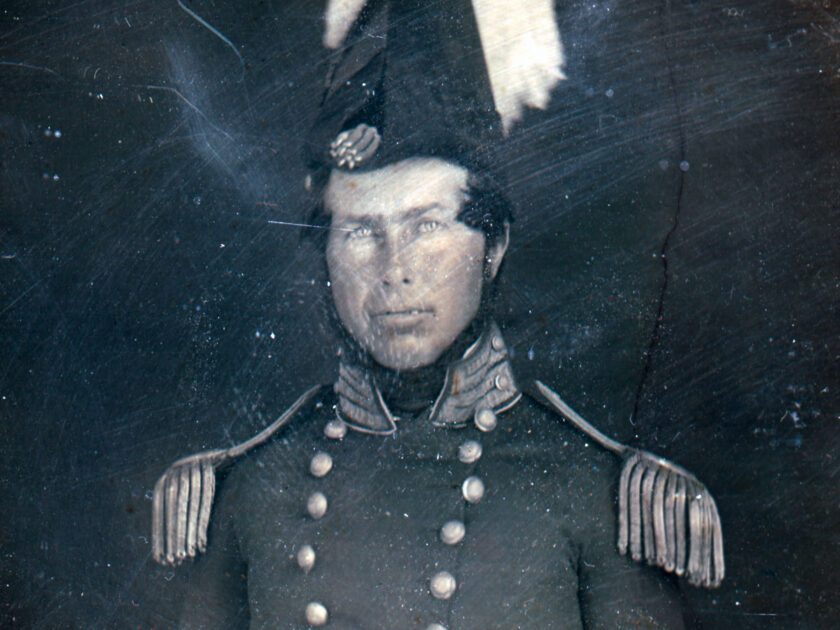
An Antebellum Militia Officer Daguerreotype
This officer holds a Model 1834 general officer’s sword, likely produced by the Ames Manufacturing Company, judging by its pommel and mounts. He wears narrow sleeves associated with Mexican War–era
This officer holds a Model 1834 general officer’s sword, likely produced by the Ames Manufacturing Company, judging by its pommel and mounts. He wears narrow sleeves associated with Mexican War–era
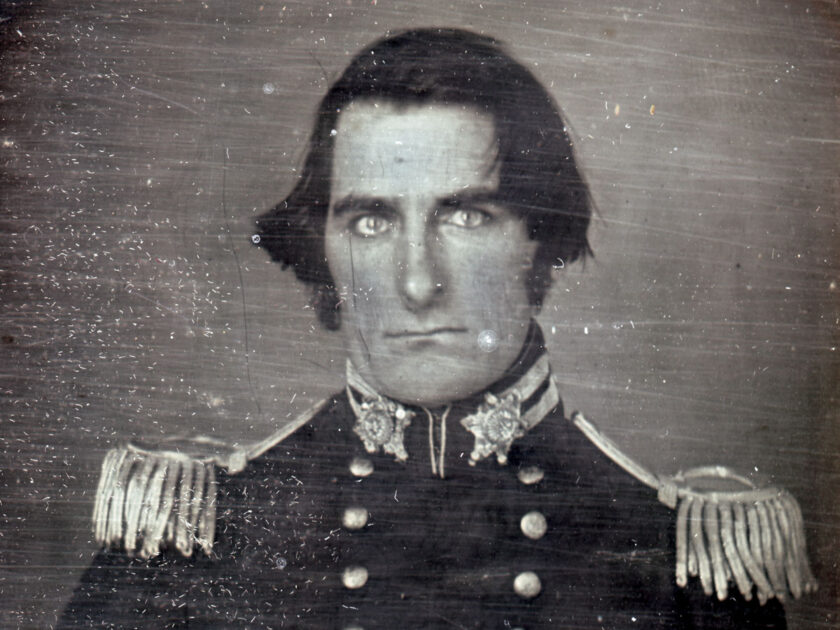
This clean-shaven officer, in gold trim, with a staff-pattern buckle and a fashionable eagle-head sword, is representative of the militia culture in the antebellum United States. Between the Treaty of
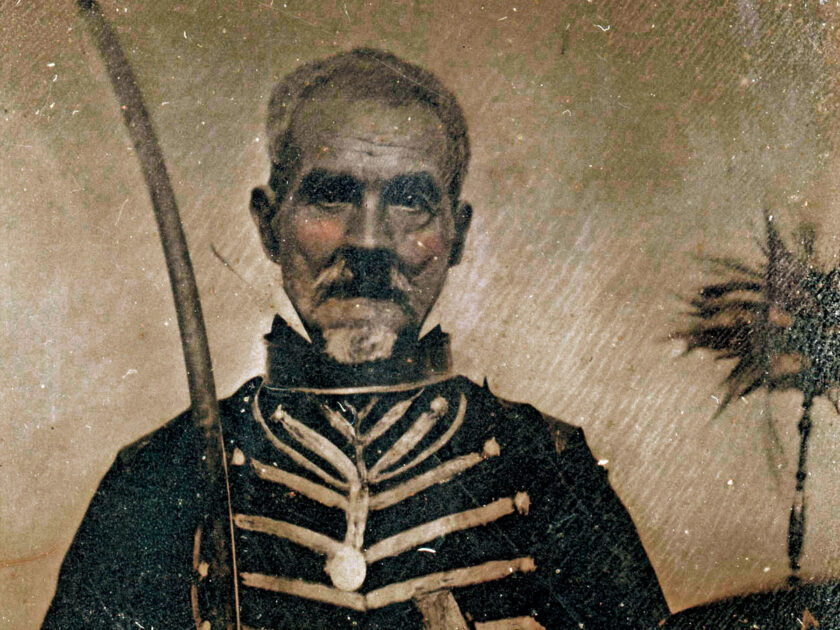
By Ron Field The antebellum volunteer militia of South Carolina wore a great variety of uniforms. Distinguished by the Palmetto-shaped plume on extended stem, and Palmetto device at the front

By Joe Bauman Few soldiers served in the major armed conflicts of 1812, Mexico, and the Civil War. The most notable name is Lt. Gen. Winfield Scott, who commanded the

This well-appointed soldier appears ready for duty with one hand on the grip of his sword and the other mid-blade, suggestive of the port arms drill position for inspection. Though

The sailor in this image wears a white cotton warm weather frock with blue “nankin” collar and bib bordered with three strips of white trim. The blue bib suggests this

The uniform, equipment and bearskin cap worn by this militiaman closely resemble those worn by members of the 6th Massachusetts Infantry. Established in 1855 in a reorganization of the state

Marcus Aurelius Root, renowned Philadelphia photographer and author of the 1864 treatise and handbook, The Camera and the Pencil; or the Heliographic Art, created this portrait of a U.S. Army
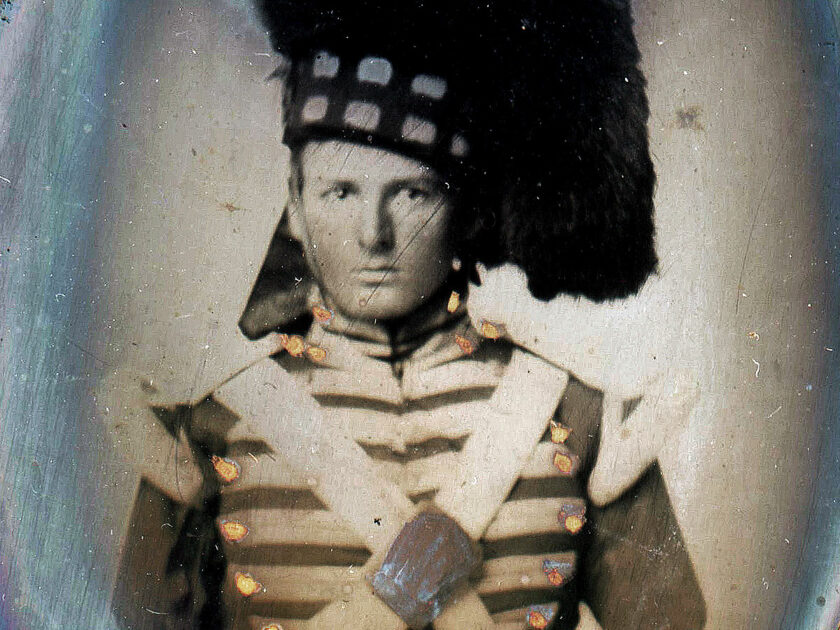
By Ron Field Scottish immigrants to the U.S. during the 19th century brought with them a rich military tradition. Wearing full Highland uniforms, militia companies of Scottish origin formed in
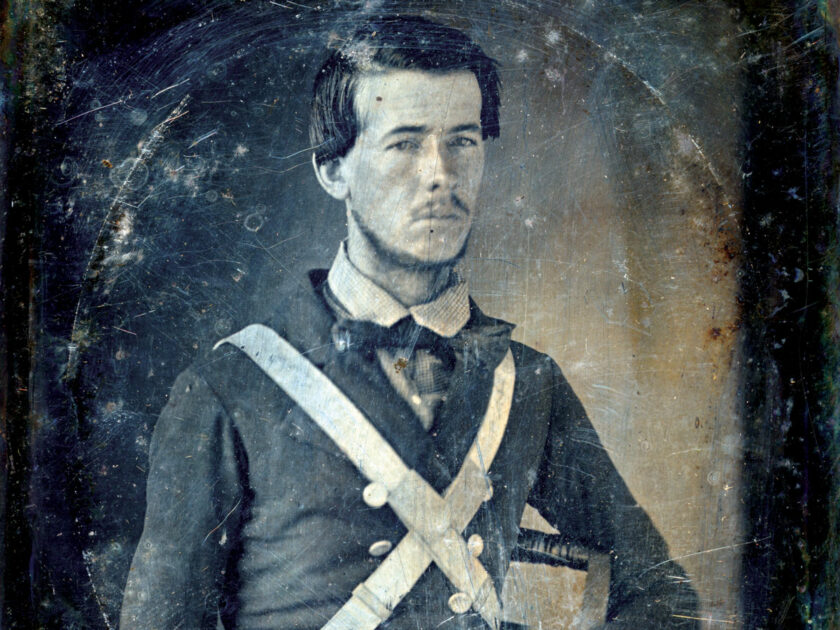
The cross-belts and bayonet scabbard worn by this volunteer are consistent with equipment used during the Mexican War. His tailcoat with tapered sleeves and buttons (known as “coin buttons” for