

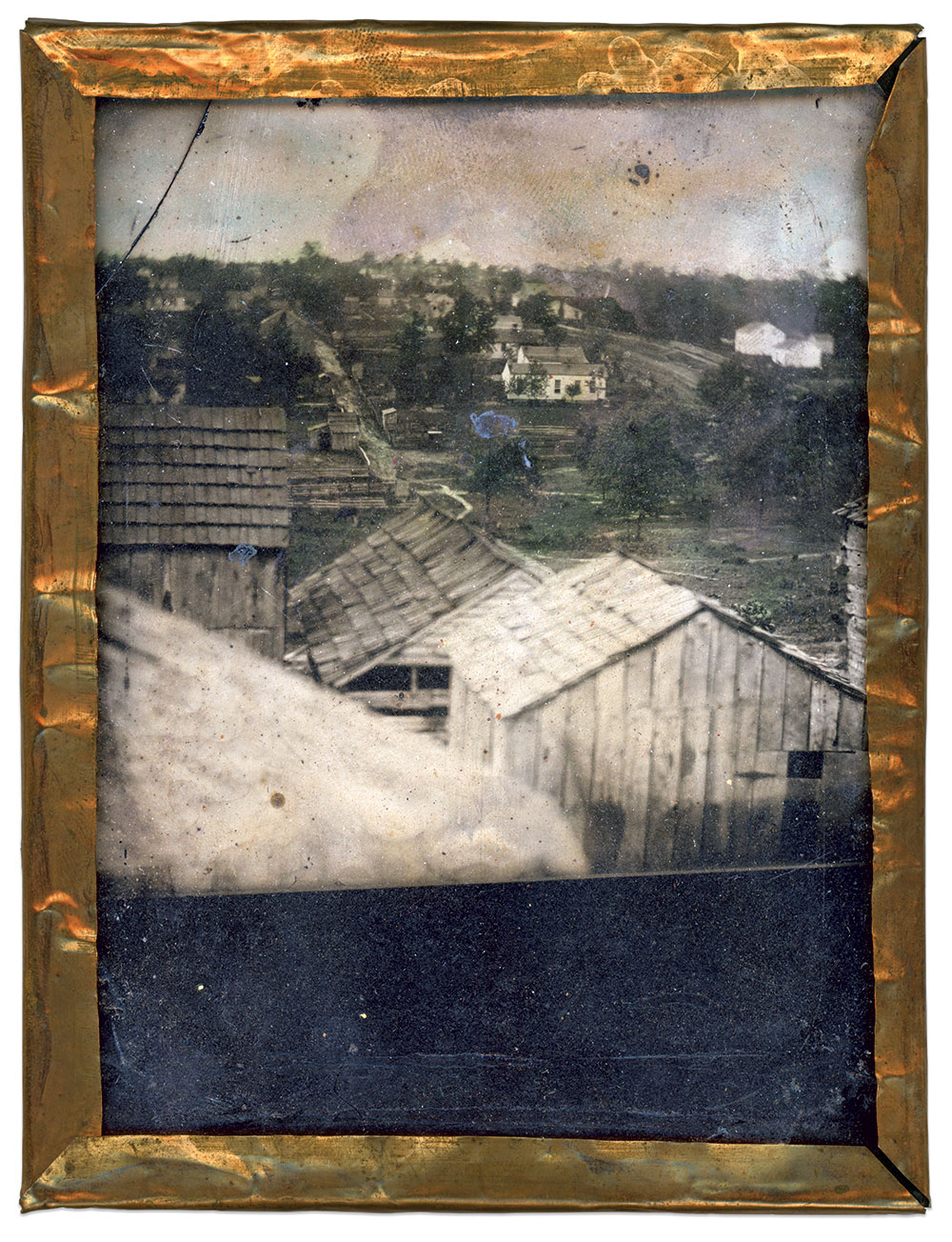
A unique double-sided ambrotype features a Southern trooper on the front and a town scene on the back. The cavalryman wears an enlisted infantry-pattern overcoat, broad-brimmed hat, and riding boots. His horse’s equipment includes a likely Confederate three-buckle bridle with cloth reins, possibly reflecting leather shortages, and a captured federal Model 1859 McClellan saddle. A rolled blanket and possibly Confederate-made Model 1860 saber complete the ensemble. Neither the trooper nor the town is identified. The image came from an Oklahoma estate. Artistically, note the color tinting, particularly his cape and sword and hand-painted tufts of foliage. Also of interest is the custom-cut brass mat to frame the subject.
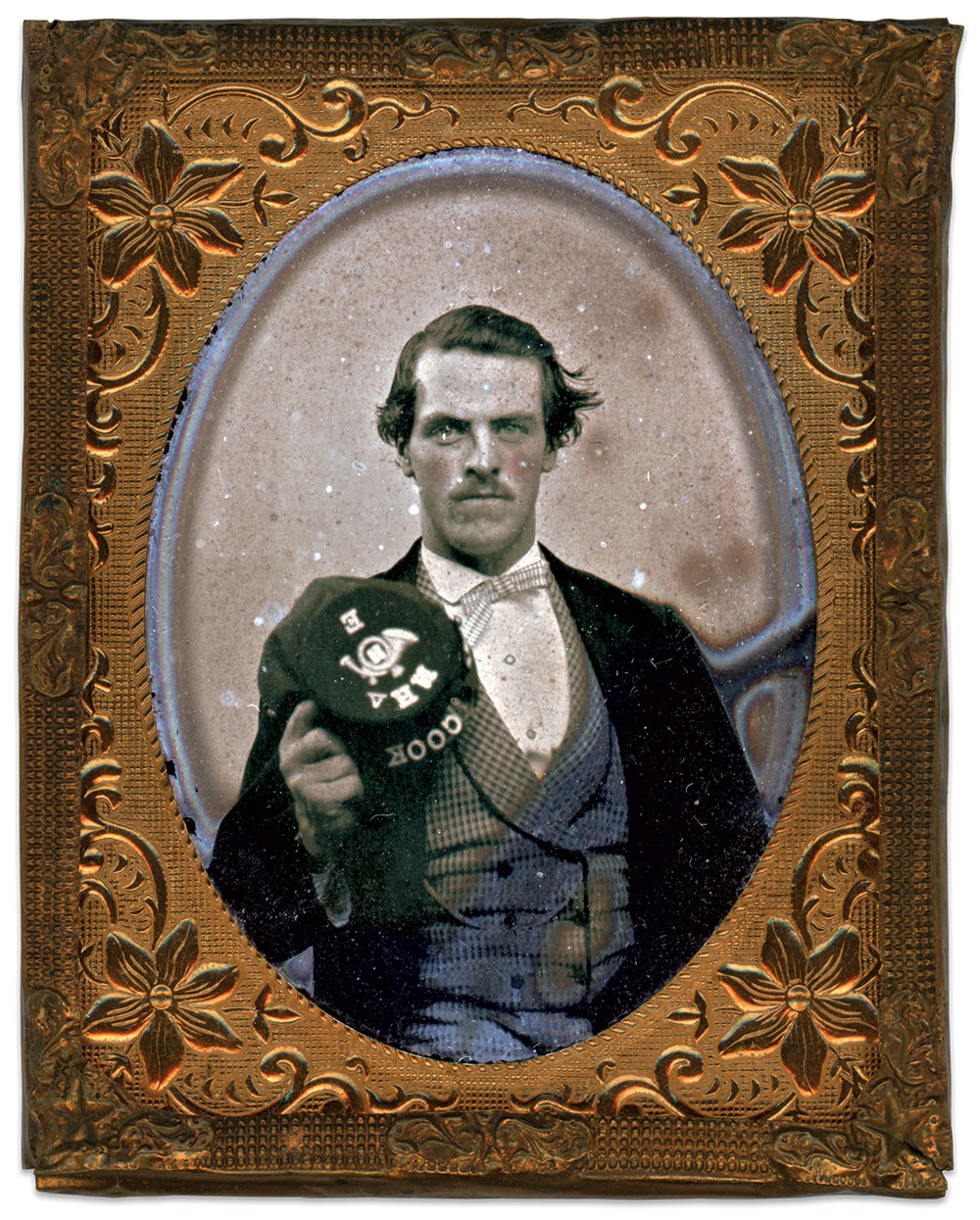

Portraits of New Hampshire soldiers holding up their caps to reveal the distinctive NHV brass and related insignia are familiar to image collectors. Far less common are additional letters spelling out a man’s role. This member of Company E of the 11th New Hampshire Infantry added COOK to his visor. Image owner Heather Steele identified a possible match: Rufus Baker (1829–1911), who served as a cook in the company. Baker suffered wounds to his face and foot at Fredericksburg in December 1862 and received a discharge two months later.

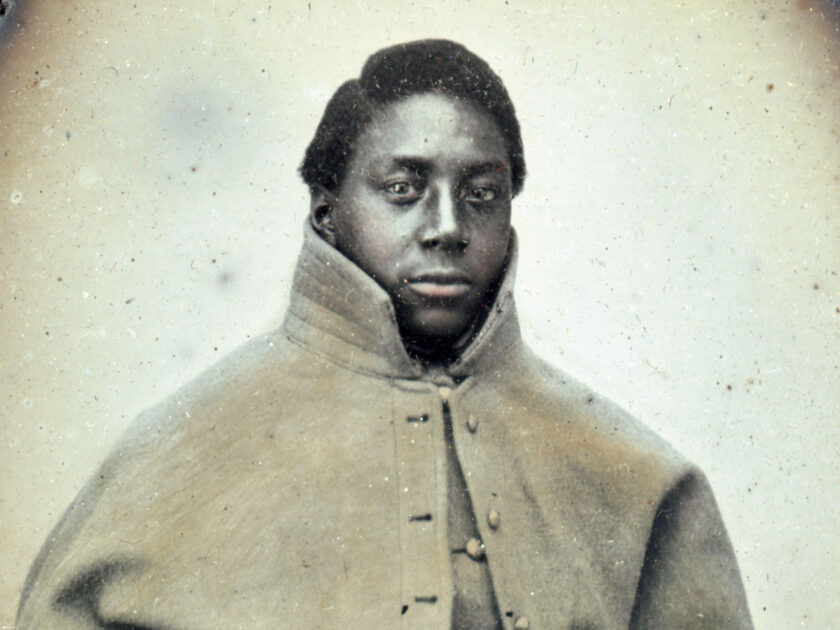
A member of the U.S. Colored Troops wearing his greatcoat is prepared for cold weather. His likeness brings to mind the words of the nation’s first Black U.S. senator, Hiram Revels of Mississippi. In his first speech on the Senate floor, he noted, “The people of the North owe to the colored race a deep obligation which it is no easy matter to fulfill. When the federal armies were thinned by death and disaster, and somber clouds overhung the length and breadth of the Republic, and the very air was pregnant with the rumors of foreign interference—in those dark days of defeat, whose memories even yet haunt us as an ugly dream, from what source did our nation in its seeming death throes gain additional and new-found power? It was the sable sons of the South that valiantly rushed to the rescue, and but for their intrepidity and ardent daring many a northern fireside would miss today paternal counsels or a brother’s love.”

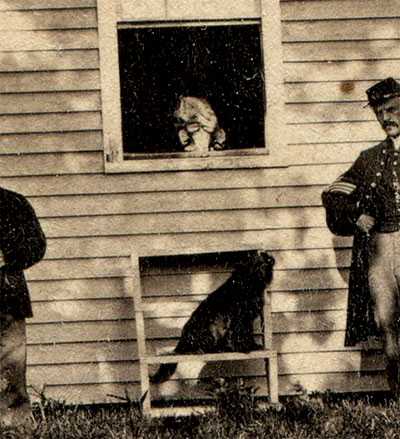
Four noncommissioned officers and a dog, flanked by two enlisted men, pose between hay bales and a house. In the window, a cat turns its head away as a pair of hands holds it steady. A woman stands in the doorway. She may be Addie A. Searle, whose name is inscribed on the back of the mount, along with the imprint of photographer Joshua Appleby Williams of Lovell General Hospital in Portsmouth Grove, R.I. Searle may also be the author of “Oh Deathless Land,” a poem echoing themes of war, Christianity, and heaven, published in Peterson’s Magazine in April 1871.

A quintessential Union cavalry trooper, equipped with the arms and accoutrements of his branch of service, sits astride his horse. The two-story buildings with porches and columns in the background offer clues to the location of the portrait and the identity of the sitter.

A Southern captain cradles a sword.
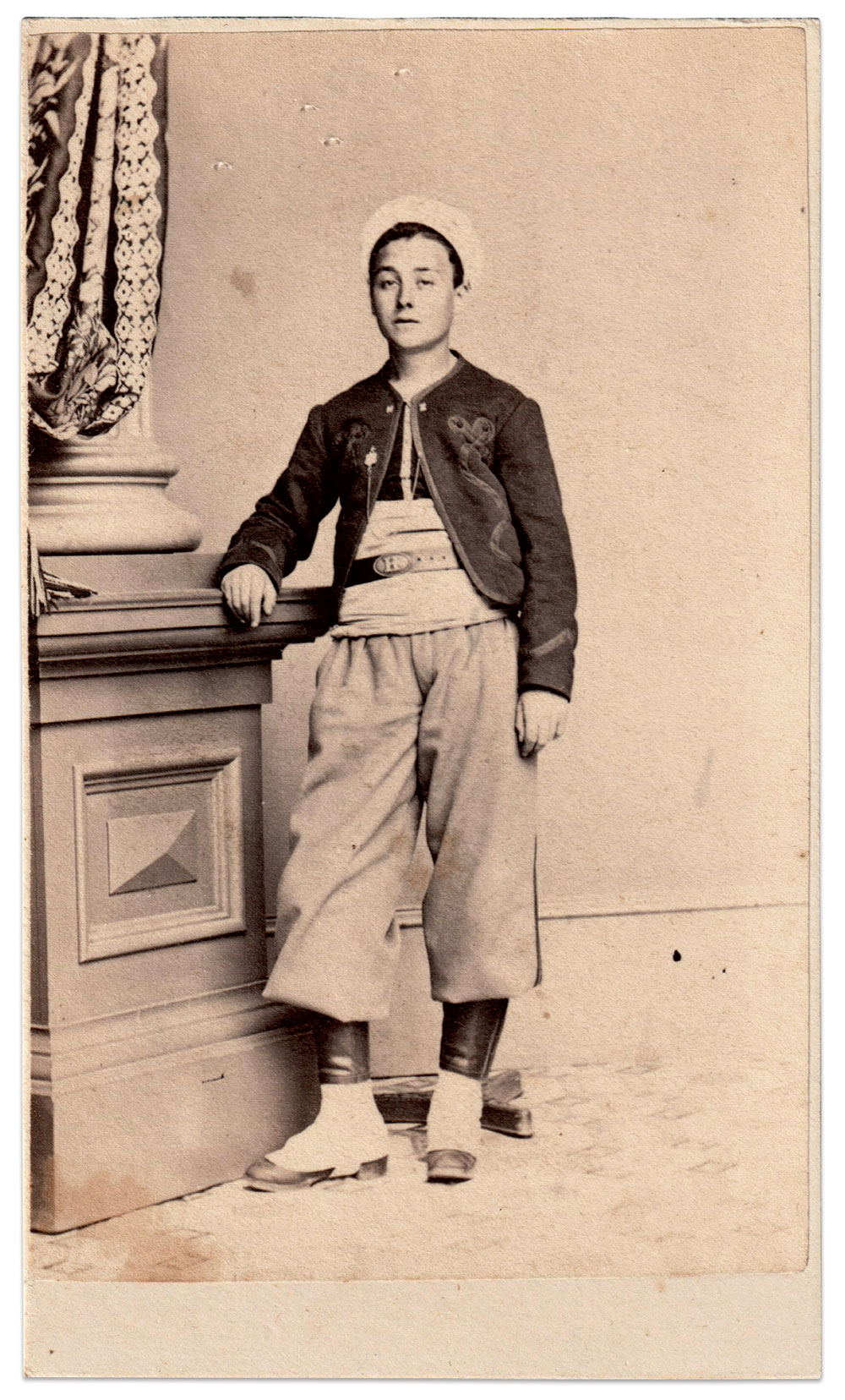
A member of the 10th New York Infantry wears an oval belt plate embossed with the company letter H. Also known as the National Zouaves or McChesney’s Zouaves, after Col. Waters W. McChesney, who had previously served with Elmer Ellsworth’s Zouaves, the 10th fought in 28 battles in the Eastern Theater. Photographer Matilda Moore (born in Prussia about 1832-unknown) was a pioneer woman photographer active from the 1860s until 1883.


This unidentified Confederate’s coat and weapons resemble those of Pvt. Henry Clay Tyson, 26th North Carolina Infantry, from our Summer 2026 issue. The portraits match in format and size. Both wear a Model 1851 Colt Navy revolver and a Sheffield knife at the belt.
SPREAD THE WORD: We encourage you to share this story on social media and elsewhere to educate and raise awareness. If you wish to use any image on this page for another purpose, please request permission.
LEARN MORE about Military Images, America’s only magazine dedicated to showcasing, interpreting and preserving Civil War portrait photography.
VISIT OUR STORE to subscribe, renew a subscription, and more.