
By Ronald S. Coddington
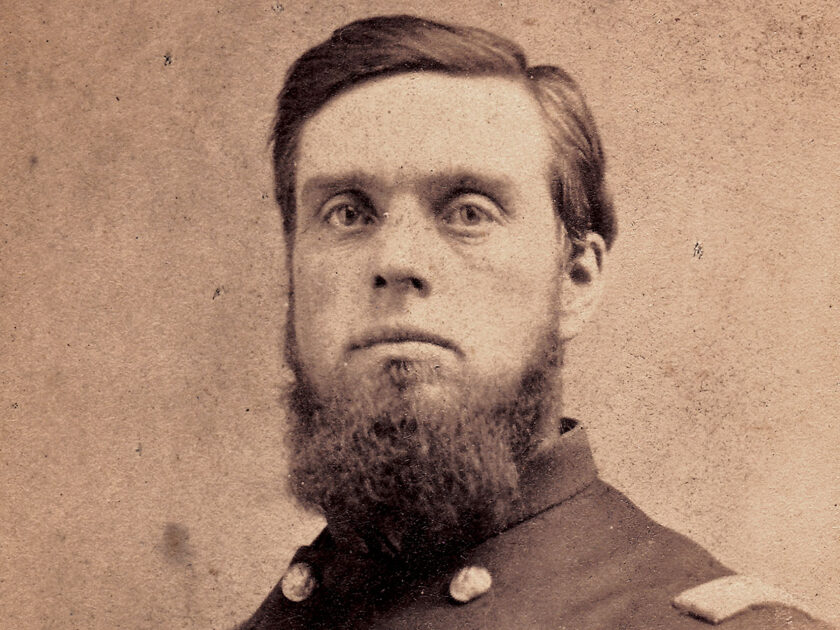
Wilder’s “Lightning Brigade” emerged as the Union Army’s innovative counter to fast-moving Confederate cavalry. The notable brigade of mounted infantry and artillery was ably led by Col. John Thomas Wilder (1830-1917), a New York native and mechanically-minded problem-solver with no formal military experience who, before the war, owned a foundry in Greensburg, Ind.
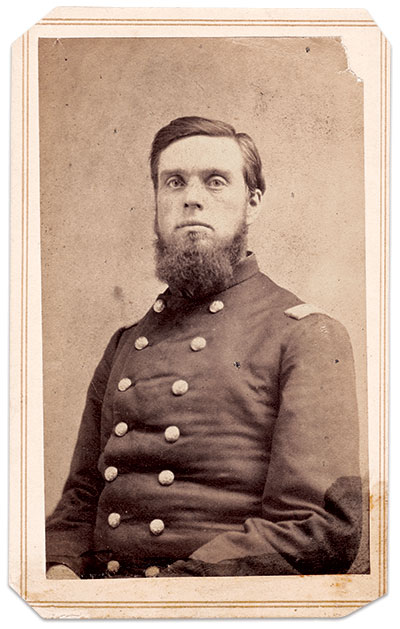
In 1861, he organized an artillery company and mustered into state service with a pair of cannon cast in his foundry—but the federal government needed more foot soldiers and mustered him and his men into the army as Company A of the state’s 17th Infantry. Wilder received his captain’s bars and soon advanced to lieutenant colonel of the regiment. About this time, the army permanently detached Company A, reorganizing it as the 26th Battery Indiana Light Artillery, known for a time as Wilder’s Battery after its original captain. Wilder remained with the 17th and, in March 1862, became colonel.
The Hoosiers joined the Army of the Cumberland in late 1862, and Wilder received an assignment to lead the brigade that originally consisted of his and two other Indiana infantry regiments, the 72nd and 75th, the 98th Illinois Infantry, and the 18th Indiana Light Artillery. Later, the 123rd Illinois Infantry replaced the 75th.
Thus was born Wilder’s Brigade. The story of how the brigade received its nom de guerre has its origins in the army’s lack of cavalry to chase and give fight to Confederates of the likes of John Hunt Morgan, and, without enough troopers, having to turn to infantry, which was not a winning solution. The commander of the Army of the Cumberland, Maj. Gen. William S. Rosecrans, seeking options, turned to Wilder, who converted his brigade to mounted infantry. Wilder’s men were also equipped with popular lever-action Spencer Repeating Rifles. As a result, the 2,000-strong brigade possessed the speed of cavalry and the sustained firepower of infantry—a potentially lethal combination in combat.
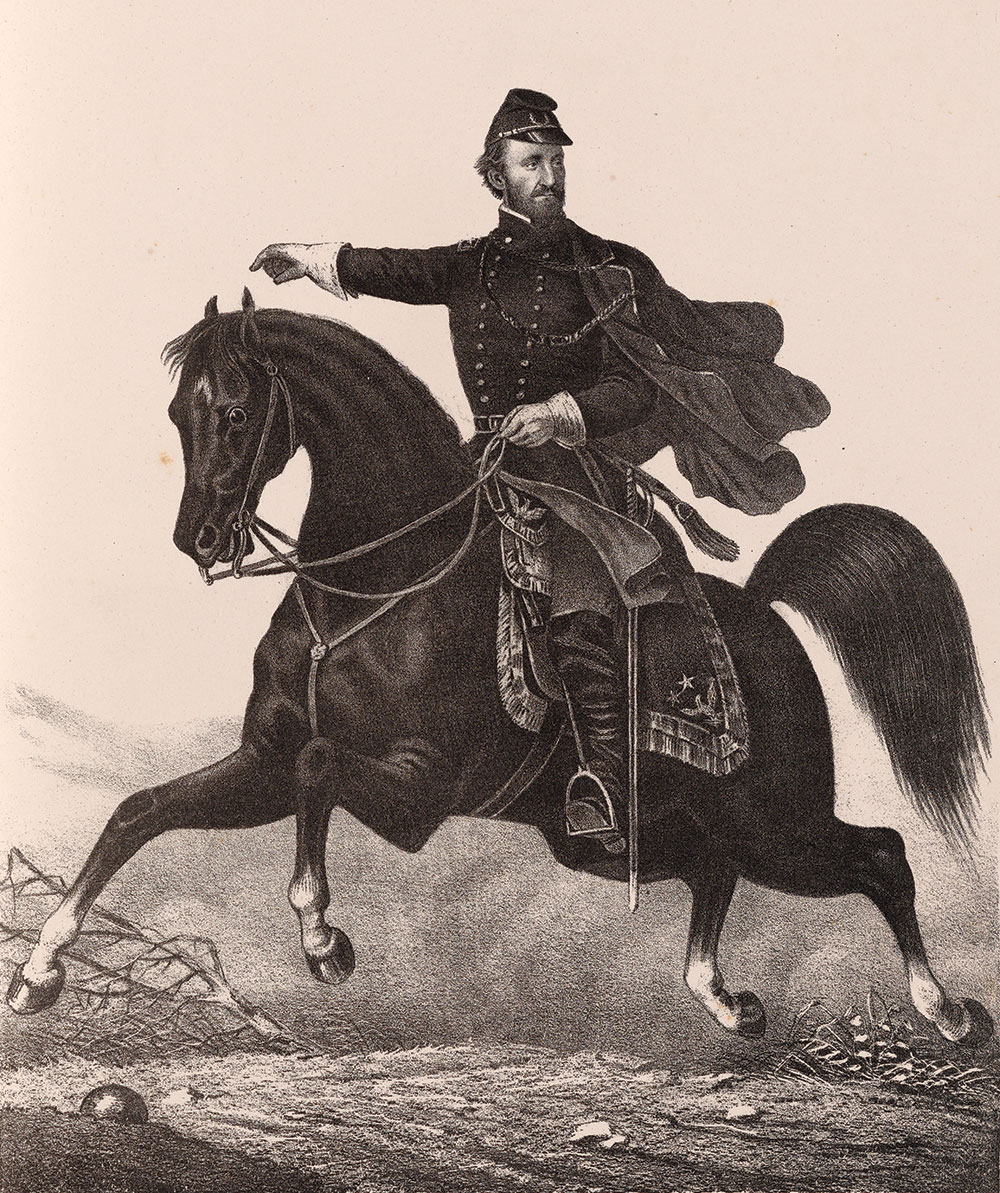
On paper, the concept seemed sound.
Experiments in small-scale skirmishes during May and early June 1863 proved successful. Wilder’s men faced troopers armed with muzzle-loading weapons and discovered that they could hold their own against forces two or three times their size.
One newspaper correspondent traveling with Wilder during this testing time praised the brigade’s effectiveness and morale: “The energy displayed by this command, the ever-cheerful alacrity with which orders to move are obeyed, and the thorough and speedy execution of the work entrusted to it, have justly earned for it the appellation of the Lightning Brigade.”
However, to really prove the name, the Midwesterners needed to be tested at a larger scale.
The Tullahoma Campaign provided an opportunity.
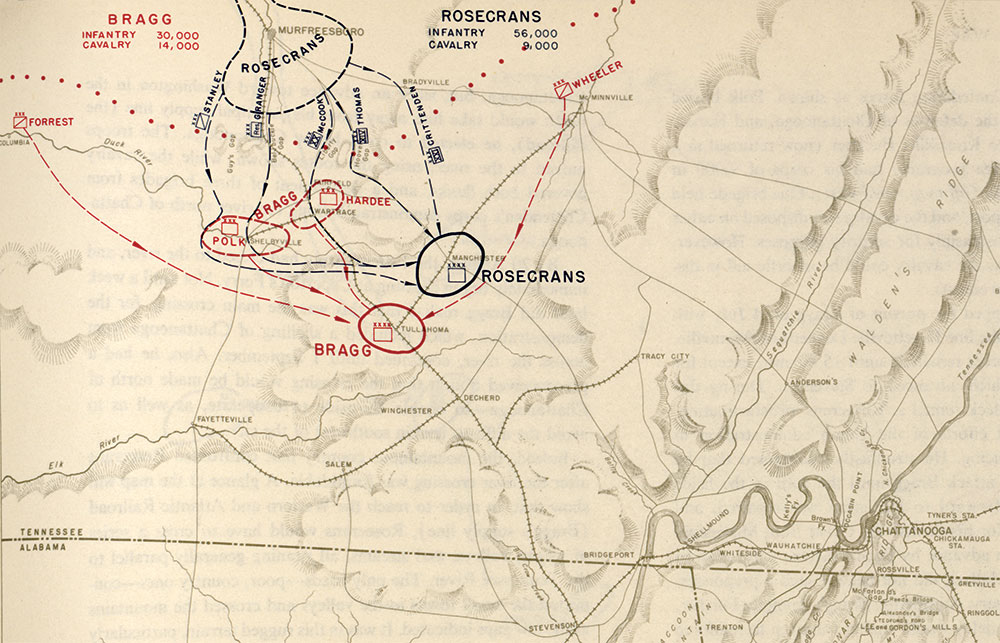
On the second day of the campaign, June 24, 1863, in Middle Tennessee at a place called Hoover’s Gap, a battle ending in Union victory with Wilder’s Brigade playing a pivotal role in driving Gen. Braxton Bragg’s Confederates out of this part of the state.
In this engagement, the Lightning Brigade secured its nom de guerre.
Two accounts, both by Wilder, tell the story.
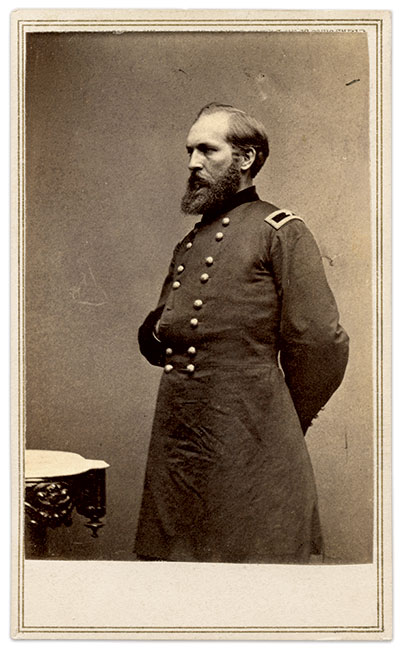
One account dates to an 1887 regimental reunion, with credit to the late Brig. Gen. James A. Garfield, who served as chief of staff to Maj. Gen. Rosecrans, became the 20th president of the United States, and died in 1881 from complications after being shot by an assassin.
According to a newspaper report of the reunion, Wilder told an enthusiastic audience of veterans and their families how his “command was sent forward to find the enemy.” Contrary to orders, they drove out the enemy and held the gap. The next day a report of the engagement made by the rebels was that they had met a good many Yankee cavalry, but the ones that came yesterday came like lightning and each one was a thunderbolt. This report reached Garfield, who effectually gave the brigade the name of the “Lightning Brigade.”
The other account can be found in a paper written by Wilder and published in 1908 in Sketches of War History, 1861-1865, edited by the Military Order of the Loyal Legion of the United States (MOLLUS), a group founded by Union veterans.
In this version, far more detailed than the newspaper report, Wilder describes how after Maj. Gen. Rosecrans commenced the Tullahoma Campaign, his brigade moved rapidly south from Murfreesboro, advancing ahead of the main infantry columns toward Hoover’s Gap, a narrow, wooded mountain pass guarding Bragg’s right flank.
The approach to the gap unfolded with remarkable speed, according to Wilder. His advance guard surprised Confederate pickets north of the pass, scattering them before they could warn their comrades. The brigade pushed through Hoover’s Gap at a gallop, encountering minimal resistance and seizing the high ground beyond. From this elevated position, Wilder observed Confederate camps in the valley below, their occupants unaware of the Union presence bearing down on them.
Wilder halted and dismounted his men, then deployed his regiments across the road and adjacent hills, anchoring his flanks and bringing artillery into position. Meanwhile, word of the Union incursion made its way back to the Confederate encampment, and an infantry brigade commanded by Brig. Gen. William B. Bate marched to meet Wilder’s men.
Bate mistook Wilder’s mounted infantry for cavalry. When elements of Bate’s Brigade came within range, Wilder’s men unleashed a devastating fire from their Spencers and supporting artillery, staggering Bate’s advance.
Wilder recalled that as Confederate pressure continued and his forces held the position, a staff officer soon arrived from the rear carrying orders that would test his judgment and resolve.
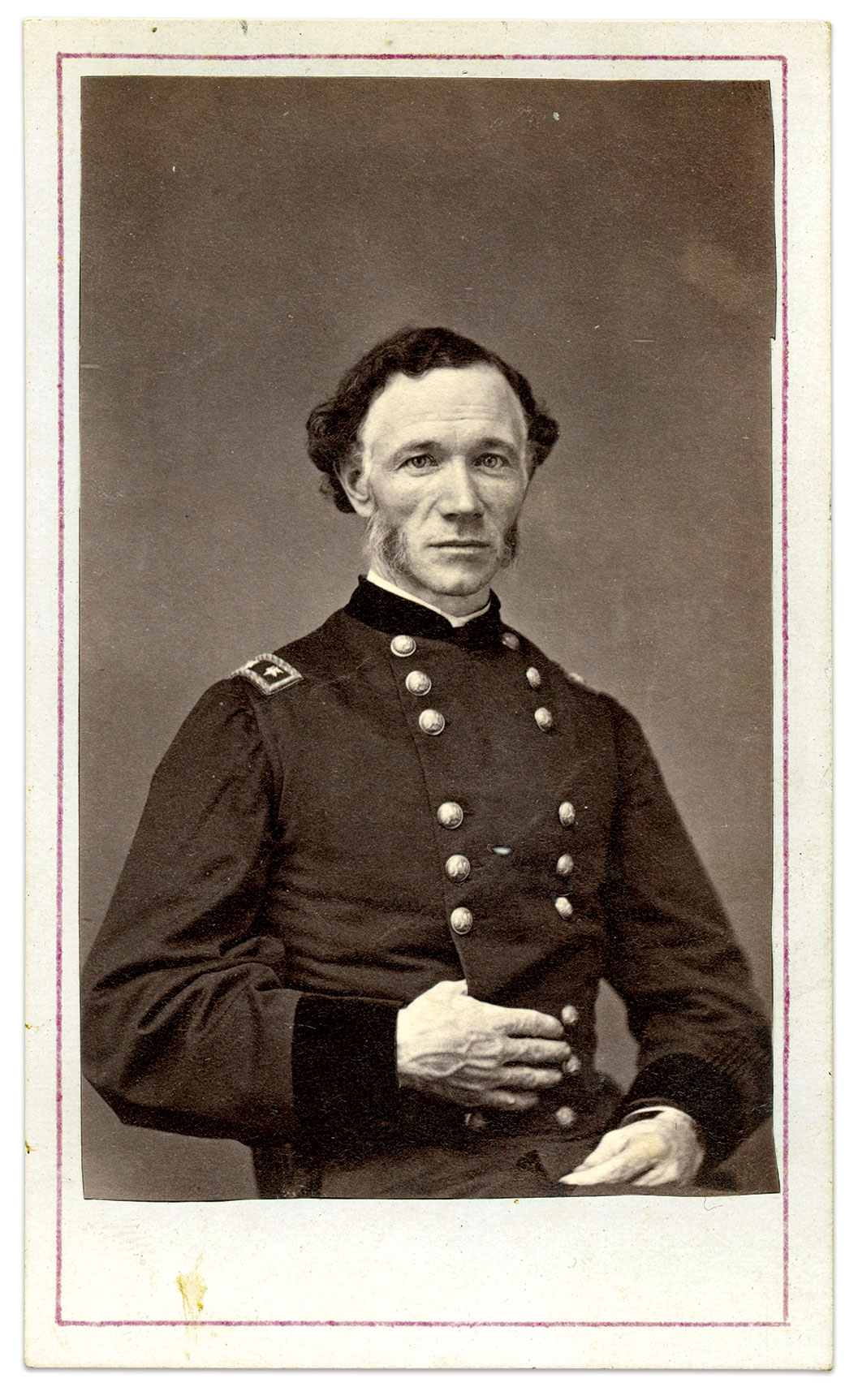
Wilder revealed a clash of authority at a critical moment. It involved Wilder’s superior officer, Maj. Gen. Joseph J. Reynolds, West Point 1843, who led the 4th Division of the 14th Corps, and Capt. Alexander A. Rice of the 72nd Indiana Infantry, who served on Reynolds’ staff as assistant adjutant general. Wilder also mentions a subordinate, Col. Abram O. Miller of the 72nd, Maj. Gen. George H. Thomas, commander of the 14th Corps, Garfield, and Rosecrans.
Wilder wrote: “Captain Rice, Adjutant-General of the division, came riding speedily to the front with orders from General Reynolds to me to fall back immediately, as the division was six or eight miles in our rear, having stopped to repair a bridge, without letting me know of it. I told him I would hold this position against any force, and to tell General Reynolds to come on without hurrying, as there was no danger of our being driven out of the position. Captain Rice repeated his order for me to fall back, and I told him I would take the responsibility of remaining where I was, and that if General Reynolds were on the ground he would not give such an order. Captain Rice said that he had no discretion in the matter, and that if I did not obey the order he would put me in arrest and give the command to Colonel Miller, who would fall back as ordered.
“I declined to obey the order of arrest, and requested Captain Rice to return to General Reynolds and tell him we had driven their force back, and could not be driven by any forces that could come at us. He then left just as the second attack was being made. This move was repulsed without difficulty, and when the enemy had fallen back out of range, General Rosecrans, with General Thomas and General Garfield, came riding up with their staff and escort.
“General Rosecrans came up to me and asked what we had done, and I told him in a few words, and also told him I had taken the responsibility of disobeying the order of General Reynolds to fall back, knowing that we could hold the position, and also felt sure that General Reynolds would not order us to retire if he were present. General Rosecrans took off his hat and handed it to an orderly, and grasped my hand in both of his, saying: ‘You took the responsibility to disobey the order, did you? Thank God for your decision. It would have cost us two thousand lives to have taken this position if you had given it up.’ General Reynolds just then came riding up in advance of his forces, and General Rosecrans said to him: ‘Wilder has done right. Promote him, promote him,’ and General Reynolds, after looking over the position, said to me: ‘You did right, and should be promoted and not censured.’ The next morning an order was read at the head of every regiment of the Fourteenth Corps describing the attack of my command, and saying that the conduct of the brigade should be emulated by all, and recommended my promotion as a Brigadier-General, and directing that the command should thereafter be known as Wilder’s Lightning Brigade.”
Wilder received a brevet rank of brigadier general in August 1864. By this time, the Lightning Brigade had grown to include the 92nd Illinois Infantry, and had again proved its battlefield advantage at Chickamauga. However, bouts of dysentery took a toll on Wilder’s health, prompting his resignation in October 1864.
After the war, Wilder settled in Tennessee, becoming involved in ironworks and railroads and rebuilding the state’s shattered economy. He held several public offices, including commissioner of the Chickamauga and Chattanooga National Military Park. He died in Jacksonville, Fla., in 1917, at age 87. He outlived his first wife and was survived by a second and six children.
The Lightning Brigade stands as his best remembered legacy. What Wilder accomplished would likely have won the approval of Napoleon, who defined strategy as “the art of making use of time and space”—a principle the Lightning Brigade enforced with horses, repeating rifles, and audacity. Wilder’s use of mounted infantry, concentrated firepower, and decentralized command anticipated similar tactics later in the century.
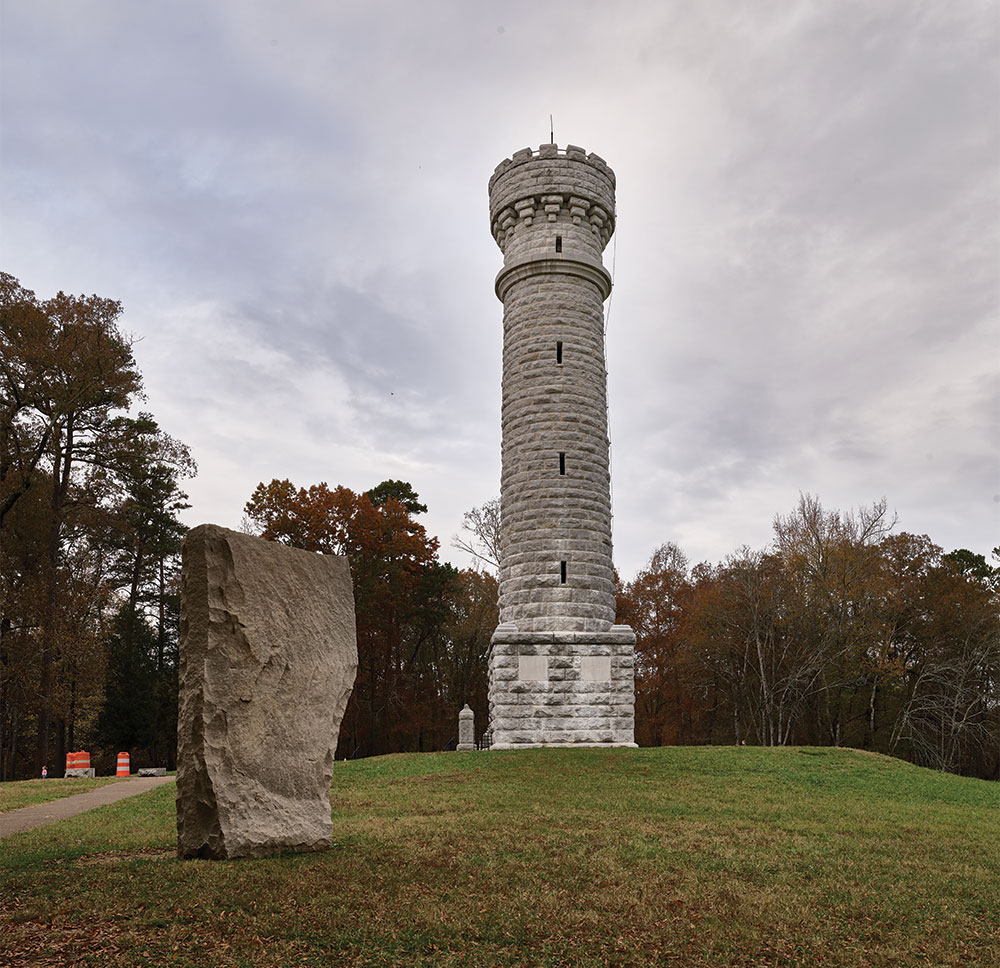
Less remembered are his efforts to heal the nation after four years of war. A tribute to his life in The Chattanooga Sunday Times stated, “Gen. Wilder was a most potential factor in the growth and prosperity not only of Chattanooga, but of the entire South. A brave and generous officer of the Federal army, he came among the defeated soldiers and people of the South at a time when prejudice was high and the bitterness of the strife was intense, and counseled fraternity, good feeling and forgetfulness of the passions of the war. He became at once a friend to the Southern people and freely and generously sought the companionship of the ex-Confederate soldiers. He believed that the war being over its strife and passions should be buried and that all men of whatever opinion should share equally in the blessings of the government. His manly and conciliatory attitude won for him at once the friendship and esteem of the people, and his influence for the complete pacification of the sections was, therefore, exercised in a most potential and practical way. From the time he came among us to the day of his death he was a broad, liberal-minded and patriotic American, recognizing no divisional lines and holding in memory no feelings of hate or animosity toward the men who had met him in honorable battle.”
Note: Wilder’s excerpt has been modified to add paragraph breaks.
References: MOLLUS, eds., Sketches of War History, 1861-1865; The Louisville Daily Journal, Louisville, Ky., June 23, 1863; Harbison, Robert E., “Wilder’s Brigade in the Tullahoma and Chattanooga Campaigns of the American Civil War”; The Indianapolis Journal, Sept. 9, 1887; The Chattanooga Sunday Times, Oct. 21, 1917.
Ronald S. Coddington is editor and publisher of MI.
SPREAD THE WORD: We encourage you to share this story on social media and elsewhere to educate and raise awareness. If you wish to use any image on this page for another purpose, please request permission.
LEARN MORE about Military Images, America’s only magazine dedicated to showcasing, interpreting and preserving Civil War portrait photography.
VISIT OUR STORE to subscribe, renew a subscription, and more.