
To the Army Quartermaster’s Office in Washington, D.C., fell the grim daily task of tallying the number of soldier burials from area military hospitals. The length of the report varied from day to day, with no discernible pattern.
The September 7, 1864, report included only nine soldiers. They hailed from different states and regiments, succumbed to wounds or disease, and ranged in age from young to old. About the only common characteristic that linked them was the timing of their burials. They did not even serve on the same side—eight fought for the Union and one for the Confederacy.
The Confederate, Huston Gibson of the 50th Virginia Infantry, died from an abdominal wound received in the Wilderness. His burial site is in dispute. One source notes that his remains rest somewhere in D.C., while another places them in a mass grave in Richmond’s Hollywood Cemetery.
One of the Union soldiers, Sgt. George H. Sutton of the Purnell Legion Maryland Infantry, had been wounded in the recent fighting along the Weldon Railroad, which resulted in the amputation of a leg. His body went home to Baltimore for burial.
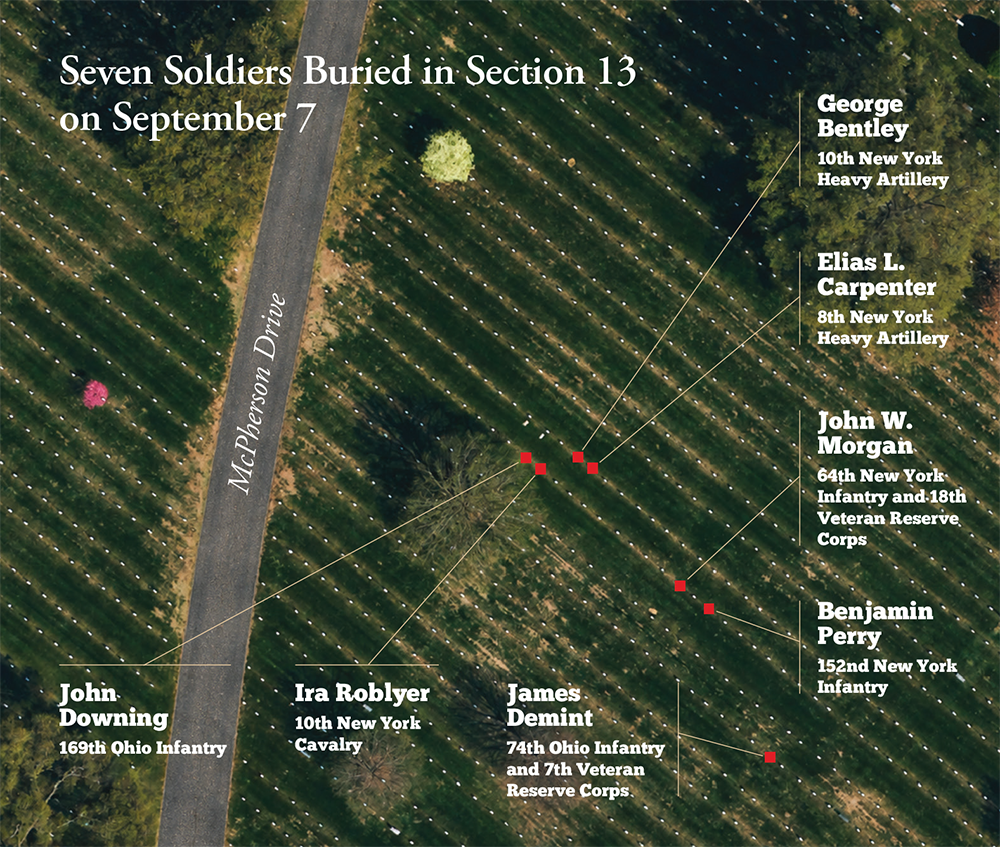
Attendants transported the remaining seven bodies across the Potomac River for interment on the grounds of Gen. Robert E. Lee’s Arlington estate. The first soldier had been buried there just four months earlier, marking the origins of the national cemetery.

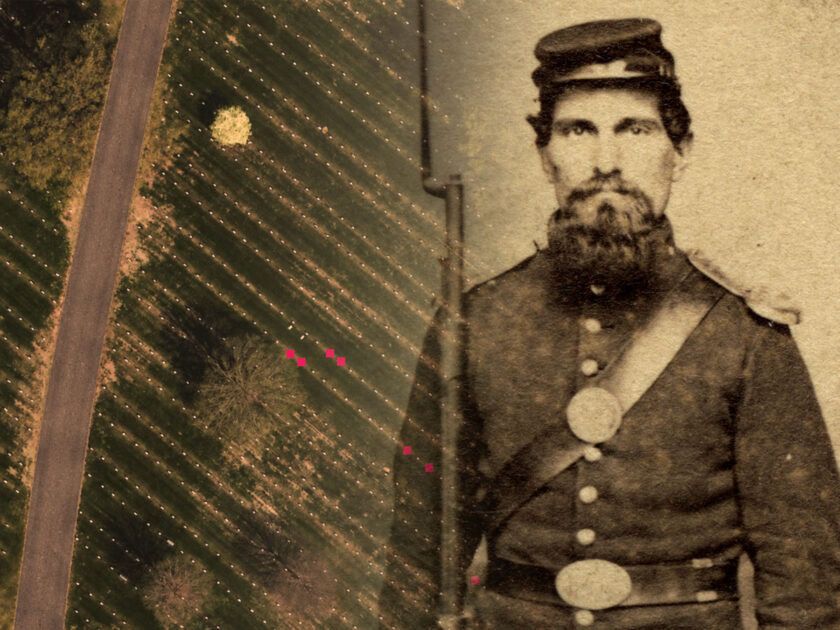
One of them is pictured here. George Bentley, a farm laborer from the village of Antwerp in New York’s North Country, had died on September 6, a week shy of his 29th birthday. In the summer of 1862, he left behind his wife of three years, Almira, and infant son Ezra and joined the Empire State’s 10th Heavy Artillery. Like so many of the Eastern heavies, the 10th manned the Defenses of Washington until reassignment to the Army of the James in June 1864.
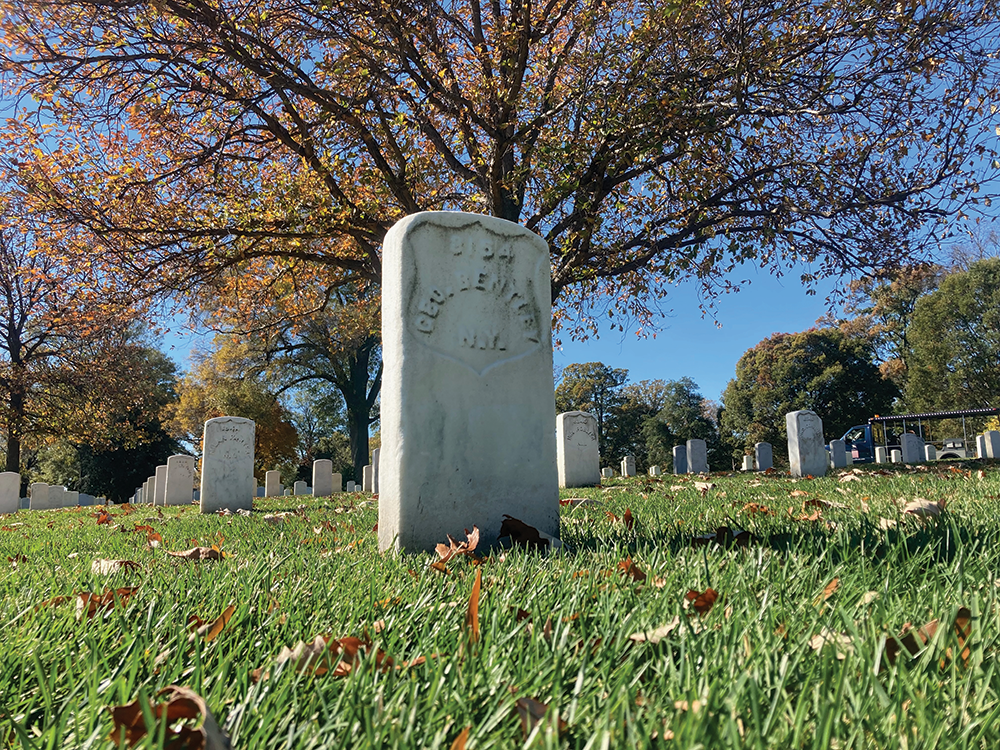
The rigors of campaigning took their toll as Union forces closed in on Petersburg and Richmond. Suffering from exposure and fatigue in rifle pits in front of Petersburg, along with diarrhea, fever, and lung issues, he was admitted to Lincoln General Hospital on August 15. He succumbed to chronic diarrhea three weeks later. His remains rest beneath a ubiquitous white marker near the plots where the other six soldiers were interred that September day—all strangers united to fight for a common cause and forever linked by a burial date.
Most Hallowed Ground is part of the Arlington National Cemetery (ANC) Project. Established by Jim Quinlan of The Excelsior Brigade, its mission is to identify all Civil War veterans on the grounds. Contact Jim at 434-992-7041.
SPREAD THE WORD: We encourage you to share this story on social media and elsewhere to educate and raise awareness. If you wish to use any image on this page for another purpose, please request permission.