
By Ronald S. Coddington
The opening salvo at Fort Sumter spurred Maryland secessionists to block Northern troops from passing through their state to defend the beleaguered nation’s capital. President Abraham Lincoln, inaugurated only a month earlier, and government officials occupied a perilous position among Southern-sympathetic neighbors.
An increasingly distraught Lincoln would not feel safe until an ample number of boys in blue arrived to defend Washington, D.C.
The Marylanders did everything in their power to deny Lincoln what he desperately wanted.
In Baltimore, bands of armed men roamed freely. Cannons were wheeled into the streets to face the Northern menace. Confederate and state flags replaced the Stars and Stripes.
Baltimore was a powder keg ready to explode.
On April 18, 1861, Baltimore mobs attacked a company of Pennsylvania artillerists—spitting and grabbing at first, then throwing fists, cobblestones, and chunks of bricks. The next day, the emboldened rioters assaulted the 6th Massachusetts Infantry as it marched down Pratt Street. The violence ended with bullets and scores of dead and wounded.
State and local officials moved to quell the violence by closing the city. They fired off a request to President Lincoln to reroute troops around the capital and sent local forces to burn bridges along the Philadelphia, Wilmington & Baltimore Railroad (P.W. & B.).
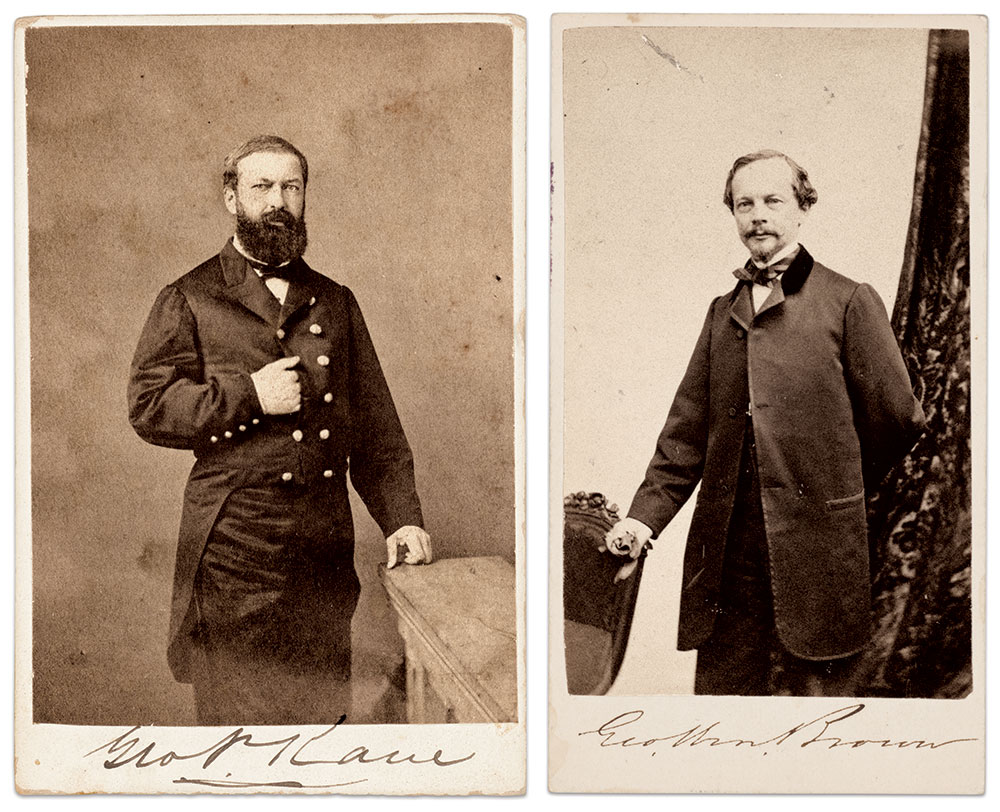
Baltimore’s mayor, the moderate academic George W. Brown, who had marched at the head of the 6th Massachusetts in a failed effort to calm protesters, and the city’s Southern-sympathetic police marshal, George P. Kane, led the effort to destroy the bridges. Another key player, Isaac R. Trimble, a railroad executive, commanded local militia.
In his postwar treatise, Baltimore and the Nineteenth of April, 1861: A Study of the War, Mayor Brown stated that Trimble estimated the assembled force at more than 15,000, about three-quarters of them armed. This number included a contingent of Marshal Kane’s police, local militia, and outraged citizens.
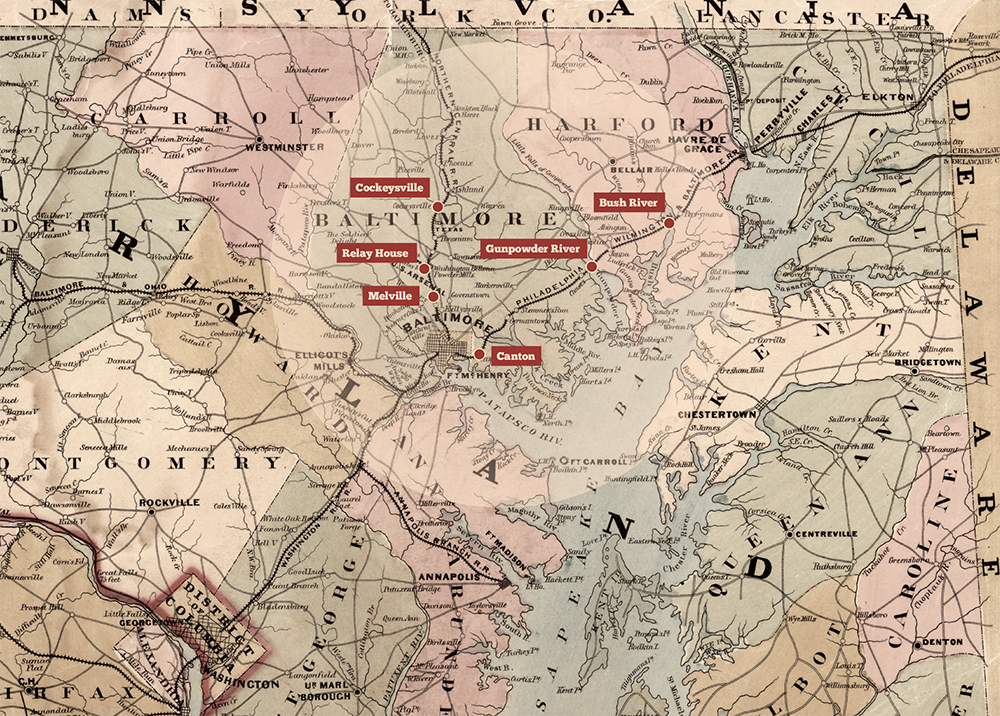
News reports stated that squads descended on the railroad and hit the Melville Bridge. They tore apart the guardhouse and piled the wood debris beneath the bridge. Turpentine and a torch finished the job amid cheers and shouts.
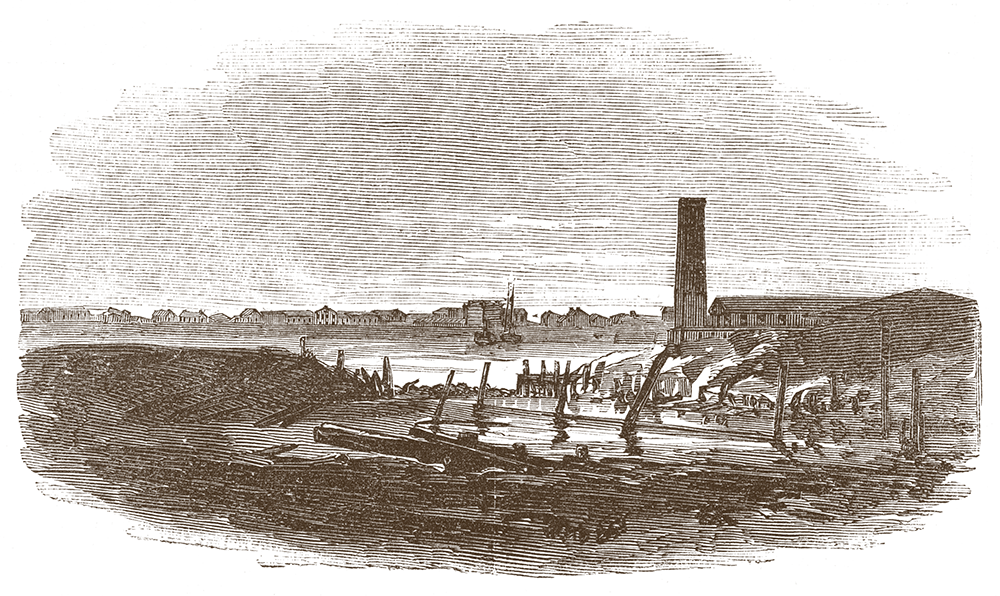
More bridges fell. At Relay House, a mob unscrewed the girders of an iron bridge and flipped the structure over and into the water. A bridge at Cockeysville fell, toppling telegraph poles and cutting wires for good measure. They laid waste to the Bush River Bridge and disabled the Gunpowder Bridge and the rail crossing at Canton.
Washington moved quickly and hit back with its military and political might. The stakes could not be higher—the nation’s capital sandwiched between hostile Maryland and a Virginia on the verge of secession was not an option. Brigadier Gen. Benjamin F. Butler, who detoured around Baltimore with the 8th Massachusetts Infantry following the assault on its brothers in the 6th, secured Annapolis. On May 13, Butler entered Baltimore under orders of Lt. Gen. Winfield Scott with 1,000 troops and artillery. Butler encountered no serious resistance. After occupying the city, his heavy-handed rule foreshadowed his actions in New Orleans a year later. Brown and Kane were arrested and hauled off to prison. The suspension of habeas corpus rocked the city.
Meanwhile, workers repaired damaged and burned bridges and associated track and restored telegraph service. These men were guarded by soldiers—and a unique armored railroad car.
“Death Will Be the Portion of All Offering Enemies”
Curious onlookers along Broad Street in Philadelphia watched as a new type of railroad car left the Baldwin Locomotive Works on Saturday, May 4, 1861. One observer described it as “a very formidable looking object, the sides and top being of the best boiler iron, warranted to resist rifle balls. One half of the car is furnished with port-holes, so as to allow the use of a formidable cannon, which has been placed on a pivot table, at any point on the side or front of the car. It has numerous holes for look-outs, or for the use of men armed with rifles.”
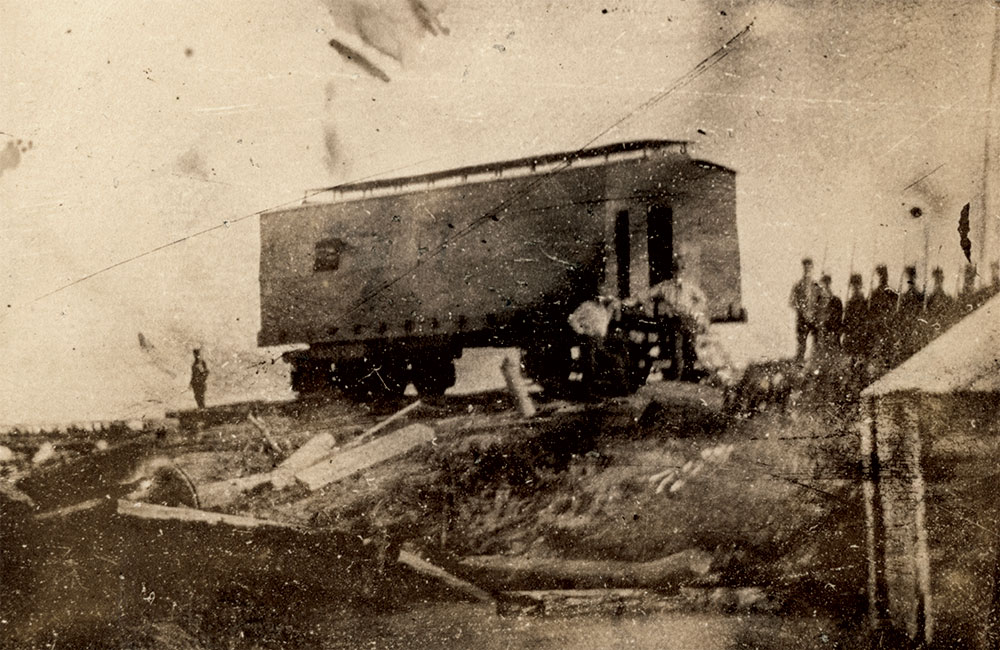
The same writer offered an opinion of its capabilities: “With this battery in front of a locomotive, and a cannon loaded with punchings from boiler iron, death will be the portion of all offering enemies.”
In other words: Maryland secessionists beware.
Plans for this metal-plated monster came from the brain of an original thinker described by one writer as “a man of wonderful mind and possibilities”: Rufus A. Wilder, superintendent of the Mine Hill & Schuylkill Haven Railroad northwest of Philadelphia.
Wilder happened to be in Philadelphia when newspapers reported the bridge burnings. Subsequent reports noted the threat of sharpshooters against repair crews. The need to defend them spurred Wilder’s imagination and gave rise to the armored car. He sketched out his concept and presented it to leaders gathered at the Franklin Institute to discuss the city’s defenses. The group immediately embraced Wilder’s plan and presented it to Matthias Baldwin and other executives of his factory. They heartily endorsed the project, consulted with the president of the railroad, and built the vehicle in about four days from spare parts and custom construction.
Sheathed in boiler-plate iron, the 65-by-9-foot car caught the attention of artists working for the pictorial press. Frank Leslie’s Illustrated Newspaper and The Illustrated London News covered its deployment. Harper’s Weekly passed over the story.
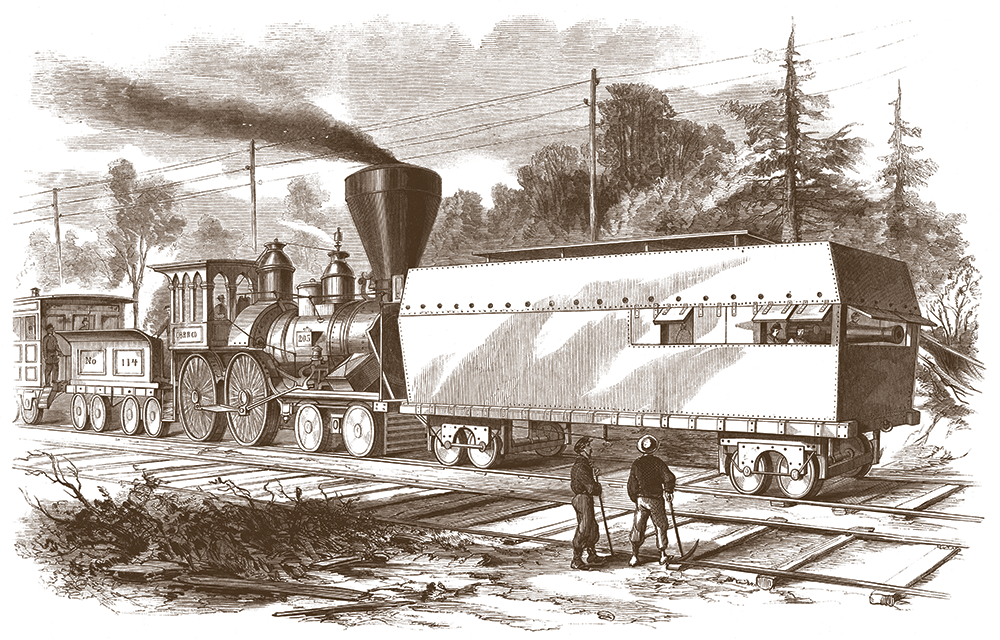
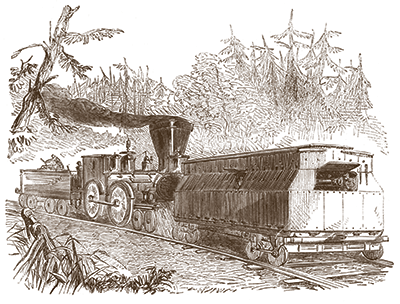 Leslie’s reported, “The sides are bored for rifle holes to the number of fifty, each man to be provided with the famous Minie rifle. At one end is a twenty-four pounder cannon which moves on a pivot, with a gun carriage complete. The cannon can be raised and lowered at will, and six experienced gunners will take charge of it. At the end of the car, opposite the mouth of the cannon and also on each side of the car, the iron is cut into doors about two feet square, with levers attached on the inside, so that they can be raised and lowered at pleasure.”
The writer continued, “When used, the cannon will be loaded with grape, canister and chain shot. A company of sixty men can be accommodated in the car. The roof and doors are the same as the sides, except that the roof in the center for about four feet is raised and supported by strong iron bars, leaving an opening all around of about a foot in width to admit air and allow the smoke from discharged rifles and cannon to escape. The doors have iron bars upon them, making their strength double. A number of shots from a first-rate rifle were fired at the sides of the car at a distance of twelve yards, but the balls fell jagged, broken and harmless to the ground, and on examining the inside of the car not the slightest mark could be seen. The car is intended to be pushed ahead of a locomotive.”
The car sat at the intersection of Broad and Prime streets (today’s Washington Avenue) for about a week. Throngs of citizens stopping by to inspect the novel machine of war snarled traffic for blocks.
On the morning of May 11, the battery rolled about 65 miles to Perryville, Md. In a Philadelphia repeat, the curious stopped to inspect the car throughout the day.
Workers loaded it onto the top deck of the steamer Maryland to cross the Susquehanna River to Havre de Grace. The vessel had been put into service to ferry troops and supplies during bridge repairs. The armed car rode the rails for about a dozen miles to the Bush River Bridge for deployment.
A day later, Brig. Gen. Butler entered Baltimore.
The crisis was contained.
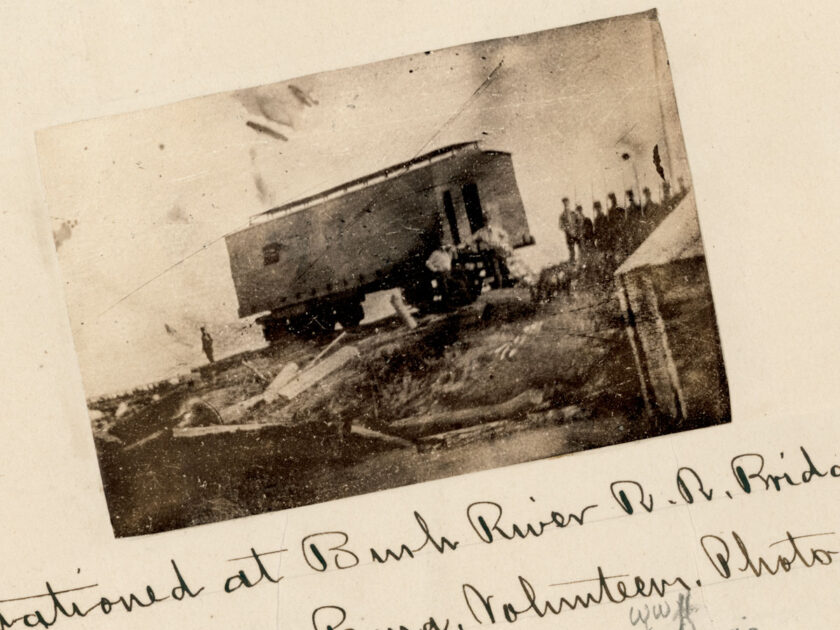
After the car arrived at the Bush River Bridge, a photographer made what is believed to be the only known view of it.
Origin of the Photograph
Two prints from the negative are known to survive.
One, mounted to a plain, unmarked cardstock mount with carved edges dating it to the 1870s, appears in Ross J. Kelbaugh’s 2012 book, Maryland’s Civil War Photographers.
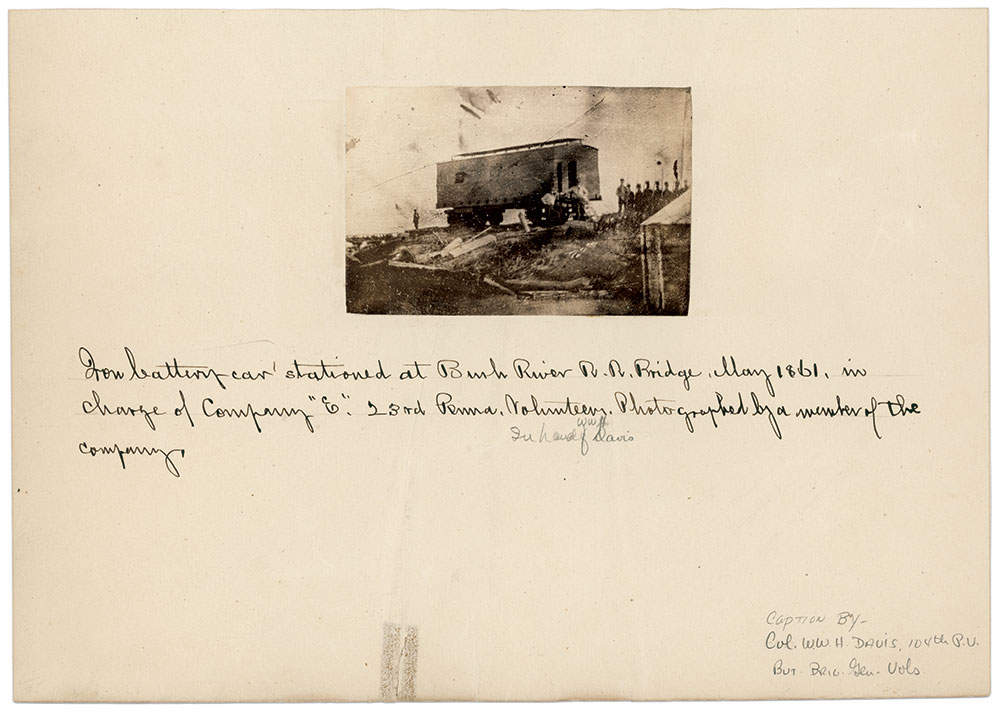
The other, published here, is mounted to a sheet of thick paper and inscribed by William Watts Hart Davis of Bucks County, Pa. The military-educated Mexican War veteran, former government official in New Mexico Territory, attorney, and owner of the Doylestown Democrat newspaper had a passion for journalism. He served as captain of the Doylestown Guards when the war began. Two days after the fall of Fort Sumter, Davis mobilized the company and called for patriots “in favor of maintaining the honor of the Star-Spangled Banner and the stability of the United States government.” Before the end of April, these volunteers mustered into Company I of the 25th Pennsylvania Infantry. Popularly known as “The Cameronians,” for President Lincoln’s Secretary of War, a Keystone State native, the 25th served a three-month enlistment.
Davis and his company rode the rails and marched through Baltimore in mid-May—numbering among the first Union troops to travel the same route disputed by secessionists the previous month. After the regiment mustered out, Davis raised and became colonel of the 104th Pennsylvania Infantry, which he commanded through the rest of the war, much of the time in the military departments of North Carolina and the South.
After the war, Davis returned to his occupation as newspaper editor and publisher and documented the history of the Doylestown Guards, his comrades in the 104th Pennsylvania Infantry, Bucks County, and other subjects.
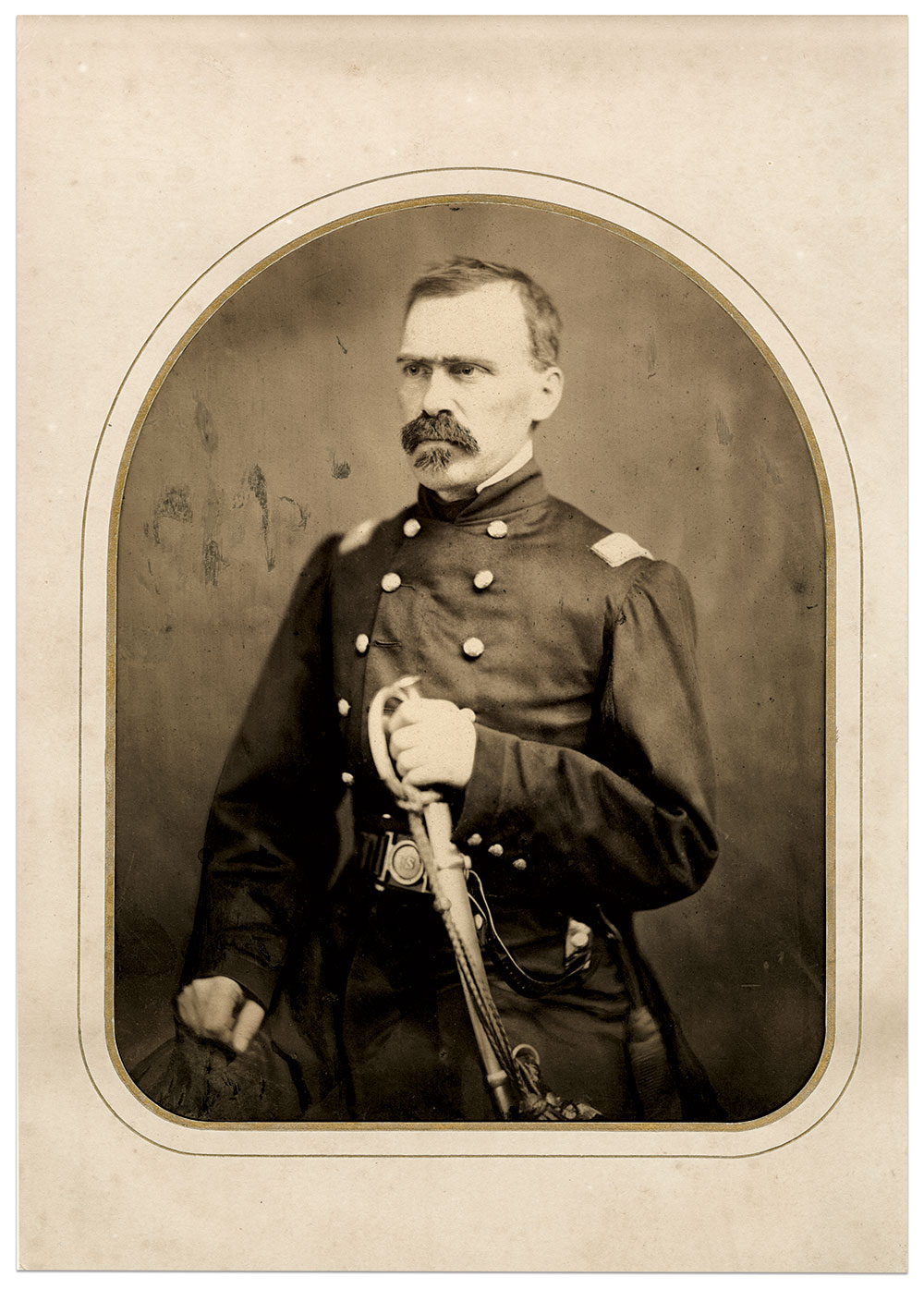
At some point, Davis acquired the image of the armored car and notated it. Considering his interest in history and the inscription, it is likely he acquired it to document the contributions of Pennsylvania during the first months of the war. He does not mention the car or the image in his books about the Guards or the 104th.
Who took the photograph is an open question. Searches of 77 officers and enlisted men listed in the History of the Twenty Third Pennsylvania Volunteer Infantry in city directories, newspapers, and other publications were unsuccessful.
Mike Campbell, President of the Bucks County Civil War Museum, offers theories about the photographer’s identity connected to Davis.
Who took the photograph is an open question.
One possibility is John Savers Young (1827-1885), who worked in Doylestown and Washington, Pa., during this period. A man named John Young served in Company E of the 23rd. However, he did not enlist until after the expiration of the unit’s original three-month enlistment and is numbered among the missing at the Battle of Cold Harbor in 1864.
Another theory is rooted in an advertisement by McAllister & Brother (Thomas H. and William), who operated a gallery along Philadelphia’s Chestnut Street from 1853 to 1865. In a July 1862 notice, they promoted sales of card photographs of Col. Davis. It is possible that Davis’ connection to the McAllister brothers relates to the photographer of the armored car.
Armored Rail Car Killer
By July 1861, infrastructure repairs, the influx of federal forces into the Baltimore area and elsewhere, and the exodus of men to join the Confederate army stabilized Maryland. The “celebrated iron battery,” as one correspondent billed it, also left the state and rolled into Washington on or about July 16 for a new assignment.
Orders never arrived.
In fact, the War Department had expressed an interest in the car and approved it for further examination more than a month before it arrived in the capital.
Brigadier Gen. Herman Haupt, superintendent of military railroads, decided its fate. An 1835 West Point graduate who had made a career in the private sector as an engineer and railroad executive, Haupt’s 1901 Reminiscences tells the tale.
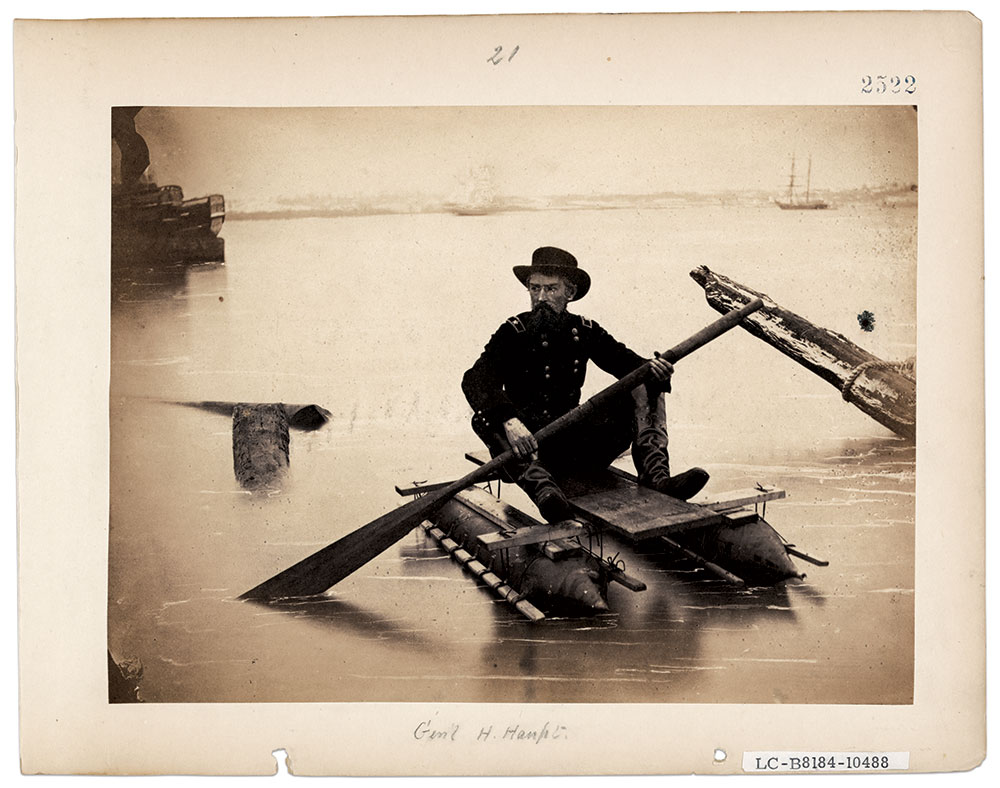
On Aug. 29, 1862, Assistant Secretary of War Peter H. Watson telegraphed Haupt that “an armor-clad car, bullet-proof, and mounting a cannon,” would be sent to him in Alexandria. Watson asked Haupt to evaluate its capabilities and suggested that armor-plated locomotives would benefit the rail system. He suggested that such plates could be produced in Philadelphia or Wilmington.
More than a year had elapsed since the Philadelphia armored car had moved from Maryland to Washington. In his telegram, Watson did not name the car as the one designed by Wilder and built by Baldwin, but his description is consistent with other observations.
I could not use it and, being in the way, it was finally side-tracked on an old siding in Alexandria.
Haupt dismissed the gift. “The kindness was appreciated, but the present was an elephant, I could not use it and, being in the way, it was finally side-tracked on an old siding in Alexandria,” he wrote in his Reminiscences. He did, however, like Watson’s suggestion of armored locomotive cabs. “I had a number of them made and put on engines, and they afforded protection to engineers and firemen against the fire from guerrillas from the bushes that lined the roads.”
Though the armored car concept ended in Alexandria, it lived on in the form of armored cabs. And it may have saved lives.
A Footnote in Armored Rail Car History
Wilder’s car marked the earliest experiment in a manned, armored train for military purposes. But it was not the last.
Soon after Haupt killed the idea, a Cincinnati newspaper challenged the government to develop a guerrilla-resistant, iron-sheathed car mounting two cannon and a squad of riflemen.
In Tennessee, a Chicago Times correspondent attached to Maj. Gen. John A. Logan, a division commander in the Army of the Tennessee, described an iron battery composed of a 30-by-8-foot platform car mounting a 6-inch James rifled cannon protected by oak and iron plating at a sharp angle and flanked by armored cars with port-holes for riflemen. This three-car combination would be placed in the front and back of the train.
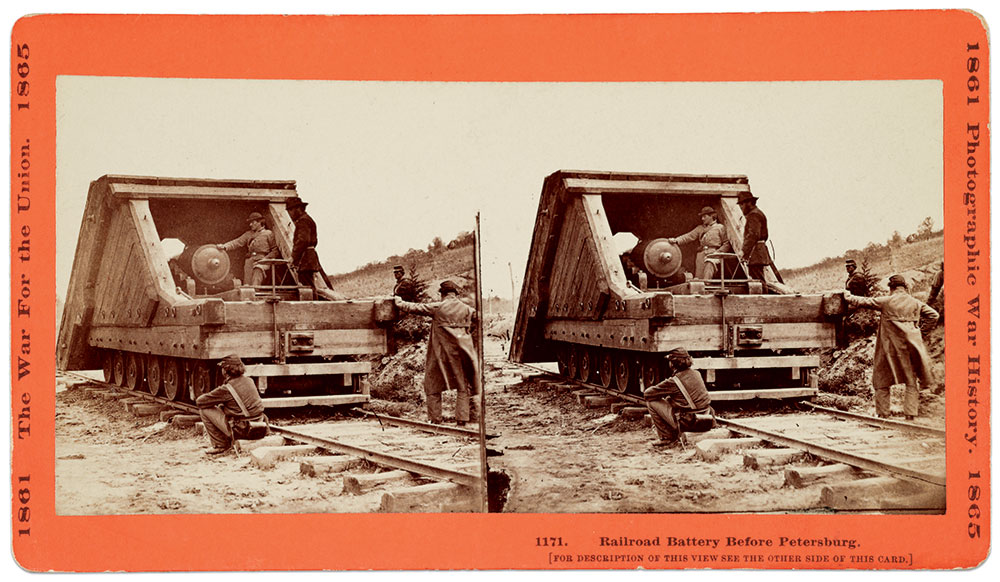
Such cannon mounted on ironclad platform cars were distinct from Wilder’s armored car. Numerous references to mounted rail artillery—“a railway Merrimac,” according to one source—are recorded in the annals of the war. One such car was constructed by the Philadelphia, Wilmington, and Baltimore Railroad Company for use along the same tracks guarded by Wilder’s armored car. This battery mounted two guns protected by timber and iron.
The armored car pioneered by Wilder was ahead of its time. Throughout the rest of the 19th century and into the 20th, armored trains played an important role in armed conflicts across the globe.
References: The Daily Exchange, Baltimore, Md., April 22, May 7, May 8, and July 17, 1861; Lossing, Harper’s Popular Cyclopedia of United States History, Vol. 1; Railway & Locomotive Historical Society, “A Civil War Iron Clad Car,” Railroad History (Spring 1974); Pottsville Republican, Pottsville, Pa., May 10, 1907; Brown, Baltimore and the Nineteenth of April, 1861; The Philadelphia Inquirer, May 13, 1861, and July 4, 1862; Kelbaugh, Maryland’s Civil War Photographers; History of the Twenty Third Pennsylvania Volunteer Infantry; Haupt, Reminiscences; The Courier-Journal, Louisville, Ky., Sept. 13, 1862; The Era, New Orleans, La., Oct. 9, 1862.
Ronald S. Coddington is editor and publisher of MI.
SPREAD THE WORD: We encourage you to share this story on social media and elsewhere to educate and raise awareness. If you wish to use any image on this page for another purpose, please request permission.