

By Gene Eric Salecker, with images from the Sultana Disaster Museum
The image of the sidewheel steamer Sultana documents a unique moment in time. Thomas W. Bankes photographed the vessel at a wharf in Helena, Ark., on April 26, 1865, its decks crowded with 2,124 passengers, including 1,947 paroled Union prisoners of war who had been held at the Confederacy’s Andersonville and Cahaba prison camps.
Had time stood still, Bankes’ image would be remembered as a celebration of freedom for the former prisoners at the war’s end. However, just a day later, the explosion of the steamer’s boilers on the Mississippi River near Memphis resulted in a loss of an estimated 1,164 people. It remains the deadliest maritime disaster in American history.
The Sultana Disaster Museum in Marion, Ark., features more than 400 images of individuals connected to the Sultana. These portraits add a human dimension to the suddenness and scale of the disaster. The collection includes wartime and postwar portraits of soldiers, crew members, civilian passengers, and rescuers. Most are copies. A handful are original cartes de visite that survive as tangible links to those caught up in the catastrophe, and they are showcased here.
Acting on Instinct to Douse the Flames
Private Levi George Morgan of Company B, 21st Ohio Infantry, was among nine comrades who claimed a spot on the Sultana’s cabin deck, forward of the smokestacks. Just after 2 a.m. on April 27, 1865, while the overcrowded boat steamed north on the Mississippi River seven miles above Memphis, three of its four boilers exploded.
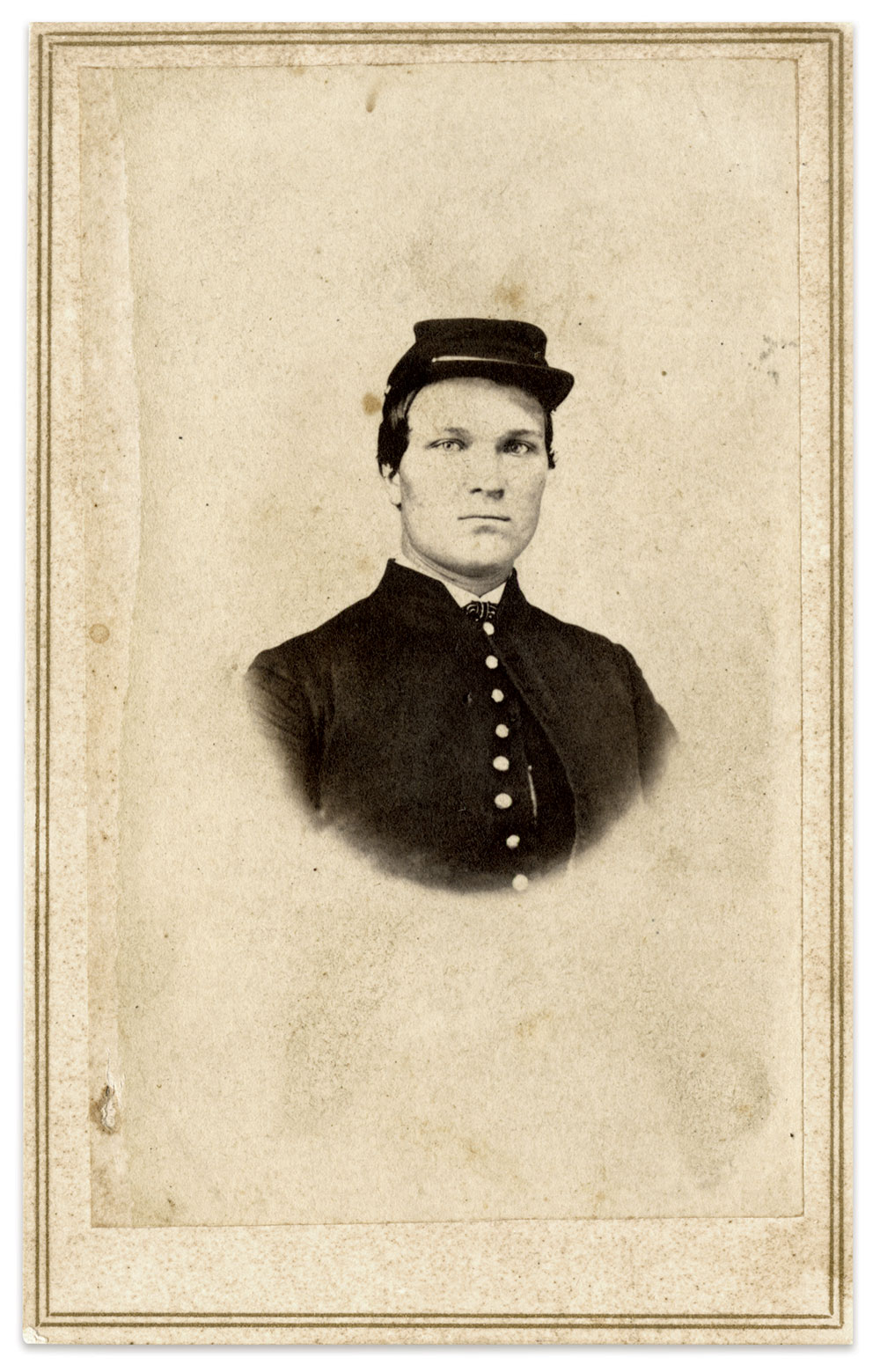
Morgan survived the blast uninjured. His initial instinct was not to save himself, but to save the boat. “My first thought was to get some buckets and put the fire out,” he later recalled. Unable to find any and confronted by spreading flames and wreckage, he soon realized the fire could not be stopped.
Turning to the injured around him, Morgan joined others in placing wounded soldiers into the river rather than leave them trapped aboard the burning vessel. Eventually, the flames forced Morgan to abandon the boat. “Being a good swimmer I did not take anything to help me along with,” he remembered. “My only fear was that someone would get hold of me and pull me down and I would drown. I must have swam very rapidly for I passed a number of fellows in the water.” After a short time, he joined another survivor who shared a board being used for flotation. The pair remained afloat until rescue shortly after sunrise. Taken to Memphis, Morgan recovered at the Soldiers’ Home before returning to Ohio.
A native of Perry County, Ohio, Morgan moved with his family to Findlay as a child. He enlisted in 1861 and fought with the 21st at Stones River and Chickamauga. While home on furlough in 1864, he married his sweetheart, Susannah Clymer. Later that year he was captured at Kingston, Ga., and imprisoned at Cahaba, Ala.
With the war drawing to a close, Morgan and thousands of other Union prisoners were transferred to Camp Fisk near Vicksburg and released on parole. On April 24, 1865, he boarded the Sultana for the journey home.
Mustering out a month later, Morgan returned to Findlay, where he worked as a miner and farmer, raised six children, and became active in the Grand Army of the Republic and the Sultana Survivors Association. Repeatedly elected chaplain of the association, he helped preserve the memory of the disaster until his death in 1918 at age 81.
Blown into the Mississippi
Private Philip L. Horn and Sgt. William Henry Harrison Wasson, both of Company I, 102nd Ohio Infantry, boarded the Sultana on April 24, 1865. They had endured six months of captivity at Cahaba Prison.
The two Buckeye soldiers chose different places to sleep aboard the steamboat. Wasson settled near the rear of the hurricane deck, while Horn bedded down on the second deck along the left-hand railing. Both were asleep when the Sultana’s boilers exploded shortly after 2 a.m. on April 27.
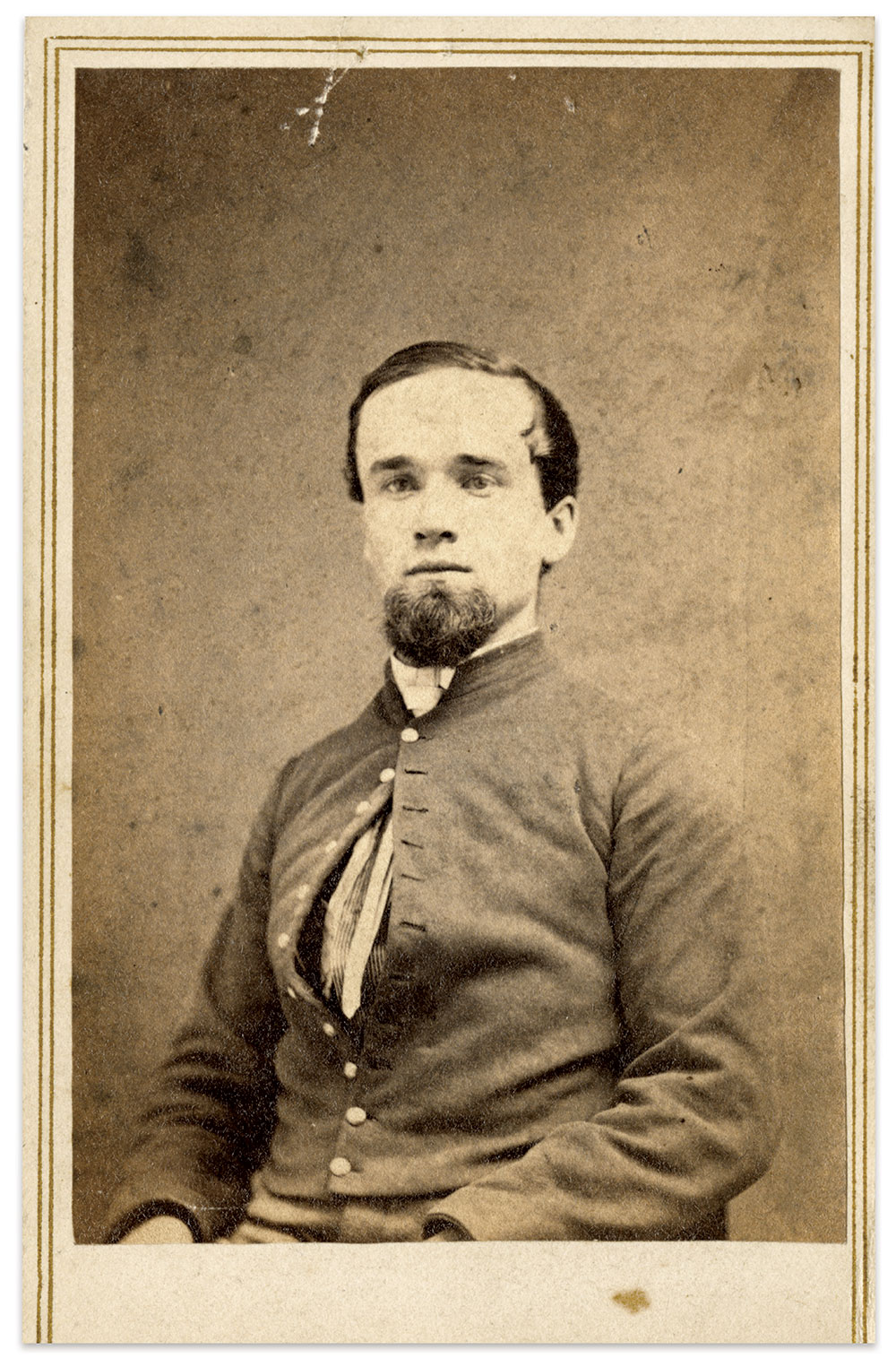
“My first consciousness was that of being in the air,” Horn recalled. Thrown into the river, he seized a section of wreckage about 20 feet long. Seven others clung to the makeshift raft as it drifted downstream in the darkness. Two lost their grip and disappeared into the water. Near daybreak, the survivors raised an alarm that attracted men from a nearby gunboat. Picked up by a skiff and taken to Washington Hospital in Memphis, Horn reported suffering injuries to his left side.
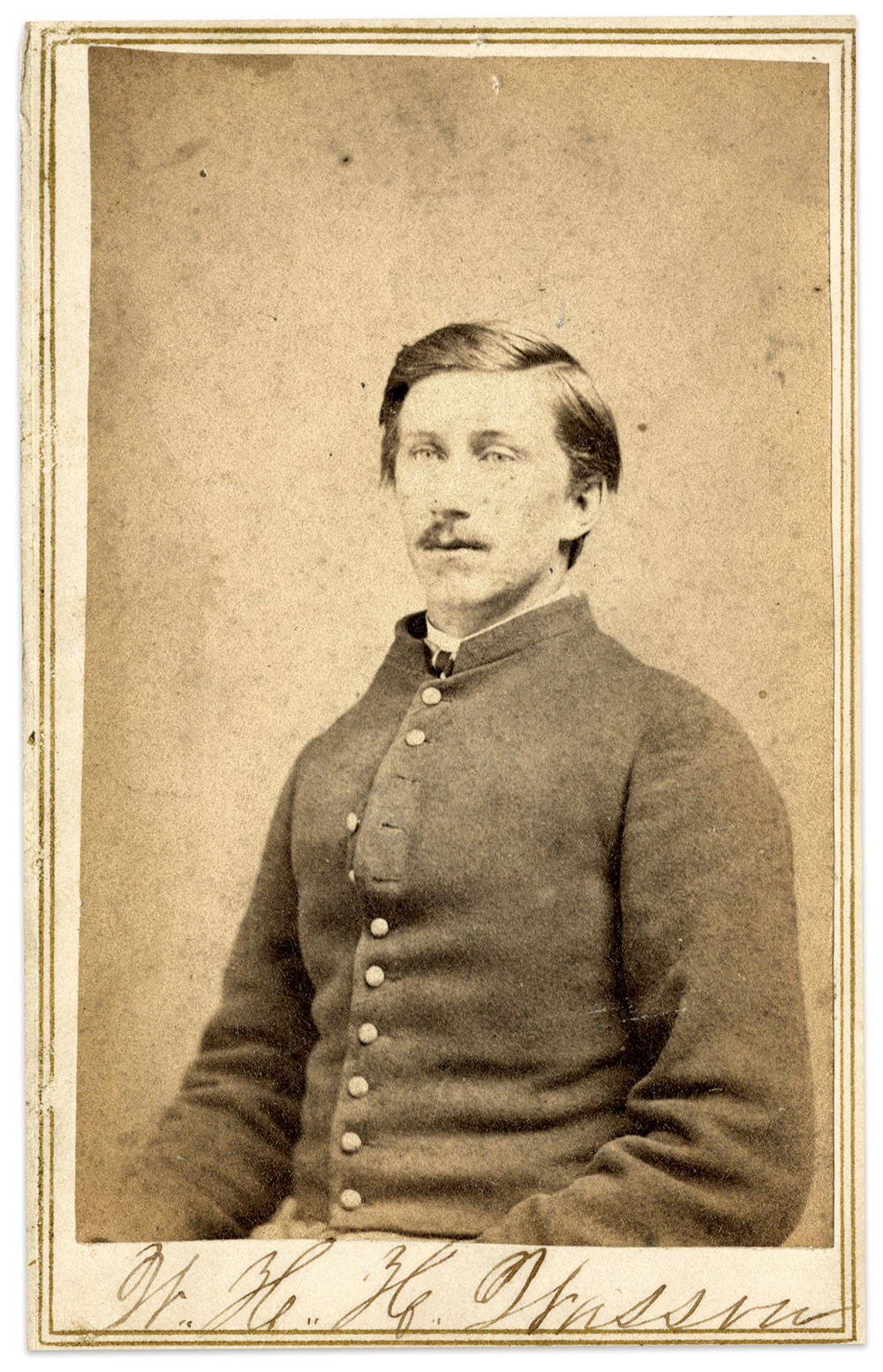
Wasson was blown from the hurricane deck into the river. Though unable to secure any substantial wreckage for support, he managed to stay afloat until rescuers brought him safely back to Memphis.
The story of both men began in Wooster, Ohio. Wasson, born in Wayne County in 1840, answered the call to arms within days of the firing on Fort Sumter, serving first in the three-month 16th Ohio Infantry before reenlisting in the 102nd in 1862. He was promoted to sergeant shortly after the regiment entered service. Horn, four years younger, was an 18-year-old baker and confectioner when he joined the same company. Also promoted to sergeant, Horn joined Wasson in spending the next two years guarding rail and river supply lines in Kentucky, Tennessee, and Alabama.
In September 1864, they were among 163 members of the regiment captured during operations near Athens, Ala., after Confederate forces under Maj. Gen. Nathan Bedford Forrest surrounded them.
Horn returned to Wooster, opened a bakery, married, raised three children, and remained active in veterans’ organizations, including the Grand Army of the Republic and the Sultana Survivors Association. He died in 1933 at age 89.
Wasson pursued a career in construction and public works, eventually settling in Dayton, Ohio. He married in 1883 and died five years later of lung disease at age 47. His only son, Henry Robert Wasson, was born four months later.
Letter from Camp Fisk
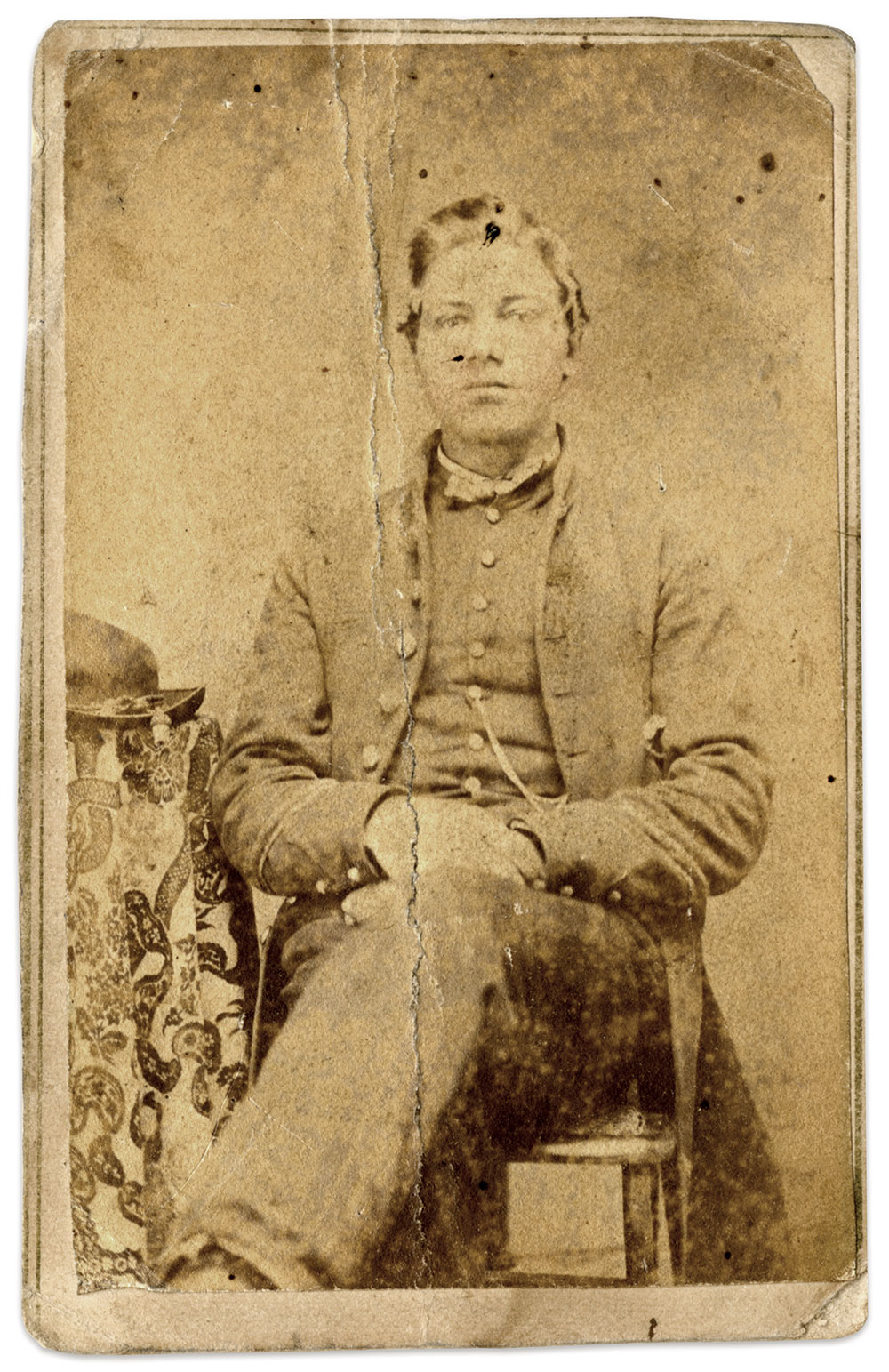
Private John F. Kauffman of the 102nd Ohio Infantry, like many prisoners at Cahaba Prison, suffered from disease.
At Camp Fisk following his exchange, his health improved. On April 17, 1865, Kauffman wrote to his mother from a hospital near camp. He reassured her that he was recovering. “I am happy to inform you that I am not very bad and am able to take care of myself,” he wrote, adding, “I feel more like a man today.”
A week later, he boarded the Sultana. He numbered among the survivors.
A native of Ashland, Ohio, Kauffman had enlisted in the 102nd in 1862 at age 17, claiming to be 18. He spent the next two years with the regiment before Confederate cavalry under Maj. Gen. Nathan Bedford Forrest captured him and his comrades near Athens, Ala., in September 1864. Imprisoned at Cahaba, he remained there until transferred to Camp Fisk near Vicksburg.
After he mustered out in June 1865, Kauffman returned to Ohio. He married Lizzie Hines in 1868. Suffering lingering effects from his wartime experiences, he received a pension before dying of an abscess in 1869 at age 24. He and his wife had no children.
“Went from This Life”
Corporal James Warren Bradish of the 18th Michigan Infantry numbered among 258 Michigan soldiers who boarded the Sultana.
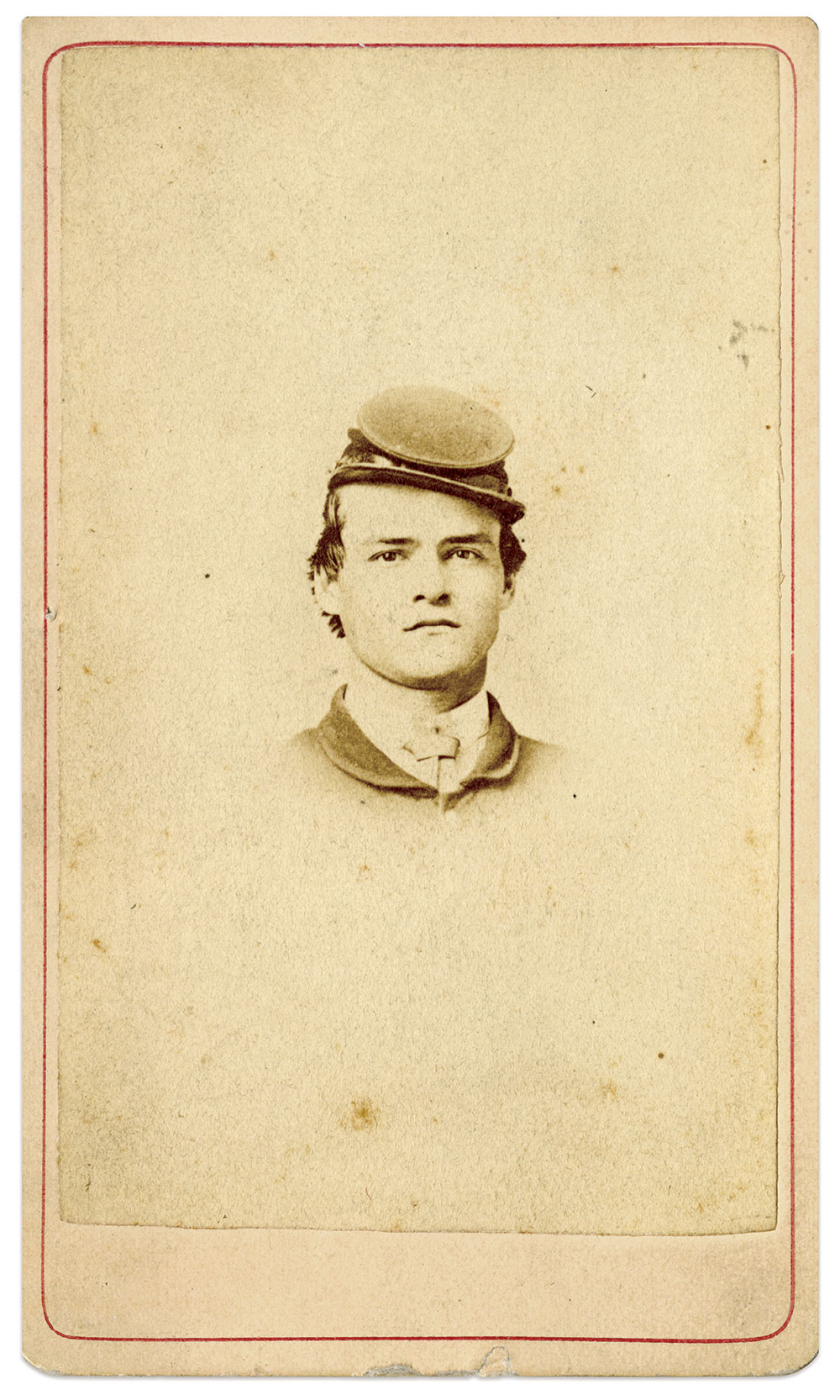
Born in New York and raised in Medina, Mich., 18-year-old Bradish enlisted in the newly formed 18th in 1862. Two years later, he joined a relief expedition sent to aid Fort Henderson at Athens, Ala. The effort failed when Confederate forces under Maj. Gen. Nathan Bedford Forrest surrounded the Union column and compelled its surrender.
Bradish spent nearly six months imprisoned at Cahaba before being transferred to Camp Fisk near Vicksburg in the closing weeks of the war.
Many of the regiment’s men found space in a stern cargo room behind the boilers and engines. When the boilers exploded shortly after 2 a.m. on April 27, scalding steam, boiling water, and wreckage swept through the compartment. Whether Bradish died in the blast or drowned in the Mississippi River is unknown. His body was never recovered.
Sometime after the disaster, a family member penciled a simple note on the back of this photograph: “James Warren Bradish Went from this life when the Sultana was sunk.”
Though no family headstone marks his grave, Bradish’s name survives on the Civil War Soldiers’ Monument in Lime Creek Cemetery, Mich.
Washing Away His Andersonville Pains
A drawing pictures a gaunt, bearded soldier leaning on a crude crutch while an orderly supports him. His clothes hang in tatters and shoes are worn through at the toes. Scurvy sores cover his arms and legs, and his swollen left leg bears the effects of malnutrition.
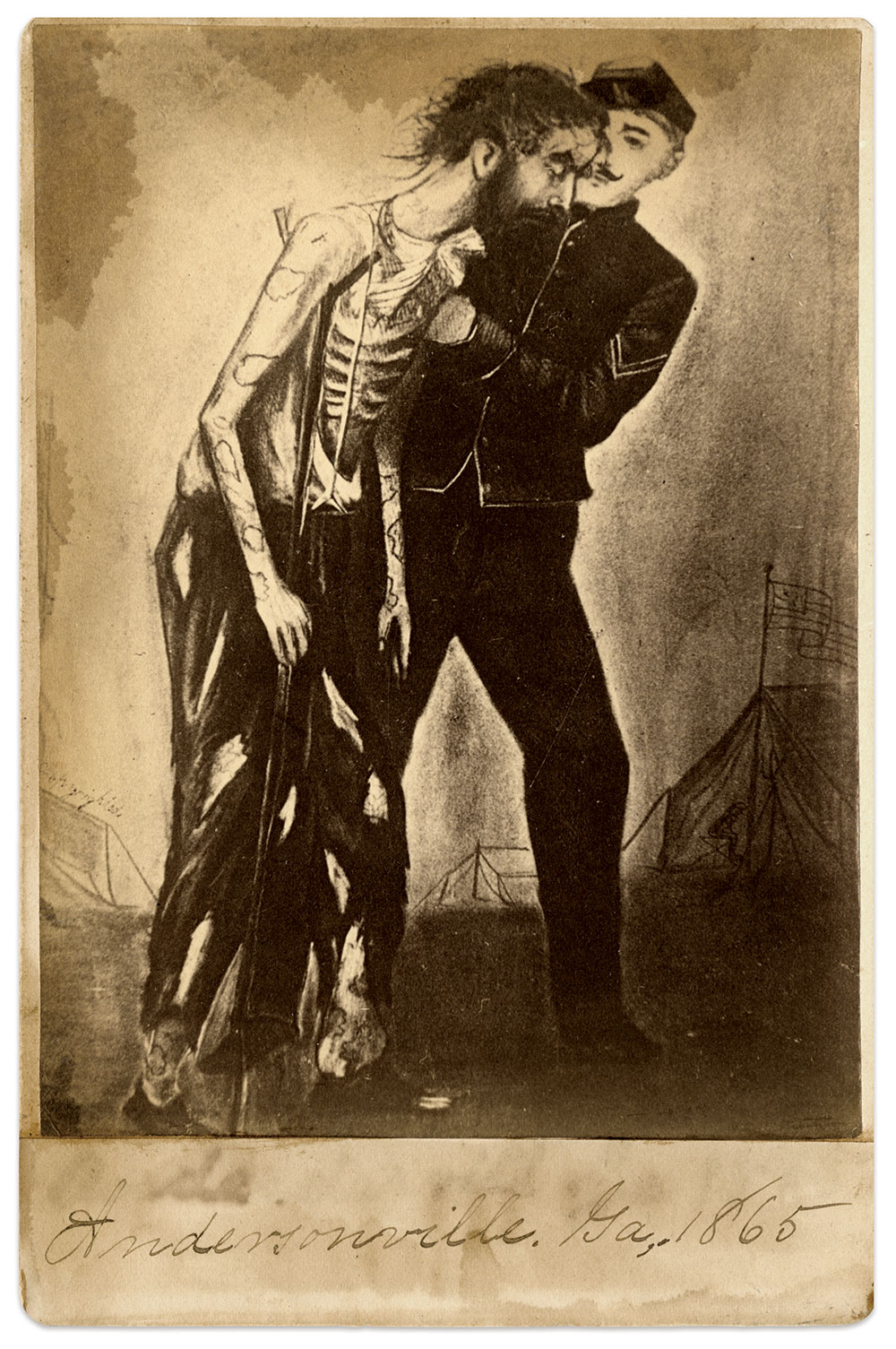
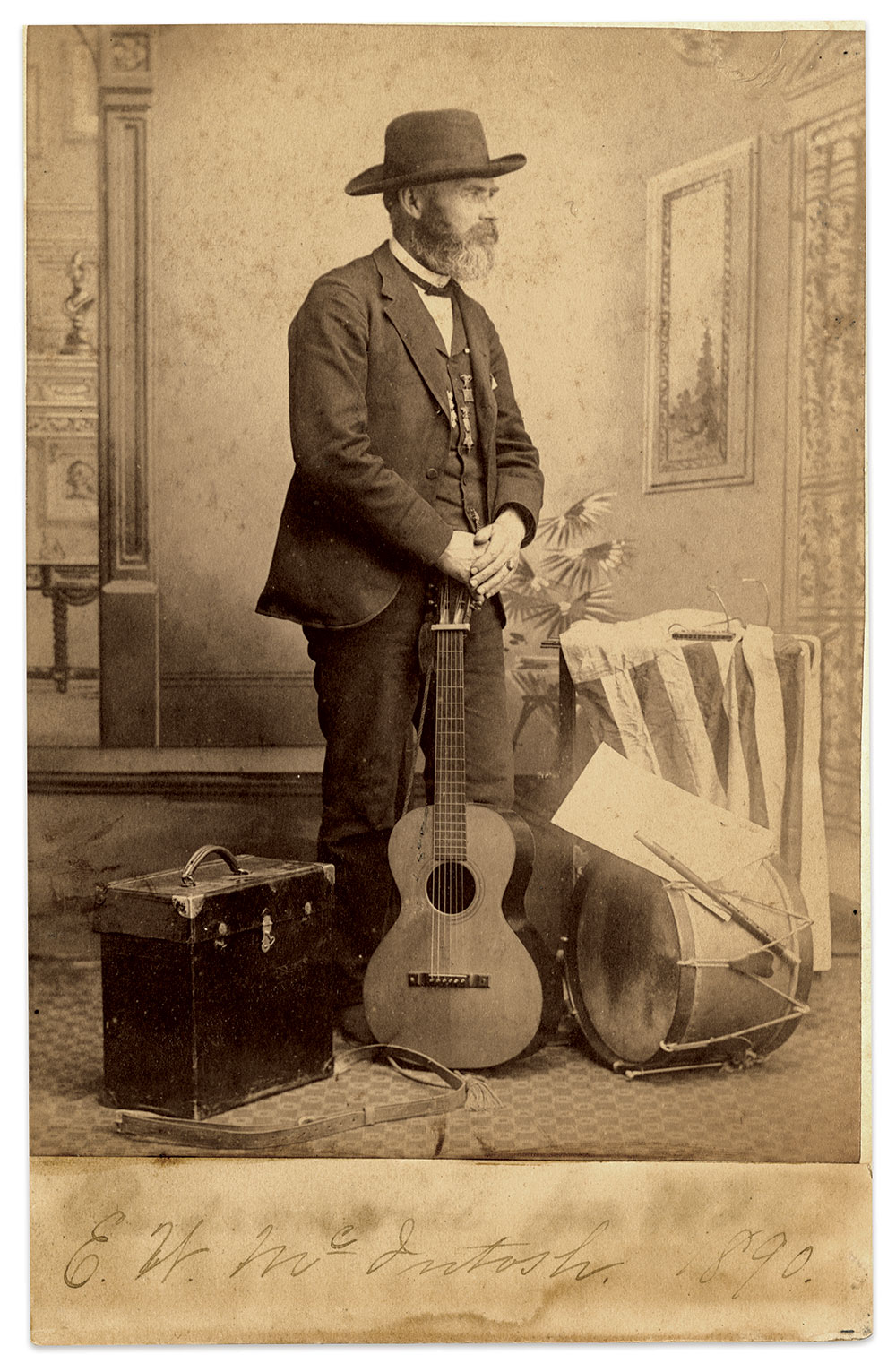
On the back of the image is printed, “This Photo is a copy of the original, taken from a tin type, by a rebel artist at parole camp near Vicksburg, March 28th, 1865; it is a correct photo of E. W. McIntosh, of Co. E, 14th Illinois Infantry, as he appeared after having been confined in Andersonville prison from October 4, 1864 until March 28, 1865.”
He is Eppenetus Washington McIntosh. Born in Terre Haute, Ind., and raised in Bloomington, Ill., McIntosh enlisted at age 17 in 1861. He served with the 14th through Fort Donelson, Shiloh, and Vicksburg before reenlisting as a veteran volunteer during the Atlanta Campaign.
Captured near Ackworth, Ga., McIntosh was sent to Andersonville and later recalled that “through intense suffering and frightful starvation I became a physical wreck.” Transferred to Camp Fisk in March 1865, he began recovering his strength and boarded the steamboat Henry Ames on April 22 for a trip to St. Louis and Benton Barracks.
Fate intervened. While the vessel stopped at Memphis, McIntosh went ashore to buy a few items and was accidentally left behind. The next day he boarded the Sultana and secured a spot on the hurricane deck.
When the boilers exploded, McIntosh recalled being “sent whirling into the water,” adding, “As I struck the water I heard groans and screams of agony on every side.” He continued, “I decided to keep back from the crowd, but found it was not an easy matter, as the drowning were making for any who could swim… It was hard work to keep clear and save one’s own life.” Grabbing pieces of wood, McIntosh floated in the cold water and was rescued below Memphis. A rescue boat took him to Overton Hospital. “Being in the cold water so long had reduced the swelling in my ankles and feet,” he later surmised. “The scurvy ulcers were thoroughly cleansed… and I believe now that terrible bath had much to do with saving my feet from amputation.”
Two days later, McIntosh boarded another steamer for Benton Barracks and received a discharge in June 1865. Never regaining the strength for manual labor, he became a Methodist Episcopal minister, musician, lecturer, and frequent speaker about his wartime experiences. He attended reunions of the Sultana Survivors Association and remained active in veterans’ organizations for decades.
The effect of his travels strained his relationship with his wife and children, leading to an unstable family life that ended in estrangement. In his old age, McIntosh suffered from Parkinson’s disease and died at the National Military Home in Leavenworth, Kan., in 1927 at age 83. His remains rest in Leavenworth National Cemetery.
Last Act of a Kentucky Cavalry Officer
When the Sultana exploded, Maj. William H. Fidler of the 6th Kentucky Cavalry was asleep in a temporary bunk in the main saloon. Uninjured by the blast, Fidler and his aide de camp made their way to the main deck in search of buckets to fight the growing fire. Finding none, they joined others in tossing wreckage into the river to aid struggling survivors.
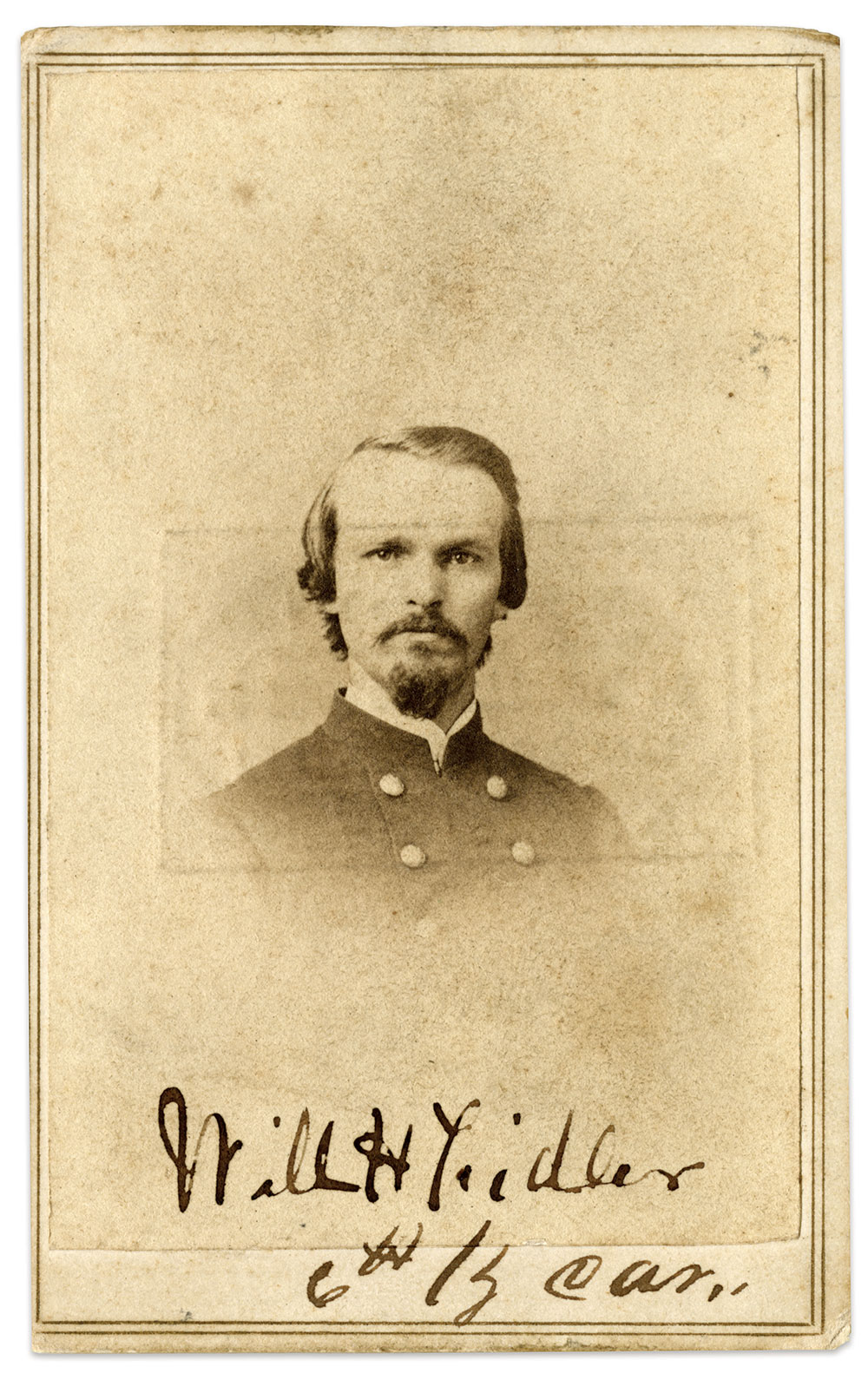
Born in Marion County, Ky., Fidler entered service in 1862 as major of the newly organized 6th Kentucky Cavalry. A devoted son, he regularly sent much of his pay home to support his widowed mother and siblings. Over the next three years, he proved himself in the Middle Tennessee and Atlanta Campaigns and during Union Gen. James H. Wilson’s cavalry raid through Alabama and Georgia in the spring of 1865.
During that campaign, Fidler was captured after being cut off from his regiment near Pleasant Ridge, Ala. Tracked through swamps by Confederates with dogs, he and two privates were captured on April 6 and sent to the parole camp near Vicksburg.
On April 24, he boarded the Sultana with 75 comrades from his regiment. After the explosion, while helping clear burning wreckage, Fidler heard a young woman cry that her mother was drowning. Without hesitation, the 23-year-old major leaped into the river. Almost immediately, he and the woman were seized by panicked survivors and pulled beneath the water. His body was never recovered. A military headstone was later erected for him at Lebanon National Cemetery in Lebanon, Ky.
Taking the Blame
Captain Frederic Speed proved himself a capable soldier throughout the war. From his first service in 1861 as sergeant major of the 5th Maine Infantry to a staff officer for several generals, he proved a competent administrator. His winning ways won him praise from superior officers and a series of assignments with increasing responsibilities.
In early 1864, he served as assistant adjutant general of the 19th Corps and in August became assistant adjutant-general of volunteers for the Defenses of New Orleans. By April 1865, he served on Maj. Gen. Napoleon J.T. Dana’s staff, and was detailed as assistant parole officer to deal with processing of prisoners of war.
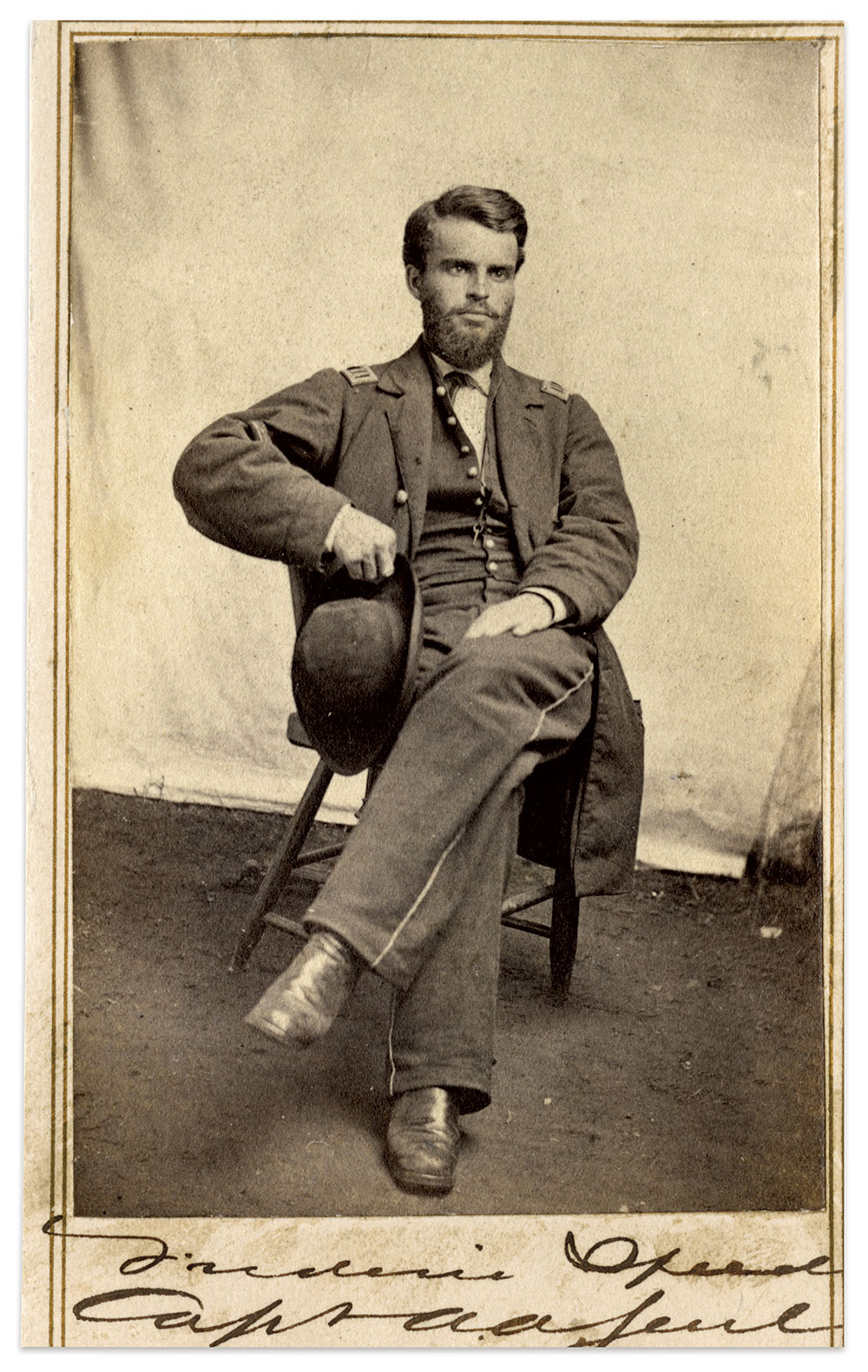
On April 24, 1865, during the loading of the Sultana, Speed spent the entire day at Camp Fisk, placing the men upon the different trains that carried the ex-prisoners from the exchange camp to a Vicksburg wharf. He never attended the Sultana boarding.
Less than a year later, in January 1866, the army court-martialed him for overcrowding the Sultana and causing the deaths of the soldiers on board. Though found guilty, the judge advocate general in Washington, D.C. rightfully overturned the verdict.
Honorably discharged in September 1866, Speed opened an ice business in Vicksburg. Perhaps spurred on by his own court-martial, Speed read law and was admitted to the Mississippi bar in 1868. Over time he became a respected judge and was an active member in the Masons. In 1869 he became editor of the conservative Vicksburg Times, and made an ultimately failed bid for state senator.
Speed married the daughter of the owner of the Times, started a family that grew to include five children, and died of Bright’s Disease in 1911 at age 70. At the time of his death, he ranked as the only 33rd-degree Mason in Mississippi.
Gene Eric Salecker is a military historian whose eight published books include Destruction of the Steamboat Sultana: The Worst Maritime Disaster in American History (2022) and The Second Pearl Harbor: The West Loch Disaster, May 21, 1944 (2014). He owned the largest collection of Sultana artifacts and memorabilia which he donated to the Sultana Disaster Museum in Marion, Ark. A graduate of Northeastern Illinois University, he is a retired police officer and middle school teacher currently acting as the historical consultant for the Sultana Disaster Museum. He lives in River Grove, Ill., with his wife, a rabbit, a cat, and dozens of tropical fish.
SPREAD THE WORD: We encourage you to share this story on social media and elsewhere to educate and raise awareness. If you wish to use any image on this page for another purpose, please request permission.
LEARN MORE about Military Images, America’s only magazine dedicated to showcasing, interpreting and preserving Civil War portrait photography.
VISIT OUR STORE to subscribe, renew a subscription, and more.
1 thought on “Faces of the Sultana”
Comments are closed.