
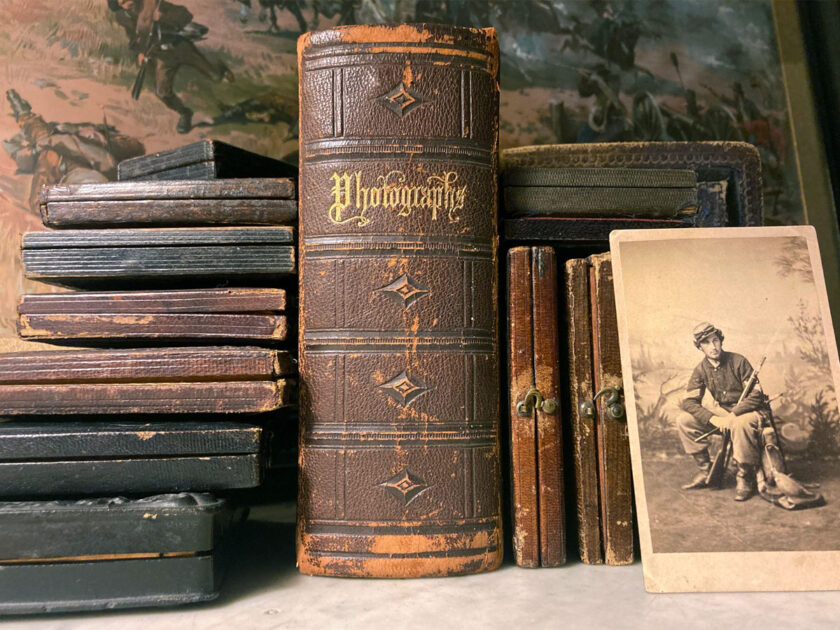
At the recent Ohio Civil War Show in Mansfield, I had the great pleasure of catching up with friends new and old. One of them, subscriber Don Andrew, brought up the subject of disposing of collections. “Everybody’s talking about it,” Don observed, describing it as the proverbial elephant in the room.
Don is absolutely correct. For collectors who became interested during the postwar Civil War Centennial era, thoughts of finding the next caretakers for cherished artifacts can feel daunting. The battle between head and heart—and the reality of considering our own mortality—can become overwhelming to the point of paralysis.
I know this is a subject every collector contemplates. At one point, I reached out to a lawyer specializing in estate planning, hoping to publish an article on the topic, but I came away with more questions than answers.
Reflecting on my conversation with Don, and similar discussions with other collectors, I’ve noticed two common themes that may help when considering the future of a collection.
Act while you are in good mental and physical health. The vast majority of collectors I’ve met have families with little or no interest in historic images. Many collectors do not want to burden loved ones with the considerable effort required to place images and artifacts with people who will value and preserve them. Some have no family members to pass a collection on to at all.
Organize your collection into groupings. Finding a single source willing and able to become the next caretaker of an entire collection is unlikely, as not all material will appeal to the same audience. Cost alone—especially with larger, mature collections—may narrow the pool of serious interest to only a handful of individuals or institutions. Breaking a collection into three categories can help. One group may include images and artifacts suited for museums, libraries, or institutions interested in preservation, study, or exhibition. These materials could be sold, donated, or handled through a combination of both. It is important to recognize that establishing such arrangements may require significant time and legal planning. A second group might consist of images you know would be especially meaningful to collectors who share your specific interests. These pieces could be offered through private sale. The final group would include remaining material best suited for consignment to a trusted dealer or auction house.
If you have additional thoughts or ideas on the subject, please send them my way.
Ronald S. Coddington
Editor & Publisher
SPREAD THE WORD: We encourage you to share this story on social media and elsewhere to educate and raise awareness. If you wish to use any image on this page for another purpose, please request permission.
LEARN MORE about Military Images, America’s only magazine dedicated to showcasing, interpreting and preserving Civil War portrait photography.
VISIT OUR STORE to subscribe, renew a subscription, and more.