

By Scott Valentine
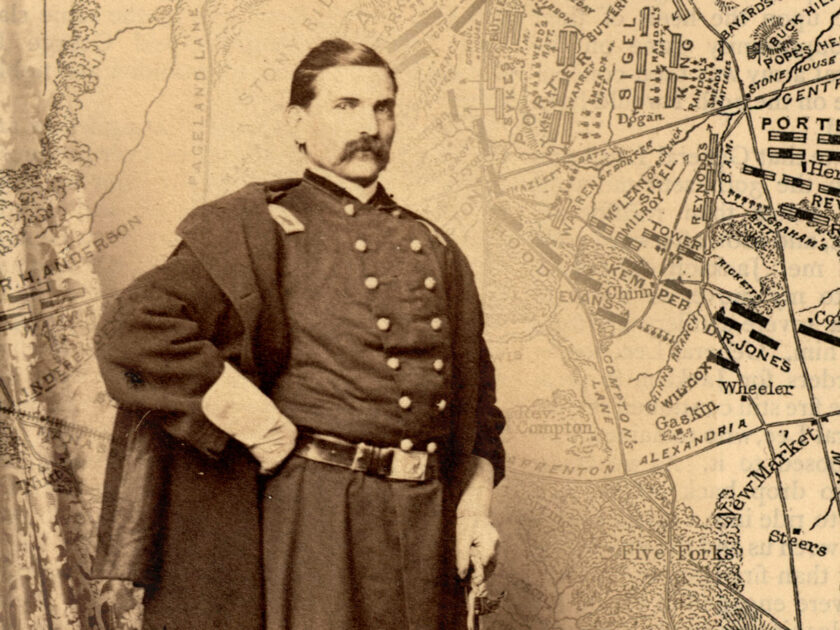
At the Second Battle of Bull Run, the Union brigade commanded by Col. John Alfred Koltes remained in reserve as the fighting unfolded. However, during the afternoon of August 30, 1862, as the Confederate corps led by Stonewall Jackson threatened, Maj. Gen. Franz Sigel, commanding the Union 1st Corps, called in Koltes’s Brigade.
Koltes, about 34, enjoyed a sterling military reputation. A German immigrant, he had previous service in the Mexican War and as a Marine guarding the U.S. Mint in Philadelphia. Active in the local militia, his respect as a leader, and his abilities as a recruiter, factored into his commission as colonel of the Pennsylvania Legion. It mustered into the federal army in late 1861 as the Keystone State’s 73rd Infantry.
Less than a year later at Second Bull Run, Koltes commanded a brigade that included his own 73rd, and the 29th and 68th New York infantries. Ordered to reinforce another brigade overwhelmed by elements of Jackson’s corps, Koltes and his men arrived at the top of Chinn Ridge and faced a storm of artillery fire, and infantry threatening his right flank. The arrival of two more sections of enemy cannon spurred Koltes forward to the head of his line, sword swinging in the air, ordering his men to take the battery. At the outset of the advance, shell fragments struck Koltes and his horse, killing them instantly.

His brigade rushed forward and reached the guns, but was forced back after a brutal half hour of combat. The survivors brought the dead colonel with them and counted their losses—about a third of the brigade was wiped out.
Had he lived, Koltes would have received his brigadier’s star, as a promotion was on its way to him. Instead, his comrades carried his body on an improvised stretcher of muskets to nearby Centreville, from where it was sent under guard to Washington, D.C., for embalmment before being shipped to Philadelphia. His grieving wife and four young children survived him. Later, veterans of Philadelphia’s Grand Army of the Republic named post 228 in his honor.
On September 5, his remains lay in state in Independence Hall. Visitors who paid their respects noted the color-tinted photograph at the foot of his open casket, and that his face appeared natural, though discolored by what was believed to be gunpowder residue. The latter observation calls into question an earlier report that stated his head had been almost cleaved in two by the shell fragment.
Once the viewing ended, the casket was closed, carried to a hearse, and taken through the streets of the city, accompanied by a long and formal procession with an imposing escort of police and military to Glenwood Memorial Gardens. At the graveside service, his empty scabbard, damaged and bloodstained from the battle, was placed atop the casket. His sword had reportedly been knocked out of his hands by one of the shell fragments.
Scott Valentine is a MI Contributing Editor.
SPREAD THE WORD: We encourage you to share this story on social media and elsewhere to educate and raise awareness. If you wish to use any image on this page for another purpose, please request permission.
LEARN MORE about Military Images, America’s only magazine dedicated to showcasing, interpreting and preserving Civil War portrait photography.
VISIT OUR STORE to subscribe, renew a subscription, and more.