
By Melissa A. Winn
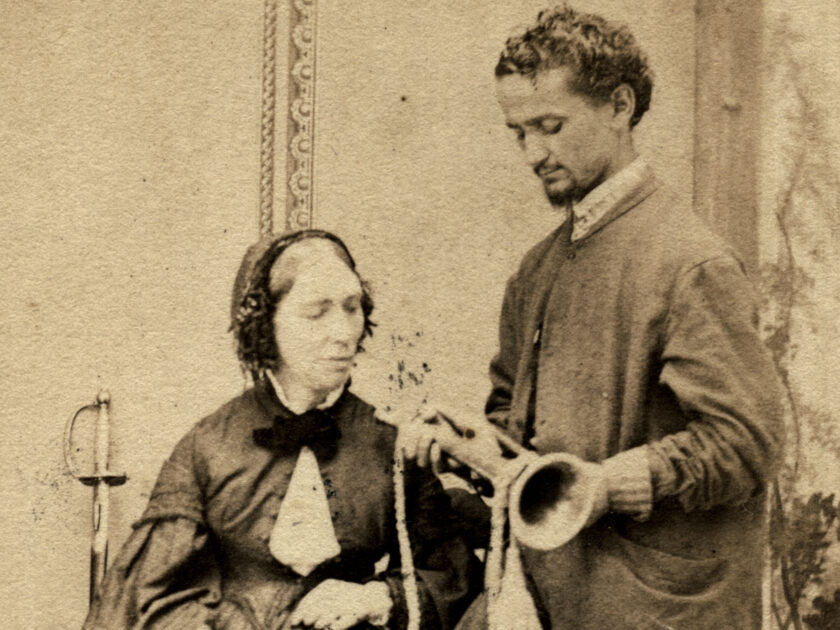
By the time the Civil War erupted, Eleanor Ransom had already lived a full life—as a wife, a mother, and a Hoosier shaped by years of responsibility and hard work.
While many nurses who followed the armies were young and unencumbered, Ransom stepped forward in her 40s, leaving her Indiana home and family in late 1862 to answer Gov. Oliver P. Morton’s call for nurses. Ransom’s calm presence, patience, and unfailing generosity quickly set her apart. To the wounded men who depended on her, she became more than a nurse; she was “Mother Ransom” and “Aunty Ransom.”
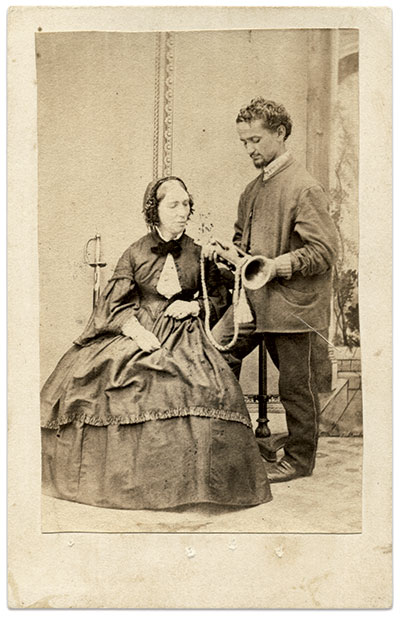
In 1863, Ransom went south to Memphis to work in Gayoso Hospital, and, over the course of the next two years, served in several Tennessee hospitals, including Jackson New Hospital and Adams Hospital. Illness forced her to take a brief reprieve in 1863, and in 1864, she took leave when one of her daughters fell ill and passed away. Undeterred from her mission, she always came back to care for the soldiers.
In late 1864, she reported to New Orleans to accompany the hospital transport ship North America. The ship, with more than 200 sick soldiers traveling to New York for long-term care, departed Louisiana on December 16, 1864.
“We had pleasant weather until the night of the 20th,” Ransom recalled in Our Army Nurses, published in 1895. “We buried one of our brave soldier boys in the sea.”
A winter storm changed everything. On the morning of December 22, just off the coast of Florida, the North America was reported to be leaking at such a rapid pace that attempts to seal it were fruitless. A nearby transport ship, Mary E. Libby, answered the crew’s distress calls, but choppy waters caused the ships to collide.
“For a time, it was hard to tell which vessel would go down first,” Ransom observed.
By the morning of the 23rd, the North America was unsalvageable, and the crew began to evacuate all they could, but many soldiers could not be saved.
The storm was so severe, and the waves rolling so fearfully, each word echoed over the sea and back into our hearts.
“My dear soldier boys,” Ransom later wrote. “God’s power in the elements forbade me doing, oh! what my heart and hands would so gladly have done. And they were taken, and I was saved, which for months seemed to me such a mystery.”
Ransom left the North America on a rescue boat, and described how it, too, was almost capsized by the ocean: “The storm was so severe, and the waves rolling so fearfully, each word echoed over the sea and back into our hearts.”
The wreck of the North America took the lives of 194 passengers, mostly wounded soldiers. Military personnel transported Ransom to the New York State Sanitary Commission for care and then to the New England Rooms, a temporary hospital, where Ransom says she was treated “as if I had been a princess.”
“For weeks, this terrible scene was kept fresh in my mind by one and another inquiring for friends,” Ransom added. “It was almost beyond my power of endurance to recount that heart-rending scene. Our dear soldiers on that sinking ship; one hundred and ninety-four went down with her!”
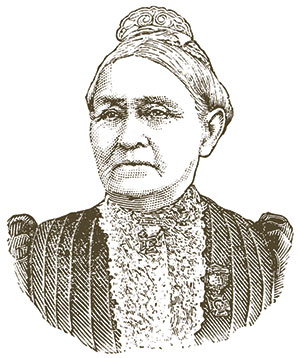
Undeterred, Ransom returned to Tennessee after her recovery to continue nursing at Adams Hospital until the close of the war. She dedicated her postwar years to assisting women in need, including helping establish homes for “friendless women” in Richmond, Ind. She applied for and received a $12 monthly pension payment for her war service.
In her seventies, she moved to Los Angeles, where she founded a First Methodist mission in a Chinese community, supported the Home Missionary Society, and donated her personal belongings to more “friendless” women and girls. The “Ransom Home” for friendless women in Los Angeles was named for her.
Ransom passed away in Los Angeles in 1909, after falling and injuring herself. She was 95 years old.
Melissa A. Winn has been enchanted with photography since childhood. Her career as a photographer and writer includes numerous publications, among them Civil War Times, America’s Civil War, and American History magazines. She is currently Director of Marketing and Communications for the National Museum of Civil War Medicine. Melissa collects Civil War photos and ephemera, with an emphasis on Dead Letter Office images and Gen. John A. Rawlins, chief of staff to Gen. Ulysses S. Grant. Melissa is a MI Senior Editor. Contact her at melissaannwinn@gmail.com.
SPREAD THE WORD: We encourage you to share this story on social media and elsewhere to educate and raise awareness. If you wish to use any image on this page for another purpose, please request permission.
LEARN MORE about Military Images, America’s only magazine dedicated to showcasing, interpreting and preserving Civil War portrait photography.
VISIT OUR STORE to subscribe, renew a subscription, and more.