
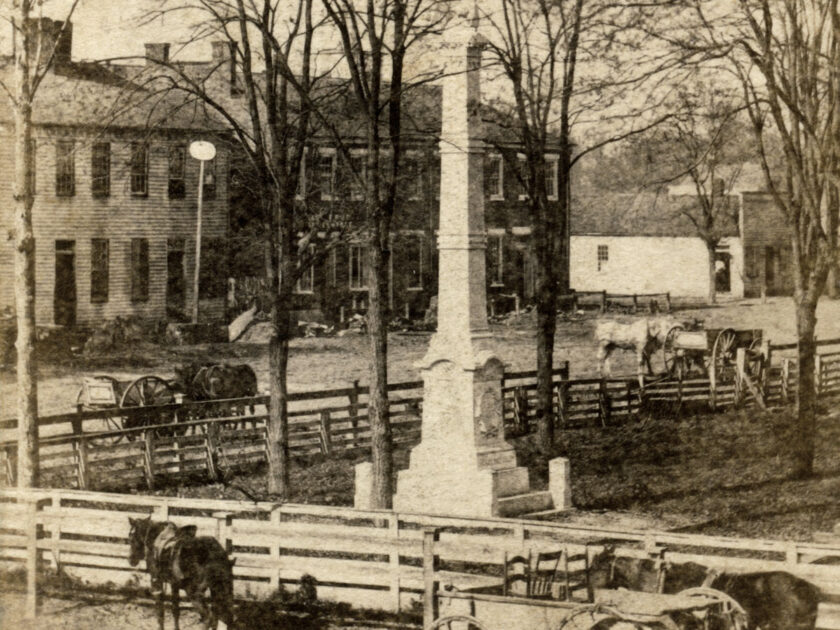
On April 24, 1863, during an evening dress parade in the camp of the 58th Indiana Infantry near Murfreesboro, Tenn., Lt. Col. James T. Embree made an offer: “To raise a monument in memory of the deceased of our Regiment, whether they died from disease or in battle.”
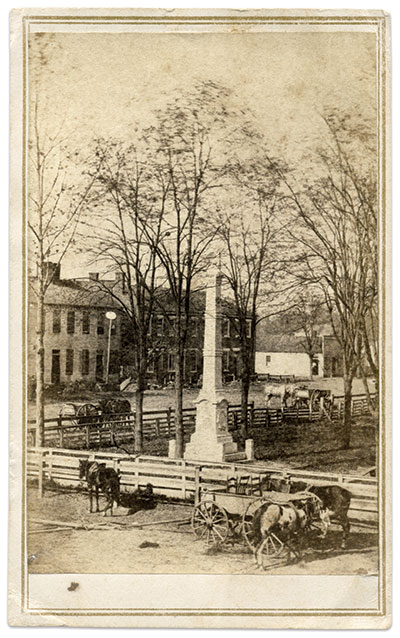
Embree, a thoughtful and generous man and a respected officer, had just cause to be proud of the 58th. Organized at Princeton, Ind., in 1861, the regiment had endured the rigors of active campaigning, and had fought well in the battles of Shiloh and Stones River. Though the end of the war was nowhere in sight, Embree desired to preserve the memory and sacrifice of his men.
A letter by a subordinate officer recalled the reaction to Embree’s proposal: “The monument is to be raised in the 1st Congressional district. We then took a vote of the Regiment and they voted unanimously to raise the monument! After which the Colonel told them, if any of them wanted it at any particular place, to propose the place, and we should vote on it.” Two locations were proposed: Princeton and nearby Petersburgh. Princeton won by an overwhelming margin, 211 to 130.
The regiment created a committee led by Embree. He and his fellow Hoosiers raised funds—$700 from a commutation allowed by the government for unused rations, and the rest from the officers. Outside donations were not allowed. The committee solicited designs, and a Cincinnati firm won the commission with a proposal of a 33-foot-tall shaft emblazoned with patriotic motifs and topped by an eagle carved from Italian marble.
Meanwhile, the 58th continued its service, fighting at Chickamauga and Chattanooga, Atlanta, the March to the Sea and the Carolinas Campaign.
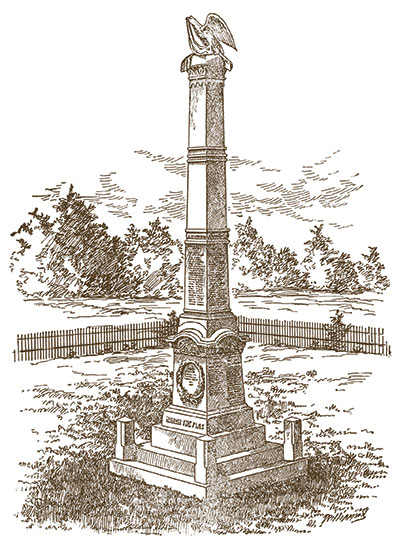
On July 4, 1865, the 58th remained on active duty in Louisville, Ky., when townspeople in Princeton, along with veterans of the regiment who had mustered out, or on furlough, dedicated the memorial.
According to the regiment’s 1895 history, “It was the first monument erected in the state in honor of soldiers of the war of the Rebellion, and is probably the only Regimental monument, in any state, erected by funds provided by its members exclusively, and the only one dedicated before the Regiment was discharged from the service. In the manner of its conception, as well as in the manner of its construction, the 58th Indiana Regimental Monument, which stands in the court house square at Princeton, is certainly unique.”
Embree barely outlived the monument, dying in 1867 from consumption contracted during his service. He was 38. To date, no portrait of Embree has surfaced. Until it is found, this image of the monument he championed fills the void.
SPREAD THE WORD: We encourage you to share this story on social media and elsewhere to educate and raise awareness. If you wish to use any image on this page for another purpose, please request permission.
LEARN MORE about Military Images, America’s only magazine dedicated to showcasing, interpreting and preserving Civil War portrait photography.
VISIT OUR STORE to subscribe, renew a subscription, and more.