
Site Overlay

A Medal Rescinded: 1st Lt Henry J Goodwin, 27th Maine Infantry, and the Medal of Honor

By Evan Phifer

The Medal of Honor’s story is one of continuity and change and of history and memory. What the nation considers worthy of the nation’s highest military honor has not been constant. The story of Henry Jefferds Goodwin and the 27th Maine Infantry highlights the evolving history of the Medal and how acknowledgments of bravery and sacrifice sometimes hinge on the moments of their respective time and place.

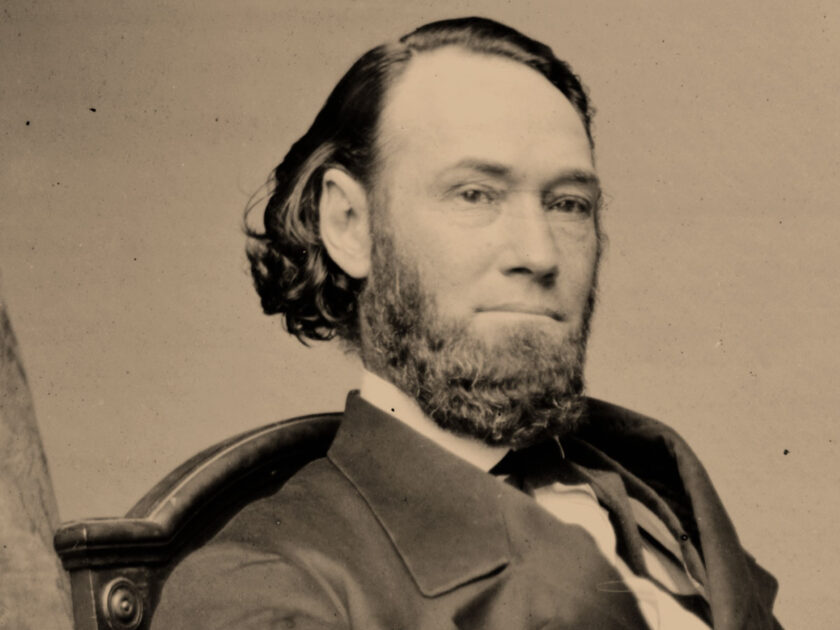
Goodwin pictured as a first lieutenant. Carte de visite by Mathew B. Brady of Washington, D.C. The Liljenquist Family Collection at the Library of Congress.

Born in 1841 in Kennebunkport, Maine, Goodwin mustered into the 27th as a sergeant in Company K. Raised in 1862 as a nine-month regiment, the regiment organized in Portland that September and by the end of October arrived in the defenses of Washington, an assignment that defined the entirety of its service.

Throughout the rest of 1862 and into the spring of 1863, the 27th saw duty at Arlington Heights, Hunting Creek, and Chantilly, with soldiers hoping for definitive orders sending them to the front. One soldier wrote home that the men had entered service “to do something towards crushing the rebellion, and they dislike the idea of living idly in camp all winter.”

Goodwin received a promotion to first lieutenant in early 1863.

As the regiment approached the end of its enlistment, one soldier summed up the mood of the men in a letter published in the May 15 edition of The Union and Journal of Biddeford, Maine: “I doubt not the willingness of the men of this regiment to make the last sacrifice for principles which they really value, or their readiness to give fortune and life for the preservation of that system by which alone fortune and life is rendered secure—only give them the opportunity they desire. In this instance we have been doomed to disappointment.”

As Gen. Robert E. Lee’s Army of Northern Virginia invaded Maryland and Pennsylvania, the 27th received orders to report to Maj. Gen. Henry W. Slocum and his 12th Army Corps in Leesburg, Va. When officials realized the 27th’s service was nearly over, Army of the Potomac commander Joseph Hooker ordered the Mainers back to Washington.

Fate intervened when Secretary of War Edwin M. Stanton reached out to influential former Maine congressman Daniel E. Somes to convince the 27th, and its brother regiment, the 25th Maine, to stay in uniform beyond their original terms to assist in repelling the Confederate invasion. Although the 25th declined the request, Somes found the officers and men of the 27th more receptive. Stanton added to the drama on June 29 with General Orders No. 195, which stipulated that those who continued to serve past their enlistments would be awarded “an appropriate Medal of Honor.” While the men of the 27th probably did not know of this as they weighed whether to remain in Washington or return home, Stanton’s declaration would heavily influence the historical memory of the 27th’s Civil War service and the Medal of Honor itself.

Daniel Eton Somes (1815-1888) served as a Republican member of the U.S. House of Representatives from 1859-1861. Glass plate negative by Mathew B. Brady of Washington, D.C. Library of Congress.

These men from Maine had to consider not only physical danger if the rebels advanced against Washington, but also agricultural concerns, such as the coming haying time, in their decision-making. In the end, Goodwin, and 25 others of his company, were among the roughly 300 men who remained with the regiment.

The 27th stayed in Washington’s defenses though the Battle of Gettysburg. With the danger cleared and the emergency over, it departed the capital on July 4 and mustered out on July 17 in Portland. During its time of service, the regiment lost nearly two dozen men and one officer to disease and one soldier from the accidental discharge of his musket.

Medal of Honor awarded to Jeremiah Plumer, captain of the 27th’s Company F. Library of Congress.

Over the next several years, through a bureaucratic error, no one created a definitive list of those who remained in D.C. in July 1863 and thus more than 800 Medals of Honor were awarded to all members of the 27th. Maine officials received the Medals and Mark F. Wentworth, the 27th’s former colonel, managed their proper distribution. Goodwin likely received his medal at some point postwar. 

Goodwin worked as a salesman for decades after his service. In the early 1910s, he spent almost two years in the National Home for Disabled Volunteer Soldiers in Togus, Maine, suffering from rheumatism, a hernia, and heart problems. Those who knew him in older age described him as quiet but always dressed in a “faultless manner.”

Goodwin died in 1916 and was buried in the Grand Army of the Republic Cemetery in Lewiston, Maine.

The same year, an Army review board investigated the criteria upon which previous Medals of Honor had been awarded. Certain aspects of bravery previously deemed worthy were reevaluated and rescinded. Evolving criteria included awarding the medal to members of the Armed Services in action under extraordinary circumstances. The board completed its work the following year, and as a result of these changes, 911 Medals were rescinded—864 from the 27th, including Goodwin and his comrades who had volunteered for extended service. Goodwin never knew of the ruling.

Others impacted were civilian scout William “Buffalo Bill” Cody and contract nurse Dr. Mary Walker. While Walker and Cody, and several other civilian scouts, had their Medals reinstated later in the 20th century, all members of the 27th remain stricken.

Evan Phifer has worked at numerous cultural institutions including the Foundation for the National Archives, White House Historical Association, and the American Revolution Institute of the Society of the Cincinnati. He holds a BA in History from Bucknell University and is a graduate of American University’s Public History program.


SPREAD THE WORD: We encourage you to share this story on social media and elsewhere to educate and raise awareness. If you wish to use any image on this page for another purpose, please request permission.

LEARN MORE about Military Images, America’s only magazine dedicated to showcasing, interpreting and preserving Civil War portrait photography.

VISIT OUR STORE to subscribe, renew a subscription, and more.

1 thought on “A Medal Rescinded: 1st Lt Henry J Goodwin, 27th Maine Infantry, and the Medal of Honor

Comments are closed.

Scroll Up