
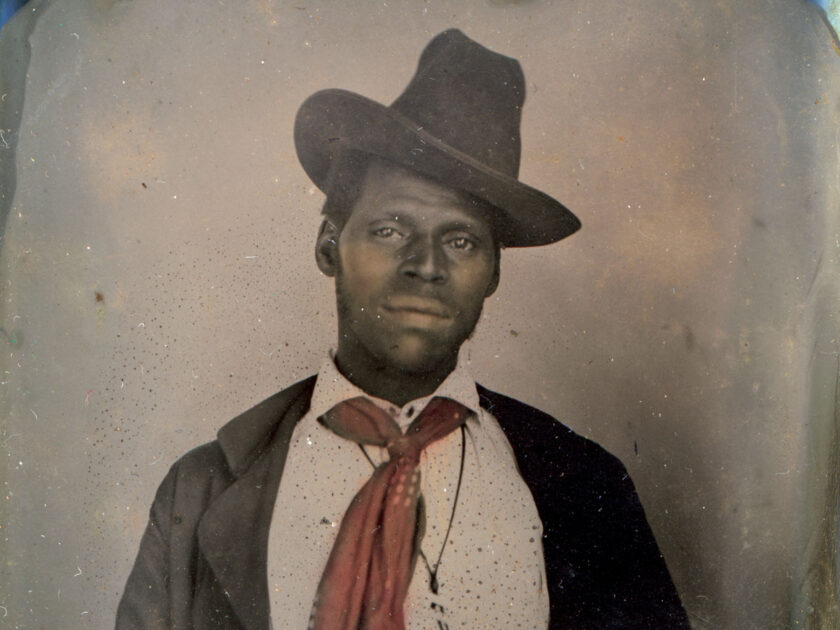
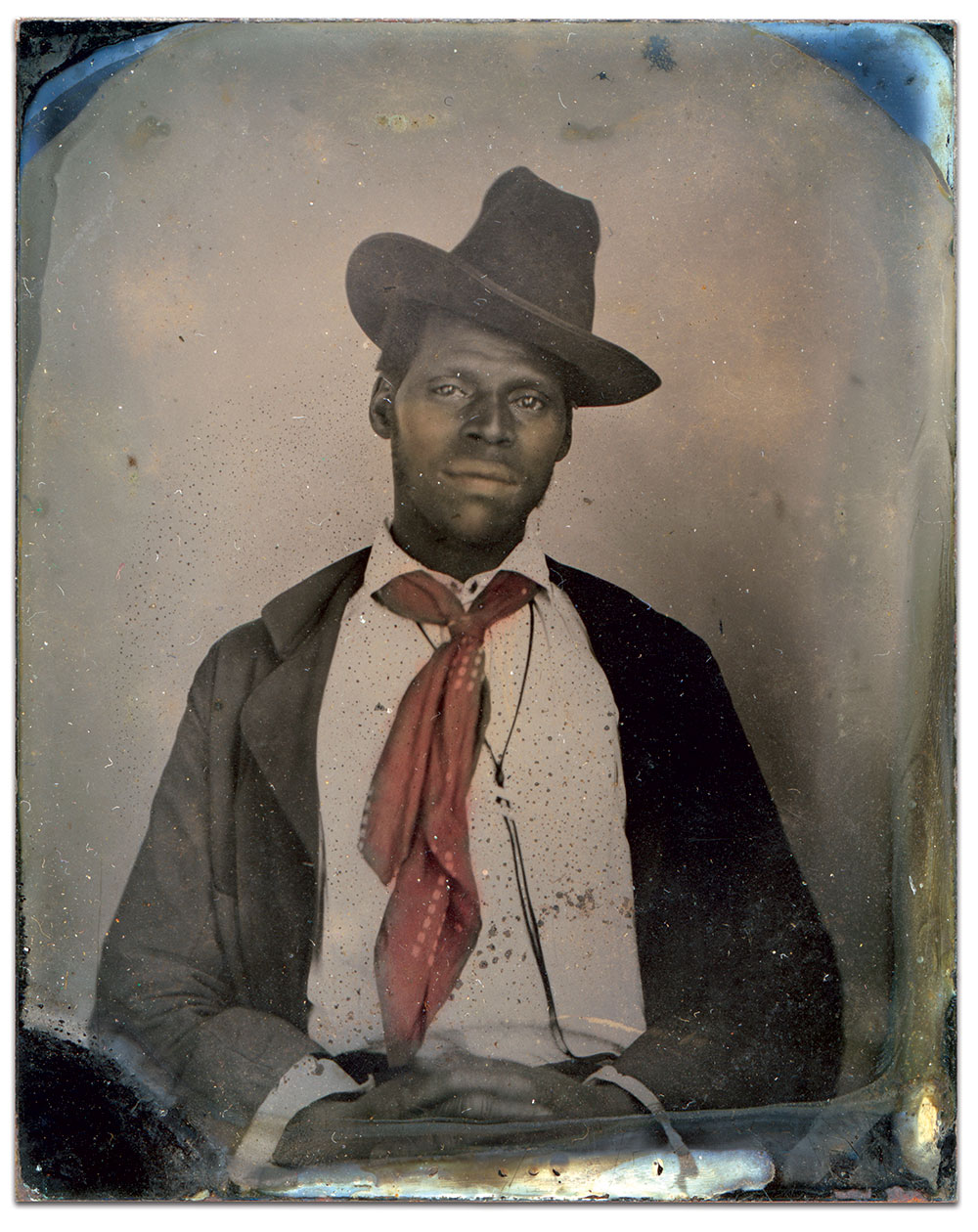
It is an uncommon occurrence when one of the millions of enslaved people in Civil War America is identified by name and face. Thanks to an inscription inside the case holding this tintype portrait of a man wearing a red-tinted scarf and well-worn hat, we know who he is:
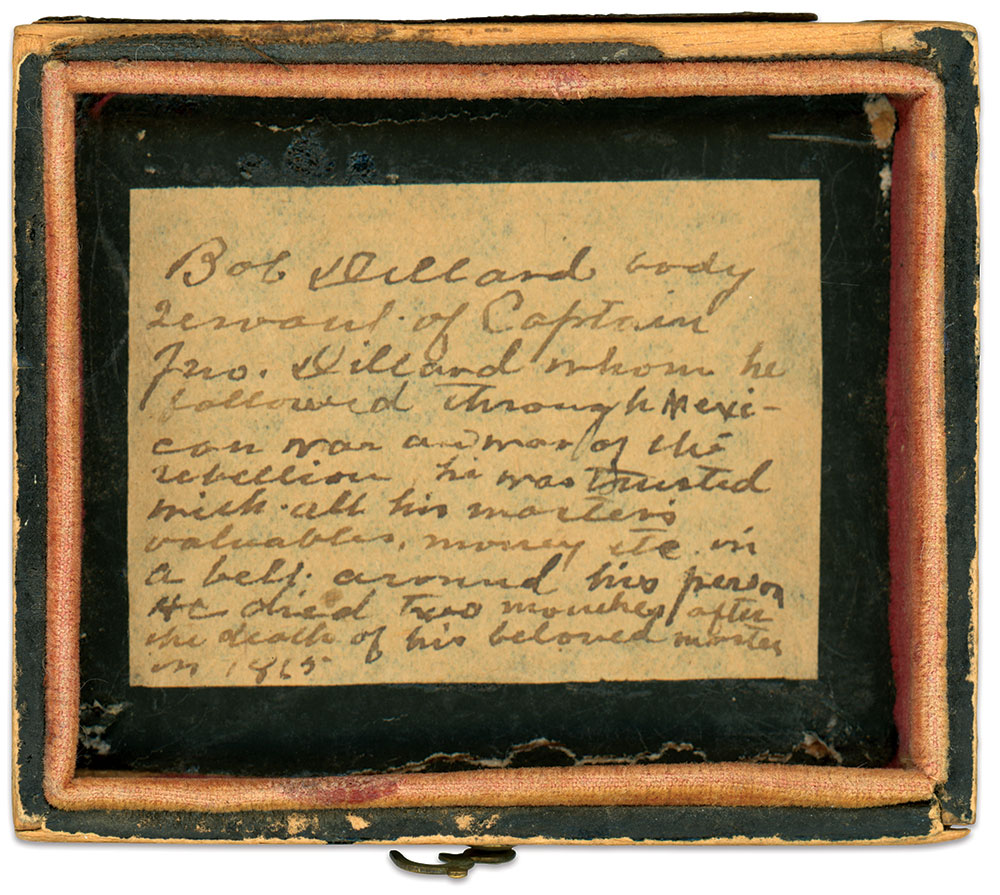
“Bob Dillard body servant of Captain Jno. Dillard whom he followed through Mexican War and war of the rebellion, he was trusted with all his master’s valuables, money etc. in a belt around his person. He died two months after the death of his beloved master in 1865.”
A search of military and genealogical records for John Dillard reveals one volunteer with military service in both wars and a captain’s rank: John James Dillard, born in 1820 in Lynchburg, Va. He relocated with his family to Arkansas during his youth. According to U.S. Census Slave Schedules, John’s mother, Sarah, enslaved 15 people in 1850, and 22 in 1860. Several individuals are young men who could be about Bob’s age. Newspaper advertisements indicate that Sarah bought, sold, and hired slaves in Crawford County, on the northern border of Fort Smith. It is likely that Sarah sent Bob to attend to John while he was off at war.
Bob’s journey was bound to John’s army service.
As captain of Company F of the Arkansas Mounted Regiment commanded by Col. Archibald Yell, John led his men to victory at the 1847 Battle of Buena Vista and received praise in after-action reports. Following the Mexican War, John spent time in California as a military escort and commander of a volunteer company. After the Civil War began, John played a key role in raising Confederate regiments in the state and became captain of the 35th Arkansas Infantry. He advanced to major and participated in the 1863 Battle of Helena, a failed attempt by the Confederates to relieve pressure on besieged Vicksburg, Miss.
The writer of the inscription and their relationship to Bob or John is not known. Use of the terms “body servant” and “beloved master” are often associated with a white person emphasizing devotion and affection that reinforce the idea of a loyal and benevolent enslaved population. “War of the Rebellion” was a popular term for the Civil War used by Union-loyal Northerners for many years after the end of hostilities in 1865—the year Bob and John both passed.
SPREAD THE WORD: We encourage you to share this story on social media and elsewhere to educate and raise awareness. If you wish to use any image on this page for another purpose, please request permission.
LEARN MORE about Military Images, America’s only magazine dedicated to showcasing, interpreting and preserving Civil War portrait photography.
VISIT OUR STORE to subscribe, renew a subscription, and more.