
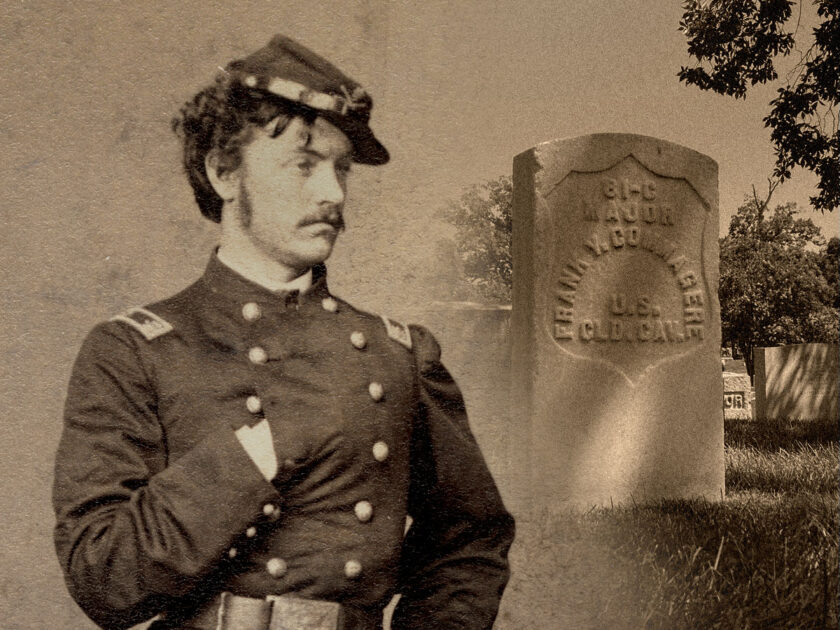
Franklin Young Commagere had a habit of disappearing.
At age 17 in 1861, Ohio-born Frank gained acceptance to the U.S. Naval Academy, a sociable young man full of fun and promise. But he slipped away and joined the Buckeye State’s 14th Ohio Infantry for a three-month enlistment after the war began. The next autumn, he turned up in the ranks of the 67th New York Infantry as a second lieutenant, only to be sent packing in 1863 after a military tribunal found him guilty of “absence without proper authority.”
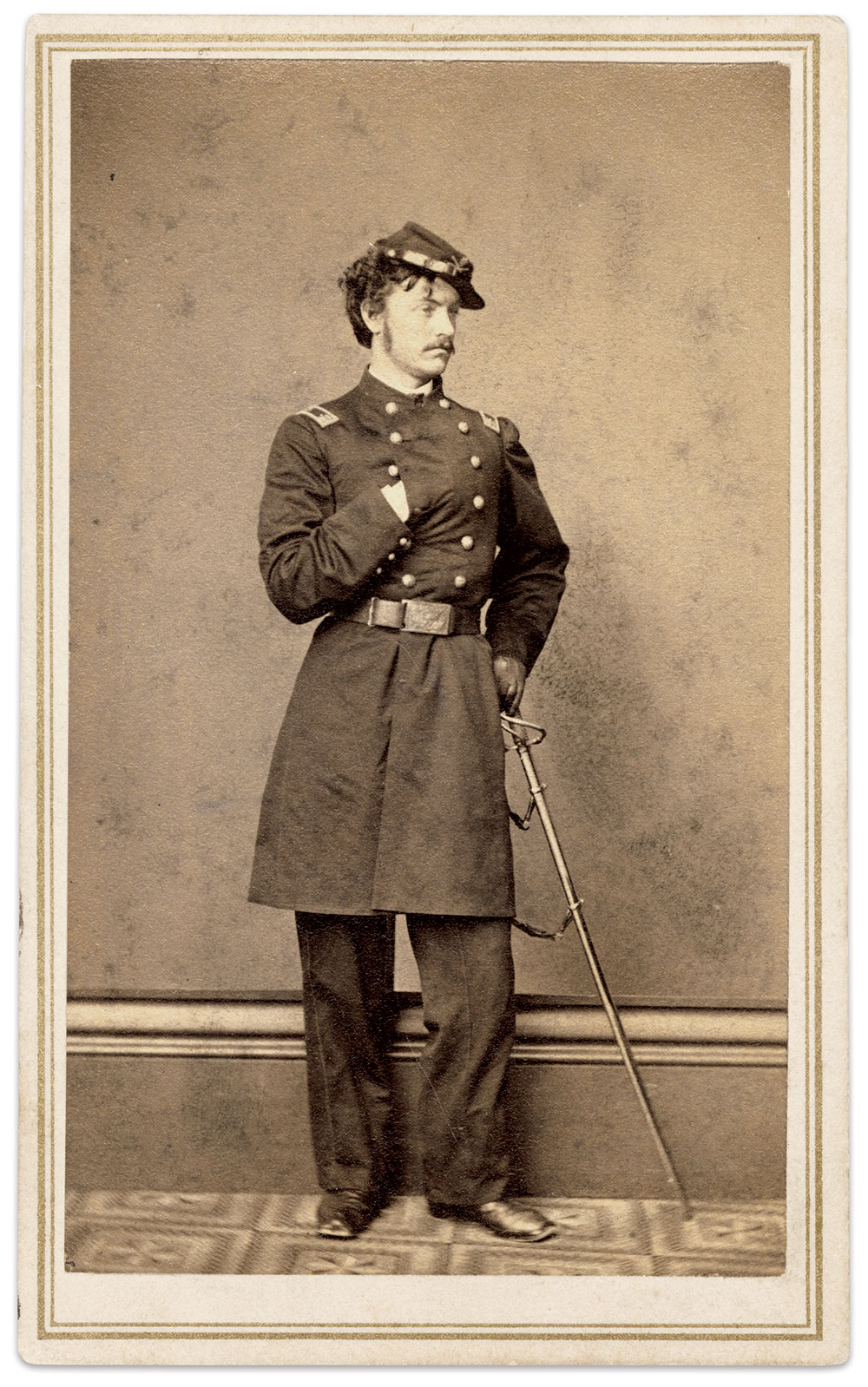
Frank resurfaced as a major in the 6th U.S. Colored Cavalry in 1864. For a time, his record looked clean—at least on paper—until May 1865, when he vanished. The army cashiered him that August. A month later, he reappeared, and sympathetic superiors restored his rank. But Frank could not resist old habits. When he disappeared once more, the army, perhaps weary of the game, simply let him go—never bothering to issue a formal discharge.
Somehow, his service continued. On July 28, 1866, the 7th U.S. Cavalry came into existence. Its original officers included Lt. Col. George A. Custer, his brother Tom, Frederick Benteen, Myles Keough—and Frank, who landed a first lieutenancy. His tenure ended in 1868 when he resigned after being refused a leave to visit his mother. He left Fort Leavenworth without clearance and failed to return government property. Frank attempted to have his resignation revoked and be reinstated, once, just a month after leaving, and again after the 1876 Battle of the Little Bighorn. Both failed.
By this time, Frank morphed into a journalist based in Washington, D.C., writing and editing for several newspapers. His byline can be found in the National Tribune, a periodical founded in the late 1870s for Civil War veterans and their families. Given his dismal army record, his new role carried more than a trace of irony.
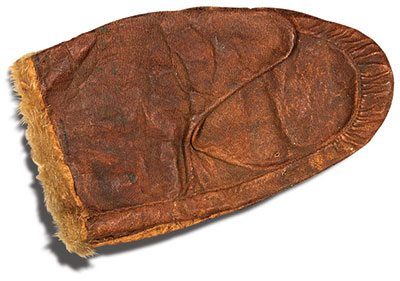
His writings took him on various adventures, notably the 1871-1873 Polaris Expedition, an early and unsuccessful attempt to reach the North Pole. After the Polaris ran into trouble, the government dispatched the steamer Tigress to rescue the explorers. Frank, disguising his identity as a New York Herald correspondent, joined the crew of the Tigress as an ordinary seaman and received a promotion to yeoman. “Mr. Commagere was much esteemed on board, and added not a little to enliven, by his intelligence and humor, the short though stormy voyage of the Tigress,” according to a book published after the end of the expedition.
Frank’s story ended with his death in 1892 at age 59. His remains rest beside his wife, Anita, in Arlington National Cemetery. His younger brother, David, became the grandfather of Henry Steele Commager, the well-known 20th century intellectual and American historian.
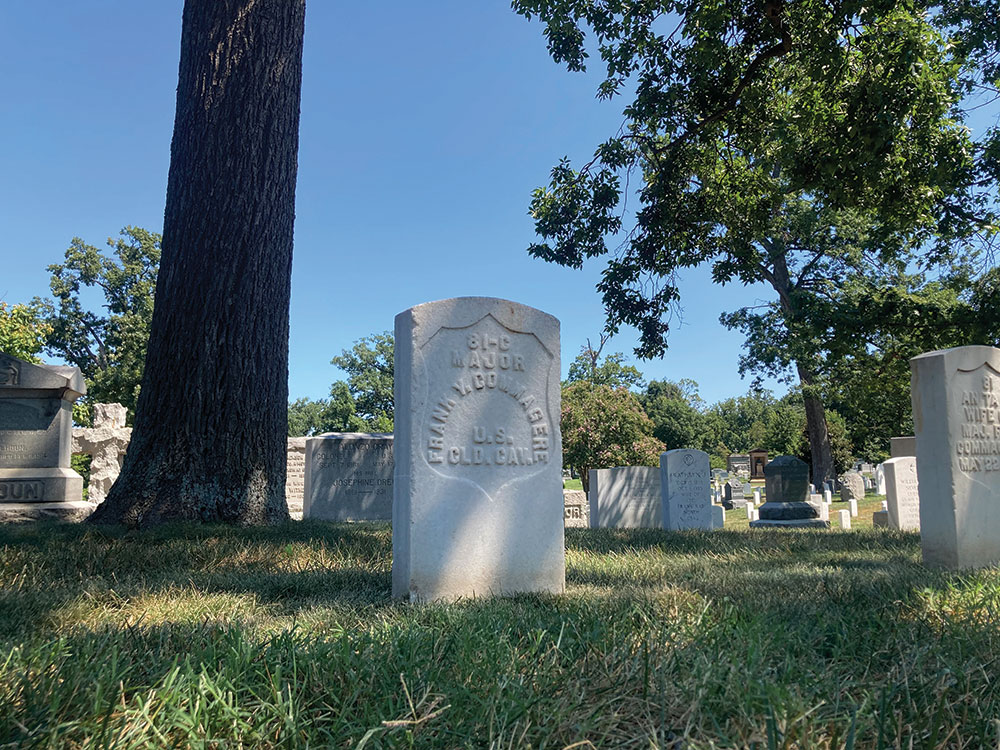
An obituary in The Washington Post praised Frank as “a well-known journalist” who “served with honor and distinction throughout the war.” One admirer observed, “Commagere was a wonderful man in many respects, and but few of us ever had such remarkable experiences as came to his portion.”
Most Hallowed Ground is part of the Arlington National Cemetery (ANC) Project. Established by Jim Quinlan of The Excelsior Brigade, its mission is to identify all Civil War veterans on the grounds. Contact Jim at 703-307-0344.
SPREAD THE WORD: We encourage you to share this story on social media and elsewhere to educate and raise awareness. If you wish to use any image on this page for another purpose, please request permission.
LEARN MORE about Military Images, America’s only magazine dedicated to showcasing, interpreting and preserving Civil War portrait photography.
VISIT OUR STORE to subscribe, renew a subscription, and more.
1 thought on “A Habit of Disappearing—and Reappearing”
Comments are closed.