

On Blue, Gray and Khaki
It perhaps comes as no surprise that MI marks the centennial of America’s entry into World War I with images of doughboys and Civil War veterans. This project has developed
It perhaps comes as no surprise that MI marks the centennial of America’s entry into World War I with images of doughboys and Civil War veterans. This project has developed
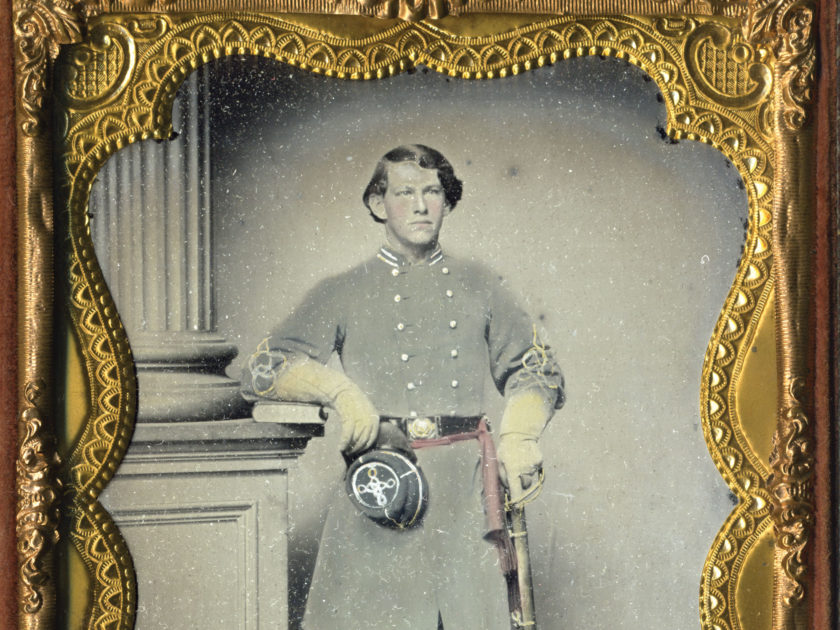
By Evan Phifer, with images from the Dave Mark Collection As the Army of Northern Virginia threatened Union soil in September 1862, two federal soldiers appeared on the doorstep of

The 7th New York State Militia The regiment posed for these group portraits at Camp Cameron in Washington, D.C. in 1861. The studio of Mathew B. Brady is believed to

Though “doughboy” was popularized during World War I, the origin of the word as a military term is disputed, with several explanations emerging over the years. In her 1887 book

Henry Meigs Meade had his hands full in 1864. The 24-year-old Navy paymaster was designated as the lone disbursing officer for all of the federal vessels in the regional fleet

No known record exists of how David Henry Bennett, a corporal in the 28th New York Infantry, came into possession of the Confederate cap he wears in this portrait.
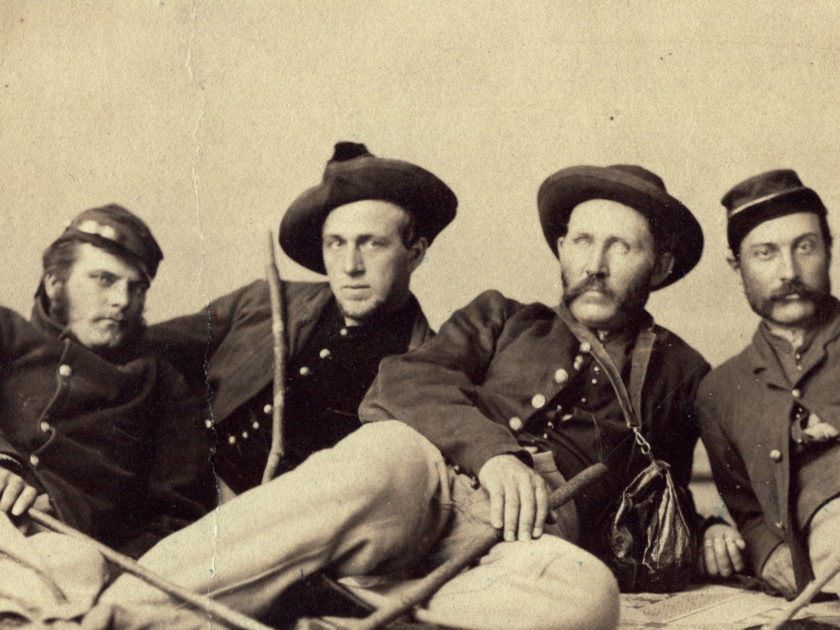
Edmund Rice is a familiar figure to many students of the Civil War. A Massachusetts surveyor at the beginning of hostilities, he worked his way up from captain to brigadier

By Kurt Luther Exactly two years ago, in the Summer 2015 issue of Military Images, this column asserted, “A Civil War photo sleuth is only as good as his or

Gray-bearded Capt. Fred Beall was conspicuously absent from the 1920 dedication ceremony for a memorial amphitheater at Arlington National Cemetery. The influential commander of the Washington, D.C., Confederate Veterans camp

Back in February at Virginia Tech in Blacksburg, I glimpsed the future of soldier photo identification. In the conference room of a building on campus, professor Kurt Luther brought our