Shifting Terminology for Enslaved People
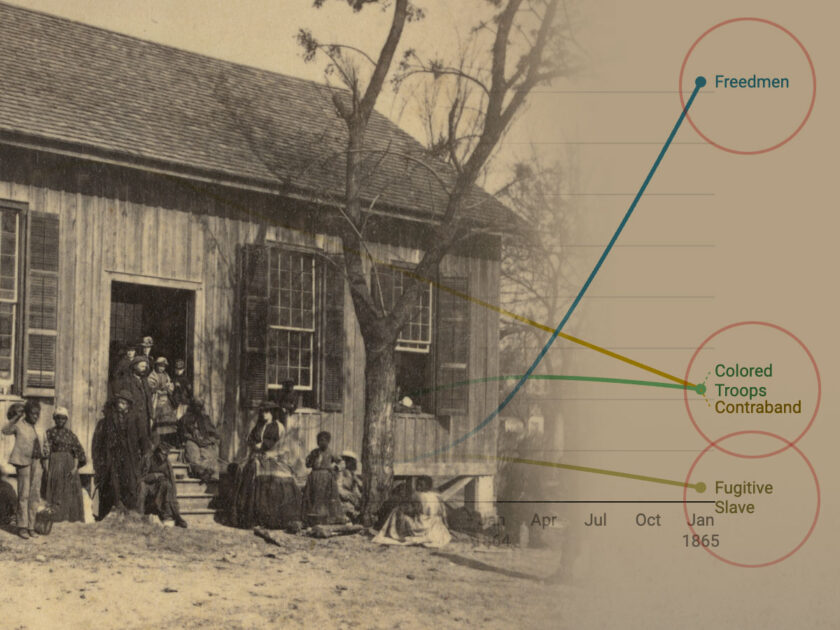
As the Civil War transformed the legal and social status of Black Americans, the language used to describe them evolved as well. In 1861, Maj. Gen. Benjamin F. Butler claimed
By Charles T. Joyce Visitors to the Gettysburg National Military Park encounter stone sentinels of all shapes and sizes. One of them, an austere granite marker on the north side
The cover story of our Summer 2024 issue profiled Evander M. Law’s rise to general in the Confederate army. The project began after I met collector Craig Wofford, who shared
The sight of a man missing an arm or leg rarely occurred before the Civil War, observed a newspaper editorial in the Confederate capital during the waning days of the
By Sidney Dreese Nothing mattered more to Sarah “Sallie” Chamberlin than to live a useful life. A fire burned in her patriotic heart, and she was both anxious and determined
By Ronald S. Coddington, with images from the Mark Jones Collection On an April day in 1864, in a field near Alexandria, Va., thousands of soldiers and civilians gathered to
Major General William T. Sherman possessed a gift for catchphrases. One of his best-known quips is “So Atlanta is ours and fairly won.” These words appeared in a telegram sent
General and Secretary of War John Aaron Rawlins lost his battle against consumption late in the afternoon of Sept. 6, 1869. His death struggle played out in a bed at
By Ronald S. Coddington An officer in the 1st Missouri Colored Infantry recalled how recruits for the new regiment marched with “sluggish step and plantation gait” through St. Louis in
The storied magazine Civil War Times ceased publication this spring after its parent company scaled back its operations, eliminated the print edition, and explored an expanded digital edition. Its decline