

By Ron Field
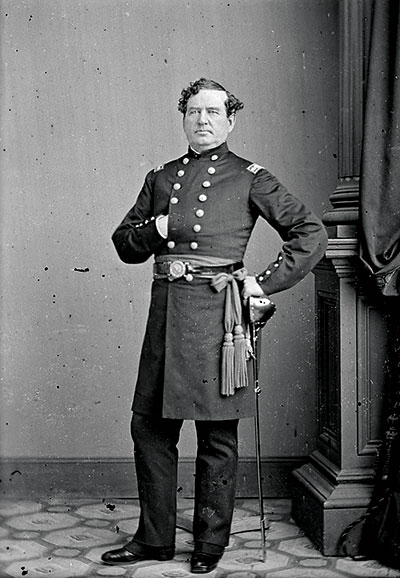
The brainchild of William A. Howard, a 54-year-old seafarer who had served more than 30 years as an officer in the Navy and Revenue Marine, the United States Marine Artillery, later designated the 1st Regiment, New York Marine Artillery, was recruited principally in New York City and Buffalo, N.Y.; Newark, N.J.; Chicago, Ill.; and Washington, D.C. Composed mainly of sailors, fishermen, and experienced boatmen, its volunteers were mustered in for three years between Nov. 12, 1861, and Aug. 18, 1862.
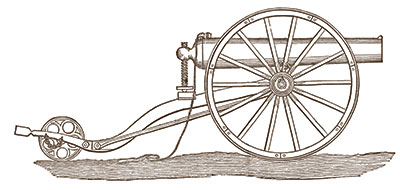
According to a New-York Times report on September 19, 1862, the Marine Artillery was based on “the principle of the Royal Marine Artillery,” which manned mortars in British Royal Navy bomb vessels and light guns during amphibious assaults. William B. Avery, a first lieutenant in Company B, stated that his unit was “at all times ready for service on land or water.” As artillerists, its men manned six-pounder Wiard howitzers mounted on slide carriages fitted in ship launches, while during amphibious operations their guns were mounted on carriages with a trail-wheel and drag-rope. Invented by Canadian-born Norman Wiard, these guns were considered better than the Dahlgren howitzer favored by the Union Navy. First Lt. Avery continued, “We were especially well drilled in the use of naval light artillery, either afloat or ashore.”
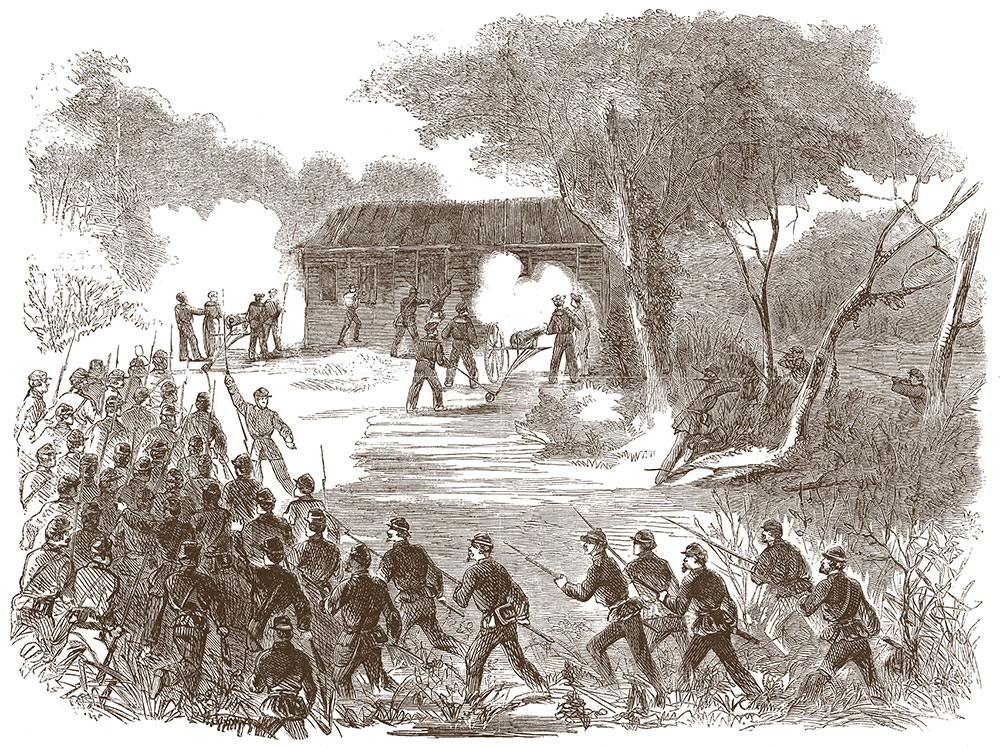
The regiment also manned shallow-draft army gunboats carrying various sizes of ordnance and capable of penetrating Confederate estuaries and rivers along the Atlantic seaboard. It took part in a number of actions in North Carolina, including Dismal Swamp Creek, South Mills, Tranter’s Creek, Swift Creek Village, and Kinston. The unit sustained its highest number of casualties performing gunboat duty when the magazine aboard the Army steamer Picket exploded, killing 17 and wounding five of a crew of about 30.
According to 1st Lt. Avery, the uniform of the Marine Artillery was “nearly like that of the navy. The officers wore a gold band on the cap, but no sash under the belt [photographic evidence indicates that sashes were worn]. The shoulder strap was red, with a cross cannon and anchor wrought in silver, subsequently adopted by Maj. Gen. Ambrose Burnside as the emblem of the Ninth Corps. The line officers wore double-breasted coats, and the clothes of the men were all dark navy blue. The arms were short Belgian rifles with the sword bayonet for those who acted as infantry, and pistols and cutlasses for those who worked the howitzers ….” Although recruits were promised “a neat and comfortable outfit” when mustered in, it is not clear how quickly this was received.
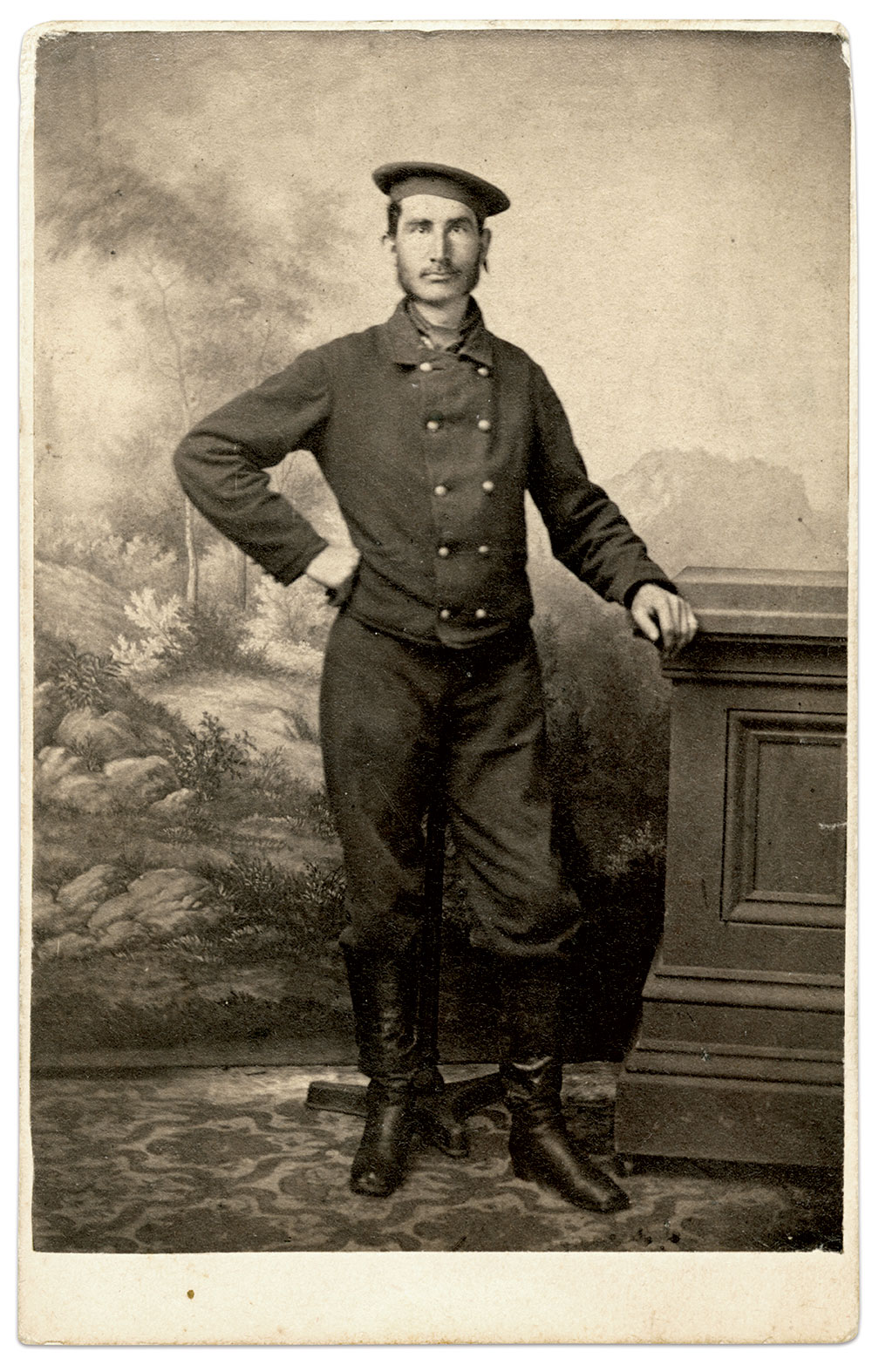
Enlisted men recruited in Chicago were advised in the Daily Tribune of July 18, 1862, that their “List of clothing” would consist of “1 Long Pea Jacket, 1 Blue Cloth Pea Jacket; 2 pairs Duck Trowsers; 1 Black Silk Handkerchief; 1 pair Long Stockings; 1 pair Blue Cloth Trowsers; 1 pair blue Satinet Trowsers; 1 pair Boots; 1 pair shoes; 1 blue Cap; 2 pair Drawers; 2 flannel Shirts; 2 Linen Frocks; 2 Blankets; 1 Mattress: 1 Glazed Hat.”
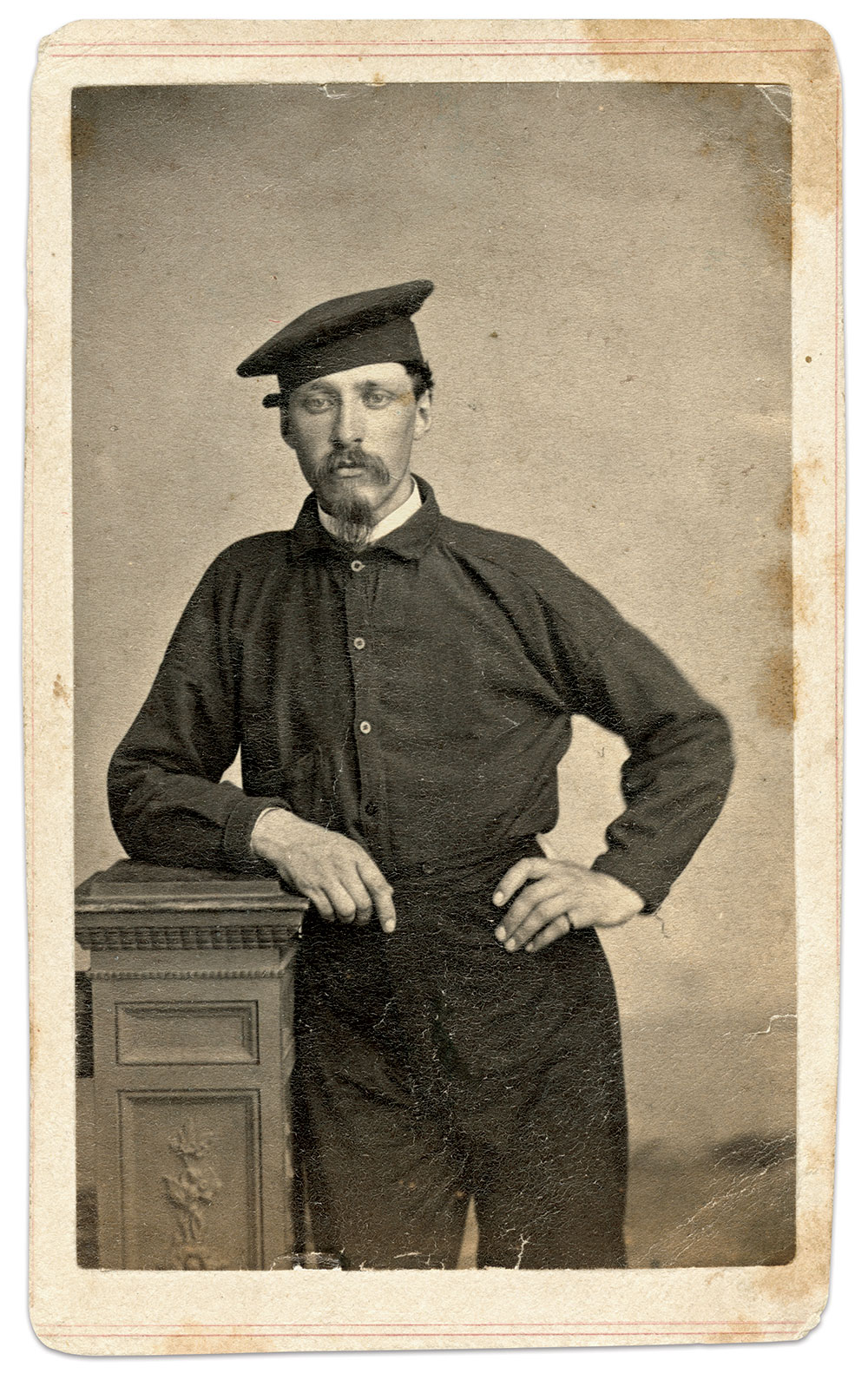
Based on documentary evidence in the National Archives, uniforms for enlisted men, or ratings, were acquired in mid-1862. As the Navy refused to clothe or equip the unit, the Army arranged for the naval clothing to be provided. A contract for “Uniforms for Howard’s Marine Artillery at Newberne, N.C.” was issued to Anthony & Gabriel A. Arnoux of New York City on April 26, 1862, for 1,200 sailors’ shirts and trousers, plus 50 dozen each of black silk cravats and straw hats with black ribbons. The latter were required by Lt. Col. David H. Vinton, Deputy Quartermaster General, to conform to the sample left at the Office of Army Clothing and Equipage at 502 Broadway, New York City. A further contract was issued to James B. Boylan of Newark, N.J., on Dec. 20, 1862, for making and trimming 1,000 jackets of “Dark blue kersey—like those worn by sailors of [the] US Navy.”
References: New-York Times; Chicago Daily Tribune; Avery, The Marine Artillery with the Burnside Expedition and the Battle of Camden, N.C.; National Archives, RG 217, Entry 2d Cpt, Box 5—“Uniforms for Howard’s Marine Artillery at Newberne, N.C.” – “Contract to A. & G. A. Arnoux, NYC for NY Depot, dated 26 April 1862; Box 6 – “Contract to James B. Boylan, Newark, N.J., for NY Depot dated 20 December 1862.” Bazelon and McGuinn, A Directory of American Military Goods Dealers & Makers 1785-1885; 1860 U.S. Census.
Ron Field is a senior editor of MI.
SPREAD THE WORD: We encourage you to share this story on social media and elsewhere to educate and raise awareness. If you wish to use any image on this page for another purpose, please request permission.