
The world drew a little closer together in the summer of 1858. On August 16, the first telegraphic message transmitted by cable across the Atlantic Ocean connected Great Britain and the United States. Queen Victoria congratulated the Americans for their “great international work.” In his reply, President James Buchanan proclaimed the cable an instrument of peace. “It is a triumph more glorious, because far more useful to mankind, than was ever won by conqueror on the field of battle.”
News of the achievement sparked jubilation on both sides of the Atlantic. No individual was more closely identified with its success than Cyrus W. Field, one of the financiers who championed the project.
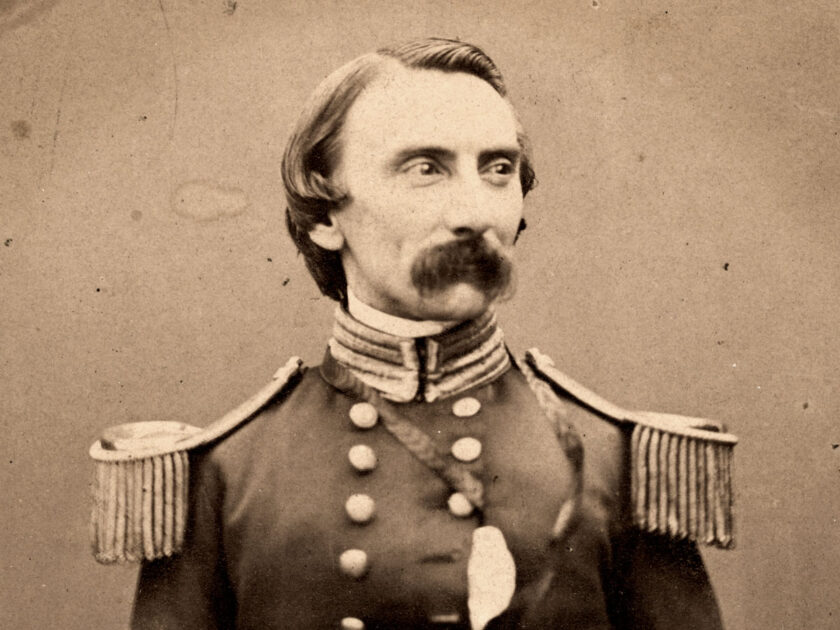
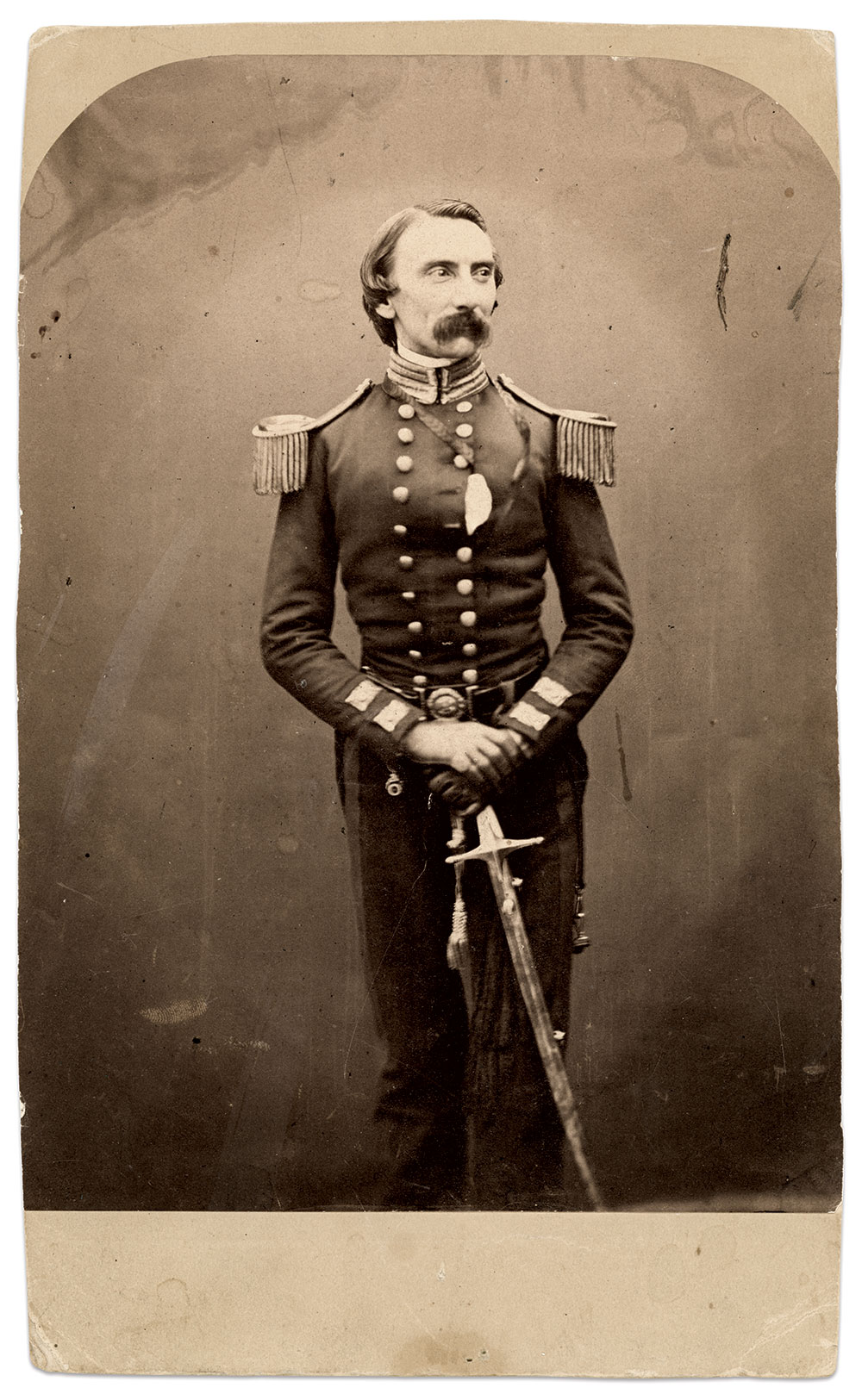
Many who contributed to the success of the enterprise were hailed as heroes. Among them was the crew of the steam-powered, screw-propelled warship Niagara. The frigate joined the American section of the cable to its British counterpart. One of its officers, 36-year-old William Stokes Boyd, commanded the ship’s Marine detachment. He had entered the Marine Corps as a second lieutenant in 1848 and received a promotion to first lieutenant in late 1857.
New York City’s Chamber of Commerce presented Boyd and 55 other officers in the U.S. and Royal navies with a commemorative gold medal designed and minted by Tiffany & Co. Field also received one.
Three weeks after the historic exchange between the two heads of state, the cable failed after excessive voltage was applied to speed message transmission times. Though short-lived, it proved the concept, paving the way for a more powerful and durable cable laid in 1866 and the establishment of a permanent transatlantic link.
This portrait of Boyd is a reminder of the grit and determination invested in the project. He posed for it in London on June 1, 1858, according to an inscription on the back of the mount, at a pivotal moment when Britain and the United States were striving to overcome unprecedented engineering challenges and the hazards of the Atlantic.
Boyd sent this image to his mother, Charlotte, in Philadelphia. Little is known about her or his father, John, who descended from an Irishman who emigrated in colonial times. Evidence suggests that the family possessed considerable wealth, and that Boyd benefited from it. He is linked to European sojourns, fine art investments, and charitable contributions.
One of his donations, made during the Civil War, supported a fund to raise bounties for army volunteers. Boyd spent the war years on recruiting duty in Philadelphia. Promoted to captain in July 1861, he resigned his commission four years later.
Politically active from his youth as a Democrat, he went on to serve a single term (1877-1878) as mayor of Jacksonville, Fla. He died in 1898 at age 76. He outlived his first wife, Mary, and two children who died as toddlers. His second wife, Melissa, survived him.
SPREAD THE WORD: We encourage you to share this story on social media and elsewhere to educate and raise awareness. If you wish to use any image on this page for another purpose, please request permission.
LEARN MORE about Military Images, America’s only magazine dedicated to showcasing, interpreting and preserving Civil War portrait photography.
VISIT OUR STORE to subscribe, renew a subscription, and more.