
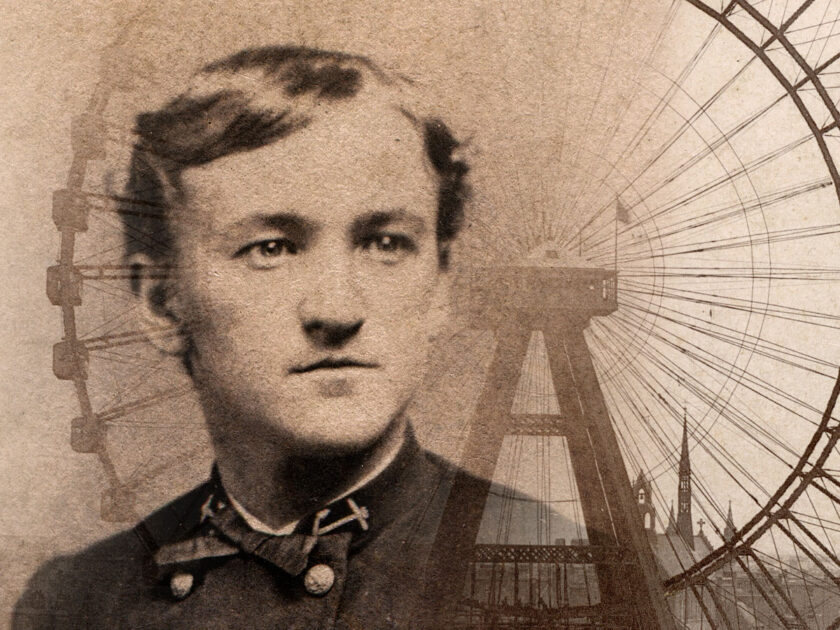
By Ronald S. Coddington
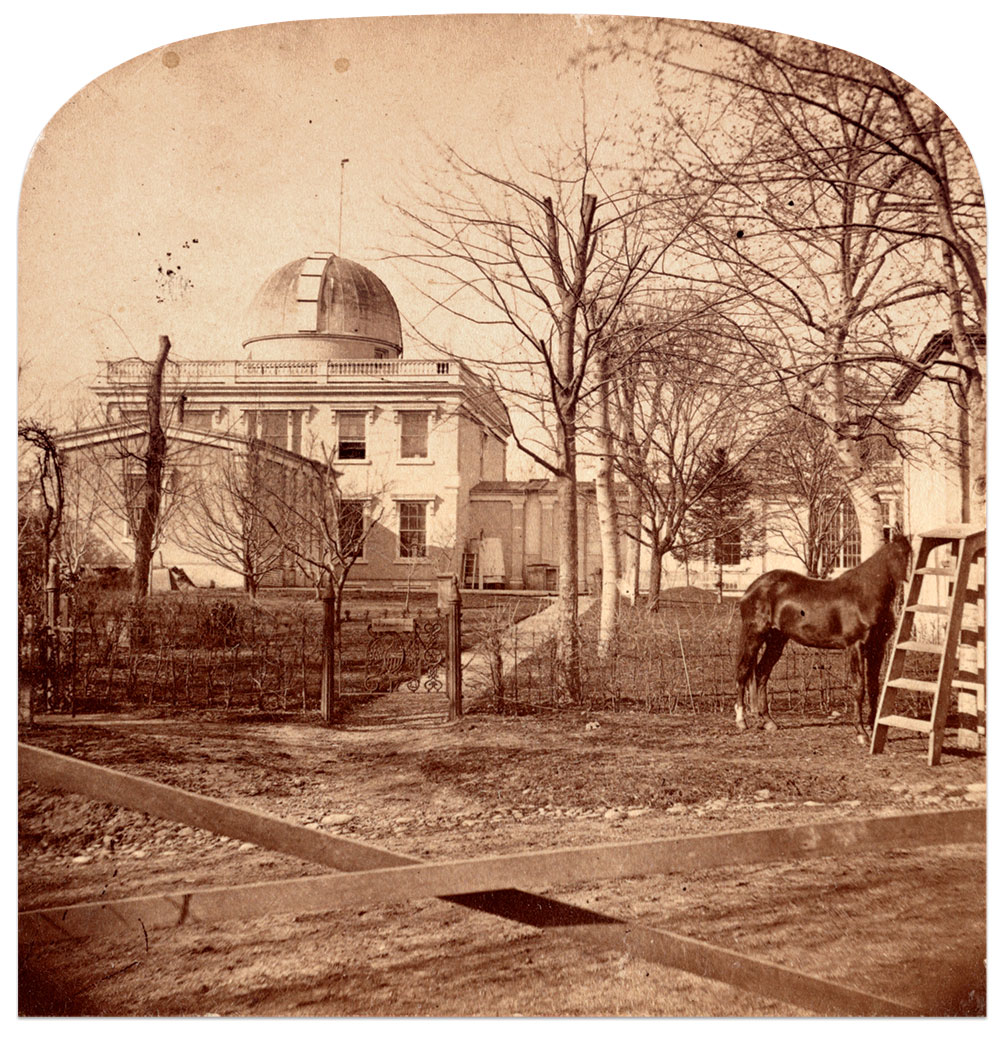
The heavens came alive for visitors to the nation’s Naval Observatory in Washington, D.C., on a crisp, clear winter’s night in 1877. A party of ladies and gentlemen entered the building’s distinctive dome and gathered around one of the larger telescopes. They took turns gazing upon Mars and its moons, recently discovered at the observatory, and marveled at other wonders of the solar system.
Their guide, an engaging young Navy lieutenant and a master of celestial navigation, oriented them to the evening sky. He was James Weir “Jimmy” Graydon, a 29-year-old creative genius who roared through life like a powder keg looking for a spark.
The unstoppable Jimmy had been wired for adventure since his earliest days.
Teenaged Trooper
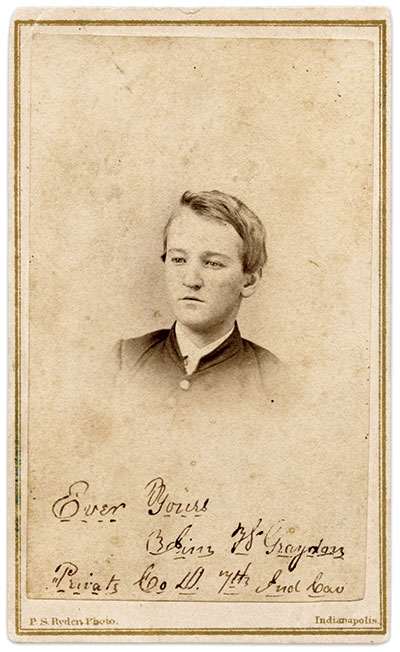
Back in 1861, when a polarized country descended into civil war, then 13-year-old Jimmy did not want to play soldier—he wanted to be one. A year later, he ran away from home in Indianapolis and attempted to enlist in the infantry. His father, Alexander, a prominent hardware wholesaler and retailer in the city, and mother, Jane, stepped in and brought him back home. Then they foiled a second attempt. But Jimmy continued to agitate and his parents, likely at their wits’ end, relented. He joined the 7th Indiana Cavalry, a new regiment organized in the summer of 1863. Jimmy, now 15, dressed in a new uniform and armed with a bugle, joined the ranks as a musician.
The Hoosier troopers left their home state before the year’s end and joined a cavalry brigade commanded by Brig. Gen. Benjamin H. Grierson. A peacetime music teacher from Illinois, Grierson had recently led a wildly successful 800-mile raid from Tennessee to Louisiana that diverted Confederate resources from the defenses of Vicksburg. Grierson’s Raid left in its wake a trail of devastation that struck fear into the hearts of Southerners, and thrill into Northerners following the action in newspapers. Grierson’s Brigade belonged to the 16th Corps.
Jimmy and his comrades saw plenty of action between late 1863 and early 1865. Operations in Tennessee. Chasing Nathan Bedford Forrest. In Mississippi, a sharp fight at Egypt Station and, in battle at Okolona, a gallant but ultimately futile saber charge to recapture a battery. Finally, back in Tennessee, guarding railroads and scouting expeditions in the vicinity of Memphis.
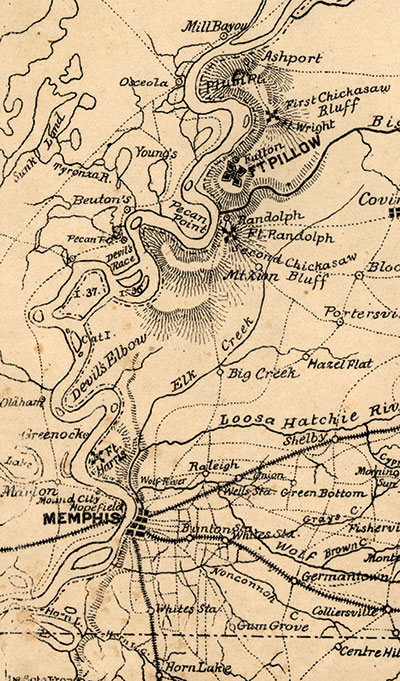
Jimmy’s service is best remembered by a singular incident. One January day in 1865 on the Arkansas side of the Mississippi River opposite Memphis, a gray-clad band of horsemen bolted through the countryside. Racing into the village of Mound City at breakneck speed, they dashed about shouting “Yanks! Yanks!” The men, 10 strong, galloped out of town for a good mile or two before slackening their pace.
The Confederates in Mound City saddled up and left town to meet up with the brothers in arms who alerted them. Riding in groups of three or four, they caught up with the men. Their gratitude turned to disbelief and anger when they learned that the men were Union soldiers in gray uniforms, who easily captured and disarmed them, one group at a time. When it was all over, 30 Confederates had fallen victim to the ruse.
The 10 Confederate pretenders were an advance guard on a scouting expedition to rid the area of rebels. And, they were not finished. After turning over the prisoners to the main body of Union soldiers who had followed behind, the 10-man advance guard rode to a nearby enemy encampment, caught the Confederates unaware and scattered them. Pursuing the graybacks through swamplands, the Union troopers gave up the chase, one by one, until only two were left.
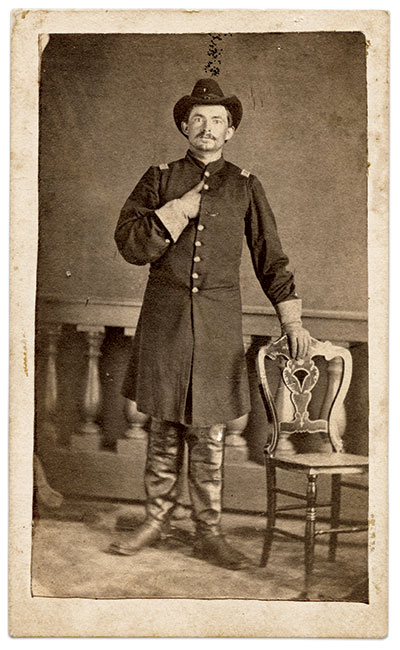
One of the two men was Capt. Joseph Washington Skelton of the 7th Indiana Cavalry. He had volunteered to lead the advance guard “just for fun,” according to a comrade. Skelton emerged from the mud and muck with three prisoners. Continuing on to rejoin the main body, Skelton soon spotted the second and only remaining member of the guard—Jimmy, walking alone through the woods and crying because he had fired his revolver at too long a distance and allowed the Confederates he was chasing to escape. “The disappointment of not getting them vexed him sorely,” recalled a comrade.
Jimmy and Capt. Skelton rejoined the main body of the 7th, crossed the Mississippi, and returned to Memphis and regular duties as the war entered its final months. At the end of June 1865, the Hoosiers left for Texas to bolster the United States military presence along the Mexican border as French occupation forces rattled their sabers.
Jimmy did not accompany them—with good reason. Indiana congressman and former general Ebenezer Dumont used his influence to secure him a berth in the Naval Academy. Jimmy headed to the East Coast and Annapolis, passed the Examination Board in October 1865 and became a midshipman, graduating four years later.
Rising Naval Star
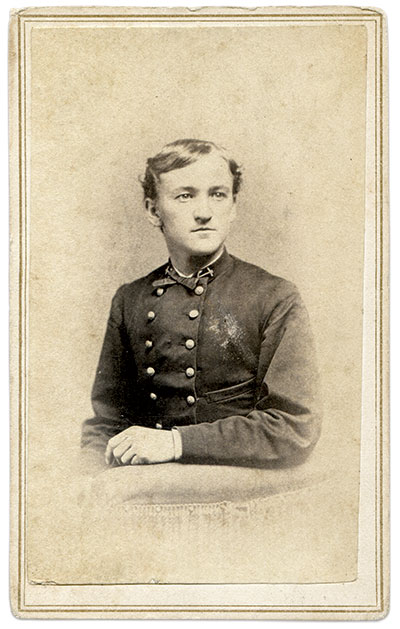
The post-war Navy continued its technological advancement as nations across the globe adapted to the age of iron and steam fighting ships. During this transition, naval authorities trimmed down the number of vessels to meet peacetime needs, while modernizing the fleet by commissioning new vessels and refurbishing others.
Jimmy, now an ensign fresh out of the Academy, began his life as an officer on wood steamers constructed and commissioned before and during the war. Service on these vessels, under the watchful eye of veteran commanders, helped him acclimate to his career in the first half of the 1870s—and scratch his adventurous itch: Plying Caribbean waters on the refitted frigate Tennessee, and patrolling the U.S. Atlantic coast on the gunboat Shawmut and sloop Brooklyn. Along the way, he advanced in rank to master.
These experiences enabled senior leadership to take the measure of Jimmy’s abilities and plot a course to benefit his professional development and the Navy’s needs.
During the second half of the decade, his assignments suggest that senior command in Washington steered Jimmy on a course as a specialist in navigation, charting, and fleet safety. In 1875, he joined the crew of the Coast Guard survey schooner George M. Bache. In 1877, a promotion to lieutenant and service at the Naval Observatory, where thrilled visitors peered into the universe. In 1878, he reported to Washington’s Nautical Almanac Office, a publication for celestial navigation of the seas modeled on a British organization established in the last century.
As the contours of his career took shape, so did his personal life. In 1876, he married Mary Elizabeth McCollough of New Orleans, whom he likely met during his cruises, and they started a family that grew to include three children.
Jimmy’s life, like that of many men, was anchored by career and family. Still, in the margins of these obligations, another identity surfaced—shaped by his innate curiosity and creative genius—and it propelled him to global renown.
Creature Comforts and Spinning Wheels
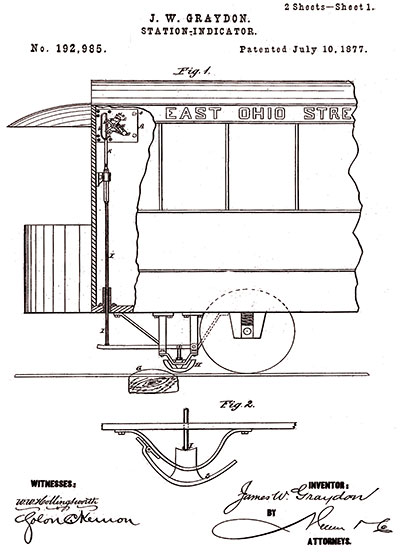
Distracted street and railcar passengers could easily lose sight of where they were as they approached stations and passed intersecting streets and towns, resulting in frustration and sometimes missing a stop. How exactly this problem came to Jimmy’s attention is not known. One explanation holds that he experienced the issue himself as a rider on public transportation through the maze of Washington’s city streets and rail lines.
Whatever the origin, the wheels in Jimmy’s brain began spinning, and led to a solution revealed in patent records in 1877. His “Station Indicator” was a chain wheel and pulley to which was attached signs at regular intervals. When the car approached an intersection, a mechanism extending below and outside the car would strike a rounded shoe just above the track, automatically turning the chain to the next sign inside the car for the passengers to read.
Jimmy’s fascination with street and rail cars continued. A group of patents issued to him in 1878 heated seats using a piping system and steam byproduct from train engines.
These patents mark the entry point of the practical application of Jimmy’s mind to problem solving, providing him with an outlet for his creativity and curiosity. They also reveal his keen interest in improving customer experience for everyday Americans during a period of rapid economic expansion, materialism, and political corruption later branded the Gilded Age.
The height of Jimmy’s work in the civilian space is his “Tower for Recreation or Other Purposes,” also known as the Gigantic, Great or Graydon Wheel. The design, patented in the United States and Britain, built on the work of engineer George Washington Gale Ferris, Jr., whose winning design to create an attraction for the 1893 World’s Columbian Exposition in Chicago rivaled the Eiffel Tower built four years earlier for the Paris International Exposition.
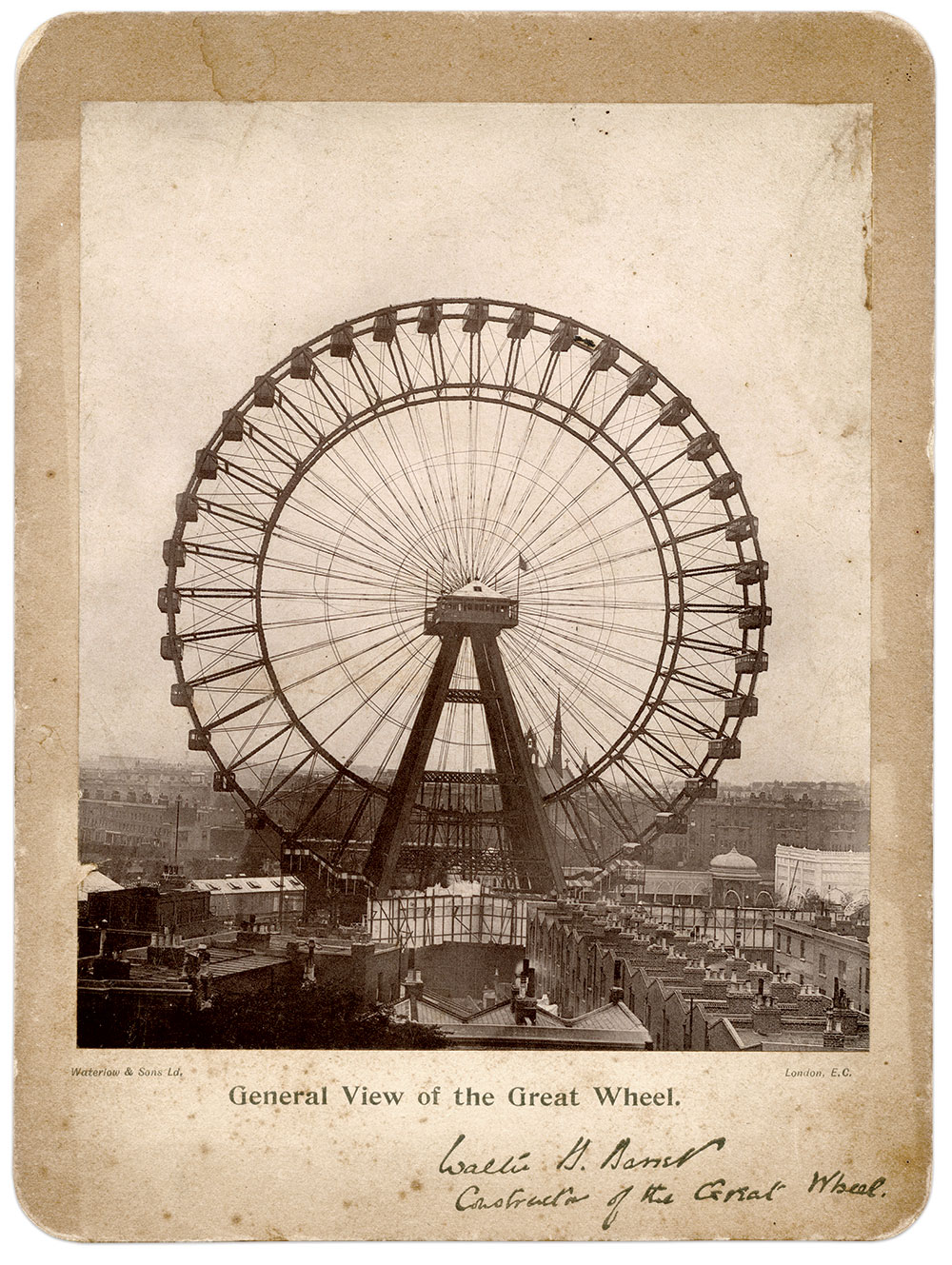
Jimmy’s wheel added creature comforts with spacious and luxurious cars and smoother operation, while making the construction less expensive in material costs. The end product looked more like an attraction and less industrial than Ferris’s original. The Graydon Wheel became popular in the United Kingdom and Europe, including London, Paris, and Vienna. Evidence suggests Jimmy earned small royalties as a result of his patents.
The Graydonite Factor
One day in 1898 in London, Jimmy sat down for an interview with a correspondent for London’s To-Day magazine. He reflected on the recent war with Spain, and shared his thoughts about the future of the world’s navies—and plans underway for more powerful ships and lethal weapons. “My improved destroyer,” he told the interviewer, “projects aerial torpedoes 6,000 yards or more, while the so-called ‘up-to-date’ ships of England, France, Germany, etc., can only use their torpedoes effectively within a range of 600 yards, and they can easily be driven away or sunk at a range of a mile, and on the darkest night.”
Size and speed animated Jimmy’s thinking. “I intend,” he continued, “the Graydon destroyers to be the fastest vessels afloat (express train speed), and they will be able to run all round the modern battleships, peppering them meantime with huge aerial torpedoes.”
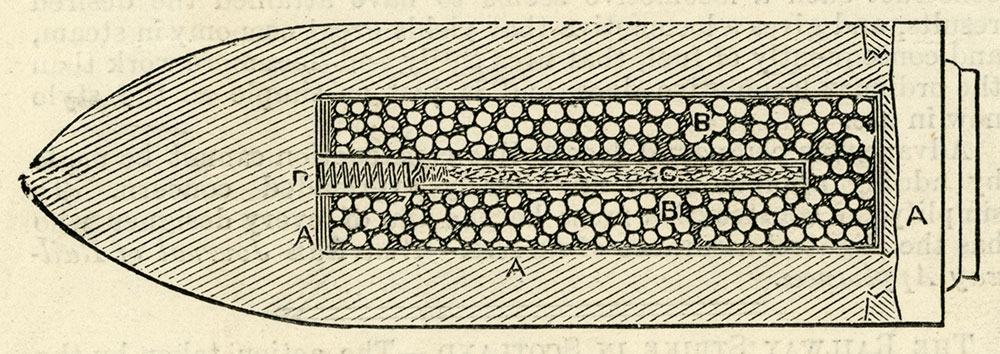
Key to Jimmy’s long-term plans: Graydonite. This is the name given to his design for ammunition combining dynamite with gunpowder. A decade before his To-Day interview, tests in California firing shells packed with a mixture of one pound of dynamite and 37 pounds of gunpowder from six-inch rifled guns proved encouraging. Further testing by the U.S. Army’s Ordnance Board at Sandy Hook, N.J., focused on Graydonite for cannon shells and rifle bullets. The results were uneven, though deemed capable of causing significant damage to heavily armored targets.
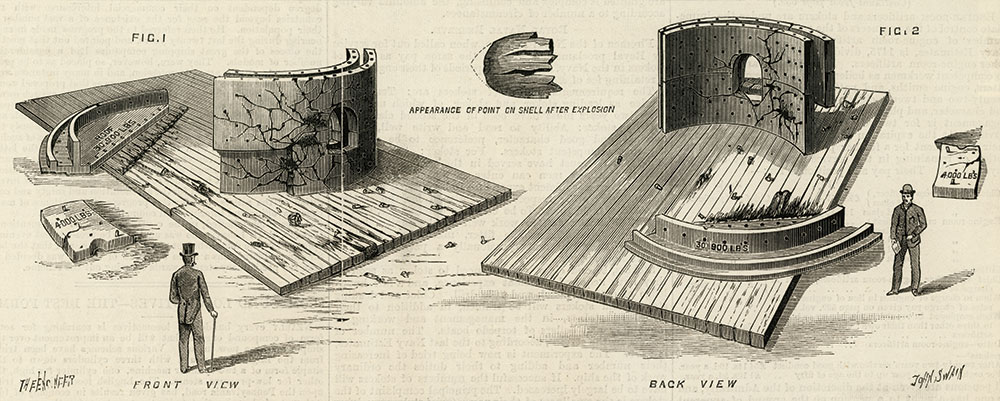
In fact, Jimmy’s first patent for military use, a submarine torpedo system issued in 1884, bears similarity to his civilian patents for emphasizing the customer experience. In this case, personnel responsible for harbor and other coastal defenses operated interconnected underwater cables to which were attached lines that held submarines, or mines, in place. A pulley apparatus connected to land by a steam engine encased in a bomb-proof shelter allowed the mines to be deployed en masse to destroy enemy vessels, or retracted for friendly ships, and to be adjusted for varied currents.
Four years later, in 1888, the government approved Jimmy’s first patent for an explosive cartridge—Graydonite. Then, in 1889, his Revolving-Pneumatic Gun received patent approval.
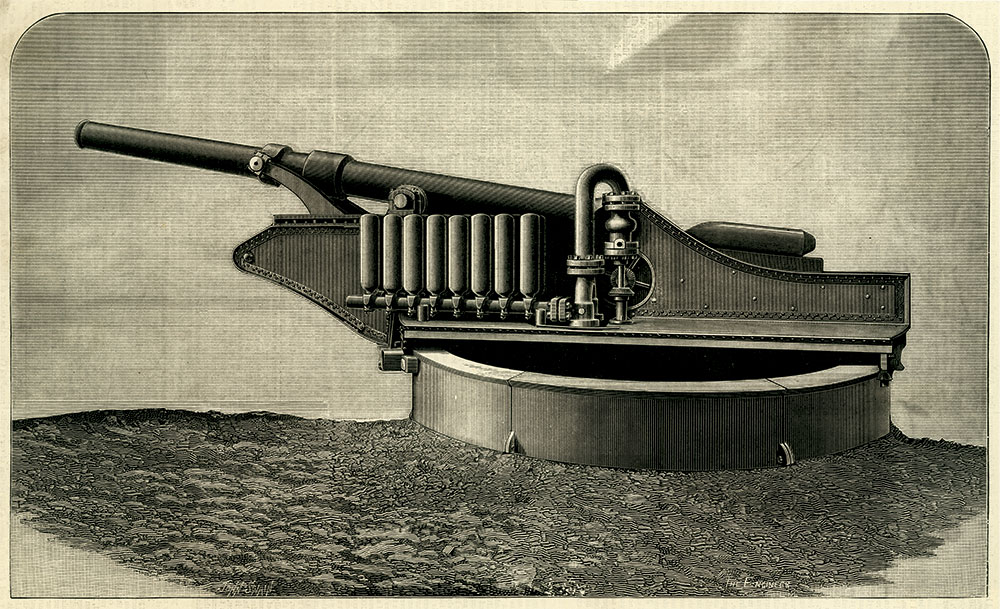
Jimmy had all the pieces in play for defensive and military operations—shells, guns, coastal fortifications, and destroyers. One writer dubbed Jimmy “The Dynamite Man.”
Unravelling
As Jimmy’s vision for the future unfolded, the stresses of everyday life took a toll. Stations at various naval stations on the Atlantic and Pacific coasts, increasing duties in an ever-expanding navy, pursuing patents, and family life stretched him thin. In 1884, his eldest child, Nona, died while he was deployed as navigator of the ironclad Alert at China Station. He resigned his commission a few months later.
According to a news report, the now former lieutenant remained in Hong Kong, where he arranged for his wife, Mary, and two children to join him. Mary also brought along two sisters and her mother. Relations grew strained as Jimmy sought business opportunities to support his extended family. In 1885 they reached a breaking point. Jimmy returned from a business trip to find Mary preparing to leave him and return with the family to the United States. Unable to change her mind, Jimmy gave her a blank check for funds to travel home. The account had $27,000 in it. Mary took it all. Jimmy gave chase and caught up with her in San Francisco and failed to persuade her to return the money and restore their relationship. In 1887, Jimmy filed for divorce on the grounds of abandonment. A year later, he remarried Clara E. Bodine, who was born the year Jimmy enlisted in the cavalry during the Civil War. They started a family.
Down but not out, Jimmy expressed hope that two inventions might save him—a powerful steam turbine engine, and a machine that could project photographic negatives of advertisements and other image on clouds using powerful light beams.
Meanwhile, his finances continued to slide. Meager royalties, legal disputes arising from the sale of his British patent for the Graydon Wheel, and a failed attempt to build a startup business in Birmingham, England, to produce his dynamite gun ended in Bankruptcy Court.
Down but not out, Jimmy expressed hope that two inventions might save him—a powerful steam turbine engine, and a machine that could project photographic negatives of advertisements and other image on clouds using powerful light beams. Neither panned out.
Sensational tabloid coverage by the British and American press traced his demise. A 1900 news brief described a letter he had written in which he declared himself homeless and starving in London. Six years later, he turned up in a tenement in Jersey City, N.J. His second wife, Clara, had died, leaving him with five young children. A charitable organization paid the rent for their meager apartment, and food and other expenses were covered by the salary of his 15-year-old daughter Marjorie, a clerk at an advertising agency in Manhattan, and Jimmy’s Civil War military pension. This income helped him hold the Society for the Prevention of Cruelty to Children at arm’s length.
Jimmy’s straightened circumstances did not prevent him from dreaming. Another of his big ideas, never realized: A 1,200-foot-tall monument to President Theodore Roosevelt to be erected in the exact geographic center of the United States in commemoration of his successful efforts to end the Russo-Japanese War of 1904-1905.
Jimmy’s brain began to unravel and his dreams faded. His service in the cavalry a half-century earlier allowed him to gain admission to the New Jersey Home for Disabled Soldiers in Kearny, where he died on September 8, 1914. His death passed largely unnoticed. His remains rest in Arlington Memorial Park in Kearny.
References: Conley, History of the Seventh Indiana Cavalry Volunteers; The Observer and Jersey Journal, Hudson County, N.J., Oct. 22, 1906; U.S. Patent Office; “Club Chatter,” To-Day (Aug. 20, 1898); Eissler, A Handbook on Modern Explosives; The Engineer, Jan. 30, 1891; The Cincinnati Enquirer, July 14, 1887; Specifications and Drawings of Patents Issued from the United States Patent Office for October, 1893, Part 1; The Inter Ocean, Chicago, Ill., Oct. 20, 1900, and November 18, 1906; Daily Utah State Journal, Nov. 11, 1905; The Star-Ledger, Newark, N.J., Sept. 8, 1914.
Ronald S. Coddington is editor and publisher of MI.
SPREAD THE WORD: We encourage you to share this story on social media and elsewhere to educate and raise awareness. If you wish to use any image on this page for another purpose, please request permission.
LEARN MORE about Military Images, America’s only magazine dedicated to showcasing, interpreting and preserving Civil War portrait photography.
VISIT OUR STORE to subscribe, renew a subscription, and more.