
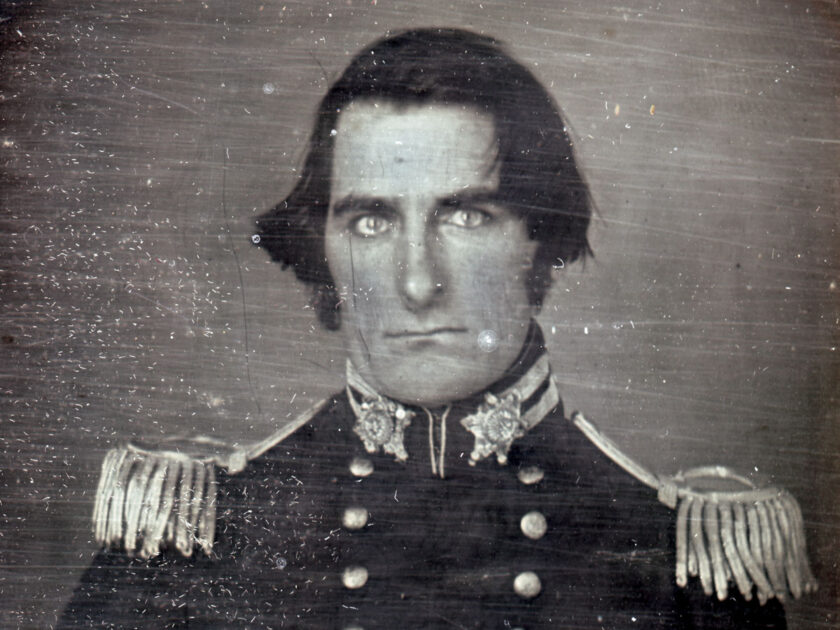
This clean-shaven officer, in gold trim, with a staff-pattern buckle and a fashionable eagle-head sword, is representative of the militia culture in the antebellum United States. Between the Treaty of Ghent in 1815 and the attack on Fort Sumter in 1861, he and others like him served in state-supervised independent companies, often self-equipped and dues-funded. The federal government distributed arms to the states under long-standing militia appropriations, rooted in the Militia Act of 1808.
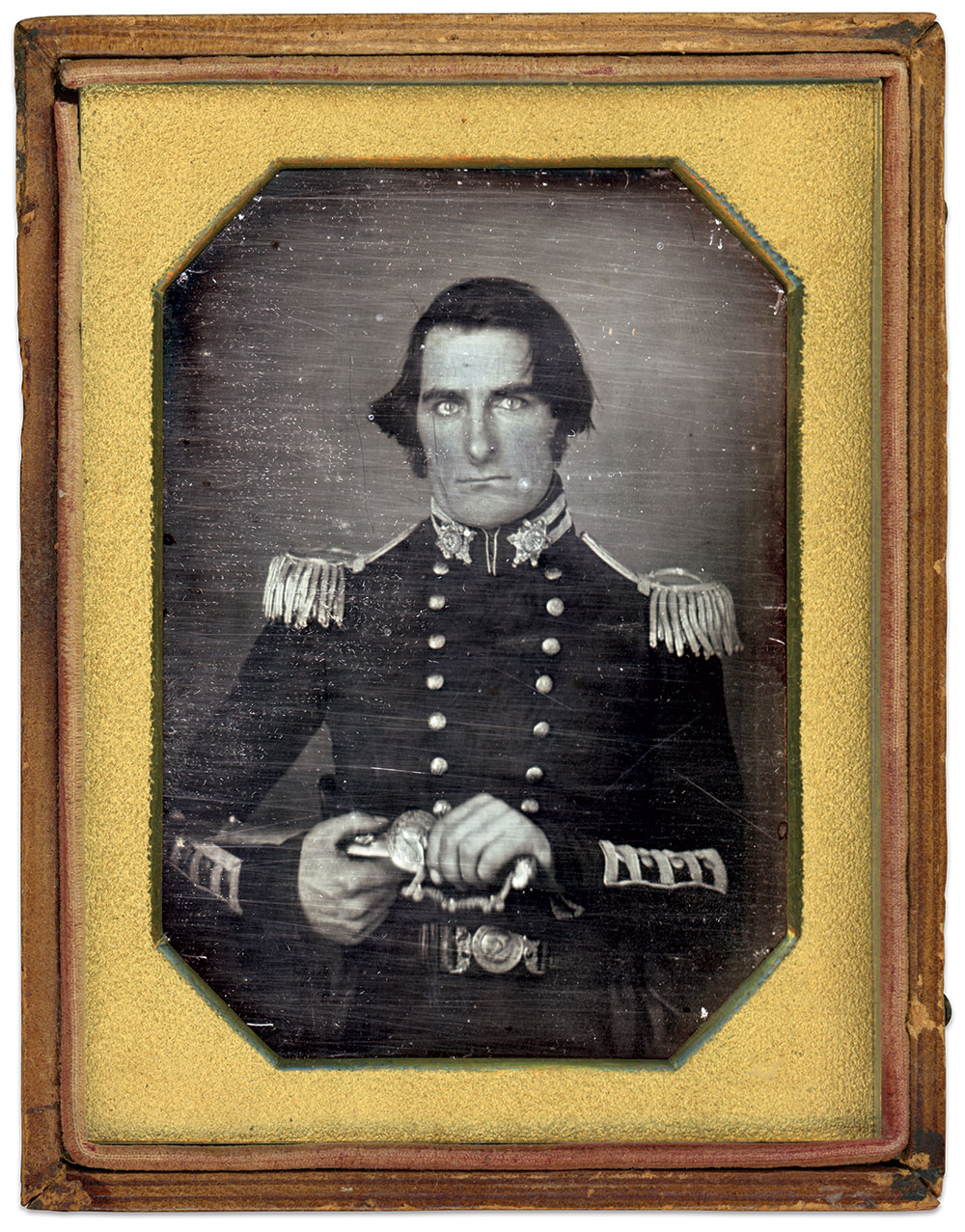
In this state-directed system, governors appointed senior commanders and organized divisions and brigades, while many companies elected officers and managed their own recruiting, uniforms, and drill. From small towns to major cities, independent companies became social organizations, visible at parades and public gatherings, while being available for occasional emergencies. During the Mexican War, many militiamen entered federal service as state volunteers serving alongside the Regular Army.
The Civil War exposed variations in readiness and standards across states and localities. Efforts throughout the rest of the century to improve consistency and quality culminated in the Militia Act of 1903, establishing today’s National Guard.
Though this man’s specific role has been lost to time, his portrait recalls the many Americans who sustained the militia tradition in the 19th century.
SPREAD THE WORD: We encourage you to share this story on social media and elsewhere to educate and raise awareness. If you wish to use any image on this page for another purpose, please request permission.
LEARN MORE about Military Images, America’s only magazine dedicated to showcasing, interpreting and preserving Civil War portrait photography.
VISIT OUR STORE to subscribe, renew a subscription, and more.