
By Bob Iwig, with images from the author’s collection
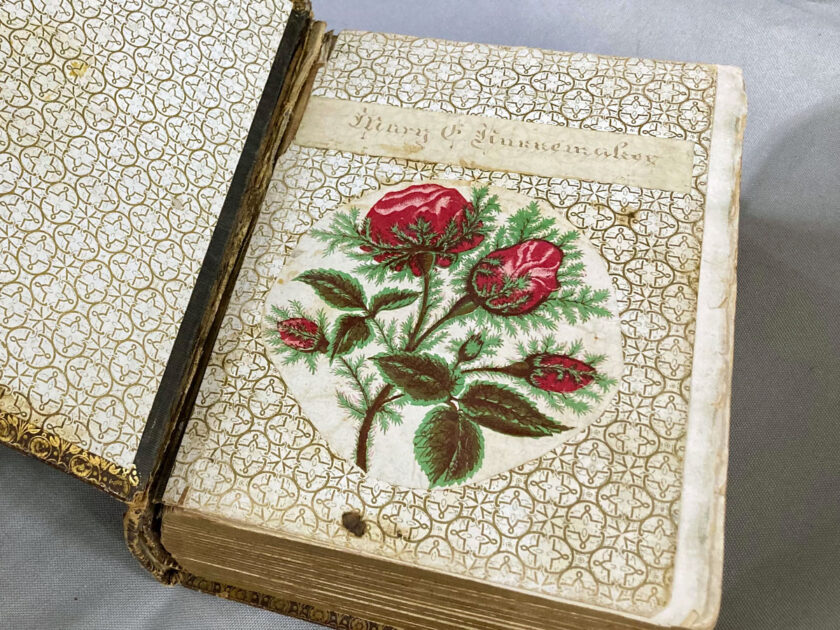
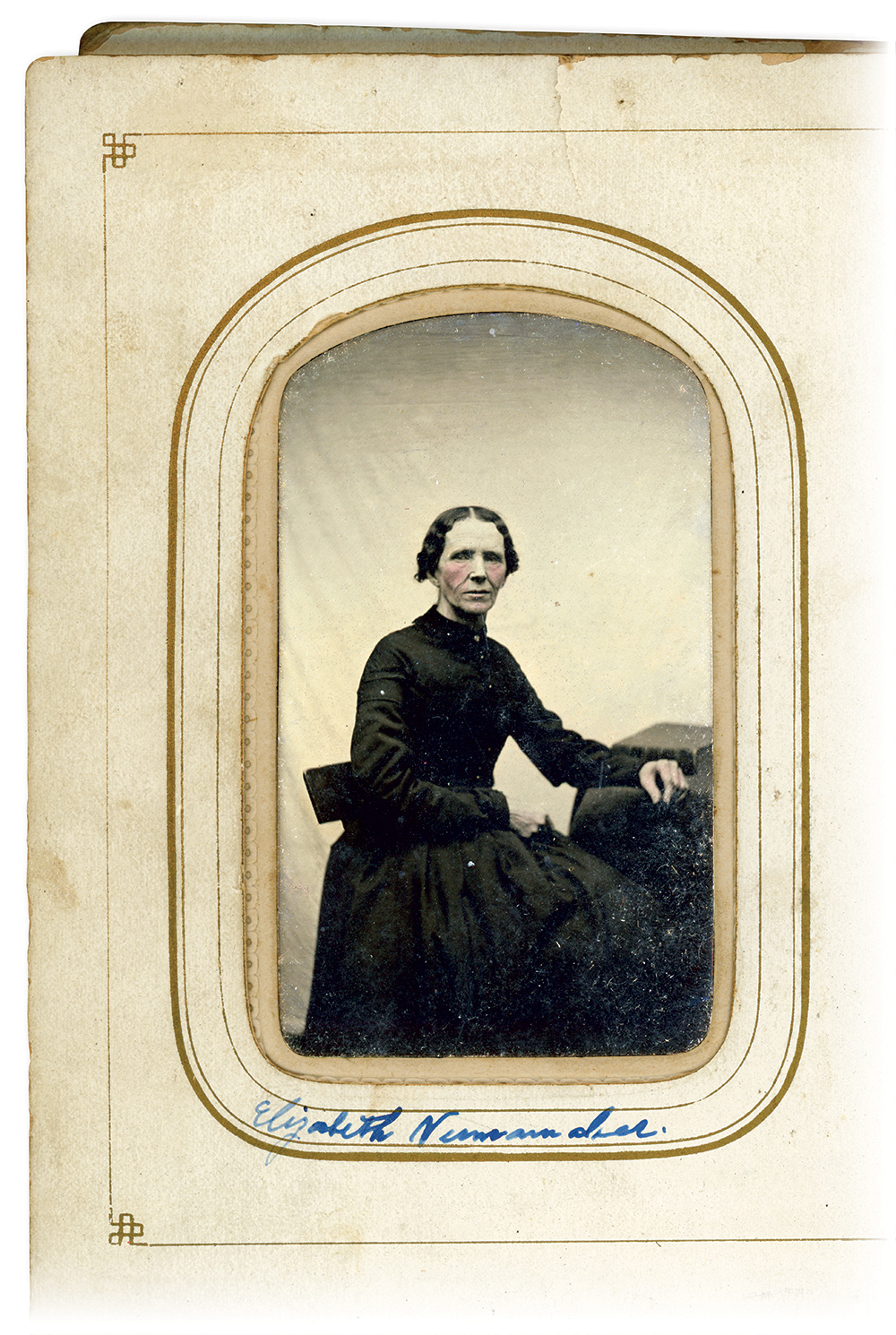
Following popular cultural trends, Mary Nunnamaker collected cartes de visite photographs in an album during the Civil War. The teenaged daughter of Edgar Nunnamaker, a Harpers Ferry armorer who had died in 1852, she lived with her widowed mother, Elizabeth, in the town where her late father had worked.
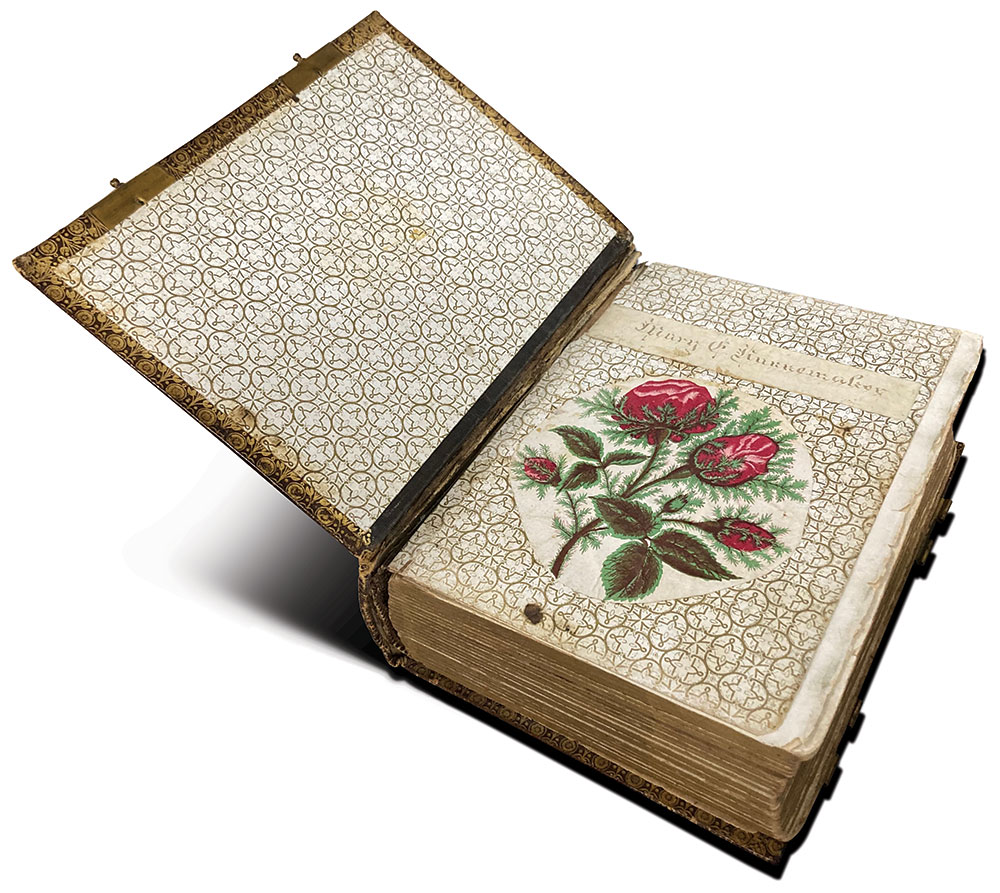
Inside the album, Mary’s name, carefully written in Gothic script on a slip of paper, is pasted on the first page above a cutout image of roses in bloom. The “Index to Portraits” page is almost entirely filled out with names of men and women, one column in pen and the other in pencil—both columns in the same hand. Mary filled out 45 entries. Most are named individuals, three are “fancy pictures,” and two mysteries: “Stranger” and “M.N.”
Of the named individuals Mary included in her album, two men, George H. Hoddinott and John William Forsyth, appear on the roll of the Loudoun Rangers, an independent cavalry company. The Rangers formed in Loudoun County, which shares a border with Jefferson County, where Mary and her mother resided.
The citizen soldiers who rode with the Rangers were composed largely of men from Quaker and German farming communities in the vicinity of Lovettsville, a town in the northern part of the county. An overwhelming majority of its citizens had voted against secession—making them an anomaly in the county.
References to the Loudoun Rangers can be found in two footnotes in Civil War history.
The first is its origins. The Rangers hold the distinction of being the only organized Union cavalry unit from Virginia. It formed in reaction to the lack of support by federal military forces against Confederates determined to seek retribution against Union loyalists in their county. One of those impacted by the depredations, miller Samuel C. Means, received authority from Secretary of War Edwin M. Stanton to raise a force which that Company A of the Rangers.
Edward Spannaus, Secretary of the Lovettsville Historical Society, described its purpose: “The primary mission of the Loudoun Rangers was to protect the loyal citizens of North Loudoun; and, because of their intimate knowledge of the area and its terrain, they were to serve as scouts and guides for Union forces.”
The second is its struggles against neighbors turned Confederate raiders: Lt. Col. Elijah Viers “Lige” White’s 35th Battalion Virginia Cavalry, later known as White’s Comanches, and Col. John Singleton Mosby’s 43rd Battalion, Virginia Cavalry, popularly known as Mosby’s Rangers. The animosity between these forces pitted men with the same surnames from the same locality against each other—a textbook example of a brothers’ war.
The Union-loyal Loudoun Rangers and the Confederates of White’s Comanches and Mosby’s Rangers pitted men with shared surnames from the same community against each other—a textbook example of a brothers’ war.
The internal strife is well documented in their histories. No love was lost between them. Various attacks and counterattacks are documented on both sides, leaving a trail of casualties behind. Accusations of stealing crops from citizens, capturing horses, and other uncivil acts are also recorded.
The history of the Loudoun boys states “The Rangers were fighting for principle,” and Mosby’s men were “entirely devoid of principle.”
The history of Mosby’s boys notes the Loudoun Rangers richly deserved the name, “for they have plundered half the poultry-yards, milk-houses, and stables in the county.”
The history of the Comanches reveals that Lige White hoped to “break up the Loudoun Rangers for the war.”
Where the truth lay in these histories is difficult to determine. It can be fairly stated that the Union and Confederate forces despised each other.
Mary Nunnamaker’s friends, George H. Hoddinott and John William Forsyth, were not mentioned in any of the histories. However, military service records and other documents detail their service.
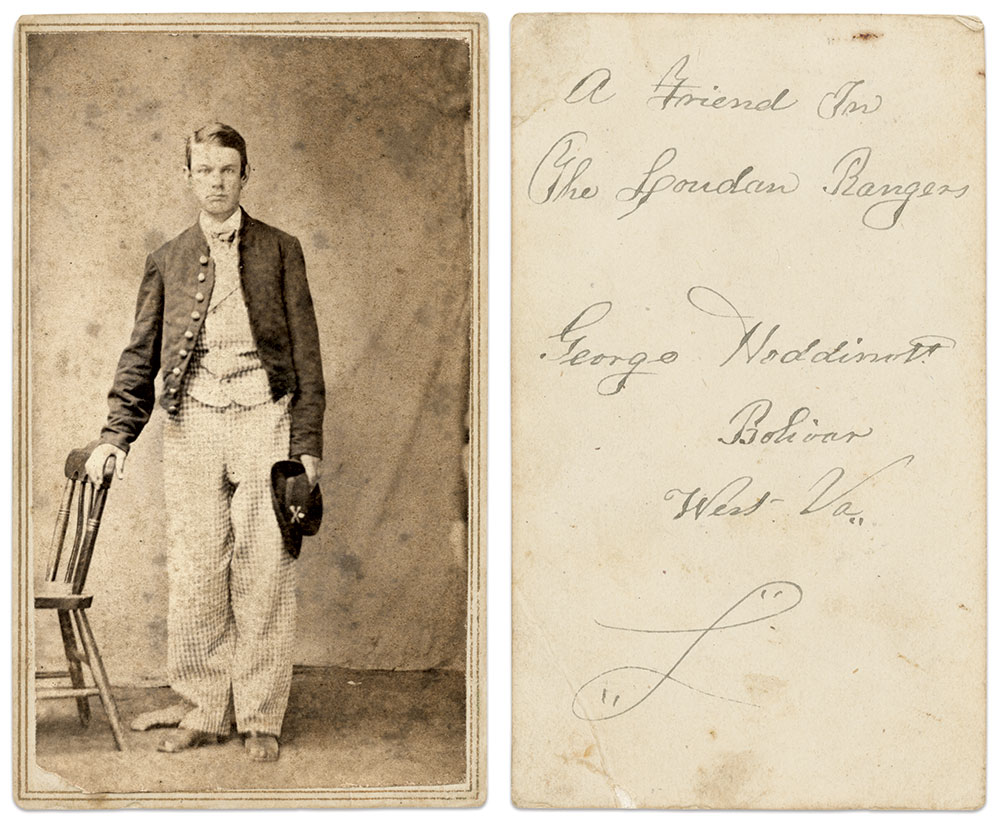
Hoddinott, the 18-year-old son of a Harpers Ferry armorer, mustered into the Rangers’ ranks on March 28, 1865. The close of the war prematurely ended his one-year enlistment. He died before 1890.
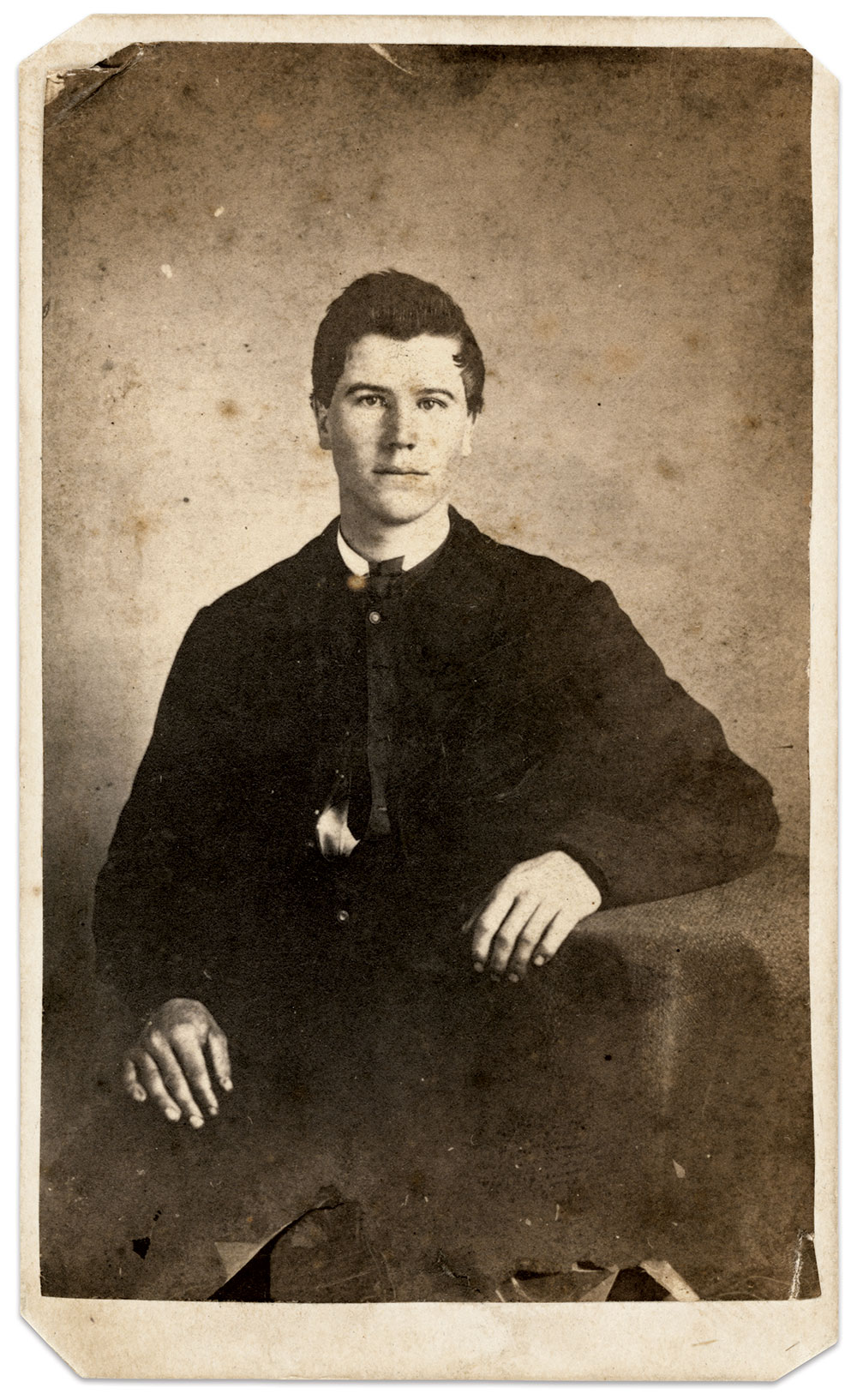
Forsyth, 17, and his father, also named William, were original members of the Rangers. Forsyth fell into the hands of Mosby’s men during a skirmish near Adamstown, Md., on Oct. 14, 1864. Sent to Libby Prison, he gained his release in February 1865. He ended the war as a sergeant. Forsyth became a minister and told his story in the 1892 book Guerrilla Warfare, and Life in Libby Prison. He died in 1896 at age 52.
What became of Mary? In 1870, at about age 22, she married Daniel Young O’Boyle. The following year, the couple started a family that grew to include two children. Mary died in Harpers Ferry in 1920. She was 71 years old.
References: 1850, 1860 U.S. Census; Spannaus, Edward, “Lovettsville Civil War Marker Dedication Ceremony – The Loudoun Rangers: lovettsvillehistoricalsociety.org/index.php/lovettsville-civil-war-marker-dedication-ceremony-the-loudoun-rangers-2009; Goodhart, History of the Independent Loudoun Virginia Rangers, U.S. Vol. Cav. Scouts 1862-65; Myers, The Comanches: A History of White’s Battalion, Virginia Cavalry.
Bob Iwig became interested in collecting Civil War artifacts after discovering that his great-grandfather, Pvt. Samuel C. Iwig, served in the 108th Illinois Infantry. While living in Shepherdstown, W.Va., he acquired the photo album featured in this article at a local estate auction. Bob is a retiree of Corteva Agriscience and lives with his wife, Paige, in central Indiana.
SPREAD THE WORD: We encourage you to share this story on social media and elsewhere to educate and raise awareness. If you wish to use any image on this page for another purpose, please request permission.
LEARN MORE about Military Images, America’s only magazine dedicated to showcasing, interpreting and preserving Civil War portrait photography.
VISIT OUR STORE to subscribe, renew a subscription, and more.
1 thought on “Mary’s Album: Cartes de visite and tintypes collected by a teenager put faces on two Loudoun Rangers of Virginia”
Comments are closed.