

By Joe Bauman
Few soldiers served in the major armed conflicts of 1812, Mexico, and the Civil War. The most notable name is Lt. Gen. Winfield Scott, who commanded the Union Army in 1861.
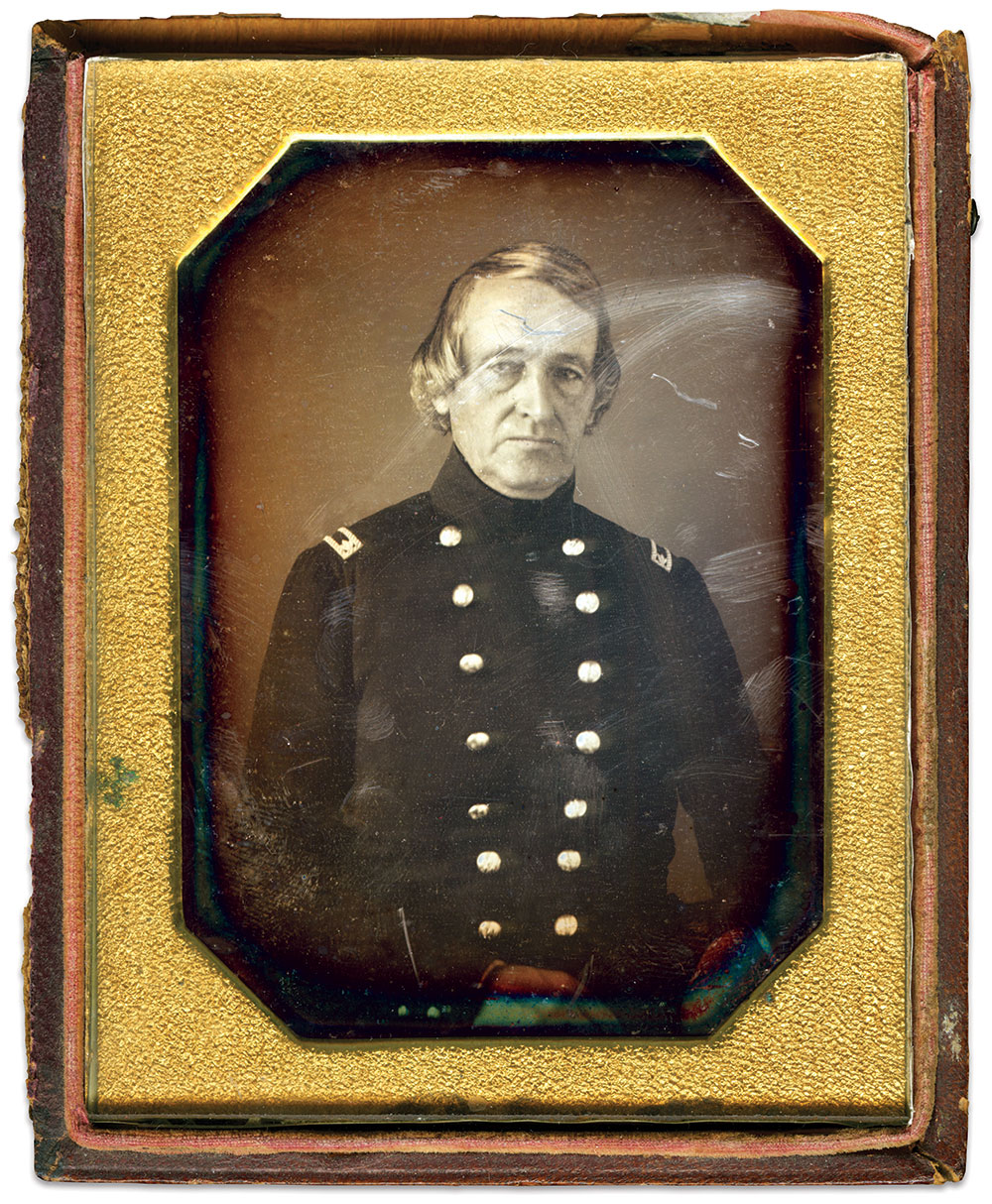
Here’s another veteran of the three wars: Lt. Col. Joshua Howard, who was born in 1793 during George Washington’s second term as president.
Howard’s service began at age 20 in 1813 as a third lieutenant in the 9th U.S. Infantry during the height of the so-called Second War for Independence against Britain. He and his regiment joined the 8,000-man Northwestern Army commanded by Gen. James Wilkinson for an invasion of Canada. In late October 1813, the Americans set out from Lake Ontario in a 300-boat flotilla and traveled downriver on the St. Lawrence River toward Montreal. But Wilkinson’s poor generalship and the failure of a planned rendezvous with 4,000 troops commanded by Gen. Wade Hampton (grandfather of the Confederate general) doomed the expedition. On November 11 at Crysler’s Farm near Morrisburg, Ontario, 600 British and Canadian troops attacked a detachment of 1,600, including the 9th Infantry, and drove the Americans back after charges and countercharges in snow and sleet. Wilkinson called off the invasion.
The combat at Crysler’s Farm went down in history as “The battle that saved Canada.”
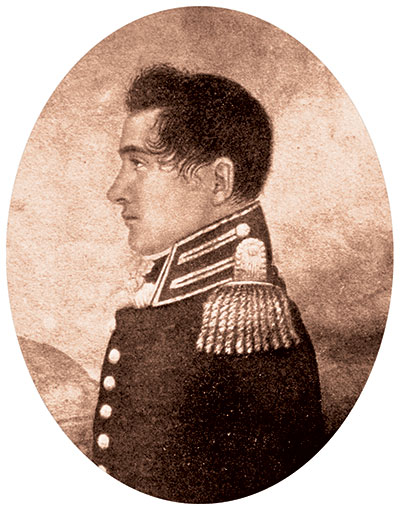
Howard advanced to second lieutenant following the campaign. He remained on army duty at various posts for the next two decades with the exception of a period in 1814 to recuperate from an injury after jumping from a cannon carriage.
Howard resigned in 1835 to enter business and politics. Elected to the Michigan House of Representatives on the Whig Party ticket, President John Tyler appointed him U.S. Marshal for Michigan in 1841 and removed him in 1844 after turning against his Whig allies.
Howard returned to the army with the outbreak of war with Mexico. In 1847, he raised the 15th U.S. Infantry and was appointed its lieutenant colonel. The regiment joined forces in Mexico. Commanded by Col. George Morgan at the August 20, 1847, Battle of Churubusco, the 15th led the brigade of general and future president Franklin Pierce. In his official report, Howard mentioned that the regiment was guided through a difficult stretch by a young captain of engineers, Robert E. Lee.
After Col. Morgan suffered a serious wound, Howard took charge. He ordered the regiment to take cover behind a stone wall, which protected the center of his line. He wrote, “The flanks were without shelter, but maintained their position in admirable order. This place was occupied until we, with the assistance of the howitzer battery, compelled the enemy to retire.”
In his after-action report, Pierce praised Howard, who remained in command of the 15th. A month later, on September 13, 1847, the regiment played a crucial role in the storming of Chapultepec Castle, near the gates of Mexico City. Howard and his 248 men, along with other American forces including his old 9th Infantry, charged up a 200-foot hill, overran enemy breastworks, and climbed scaling ladders to clear a tall stone wall and enter the castle grounds. “The colors of the regiment were waving from the top of the castle in less than thirty minutes from the time the order was given by General [Gideon] Pillow, at the base of the hill, for the regiment to ascend.”
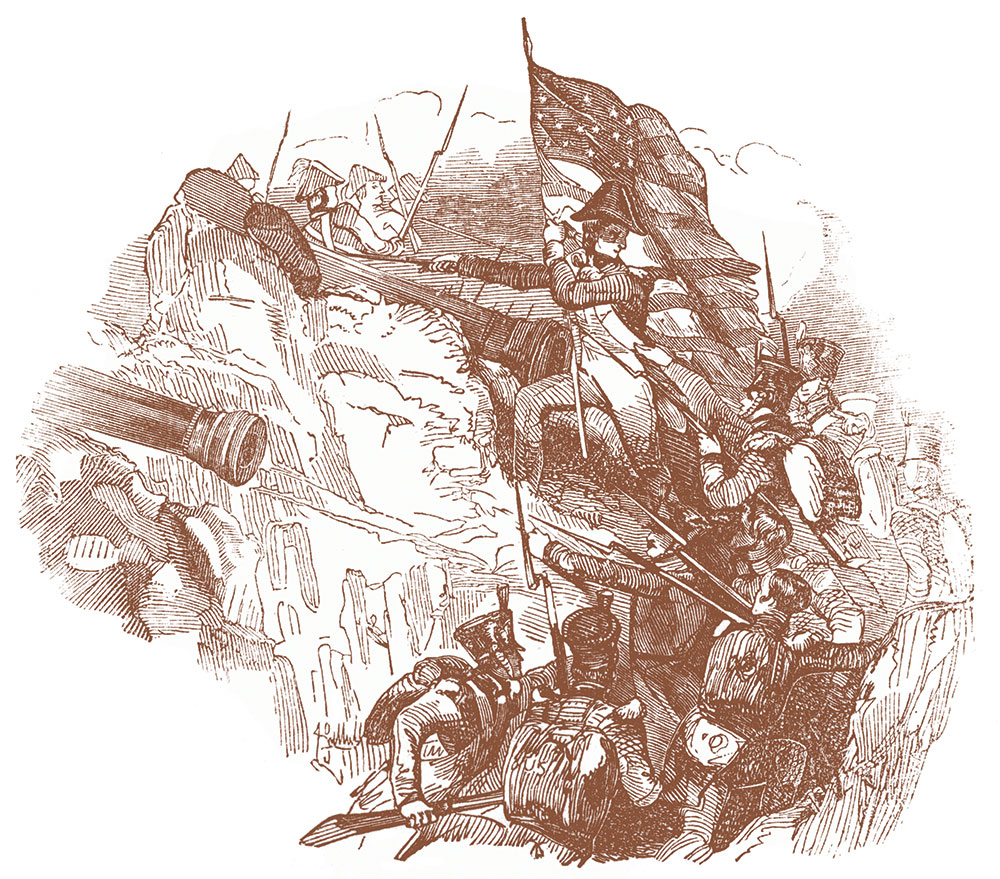
Howard received a colonel’s brevet for gallantry in the battle. In August 1848, after the war ended, the 15th was disbanded and Howard returned to Michigan, where he served a stint as sheriff of Wayne County.
In 1861, Howard answered his country’s call one more time and received an appointment as an army paymaster with the rank of major. The old soldier fell ill in 1864 at age 71 and fought efforts by senior officers to force his resignation or removal.
Howard survived the war, dying at his Detroit home in 1868 at age 75. He and his wife, Hepzibah, had celebrated their 50th anniversary the year before; she and eight of their 12 children survived him.
During his funeral, Rev. Jason F. Walker, of Detroit’s Unitarian Church eulogized Howard: “Soldiers and citizens of Detroit, who bear and attend him to the grave, Colonel Howard was one of nature’s truest noblemen—brave in war, true in peace, incorrupt in office, honorable everywhere.”
Joe Bauman is a retired journalist living in Salt Lake City.
SPREAD THE WORD: We encourage you to share this story on social media and elsewhere to educate and raise awareness. If you wish to use any image on this page for another purpose, please request permission.
LEARN MORE about Military Images, America’s only magazine dedicated to showcasing, interpreting and preserving Civil War portrait photography.
VISIT OUR STORE to subscribe, renew a subscription, and more.