
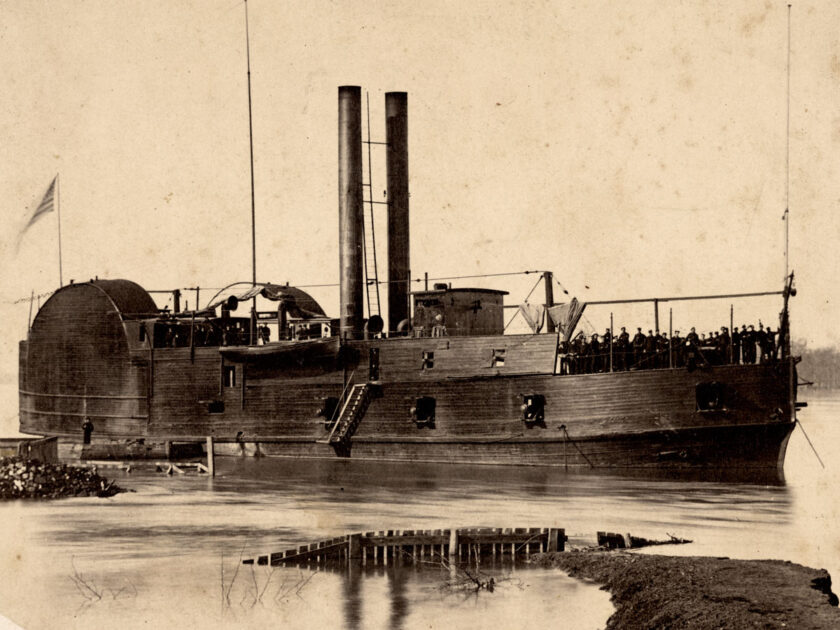
By Ronald S. Coddington
Writing in 1864 to a naval officer, Gen. Ulysses S. Grant had high praise for the courageous gunboat commanders along the Mississippi River. “I think Porter, Phelps, and some of the younger officers as clever men as I ever fell in with. I can not complain of them certainly, for I never made a request of them that they did not comply with, no matter what the danger.”
David Dixon Porter, a career Navy officer from a military family, which included his adoptive brother, David G. Farragut, is best remembered as acting rear admiral in command of the Mississippi River Squadron during the Vicksburg Campaign.
Phelps has largely dwelt in the shadows of history. And yet, Grant put him in the same class as Porter. He is Seth Ledyard Phelps, who traced his military roots to his grandfather and namesake, who served in Washington’s Army during the Revolution and endured the hardships of Valley Forge. Phelps’s father fought in the War of 1812. Drawn to warships, he began his career in 1842 as a midshipman aboard the Independence, the first ship of the line commissioned by the Navy.
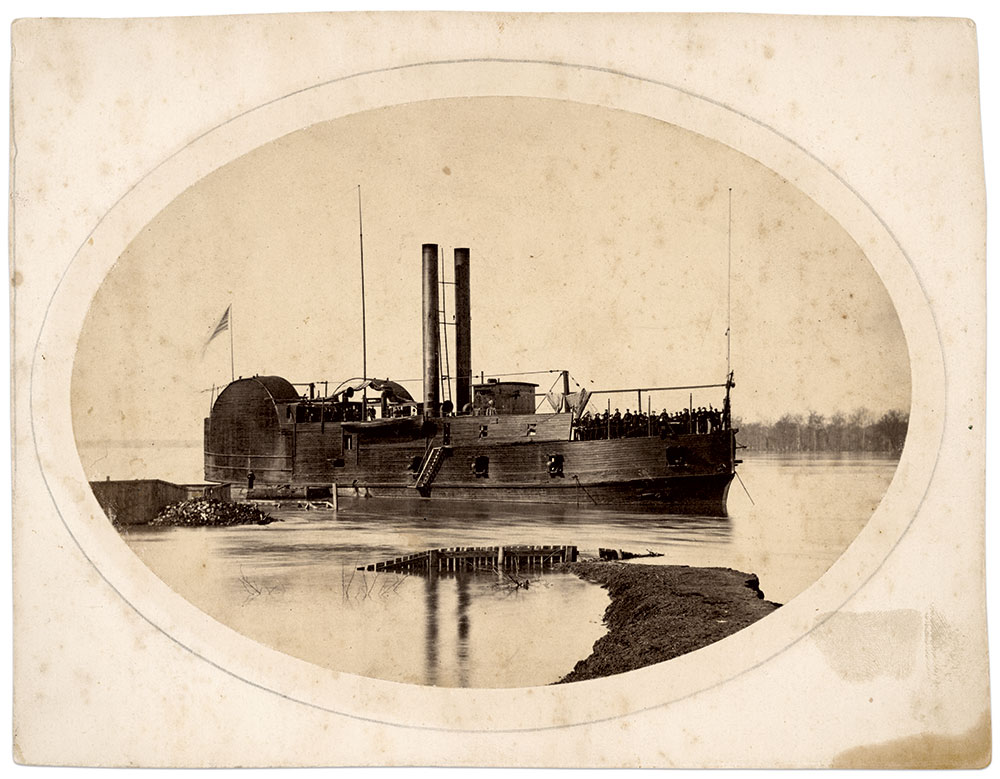
Over the next two decades, assignments took him across the globe, including West Africa to disrupt the illegal slave trade, the Mediterranean, and Central America during the War with Mexico, where he served on gunboats supporting Gen. Zachary Taylor’s army.
During the Civil War, Phelps helped build the Brown Water Navy and played a key role in various engagements along the Mississippi, Tennessee, Cumberland, and other rivers. His long list of actions included Forts Henry, Donelson and Pillow—and the Vicksburg Campaign.
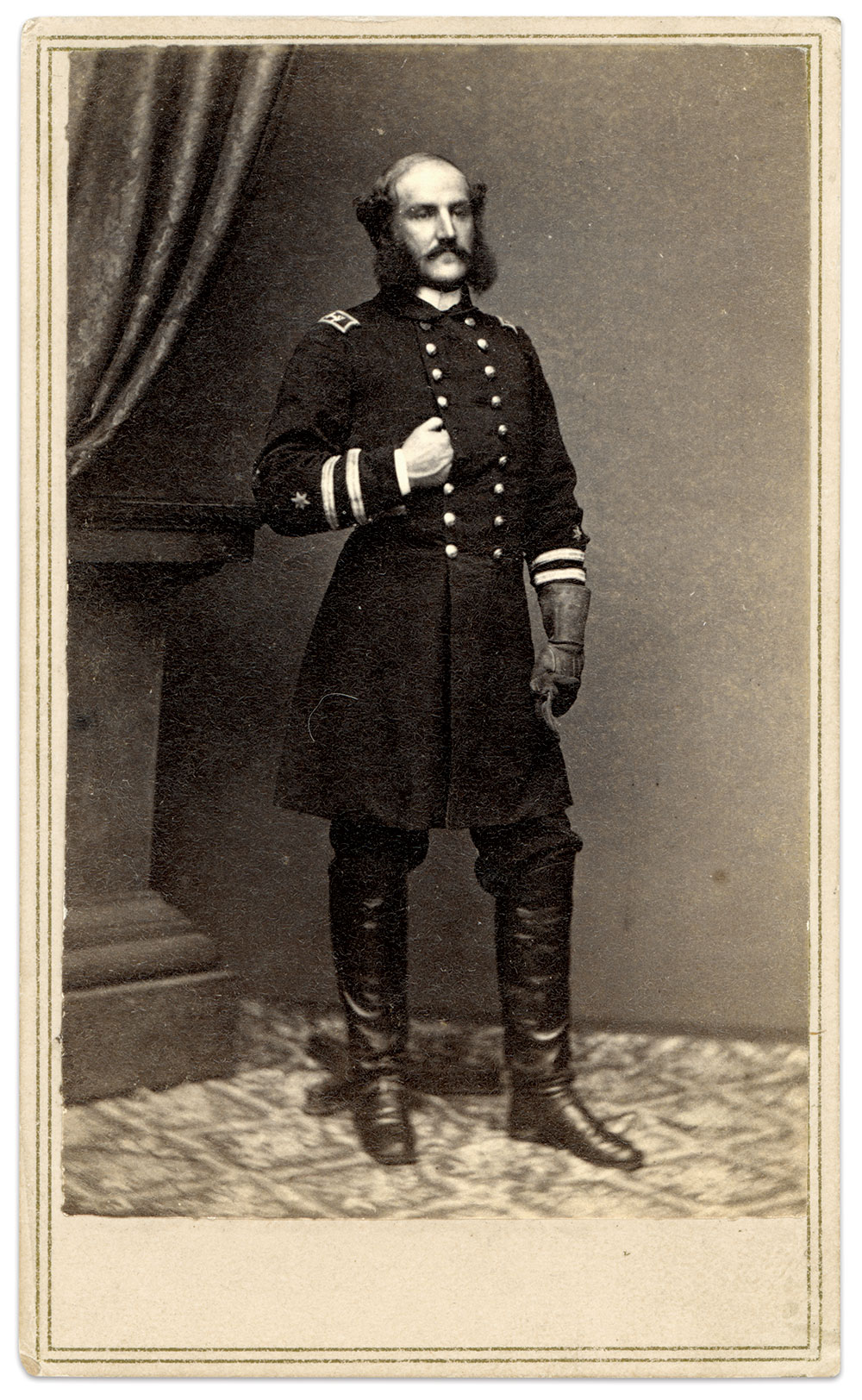
Phelps, who served as a lieutenant commander for much of the war, stands here wearing a uniform with non-standard insignia for his rank. The broad bands on his cuffs were used in 1862 and 1864. The star also appeared on cuffs, but not with the broad bands. The official star had five points, not six as Phelps wears. His shoulder straps feature the correct fouled anchor but are missing the oak leaf on each end. The gauntlets and tall boots are not often seen in images of navy officers.
In 1875, President Grant nominated Phelps to serve on the temporary Board of Commissioners of Washington, D.C. Phelps advanced to become the permanent Board’s first president three years later. In 1883, President Chester Alan Arthur made Phelps his Minister to Peru. The assignment was Phelps’ last. Two years later, he died of a fever contracted during a hunting trip in the Andes.
Ronald S. Coddington is editor and publisher of MI.
SPREAD THE WORD: We encourage you to share this story on social media and elsewhere to educate and raise awareness. If you wish to use any image on this page for another purpose, please request permission.
LEARN MORE about Military Images, America’s only magazine dedicated to showcasing, interpreting and preserving Civil War portrait photography.
VISIT OUR STORE to subscribe, renew a subscription, and more.