

In looking back at the life of William Pratt Parks, one constant emerges: he spent much of his life challenging what he viewed as entrenched power, in war and politics.
Born in Mississippi in 1843 and raised in Arkansas, Parks—known as “Buck” to friends and family—came of age on the eve of the Civil War. He enrolled at St. John’s College in Little Rock in 1859, but when war erupted, the 18-year-old entered Confederate service with the Pulaski County Field Artillery Battery. He fought at Wilson’s Creek in August 1861, one of the Confederacy’s earliest victories west of the Mississippi.
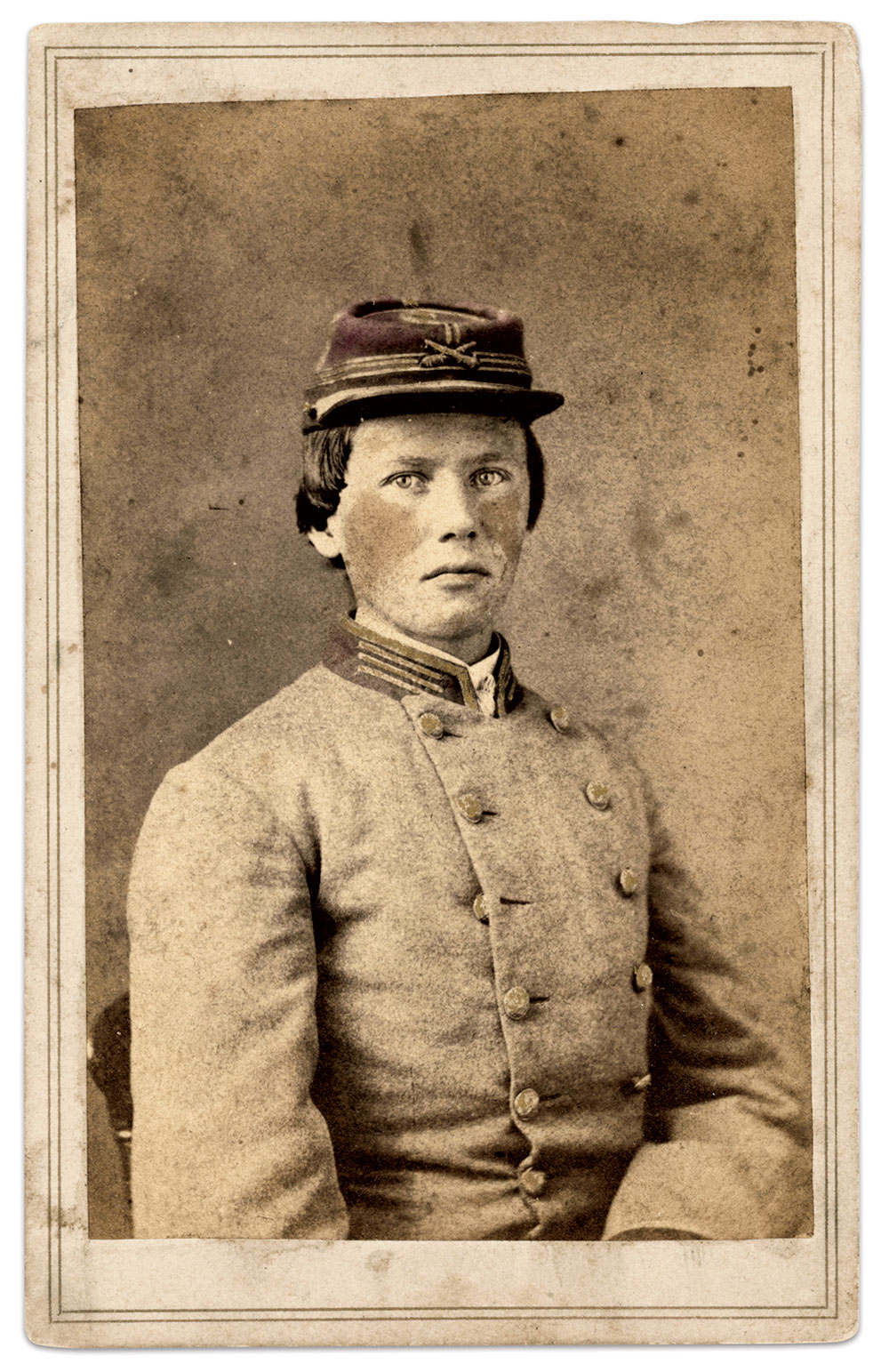
After his initial enlistment ended, Parks joined Company D of the 4th Arkansas Infantry Battalion and received a commission as first lieutenant. His service soon shifted into heavy artillery operations tied to the Confederacy’s desperate defense of the Mississippi River. Detached into Captain Frederick W. Hoadley’s battery, Parks participated in the failed defense of New Madrid and Island No. 10 in 1862.
The command later became Company H of the 1st Tennessee Heavy Artillery, informally known as “The Arkansas Battery,” with Parks eventually taking command as captain. He reportedly volunteered aboard the ironclad ram Arkansas during its dramatic 1862 dash through the Union fleet. By the Siege of Vicksburg in 1863, Parks served as quartermaster while continuing artillery operations. One account credits his battery with helping sink the Union ironclad Cincinnati. Another claims he fired the final Confederate cannon shot before Vicksburg surrendered.
After the war, Parks studied law under future U.S. Attorney General Augustus H. Garland before settling in Lewisville, Ark., where he practiced law and farmed. Unlike many former Confederates who aligned with Democratic political power, Parks embraced insurgent reform movements. As the Greenback Party’s candidate for governor in 1880 and later an active Populist, he championed struggling farmers and laborers against financial and political elites.
Parks died in 1907 at age 63.
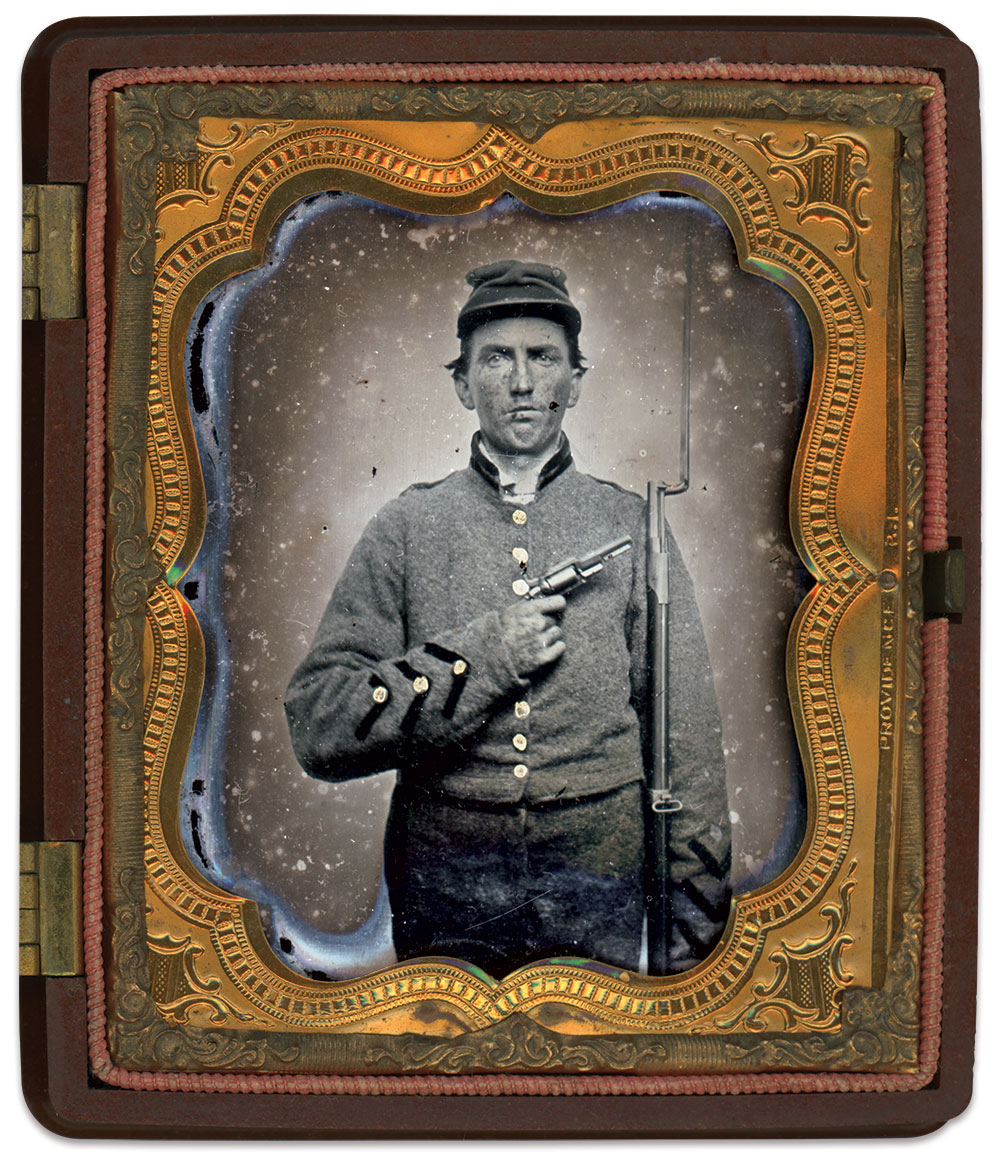
On the third day of the Battle of Gettysburg, the 2nd Virginia Infantry and the rest of the Stonewall Brigade participated in the assault against Culp’s Hill. Its number included John William Taylor, a native of Shepherdstown who began his service in 1861 in Company B, rising from private to sergeant. During a skirmish on nearby Wolf Hill, one of Sgt. Taylor’s men, fellow Shepherdstown resident Wesley Culp, was killed—not far from the hill named for his Uncle Henry. The location of young Culp’s remains are unknown. Sergeant Taylor survived without injury and went on to fight in the final campaigns of the Army of Northern Virginia, suffering a neck wound at Cold Harbor. Though the 2nd was not heavily engaged, he fell into enemy hands at Fort Stedman on March 25, 1865, late in the siege of Petersburg. Held at Point Lookout, he signed the Oath of Allegiance three months later, and then returned to Shepherdstown and lived out his life as a farmer, dying in 1905 at age 63.
—Ethan Spieles
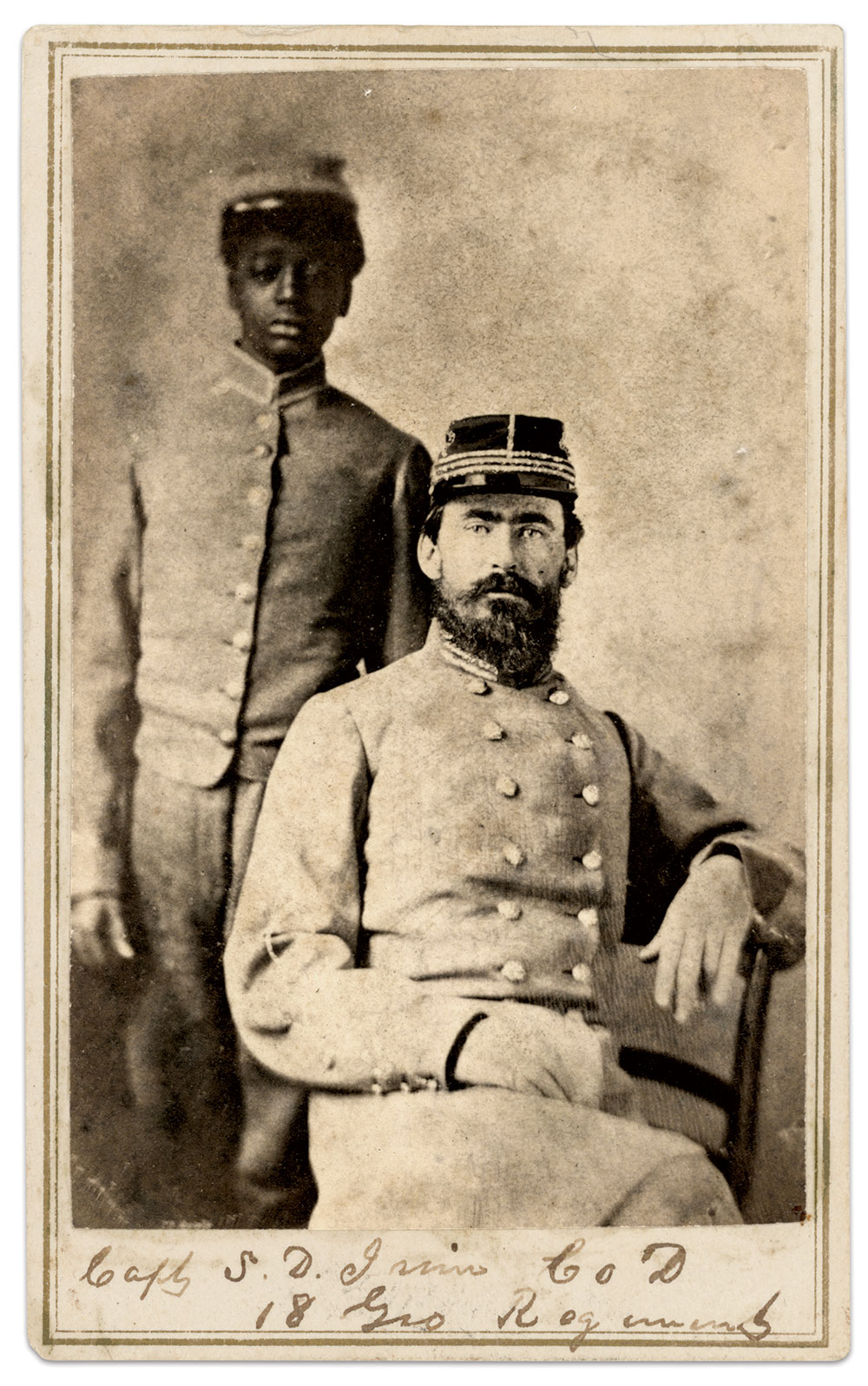
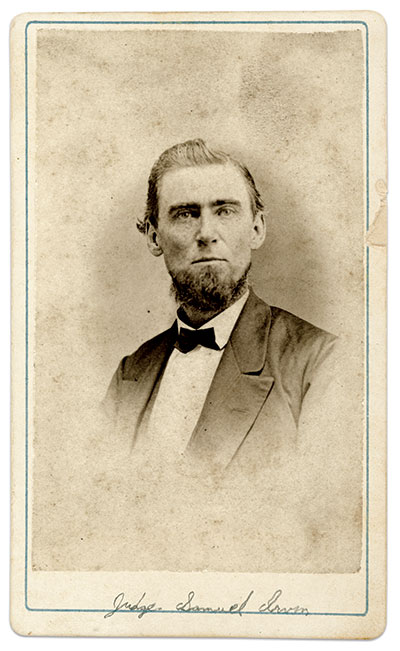
The cover of MI’s September-October 2004 issue featured this carte de visite in the David Wynn Vaughan Collection captioned “Unidentified Confederate Captain and Man Servant.” Another print, in the collection of Matthew Hensley, names the captain as Samuel Davis Irvin (1823-1877) of the 18th Georgia Infantry.The name of the servant is yet to be discovered.
The Kentucky-born resident of Dougherty County, Ga., commanded Company D of the 18th from June 1861 to July 1862, when he resigned his commission due to illness following the conclusion of the Peninsula Campaign.
The name of the servant is yet to be discovered. Hensley notes that Capt. Irvin “isn’t listed as owning any slaves on the 1860 schedule, however he is listed as having custody of one slave owned by his father-in-law.”
Hensley believes the slave and servant are the same person and is seeking information to identify him. If you can help, contact Matt.
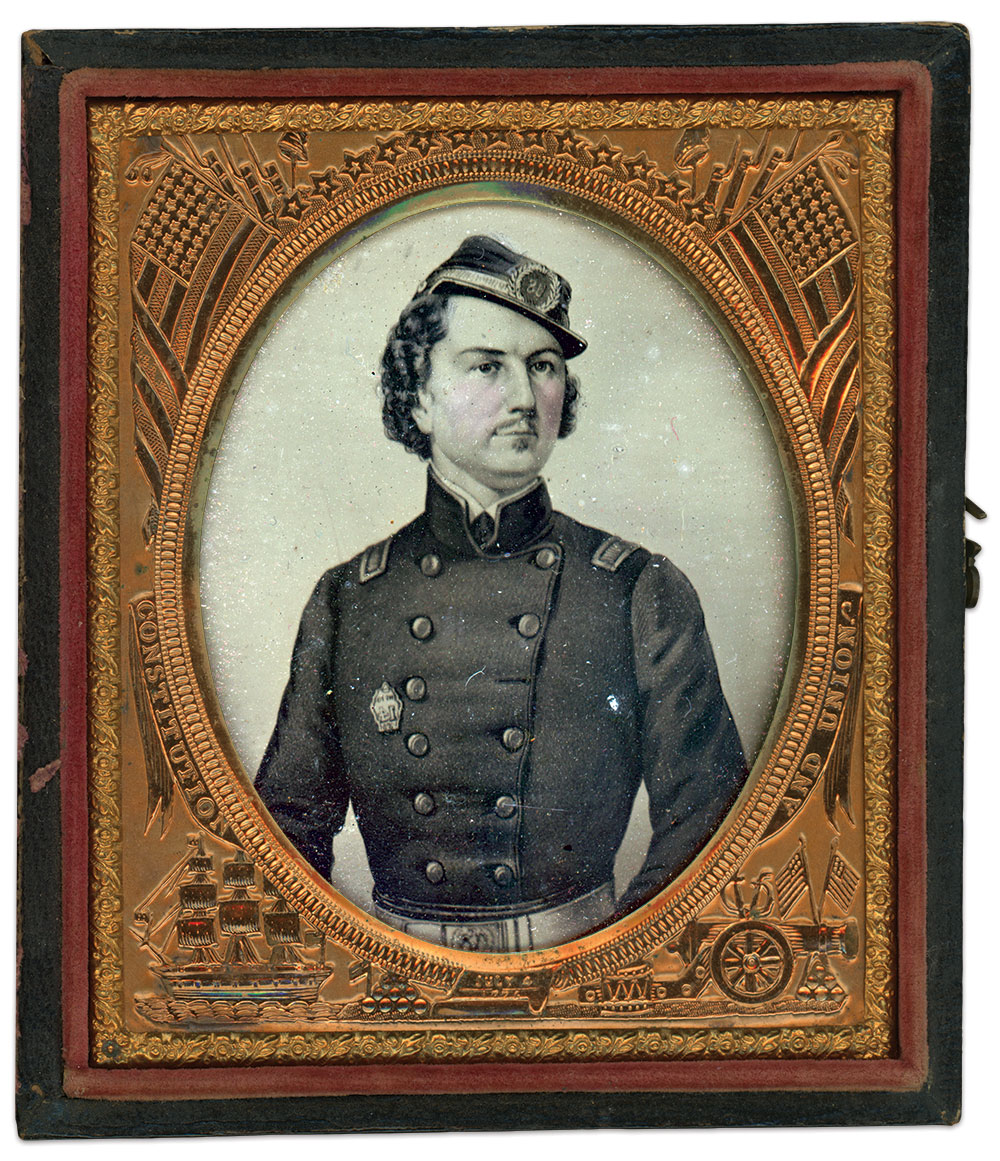
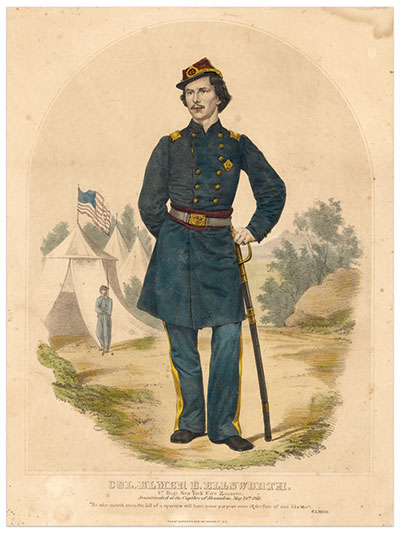
Colonel Elmer E. Ellsworth of the 11th New York Infantry suffered instant death after hauling down a Confederate flag flying from the roof of the Marshall House in Alexandria, Va. As he descended, the innkeeper shot him point-blank in the chest. News of the killing of the young officer who popularized the Zouave uniform style outraged Union-loyal populace throughout the North, making him a martyr—and inspiring writers and artists to remember his sacrifice. This painting by an unidentified artist picturing the late colonel wearing the honorary badge of New York City’s Columbian Engine Company 14 is believed to be one of the many memorials to his service. It may have been based on a lithograph, left, by Currier & Ives. The badge, and the cap of a button next to it, were blown away by the shotgun blast that snuffed out his life.
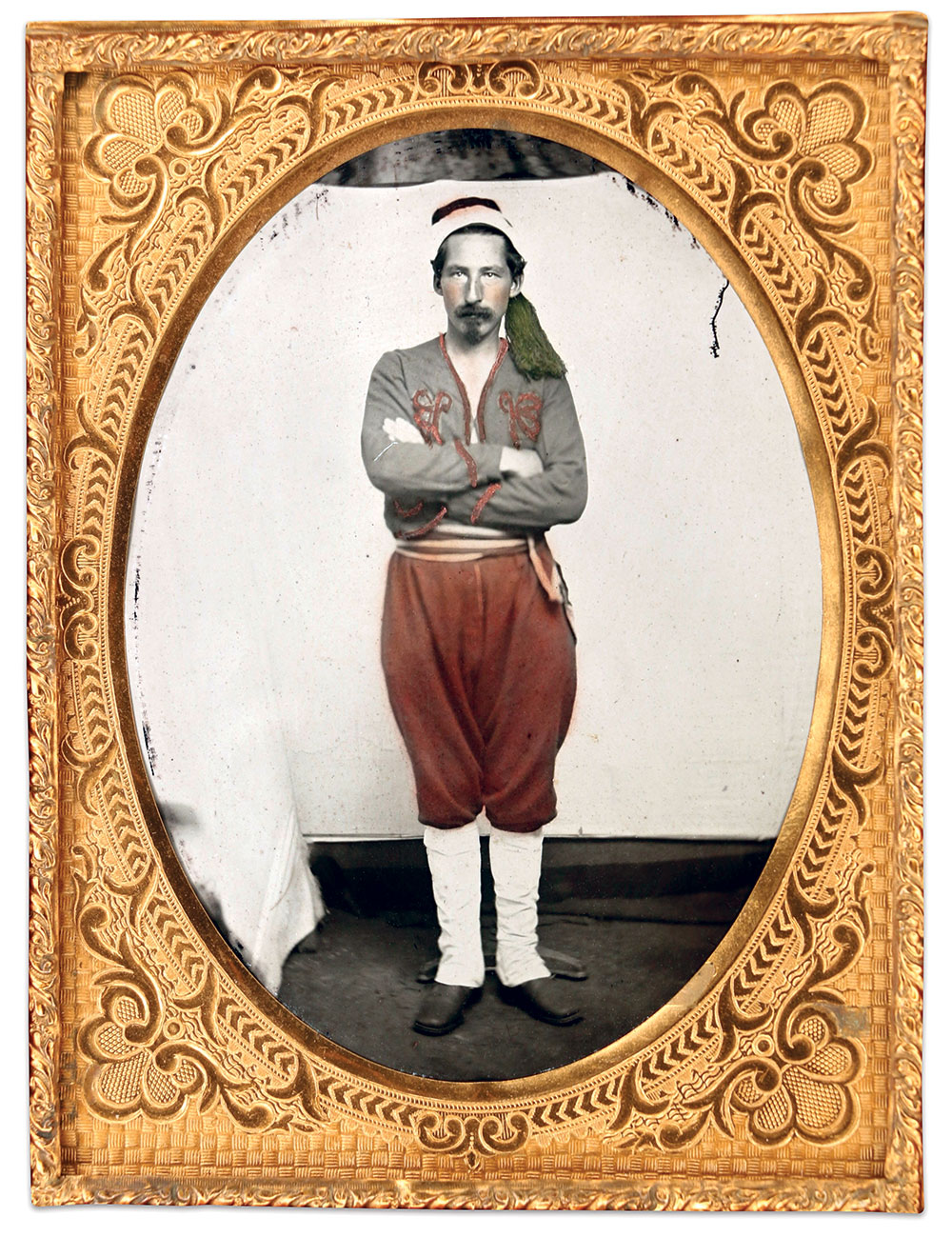
The unit to which this Zouave belonged is not precisely known. The style of his uniform suggests membership in the 5th New York Infantry, known as Duryée’s Zouaves. The uniform, and the studio backdrop, are also similar to Ellsworth’s Zouaves of Chicago.
SPREAD THE WORD: We encourage you to share this story on social media and elsewhere to educate and raise awareness. If you wish to use any image on this page for another purpose, please request permission.
LEARN MORE about Military Images, America’s only magazine dedicated to showcasing, interpreting and preserving Civil War portrait photography.
VISIT OUR STORE to subscribe, renew a subscription, and more.