

By Ron Field, with an albumen print from the Rick Brown Collection of American Photography.
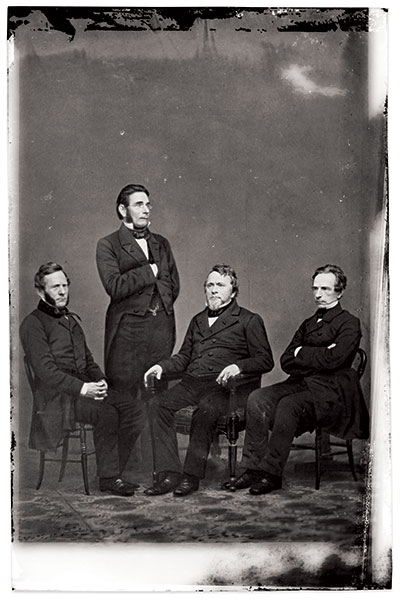
The illustrated newspapers of the Civil War period, including Harper’s Weekly, Frank Leslie’s Illustrated Newspaper, New York Illustrated News and Southern Illustrated News, depended on photographers and sketch artists to provide images, and engravers turned them into woodcut illustrations. To meet weekly deadlines, the engravers worked in teams, each engraver assigned to a two-inch wood block, with a master engraver fitting the finished blocks together and making final edits.
Nowadays, we refer to such photos as art references. Portraits of prominent persons in the news were often based on photography, and the New York Illustrated News even produced a regular supplement, Portrait Monthly.
So many photographs were being submitted to Frank Leslie’s by June 1861 that the editors published advice stating they would be much obliged to their “photographic friends if they will write in pencil the name and description on the back of each picture, together with their own name and address.”
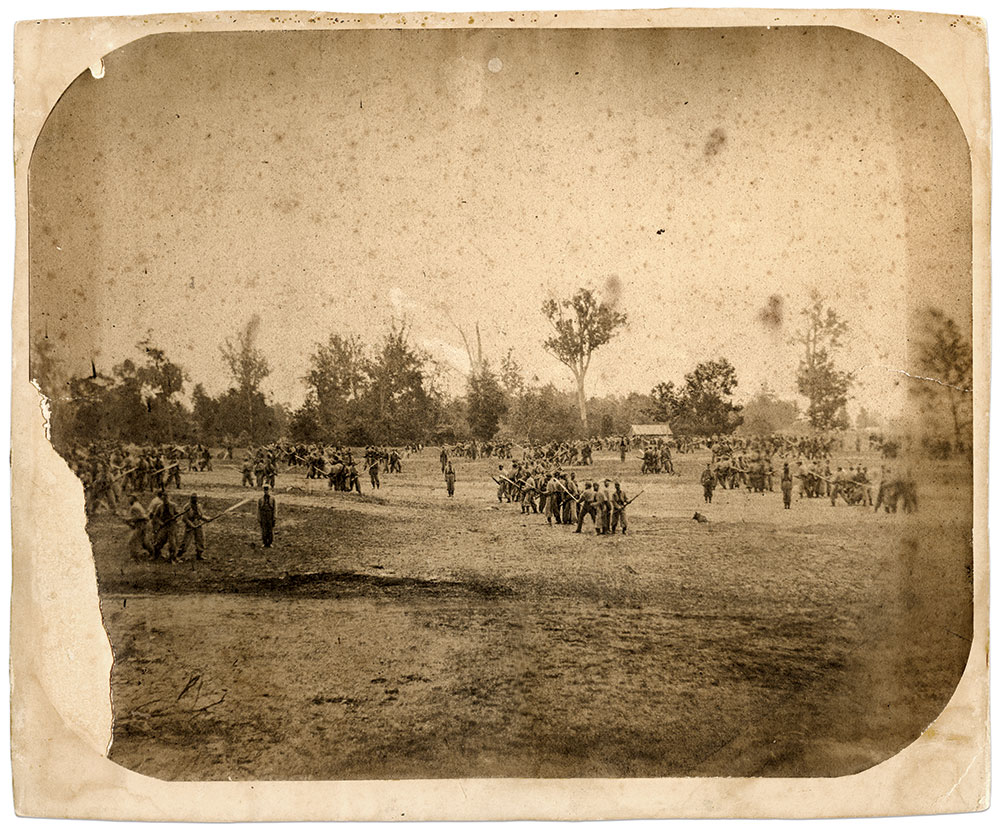
During May 1861, agents of Harper & Brothers visited the camp of the 11th Indiana Infantry, or Wallace’s Zouaves, near Evansville, Ind., and produced a series of albumen photographs. As a result, five engravings based on these photographs were published in Harper’s Weekly on July 20, 1861. Two show the Zouaves at their leisure, while three depict them at drill. An albumen on which one of the latter engravings was based, survives today and shows the whole regiment with fixed sword bayonets “rallying by fours” to guard against cavalry.
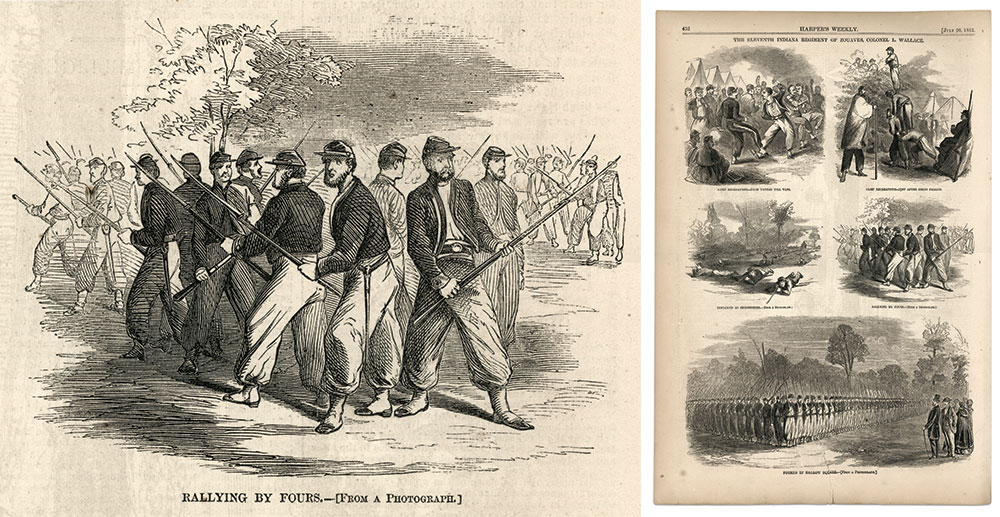
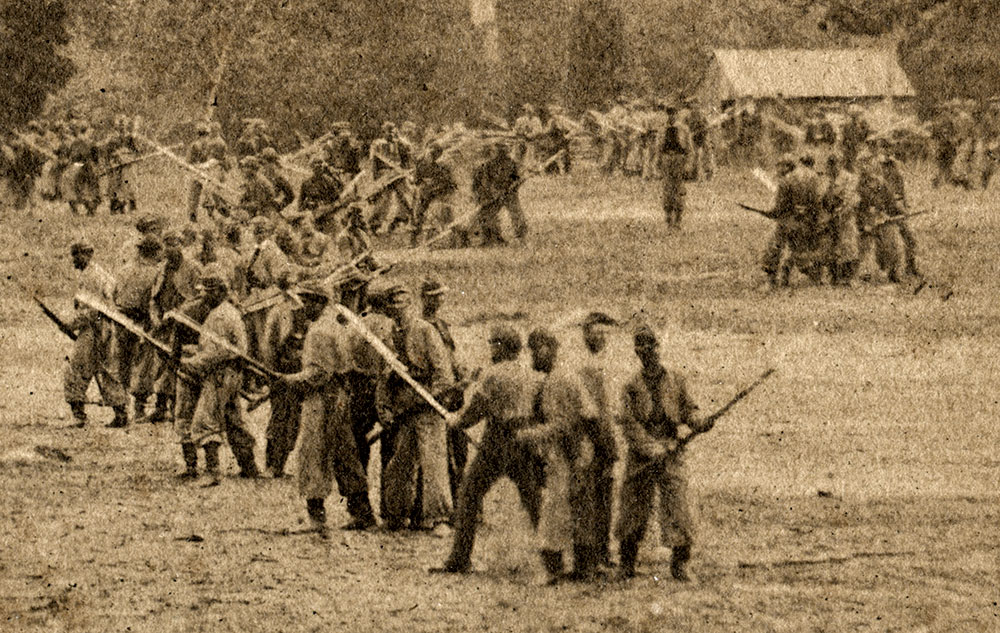
The focus of the Harper’s engraving concentrates on those Zouaves at center right in the albumen, and raises a question about the uniform they are depicted wearing. As well publicized, the 11th Indiana wore gray jackets, caps and trousers, with red trim. Yet in this engraving they wear dark-colored jackets. This may have been due to the fact that most Civil War Zouave units wore dark blue jackets and the engravers assumed the same of Wallace’s Zouaves. Alternatively, it may have been influenced by growing public concern that gray was the color predominantly worn by the Confederate army, and incidents of friendly fire on gray-clad Union troops at Big Bethel and First Bull Run increased these concerns. This would ultimately lead to the issuance of a War Department Circular on Sept. 23, 1861, ordering that no further Union troops be uniformed in gray—and maybe the work of the Harper’s engravers helped bring this about.
Special thanks to Phil Spaugy.
Ron Field is a MI senior editor.
SPREAD THE WORD: We encourage you to share this story on social media and elsewhere to educate and raise awareness. If you wish to use any image on this page for another purpose, please request permission.
LEARN MORE about Military Images, America’s only magazine dedicated to showcasing, interpreting and preserving Civil War portrait photography.
VISIT OUR STORE to subscribe, renew a subscription, and more.