
By Ronald S. Coddington with Warren “H” Shindle and Glenn Ethridge Hilburn
The phone call that came in to Glenn Hilburn’s antique shop in Frederick, Md., on a spring day in 2016 was intriguing. A family was selling off the remains of an estate—pottery, bottles, furniture and pictures. A longtime bottle collector and veteran antiques dealer, Hilburn and a buddy hopped into his truck and drove over to check it out.
Before long, they found themselves shuffling through the house, picking through the various odds and ends. The owner had sold off her estate in bits and pieces over the years. Now, she was deceased, and surviving family members wanted to dispose of whatever remained. Hilburn purchased everything. The bill of sale reads “Contents of house.”
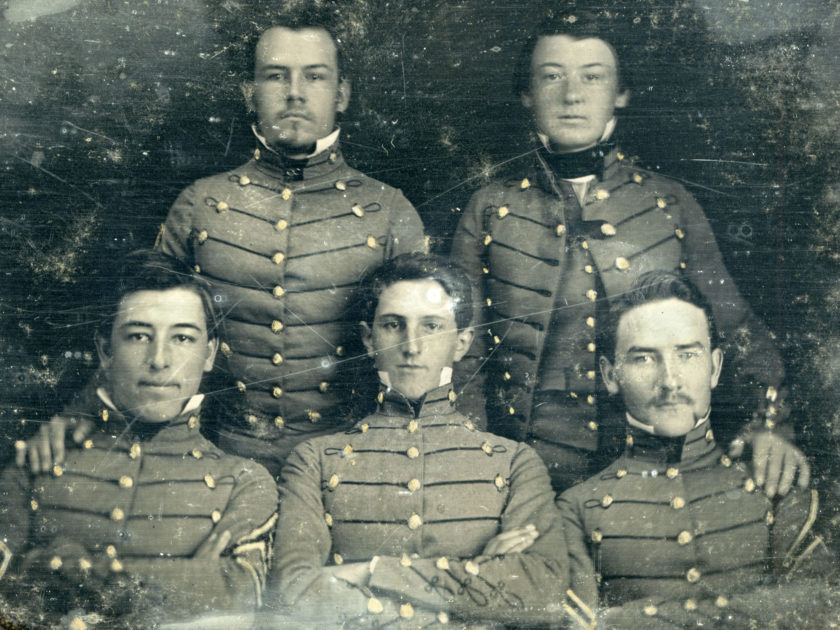
As Hilburn rummaged through one box of old family papers, he found a photographic case at the bottom. Opening it, he found five cadets staring back at him.

“I knew what it was as soon as I saw it,” Hilburn recalled. “As soon as I saw the uniforms, I knew it was one of the big military schools.” One of the cadets, Hilburn thought, resembled famed future Civil War cavalry general and Indian fighter, George Armstrong Custer.
Back at the shop, and later at his house, Hilburn sifted through the box searching for clues about the young men in the quarter-plate daguerreotype that had captured his attention. He quickly determined that the papers related to the Winston family. Their descendants had once owned the house. Hilburn found meticulously labeled genealogical charts that documented the lineage of the Winstons, and a number of old photographs that pictured family members. He noticed that several post-Civil War portraits of one man, Lucien Dade Winston, closely matched the likeness of the cadet standing on the right of the daguerreotype.

Winston, as it turns out, was a cadet at the Virginia Military Institute. The youngest of seven children born over two decades to a wealthy Virginia farmer and his wife, he had grown up outside Culpeper, Va., along the Rapidan River near Raccoon Ford. In 1853, at about age 17, he entered VMI for his freshman year.