

Survivor of Vermont’s Deadliest Day
The deadliest day in Vermont history, May 5, 1864, lives in infamy. Hundreds of miles south of the Green Mountain State, in the rough and tumble landscape of The Wilderness
The deadliest day in Vermont history, May 5, 1864, lives in infamy. Hundreds of miles south of the Green Mountain State, in the rough and tumble landscape of The Wilderness

Keepsake mementos and other trinkets dangled from the ends of pocket watch chains worn by veterans long after the Civil War. The object that hung from Sam Wright’s chain never

A carte de visite with photographs pasted on the front and back remind us of the human cost of war. On the front, a revolver and sword lying on top
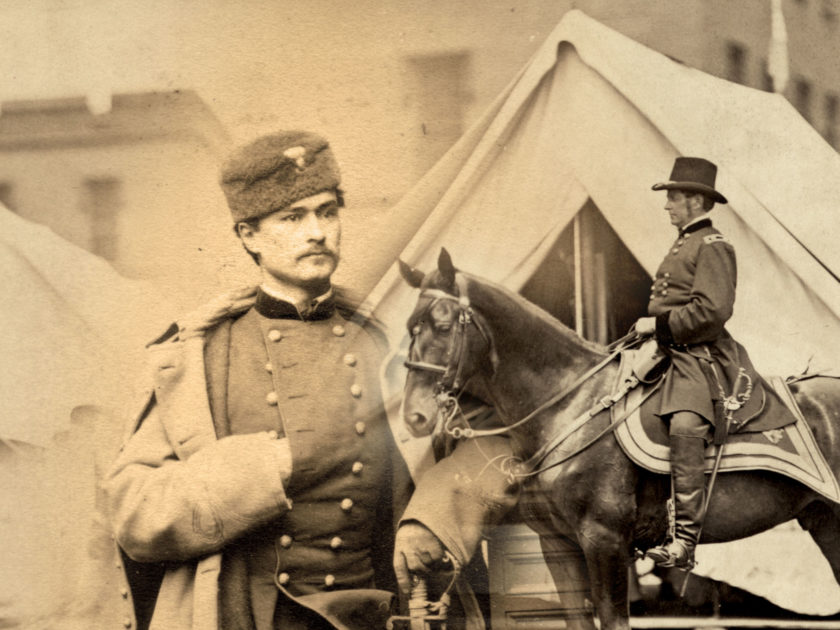
Artillery Capt. Hubert Dilger enjoyed a sterling reputation in the Army of the Potomac. One senior commander recalled long after the war, “In campaign and battle he displayed extraordinary energy;

In February 1905, the U.S. Congress passed a joint resolution to return 74 captured Confederate flags stored in the War Department in Washington, D.C. According to a news report, the

A photographer captured this Union officer giving the time-honored gesture of derision or disdain. His technique matches an instruction printed in an 1863 issue of the Semi-Weekly Wisconsin of Milwaukee:

The founding of MI sits between two cultural phenomena spread across four decades. On one side lay the writings of Bruce Catton and the Civil War centennial; on the other,
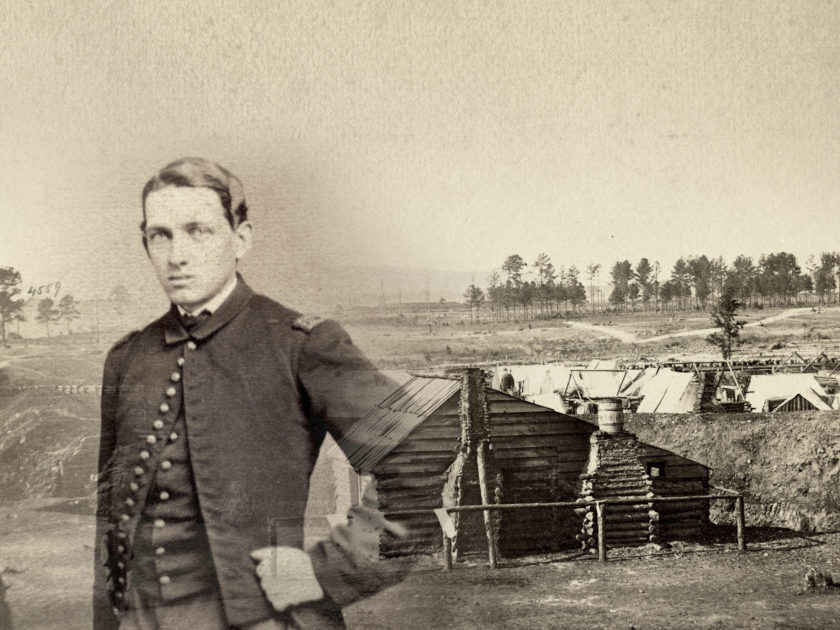
Two 58th Pennsylvania Infantrymen numbered among the mass of Union troops who struggled up and out of the deep ditch at the base of Fort Harrison under heavy fire on

A cannonball at the feet of this federal would have been filled with an exploding charge and capped with a fuse in the visible hole. This type of ammunition illustrates
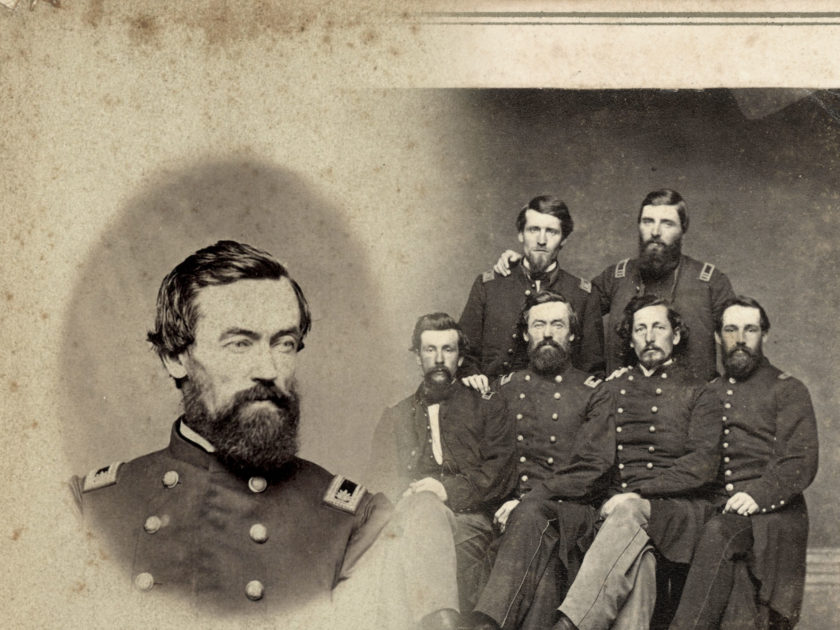
By Kurt Luther In photo sleuthing, most of us strive to set a high bar for what constitutes sufficiently strong evidence to identify an unknown soldier portrait. The gold standard