

By Curt Robbins
“My father is here.”
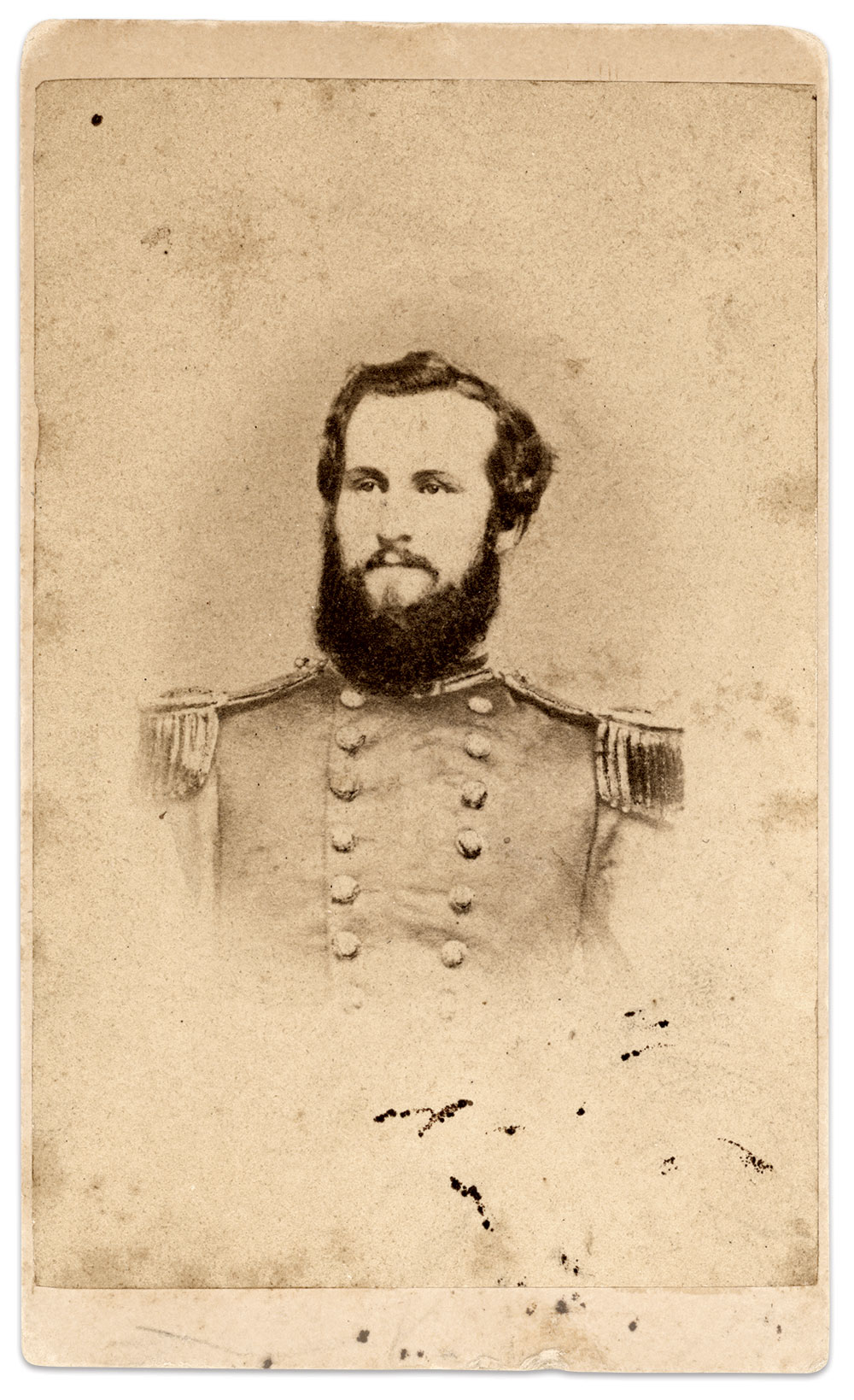
These words were spoken by U.S. Navy Lt. Cmdr. Edward Lea as he lay wounded aboard the Harriet Lane in Galveston Harbor, Texas. Confederates had captured the vessel and crew after a hard fight with small arms and cutlasses on the bitterly cold night of January 1, 1863.
Watching the action unfold was Edward’s father, Maj. Albert Miller Lea, a Confederate engineer. Learning that the Lane had been captured, he made his way aboard and found his desperately wounded son. Albert pulled Edward into his arms, seized with panic as he realized the gravity of his condition.
It was a grim reunion of two men united by blood and divided by loyalty. Tennessee-born Albert, a West Pointer in the Class of 1831, had resigned his commission in 1836, married Philadelphia’s Ellen Shoemaker, and embarked on a career as a civil engineer. Their son Edward was born the following year. He followed his father into military service, graduating from the Naval Academy in 1855.
Then came the war.
Union Loyal Edward and the Capture of Galveston
Edward had been impressed during his youth with the saying, “It is man’s highest glory to be good.” Loyal to the Union, he pledged to support the war effort in every way. A lieutenant aboard the Hartford when hostilities erupted, he soon joined the Harriet Lane, a Treasury Department revenue cutter transferred to the Navy for blockade duty off Pensacola. Serving under Capt. John Mayhew Wainwright, Edward participated in the bombardment of Forts Saint Philip and Jackson and the capture of New Orleans. The Lane then joined the Union flotilla sent to capture Galveston and blockade Texas trade.
On October 4, 1862, Cmdr. William B. Renshaw led eight ships, including the Lane, into Galveston Harbor and demanded the port’s surrender. He faced little opposition. Brig. Gen. Paul O. Hébert, acting commander of the Confederate District of Texas, considered Galveston Island indefensible and had withdrawn most of its heavy artillery and troops to Virginia Point on the mainland. The remaining Confederate regiment, commanded by Col. Joseph Cook, fired what guns it had but was quickly silenced. Cook arranged a four-day truce with Renshaw and withdrew.
Galveston and the Texas coast were now under U.S. Navy control.
The Mission to Retake Galveston
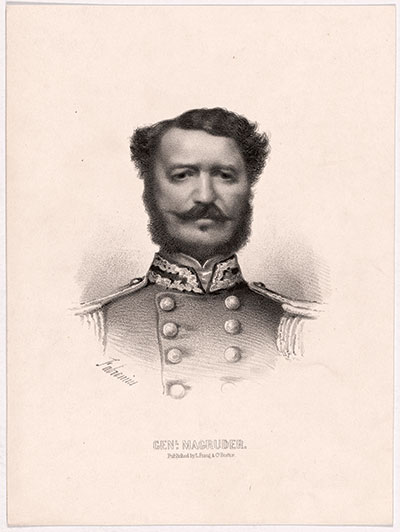
Father Albert held fast to the Southern cause, following his home state into the Confederacy. A successful civil engineer and railroad executive in Texas, he joined the Confederate army in July 1861 and served on assignments across the state. In late 1862, after the fall of Galveston, he reported to Maj. Gen. John Bankhead Magruder, who had replaced Hébert. Magruder had graduated a year ahead of Albert at West Point, and they were on friendly terms.
Determined to recapture Galveston in a simultaneous land and sea attack, Magruder assembled 20 cannon and infantry under Brig. Gen. William R. Scurry at Virginia Point, across the harbor from Galveston Island. The force traveled by rail to the island for a surprise attack. Magruder also fitted two river steamers—the cottonclads Bayou City and Neptune—with guns and placed Capt. Leonidas R. Smith in command.
Galveston Harbor Storming Party
In the frigid, unseasonably wet hours before dawn on January 1, six Union warships—the Clifton, Harriet Lane, Westfield, Owasco, Corypheus and Sachem—rested in Galveston Harbor. Along the waterfront, three companies of the 42nd Massachusetts Infantry guarded Kuhn’s Wharf.
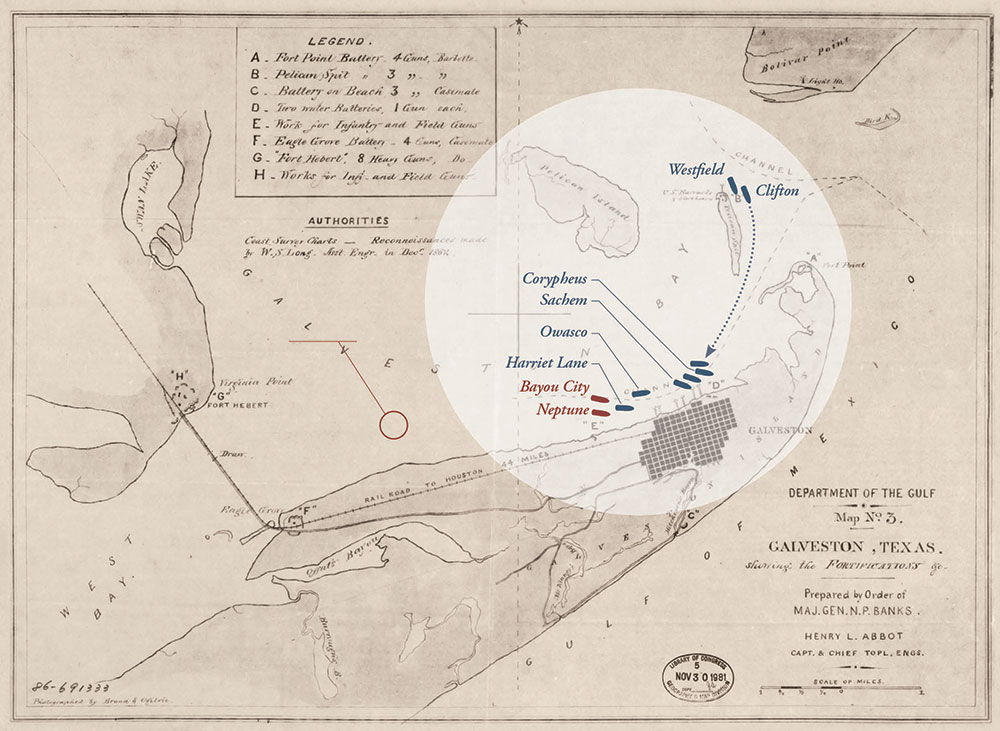
Major Gen. Magruder and Brig. Gen. Scurry led about 1,000 troops across an abandoned railroad bridge from the mainland and positioned them among the wharves and buildings. Armed with muskets and carrying ladders to scale the Union barricades, they waited for the order to charge. Nearby in Galveston Bay, the crews of the Bayou City and Neptune listened for the first shot—their signal to attack.
The ground assault soon ran into trouble. The ladders proved too short to clear the barricades, leaving the infantry to fire from the shoreline. Hearing the musketry, the cottonclads went into action.
Cannon fire from the Harriet Lane disabled the Neptune, but the Bayou City, commanded by Capt. Henry Lubbock, rammed the Lane. Its bowsprit lodged between the spokes of the Lane’s paddle wheel, disabling the vessel. Lubbock led a storming party aboard with guns blazing. In the desperate fight, he shot and killed Capt. Wainwright, leaving executive officer Edward Lea in command. Lea soon fell with a gunshot wound to the abdomen. The Confederates pressed on and seized the Lane.
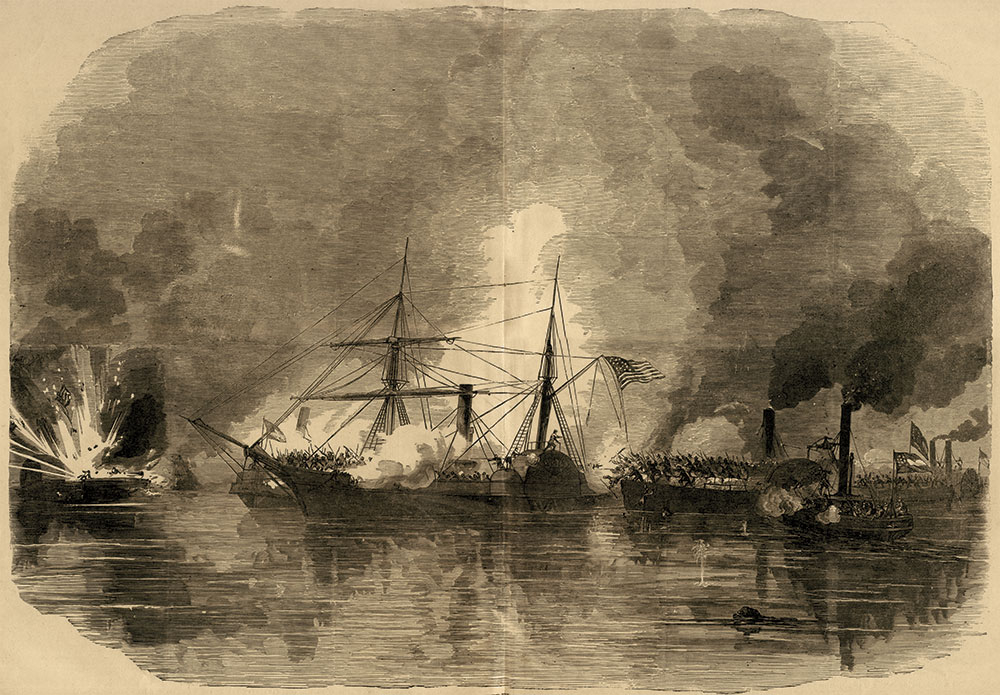
The Confederate success prompted a demand for surrender from Renshaw aboard his flagship, the Westfield, which had grounded on a sandbar. Renshaw agreed to a truce lasting until 10 a.m., but refused to surrender. He and a dozen crewmen attempted to scuttle the Westfield, only to be killed when the explosives detonated prematurely. The surviving Union vessels steamed out to sea, while the troops at Kuhn’s Wharf raised white flags.
The battle lasted about six hours. Magruder lost 26 men killed and 117 wounded. Union losses totaled about 150 Navy personnel, along with the Westfield and Harriet Lane.
A Grim, Final Reunion
Major Lea watched the fight between the Bayou City and Harriet Lane from a rooftop in Galveston, knowing his son would put up a stubborn fight and fearing for his safety. Daylight revealed the vessels side by side. Believing they had been lashed together and that the Lane had prevailed, Albert reported to Magruder that it had probably captured the Bayou City.
He soon learned the opposite was true. With Magruder’s permission, Albert hurried to the Lane and found Edward lying on a locker in the cockpit, a lower-level space used as a surgery during battle. Taking his wounded son into his arms, Albert was overwhelmed by panic, fear, and helplessness. They exchanged a few words about the family and forgot their differences.
“Taking Edward into his arms, panic, fear, and helplessness overwhelmed Albert as he comforted his son.”
Albert later recalled, writing in the third person, “his thoughts turned to his men, whose command had devolved on him by the death of his captain, and he asked his father to arrange with Magruder that the wounded should be sent to New Orleans by sea, to save the suffering of going by land to the interior, as prisoners. When told of the terms of the truce, his chagrin was deep.”
Albert faced a terrible choice: remain with his dying son or seek help. He chose the latter. After he left, several sailors asked Edward if they could do anything for him. He thanked them and replied, “It’s okay—my father is here.”
They were Edward’s last words. He died aboard his ship, about a month shy of his 26th birthday.
Aftermath
Magruder and others set about processing prisoners, tending the wounded, and burying the dead. The next day, paroled Union officers joined Confederates in funeral services for Lt. Cmdr. Lea and Capt. Wainwright. Masonic brothers from both sides joined a procession to an Episcopal church, followed by burial in the city cemetery. At Albert’s suggestion, Edward was laid to rest beside his commander.
Later, when a relative offered financial help to bring Edward home, Albert declined, saying his son would have preferred to remain where he had fallen in battle, “in sight of the sea, in sound of the surf.”
Edward’s modest headstone, adorned with an anchor and sword and a cross, bears his name, rank, life dates, and the words “My father is here.”
Albert and his family remained in Galveston until 1874, when they moved to Corsicana, Texas, and purchased a farm. He died in 1891 at age 72.
Confederates controlled Galveston for the remainder of the war, though the Union naval blockade continued to hamper trade through the harbor.
References: Texas State Library Archives (TSLA); Texas State Historical Association (TSHA); Northwest Florida Daily News, April 26, 2013; Cotham, Battle on the Bay: The Civil War Struggle for Galveston; Block, “A Towering East Texas Pioneer: A Biographical Sketch of Colonel Albert Miller Lea,” East Texas Historical Journal (October 1993); Galveston Daily News, Aug. 6, 1876 and Jan. 22, 1895; The Freeborn County Standard, Albert Lea, Minn., March 13, 1879.
Born and raised in Wichita Falls, Texas, Curt Robbins became interested in 19th century photography after being handed down some old family photographs. He started collecting about 2000 and joined The Daguerreian Society in 2003. Initially focused on Galveston photography, his interest grew to include statewide images. Curt resides in Montague County, Texas, and continues the hunt for Texana history and 19th-century photography.
SPREAD THE WORD: We encourage you to share this story on social media and elsewhere to educate and raise awareness. If you wish to use any image on this page for another purpose, please request permission.
LEARN MORE about Military Images, America’s only magazine dedicated to showcasing, interpreting and preserving Civil War portrait photography.
VISIT OUR STORE to subscribe, renew a subscription, and more.